Zen and Tea Ceremony: What to Know Before You Visit Kyoto
We operate the Maiko & Zen Kyoto experience mentioned in this guide.
Zen and tea turn up side by side in Kyoto, in temple gardens, quiet rooms, and the words of guides. If you are planning a tea experience or a temple visit, it helps to know how the two fit together and what each asks of you as a guest. This guide takes a calm, practical look at that link, using what temples, tea schools, and national tourism sites say on their own pages.
How Zen and Tea Are Read Together
Zen is a practice before it is a set of ideas. Japan's national tourism organization describes Zen Buddhism as the practice of meditation to reach self-realization and enlightenment, with practitioners guided by their teacher. Tea is also something you take part in, not just something you read about.
Chado, the Way of Tea, has its own line of teachers. Urasenke's introduction to chado covers Rikyu, who lived from 1522 to 1591, the four principles of tea, and the three Sen schools. A temple visit and a tea gathering are separate experiences, and each has its own host to guide you. Both settings reward attention to small details, such as the sound of a kettle, the weight of a bowl, or the raked pattern in a gravel garden. If gardens interest you, our guide to Zen gardens in Kyoto is a good companion to this page.
Simplicity You Can See in a Tea House
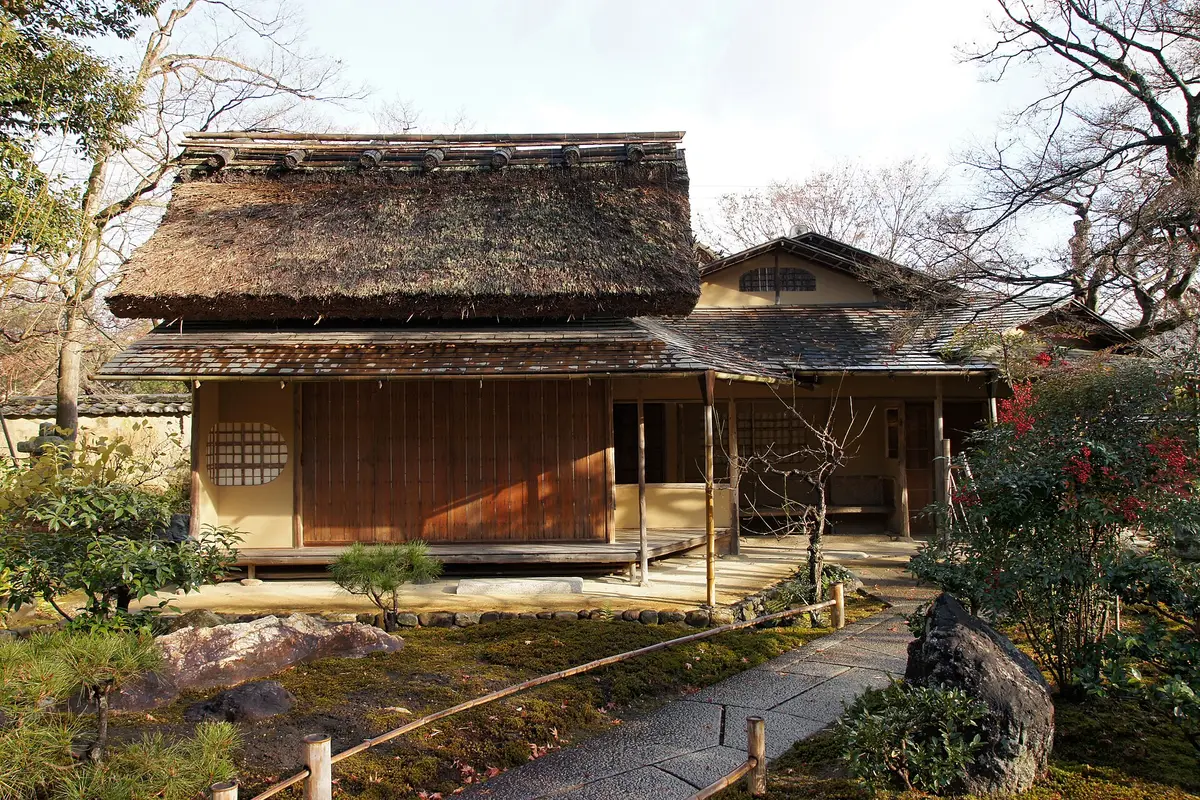
A tea house can look very plain at first glance. Urasenke says its Konnichian tea room represents the epitome of the thatched-hut style formulated by Rikyu. A thatched hut is a humble kind of building, and that humble look is part of what you are meant to notice.
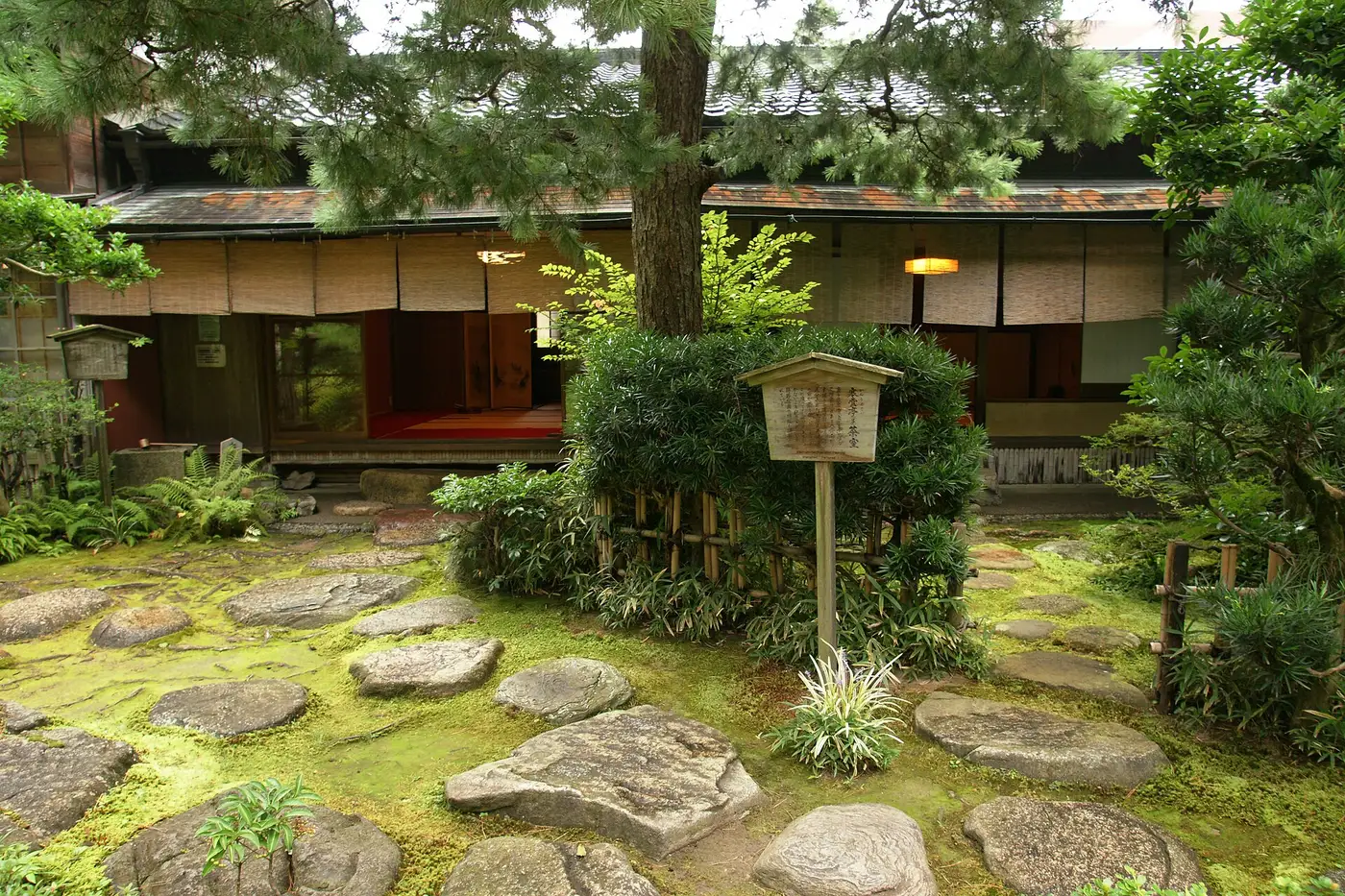
The low door shows the same plainness in another way. According to Urasenke's introduction to chado, the entrance was designed so that every guest had to crawl in, whatever their rank. Inside, flowers follow one short guideline from the same source: arrange the flowers as though they were in the field. For a closer look at the parts of the room, see our Japanese tea room guide.
The Whisk and the Bowl
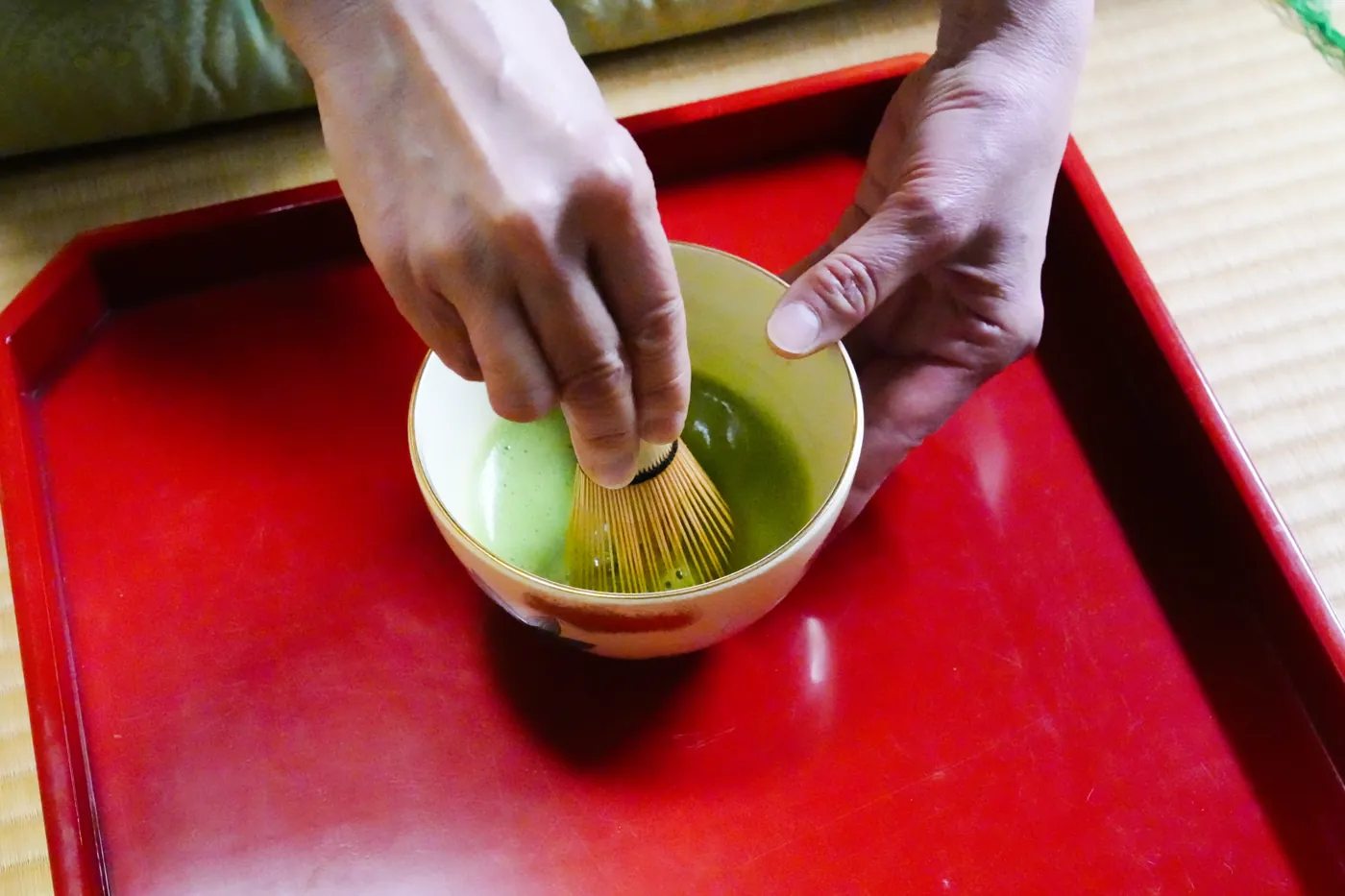
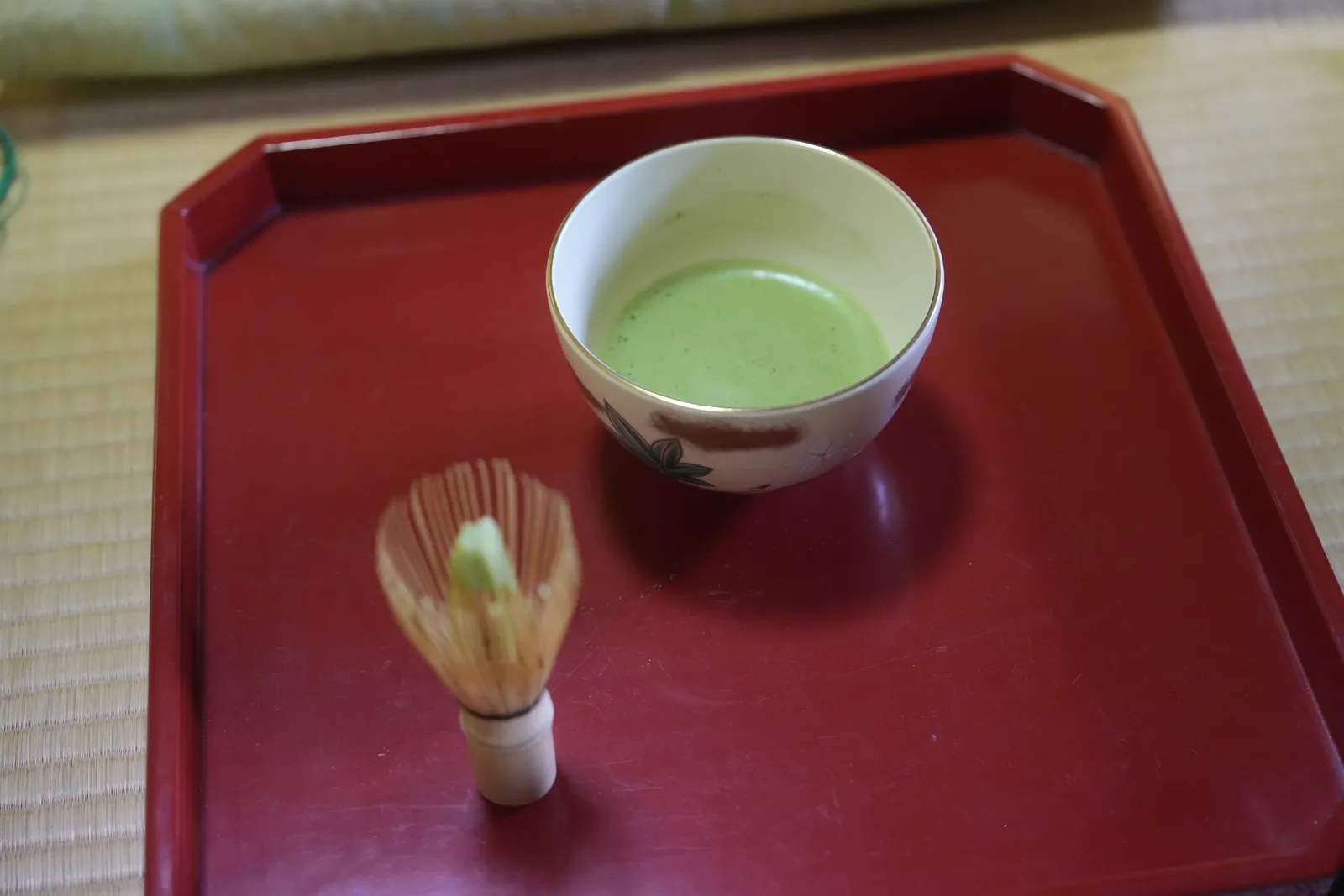
Two tools sum up what a host does in a tea ceremony. Omotesenke's glossary describes the chasen, or tea whisk, as a bamboo utensil used to mix powdered green tea and hot water together.
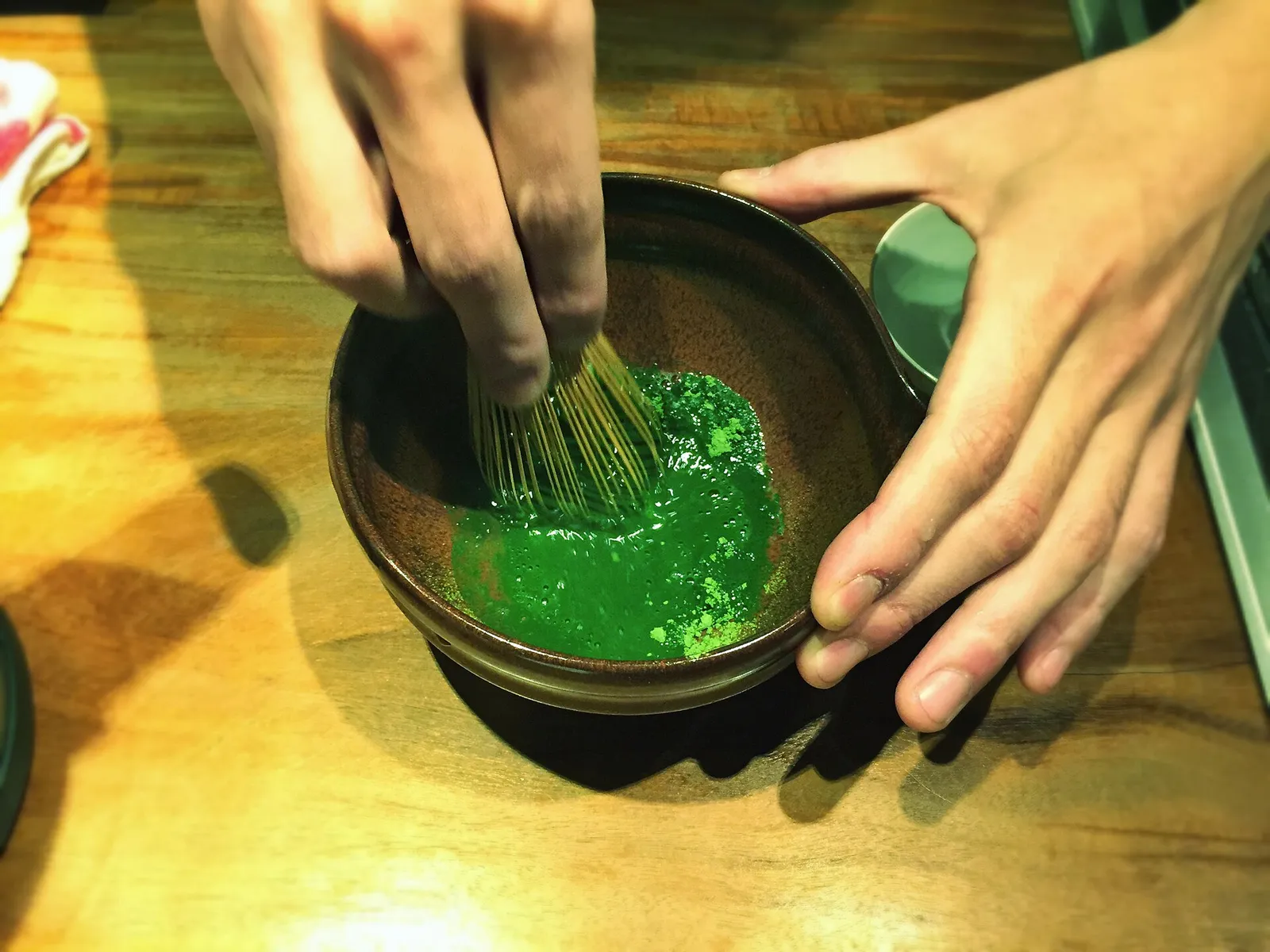
The strength of the tea depends on the style. The same glossary says that hot water is added to one and a half tea scoops of powdered tea and whisked to make usucha, or thin tea. For koicha, or thick tea, three tea scoops of powdered tea per person are measured out.
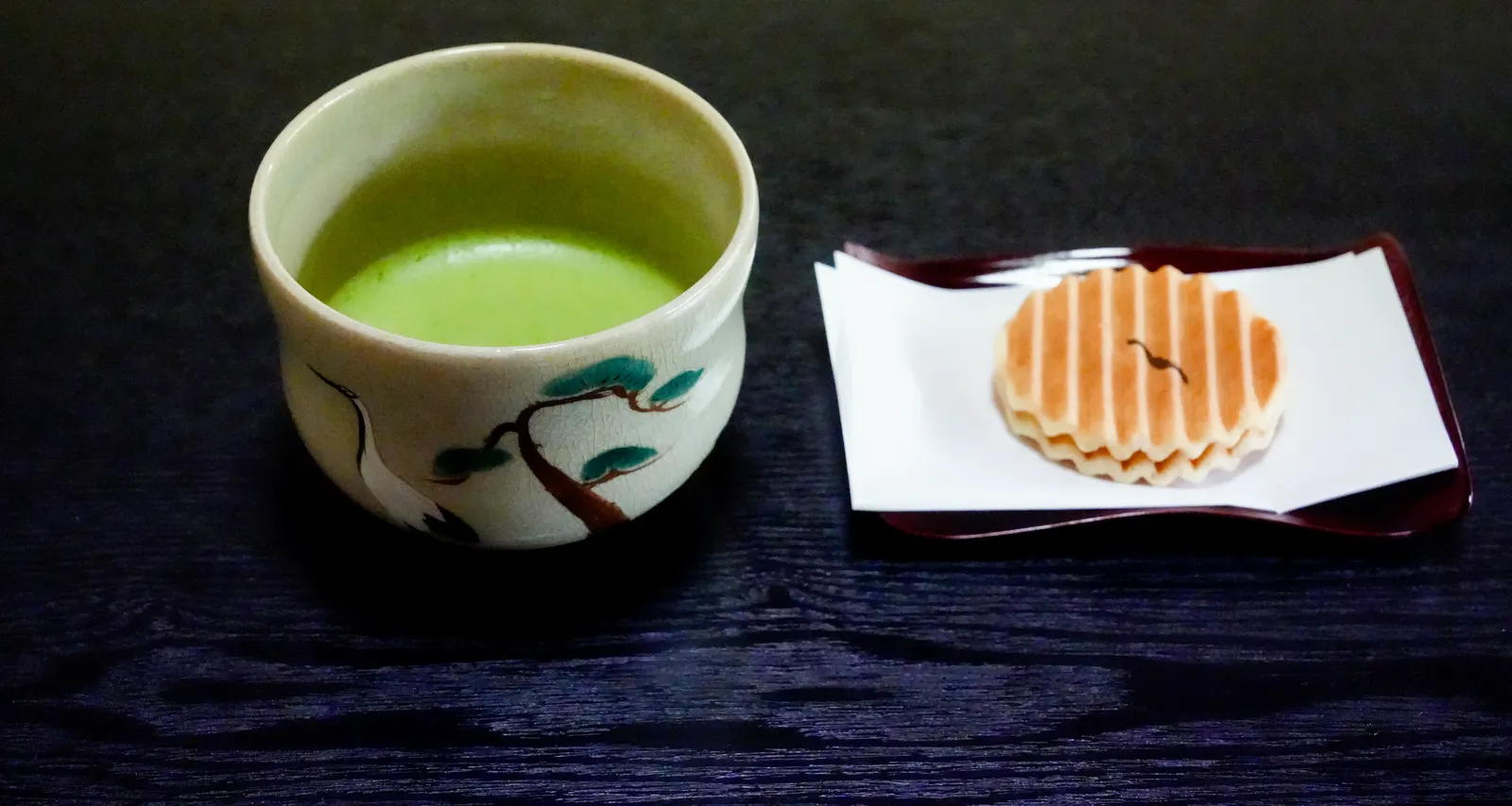
Sweets belong to the bowl too. Kyoto's official tourism site says that kyogashi developed along with chanoyu, and that namagashi sweets are usually served with koicha in the more formal sessions of tea gatherings. Omotesenke also explains that a chaji pairs a kaiseki meal with thick and thin tea for a few guests, while a chakai offers thin tea and sweets.
The tea itself has a history tied to the ceremony. Japan's agriculture ministry says that in the 16th century, as the tea ceremony flourished, shade growing that holds down astringency was developed in response to tea masters such as Sen no Rikyu, and deep green, umami-rich matcha was born. Our guide to matcha versus green tea explains how growing and taste differ.
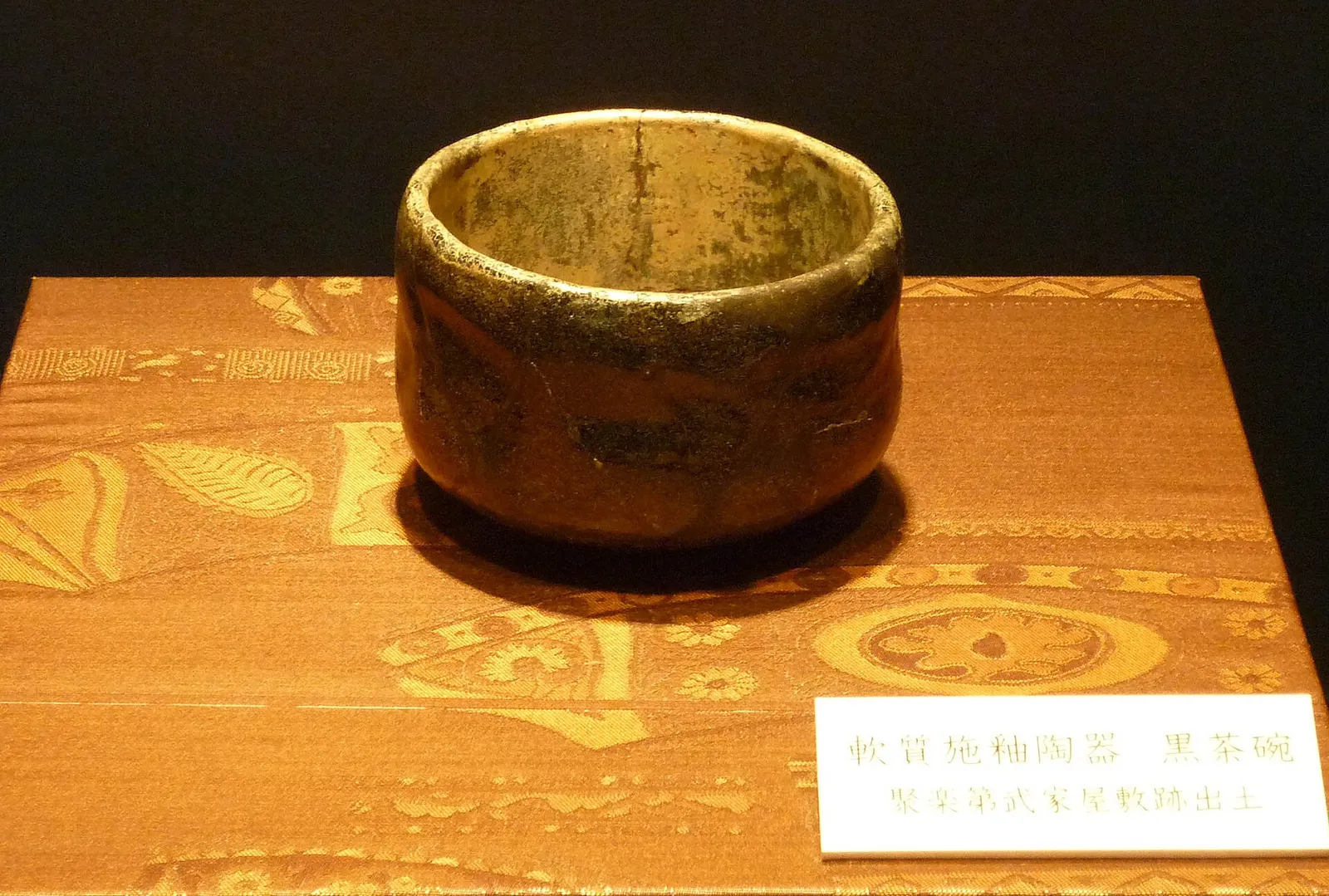
When a bowl is handed to you, take a moment to look at it. Tea bowls come in many shapes and colors, like the black tea bowl pictured here, and admiring one is a natural way to slow down.
Where to Meet Zen and Tea in Kyoto
Kyoto offers both in one city, often in different places. Tofuku-ji's official site calls it the head temple of the Tofuku-ji branch of the Rinzai school. Its history page adds that after rebuilding, the temple took the form of a fully Zen temple. The same page says it was built by regent Kujo Michiie over 19 years, from 1236 to 1255. For its gardens and visiting details, see our Tofuku-ji temple guide.
If you would like to try meditation itself, Japan's national tourism organization says that reservations are usually needed to join a zazen lesson, and that a typical session teaches the basics of meditation. It describes zazen as a sitting posture in a quiet, tidy place, with the breath flowing quietly and naturally. Our Zen Buddhism basics guide explains the ideas behind it, and our guide to choosing a tea ceremony in Kyoto helps you compare tea experiences.
Habits to Bring With You
Move slowly, speak softly, and let your host set the pace. In a temple hall or a tea room, a calm manner and a willingness to ask questions are enough. You may hear a word such as kaishi in a tea room: Omotesenke's glossary describes it as a pack of paper that guests always carry inside their kimonos in the tea room. For a fuller list of habits, read our guide to tea ceremony etiquette.
Add a Quiet Temple Stop to Your Day
Add a quiet temple stop to your day. We operate Maiko & Zen Kyoto, a 90-minute session at Ikka-in, a sub-temple of Tofuku-ji, where a maiko dances in the same temple hall with no stage between you, then takes time for your questions and photos. See current session times and prices.
To see how tea fits into the wider world of maiko, read about tea and maiko in Kyoto.
Frequently asked questions
What does Zen have to do with the tea ceremony?
Both are learned through practice, and Kyoto lets you meet them in the same city. This guide follows the link from the plain look of a tea house to the tools used to make tea.
Do I need to know Zen before I join a tea gathering?
No. Your host explains what to do, so a calm manner and a willingness to ask are enough.
What is the difference between a chaji and a chakai?
A chaji pairs a kaiseki meal with thick and thin tea for a few guests, while a chakai offers thin tea and sweets.
Can I try zazen in Kyoto?
Reservations are usually needed to join a zazen lesson, according to Japan's national tourism organization. Check with the temple before you go.
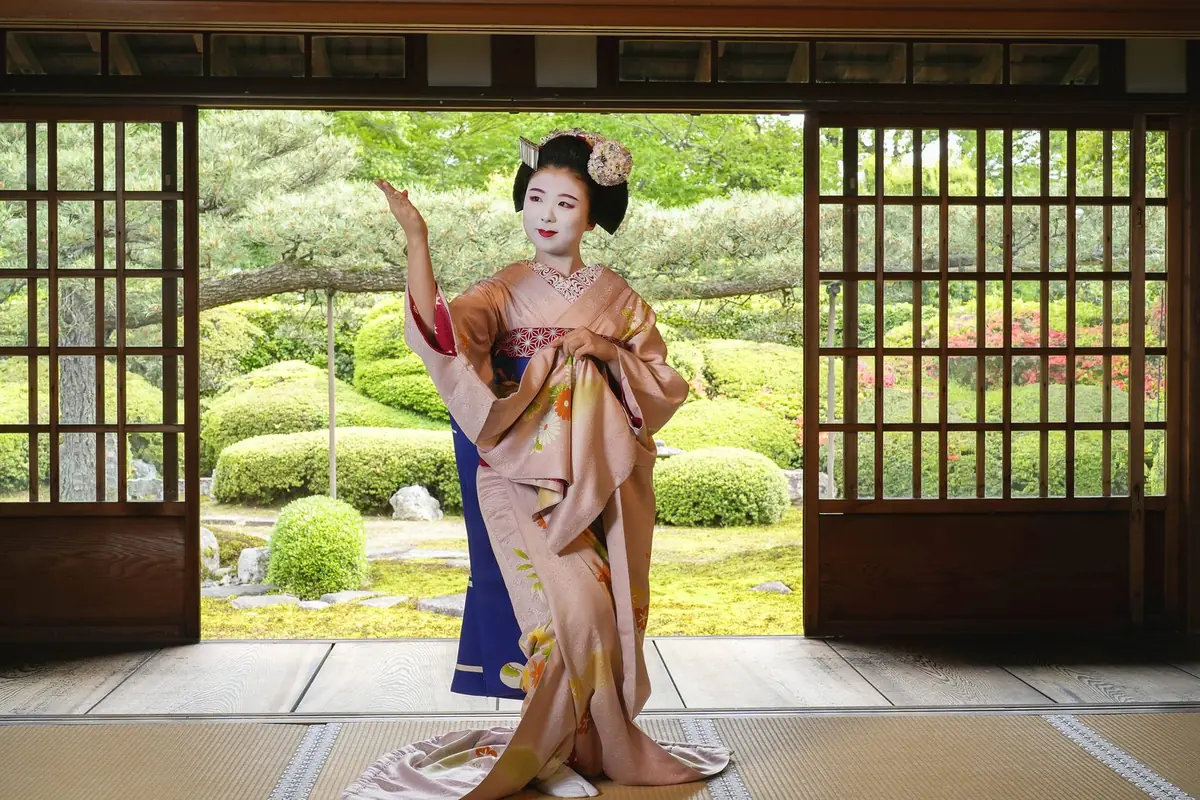
A maiko dance session at a Zen temple near Kyoto Station
Rake a Zen garden, watch two maiko dances and share green tea at Ikka-in, a temple rarely open to the public, one stop from Kyoto Station. Sessions start at 2:00 pm and 3:30 pm.
See the 2:00 pm and 3:30 pm sessions →Sources
- An Introduction to Chado — Urasenke
- Konnichian — Urasenke
- Chanoyu Glossary — Omotesenke
- Zen Meditation — Japan National Tourism Organization
- Tofuku-ji — Tofuku-ji