Tea Ceremony in Kyoto: How to Choose the Right Experience
We operate the Maiko & Zen Kyoto experience mentioned in this guide.
Kyoto is a natural place to try a tea ceremony, but "tea ceremony" covers everything from a short session in a tea room to a formal gathering with a full meal. This guide explains what the ceremony is, the formats you can book, what they cost, and how to choose the one that fits your trip.
What Is a Japanese Tea Ceremony?
The tea ceremony, called chado or chanoyu ("the way of tea"), is a practice in which a host prepares matcha for guests and they share the time together. According to Urasenke, it was perfected by Sen Rikyu (1522–1591), and its spirit is summed up in four principles: harmony, respect, purity, and tranquility. Three major schools carry on his tradition: Omotesenke, Urasenke, and Mushakojisenke.
Urasenke describes the host's care and the guest's gratitude as two halves of one encounter, in which both understand that the time they share will never come again.
Chakai vs. Chaji
- Chaji: a formal gathering for a few guests that includes a kaiseki meal and both thick and thin tea.
- Chakai: in today's usage, a gathering with thin tea (sometimes thick tea) and sweets.
Omotesenke notes that both words were long used for the same thing, and that "chaji" is now used for the formal event with a meal to avoid confusion. Most tea experiences offered to travelers are closer to a chakai: shorter, with a sweet and a bowl of thin matcha.
Thick Tea and Thin Tea
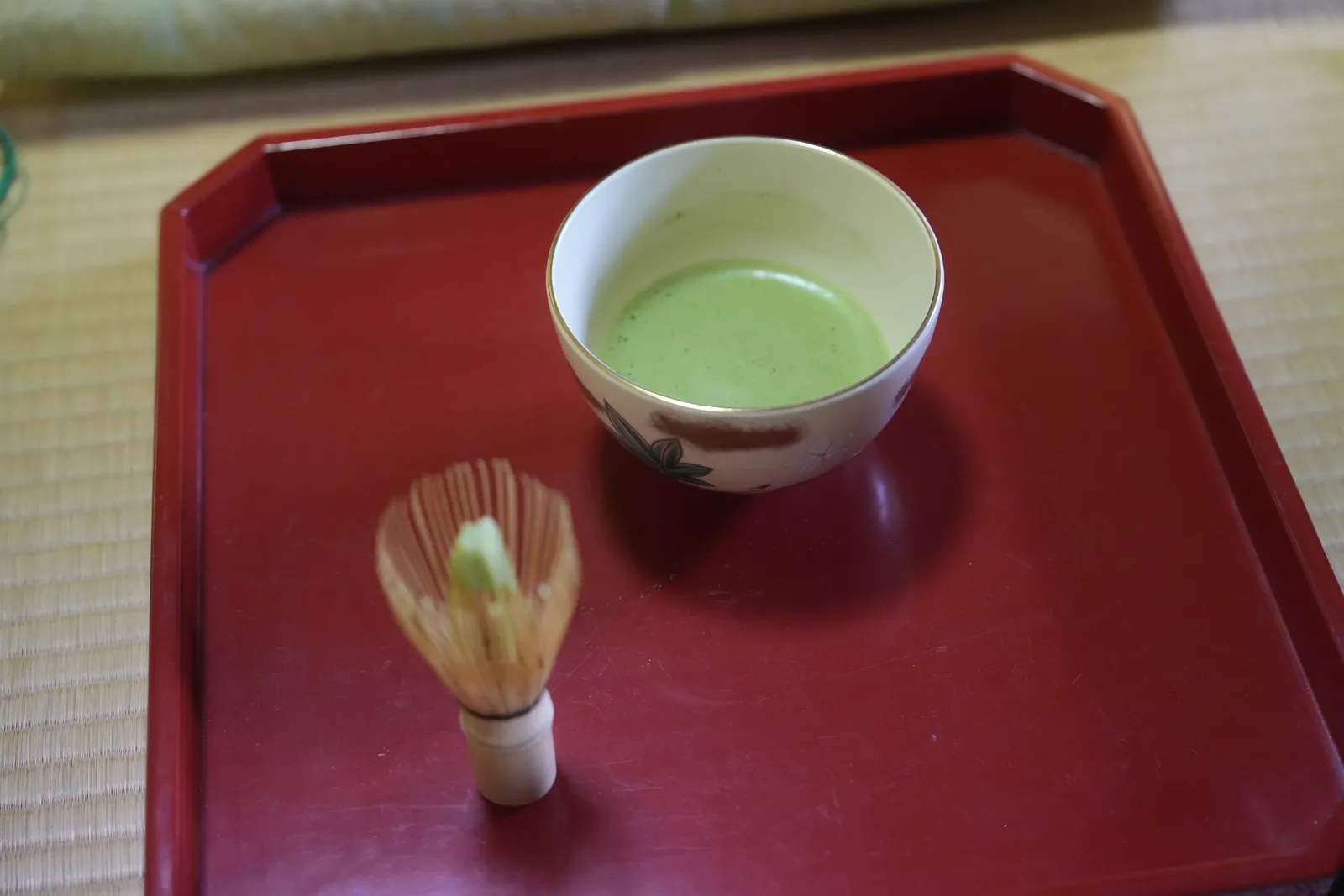
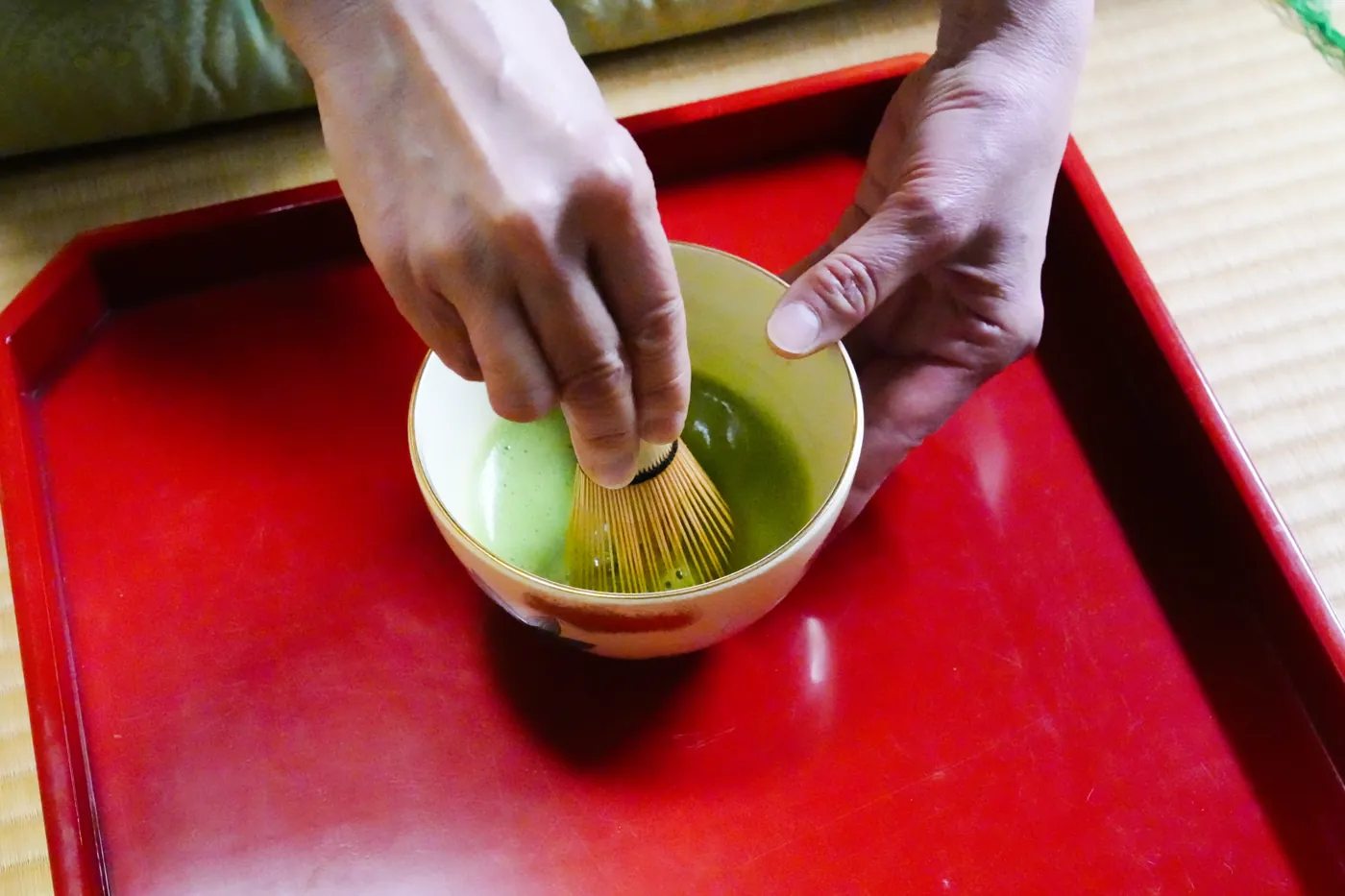
Two styles of matcha appear at a tea gathering: thick tea (koicha) and thin tea (usucha). According to Omotesenke, a formal chaji serves both, while a chakai usually serves thin tea, sometimes with thick tea as well. The tea you are served in a short visitor session is almost always thin tea.
What to Notice in the Tea Room
Part of the pleasure is noticing how the host has prepared the room for the season and the guests. Among the teachings attributed to Rikyu that Urasenke quotes:
- Arrange the flowers as though they were in the field.
- Provide a sense of coolness in summer and warmth in winter.
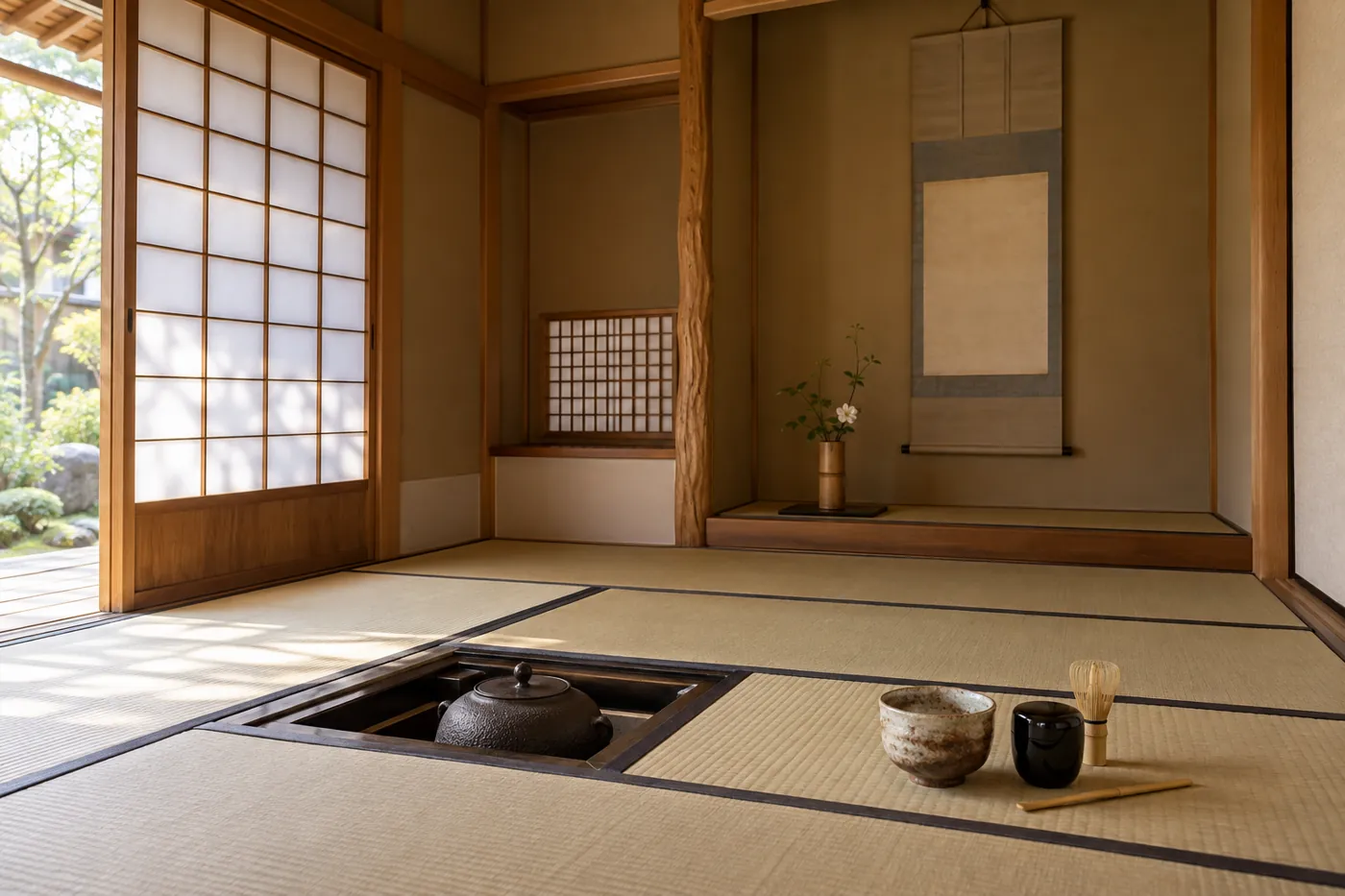
The tea room itself is deliberately simple. Urasenke describes how Rikyu's style used plain earthen walls, bamboo lattice, and a narrow alcove (toko) framed in natural wood, where a scroll and flowers are displayed.
Tea Experiences in Kyoto Compared
| Experience | Format | Length | Price (as of Oct 2026) | Kimono | Good for |
|---|---|---|---|---|---|
| Camellia (Flower Teahouse, Higashiyama) | Shared session in a tea room | 45 minutes | 4,000 yen; 5,000 yen in March, April, October, November, and New Year (ages 6+) | All-day rental, 6,000 yen extra | First-timers staying in Higashiyama |
| Camellia (private sessions) | Private session | Varies | From 8,000 yen per person (Flower Teahouse); from 15,000 yen (Garden Teahouse) | Flower Teahouse only | Couples and families who want the room to themselves |
| Tea Ceremony Ju-An (Jotokuji Temple) | Group session in a temple tea room | 70 minutes | 4,500 yen (children 3,000 yen) | Wear your own if you like | Travelers who want a temple setting |
| Gion Corner (tea seat) | Tea as part of a show of seven arts | About 1 hour | 6,050 yen (general seat 5,500 yen) | No | Combining tea with a performance |
| Miyako Odori (tea ticket, April) | Tea before a full geisha dance production | About 1 hour plus tea | First-class seat with tea 8,000 yen (2027) | No | Spring visitors who want tea and dance |
Prices and formats come from each venue's official site and can change; check before you book.
How to Choose
- You want to understand the ceremony itself: book a shared tea room session; it is an affordable way to see the preparation up close.
- You want privacy or are traveling as a family: a session for just your group lets the host adapt to your group.
- You want a temple setting: look for tea served in a temple tea room.
- You want photos in kimono: choose a venue that offers rental, and allow extra time for dressing.
- You want tea and a performance in one evening: a Gion Corner tea seat, or a dance ticket with tea in spring.
- You mainly want to see a maiko: read maiko tea ceremony in Kyoto, which explains what each format with maiko includes.
Shared or Private?
- Shared sessions are an affordable option and suit solo travelers and couples who are happy to sit with other guests.
- Private sessions cost more but let the host adapt the pace and explanations to your group, which helps with children or guests who have questions.
What to Wear
There is usually no formal dress code for a visitor session, but you will sit on tatami and take off your shoes. Wear clean socks, choose shoes that are easy to slip on and off, and avoid tight clothing if you will sit on the floor. If you want to wear a kimono, book a session that includes rental and allow extra time for dressing.
Seating and Accessibility
Tea rooms traditionally have tatami floors, and guests sit on their knees. If kneeling is difficult, ask the venue before booking whether chairs or low stools are available. Some tea rooms have steps or narrow entrances, so ask about access if you use a wheelchair.
Busy Seasons and Cancellations
Spring and autumn are the busiest times in Kyoto; Camellia, for example, charges a higher price in March, April, October, November, and the New Year period. Book early for those months. Cancellation rules differ by venue and are often stricter when you book the room for your group alone, so read the policy before you pay.
Before You Book
- Format: shared or private, and how many guests.
- Length: most visitor sessions are under an hour and a half; a chaji is much longer.
- What is included: sweets, matcha, kimono, photos.
- Age limits and language: some venues set a minimum age; check whether the session is in English.
- Seating: tea rooms usually have tatami floors; ask about chairs if kneeling is difficult.
- Busy seasons: spring and autumn bring higher prices at some venues and earlier sellouts.
Watching a Maiko Dance Over Tea
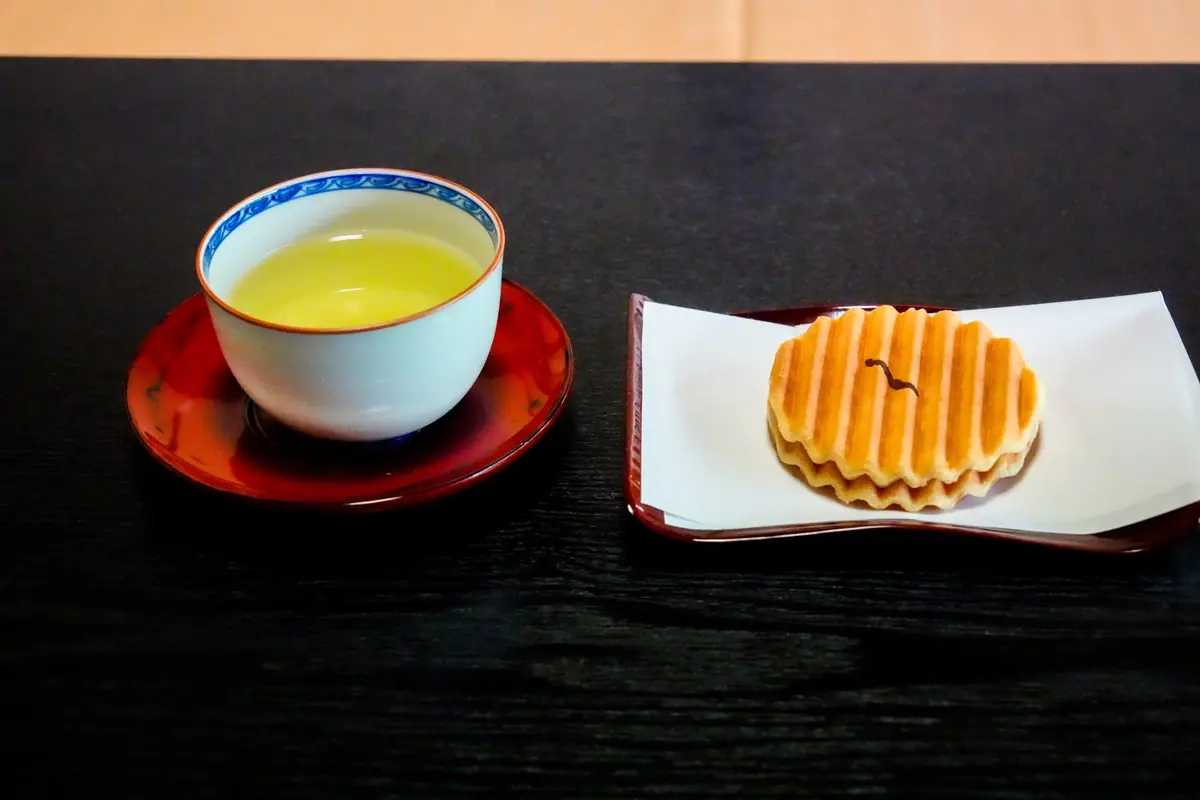
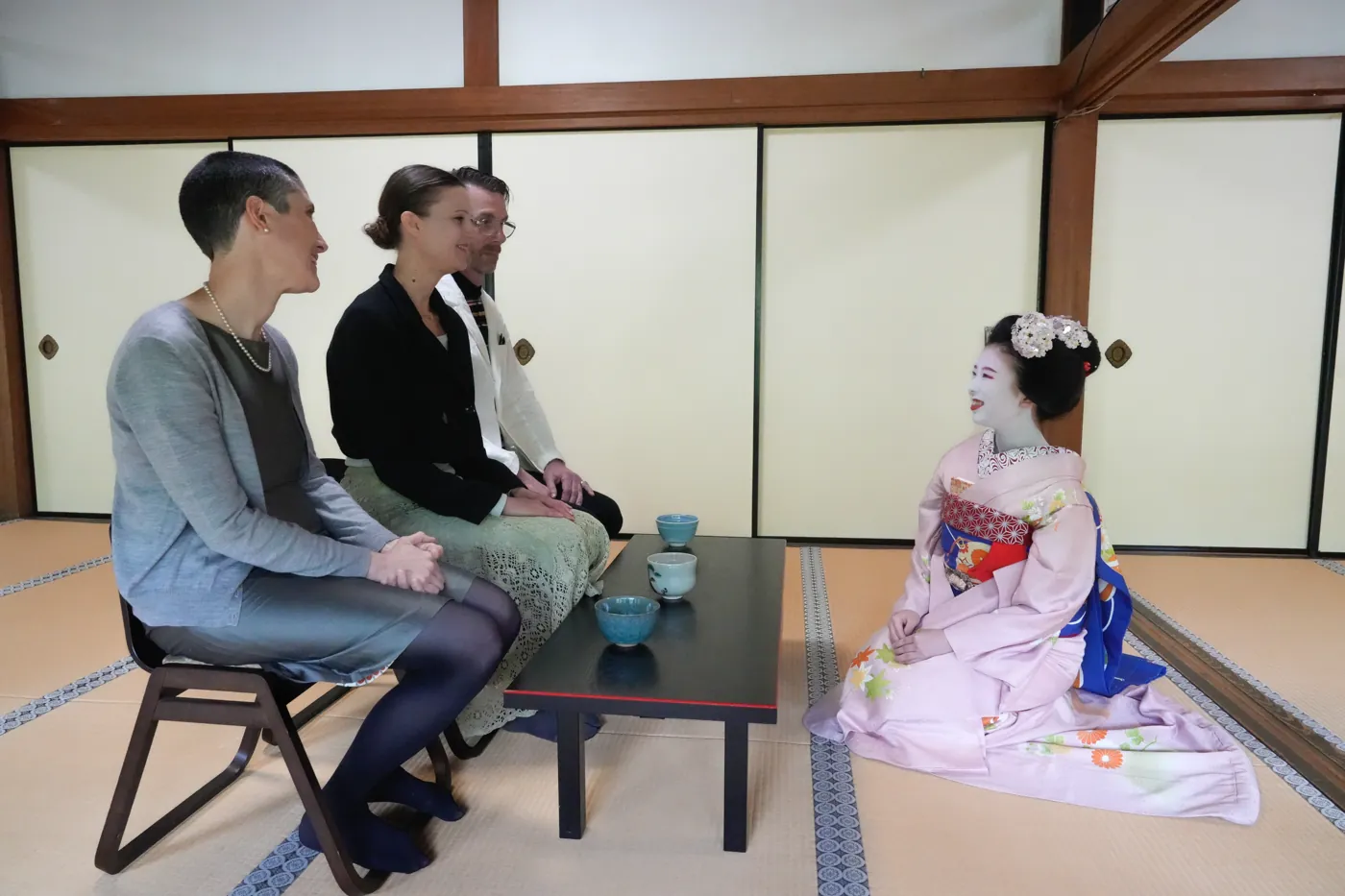
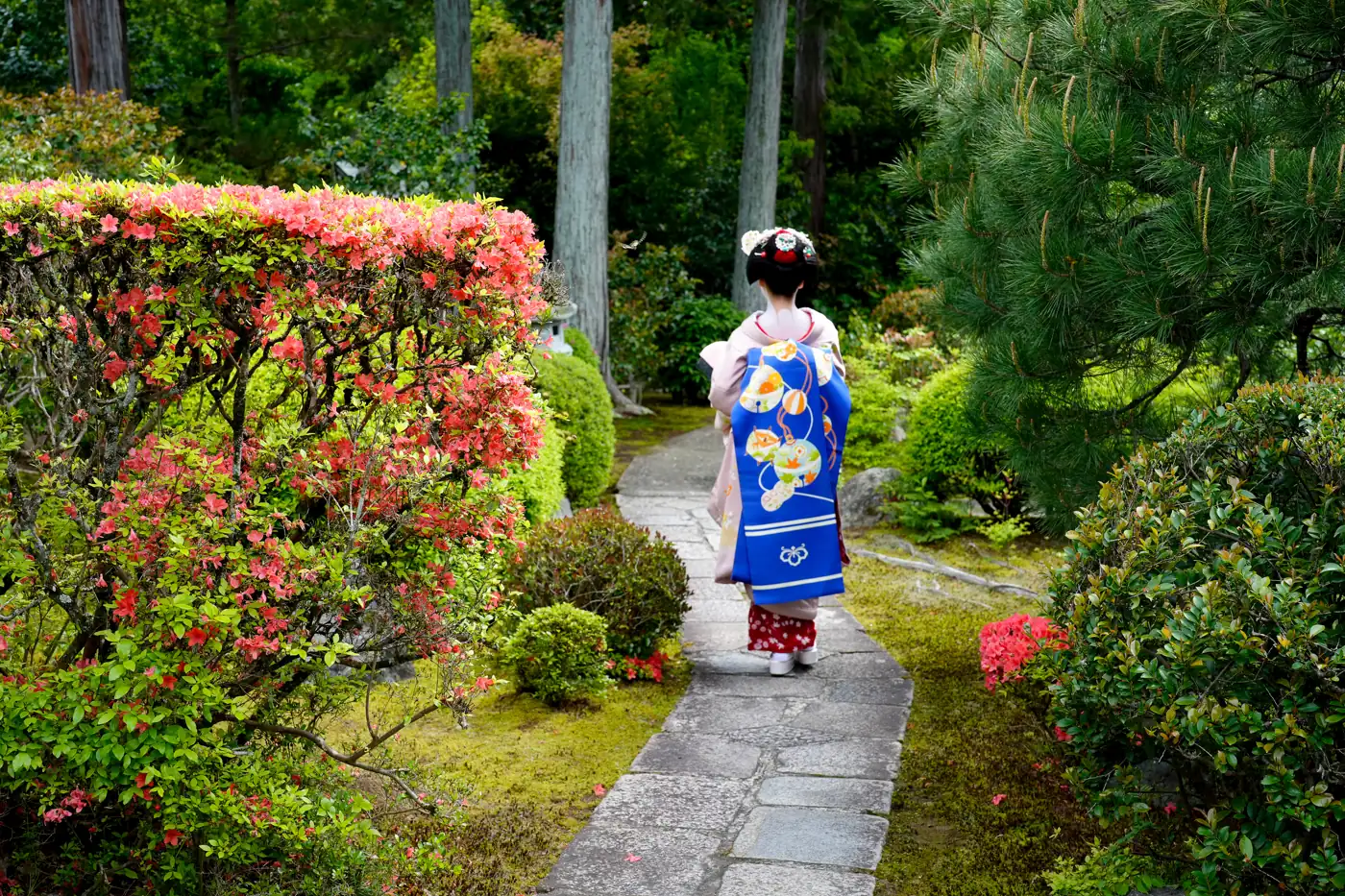
We operate Maiko & Zen Kyoto, a 90-minute session at Ikka-in, a sub-temple of Tofuku-ji founded in 1382 and rarely open to the public. Unlike a theater program, where you watch from a seat facing a stage, the maiko dances in the same temple hall as you, with no stage between you. An English-speaking guide introduces the temple and maiko culture, you create your own patterns in the gravel of the Zen garden with a wooden rake, and you watch two dances while enjoying fragrant sencha green tea and a delicate Japanese sweet, then talk with the maiko, ask her questions, and take photos together.
What sets it apart
- No stage between you and the maiko: she dances in the same temple hall, at close range.
- Time to talk: the session ends with time to ask her questions and take photos together.
- A quiet temple: no general visitors during the session; you share it with a small group of fellow travelers.
- More than a show: an English-speaking guide and a hands-on Zen garden activity are included.
- Easy to reach: near Tofukuji Station, one stop from Kyoto Station on the JR Nara Line, with afternoon start times that fit a sightseeing day.
Is it right for you? If a small group, time to talk with a maiko, English support, and photos matter to you, the session fits easily into a Kyoto sightseeing day. Tea is a relaxed accompaniment rather than a tea ceremony, so if learning tea etiquette is your goal, a tea room session is a better fit.
Sessions start at 2:00 pm and 3:30 pm and cost 23,000 yen per person as of October 2026 (children 6 and older pay the same price; children under 6 cannot join); prices may change by season, so check current session times and prices, or compare formats in our guide to maiko experiences in Kyoto.
Frequently asked questions
What is the difference between a chakai and a chaji?
According to Omotesenke, a chaji is a formal gathering for a few guests that includes a kaiseki meal and both thick and thin tea, while a chakai today usually means a gathering with thin tea and sweets.
How long is a tea ceremony experience in Kyoto?
Sessions for visitors are usually short; the shared sessions we checked last about 45 to 70 minutes. A formal chaji with a meal takes much longer.
How much does a tea ceremony in Kyoto cost?
As of October 2026, shared sessions at the tea rooms we checked cost about 4,000 to 5,000 yen per adult, and sessions reserved for your own group start at about 8,000 yen per person. Gion Corner's seat with tea costs 6,050 yen.
Can I wear a kimono to a tea ceremony?
Some tea experiences offer kimono rental for an extra fee; Camellia, for example, offers an all-day rental for 6,000 yen with its Flower Teahouse sessions.
Can children join?
It depends on the venue. Camellia's shared sessions are for ages 6 and up, and Tea Ceremony Ju-An lists a separate children's price.
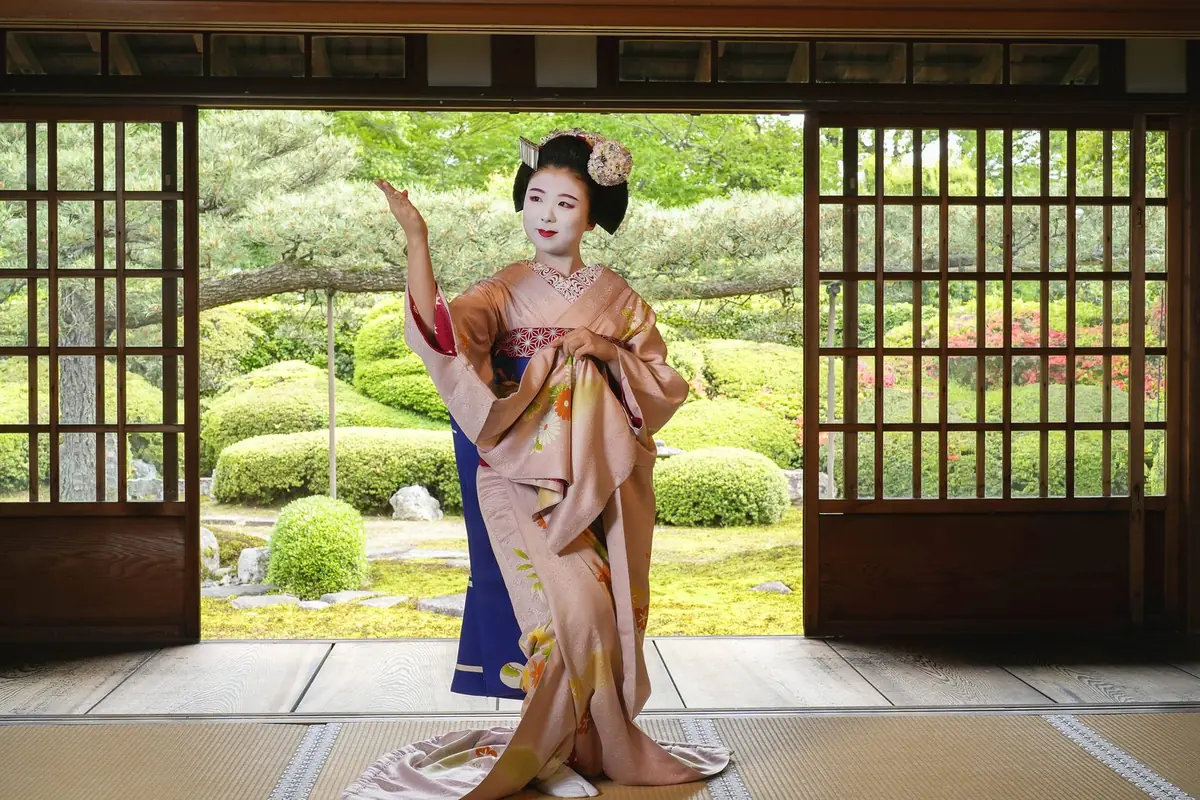
A maiko dance session at a Zen temple near Kyoto Station
Rake a Zen garden, watch two maiko dances and share green tea at Ikka-in, a temple rarely open to the public, one stop from Kyoto Station. Sessions start at 2:00 pm and 3:30 pm.
See the 2:00 pm and 3:30 pm sessions →Sources
- An Introduction to Chado — Urasenke
- About tea gatherings — Omotesenke Fushin'an
- Camellia Tea Ceremony — Camellia
- Tea Ceremony Ju-An — Tea Ceremony Ju-An
- Gion Corner: performances and tickets — Kyoto Traditional Musical Art Foundation
- Miyako Odori (English) — Gion Kobu Kaburenjo