Japanese Tea Room Guide: What to Look For Before You Step Inside
We operate the Maiko & Zen Kyoto experience mentioned in this guide.
A Japanese tea room can look plain at first glance: a small room of woven floor mats, a recessed alcove, and a low door. Each of those details has a purpose, and knowing a few of them turns a quiet room into something you can read. This guide walks through the parts of a tea room and the garden path that leads to it, drawing on what Urasenke, one of the main tea schools, shares on its own website. It is written for travelers who may step into a tea room in Kyoto and want to understand what they are looking at before they sit down.
What Makes a Tea Room Different
A tea room, called a chashitsu in Japanese, is a space designed for one purpose: preparing and sharing a bowl of tea with guests. Everything in it is arranged around that moment, from the height of the door to the choice of what hangs on the wall. Because of this, a tea room feels different from an ordinary Japanese-style room, even when the two share the same floor mats and sliding doors.
Three parts carry much of the meaning: the size and shape of the room, the garden path and entrance that lead to it, and the alcove where a scroll and flowers are displayed. The sections below take them in that order. Details differ from one tea school, one building, and one host to the next, so treat this page as a map and let your host explain the rest on the day.
Size and Shape: Reading the Tatami Count
Tea rooms are described by the number of tatami mats on the floor, and the count gives a quick sense of how a space feels. A tiny room brings guests and host together around one hearth, while a larger hall gives a gathering more space. The hearth is the sunken space in the floor where the water is heated, and its position is one more choice made when a room is planned.
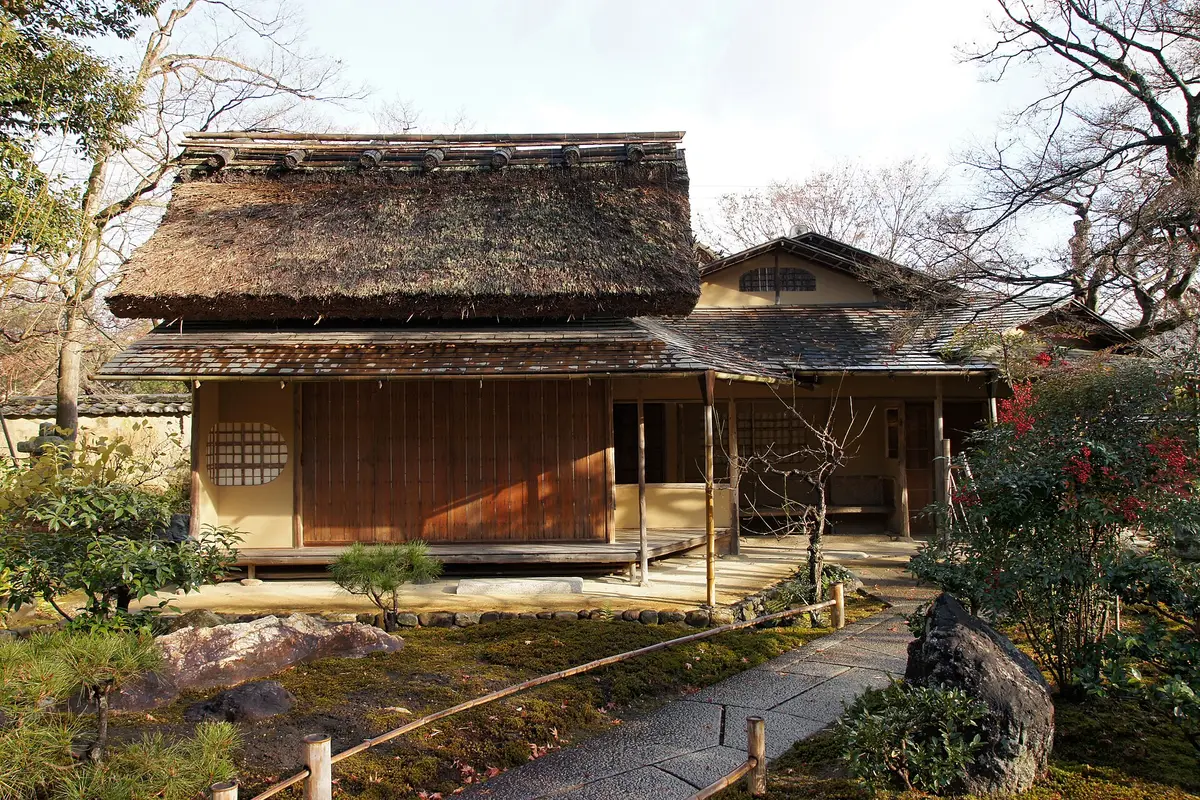
At the small end of the range, Urasenke describes the Konnichian tea room as a tiny one-tatami-plus-daime room. It also says the room represents the epitome of the thatched-hut style formulated by Rikyu. On the same website, the Kan'untei room is described as having eight tatami mats with a shoin window-shelf and an orthodox toko alcove. Put side by side, the two rooms show how wide the range can be, and why the first thing a host may mention about a room is its mat count.
The Roji and the Low Entrance
Before guests reach the room itself, they walk through the roji, the garden path that leads to it. The roji is a short passage between the outside world and the tea room, and it gives guests a moment to slow down. Urasenke notes that the roji was skillfully laid out by Sotan with Konnichian and Yuin as the focal points. That detail shows how the garden was planned around the rooms it leads to, instead of being added afterward as decoration.
The door matters just as much as the path. In its introduction to chado, Urasenke notes that the tea hut was designed with an entrance through which guests had to crawl regardless of rank. This low entrance, called nijiriguchi in Japanese, treats every guest in the same way, whether the visitor is a host's friend or a person of high standing. If you meet one in person, take a moment to look at how small it is before you duck through.
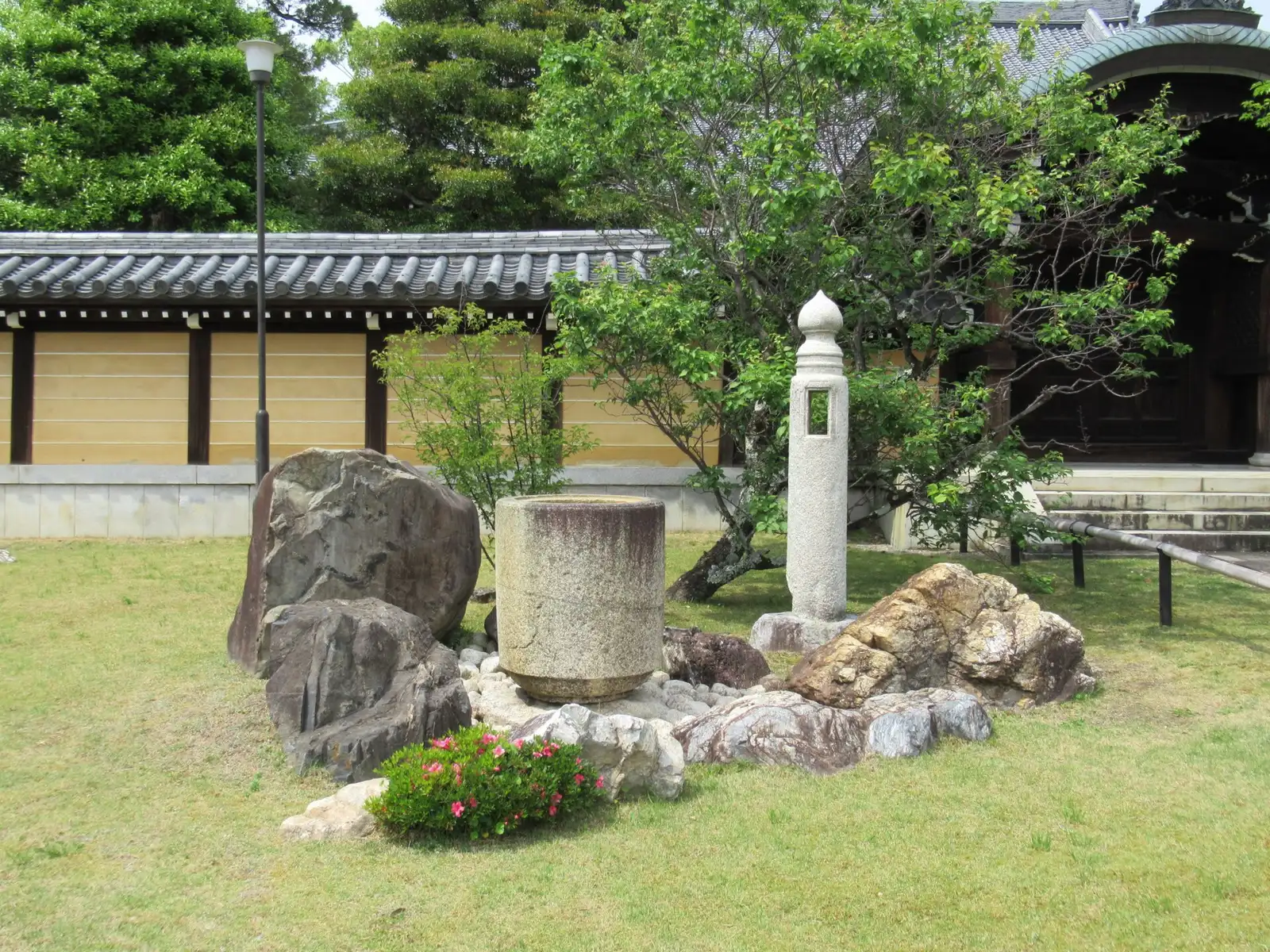
Along a roji you may also see a stone water basin, called a tsukubai. Pause there for a moment before you go on.
The Alcove and the Flowers
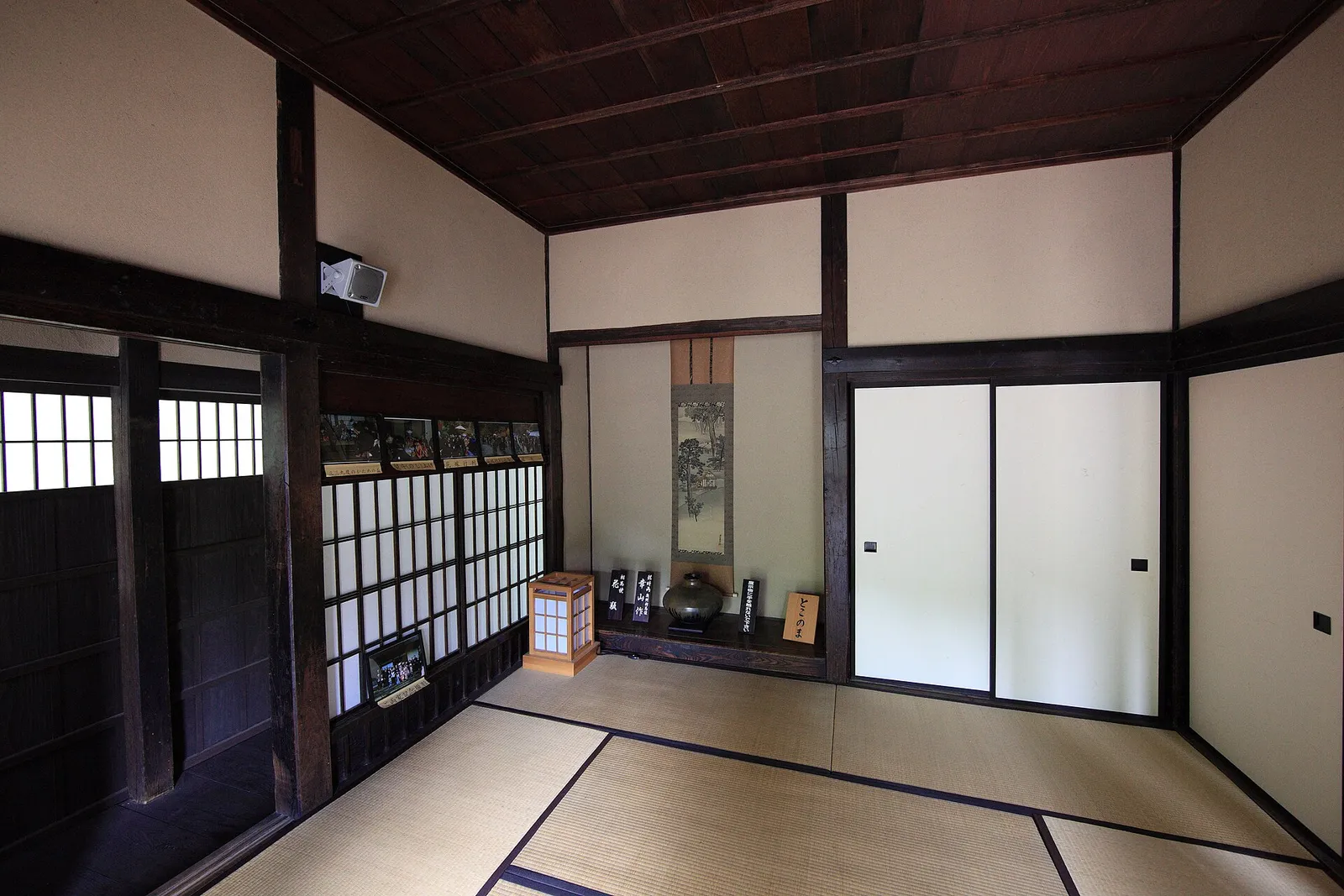
Inside, your eye is drawn to the toko, or tokonoma, the alcove built into one wall. It is the place where the host displays a hanging scroll and flowers chosen for the day, and it deserves a slow look. A scroll often carries a short line of calligraphy, and the flowers beside it are chosen to match the mood of the room.
Tea flowers, called chabana, follow a simple guideline from Urasenke's introduction to chado: arrange the flowers as though they were in the field. The idea is a natural look, not a showy one, with a few stems placed so that they feel at home in the room. If you would like to see how a Zen temple handles its gardens, our guide to Kyoto's Zen gardens is a good companion to this page.
A Short Glossary to Take With You
Tea rooms have a small vocabulary of their own. Keep this list in mind and your conversation with the host becomes easier to follow:
- Chashitsu: the tea room itself.
- Tatami: the woven floor mats that give a room its measure.
- Roji: the garden path to the tea room.
- Nijiriguchi: the low entrance that guests pass through.
- Toko: the alcove for a scroll and flowers.
- Chabana: flowers arranged for tea.
Good Habits as a Guest
Your host will guide you, but a few habits help in any tea room. Move slowly, speak softly, and keep bags and cameras out of the way. Admire the alcove from where you are seated instead of reaching toward it. If you are unsure about something, ask your host in a low voice, since hosts are glad to explain what they have prepared. For a fuller list of habits, read our guide to tea ceremony etiquette.
Seeing a Tea Room Versus Joining a Tea Experience
Some visitors only look at a tea room, and others sit down for a bowl of tea. Looking lets you study the space at your own pace, while joining a tea experience adds the moment that the room was designed for. If you choose an experience, your host explains how it goes, so you do not need to prepare anything beforehand. It helps to ask which style of tea is being served and whether you may look closely at the alcove. To compare your options, see our guide to choosing a tea ceremony in Kyoto.
Add a Quiet Temple Stop to Your Day
Add a quiet temple stop to your day. We operate Maiko & Zen Kyoto, a 90-minute session at Ikka-in, a sub-temple of Tofuku-ji, where a maiko dances in the same temple hall with no stage between you, then takes time for your questions and photos. See current session times and prices.
To see how tea fits into the wider world of maiko, read about tea and maiko in Kyoto.
Frequently asked questions
What makes a Japanese tea room different from an ordinary tatami room?
A tea room is planned around preparing and serving tea, so its size, door, alcove, and hearth are chosen with that purpose in mind. An ordinary tatami room is planned for everyday living.
Why is the door of a tea hut so low?
As Urasenke notes in its introduction to chado, the tea hut was designed with an entrance through which guests had to crawl regardless of rank.
What is a roji?
The roji is the garden path that leads to the tea room. It gives guests a moment to slow down before the tea begins.
Can I take photographs inside a tea room?
Rules differ from one place and one host to the next. Ask your host before you raise a camera, and follow the answer you are given.
Do I need to know the rules of a tea school before I visit?
No. Your host explains what to do, and details differ between schools, so a few calm habits and a willingness to ask are enough.
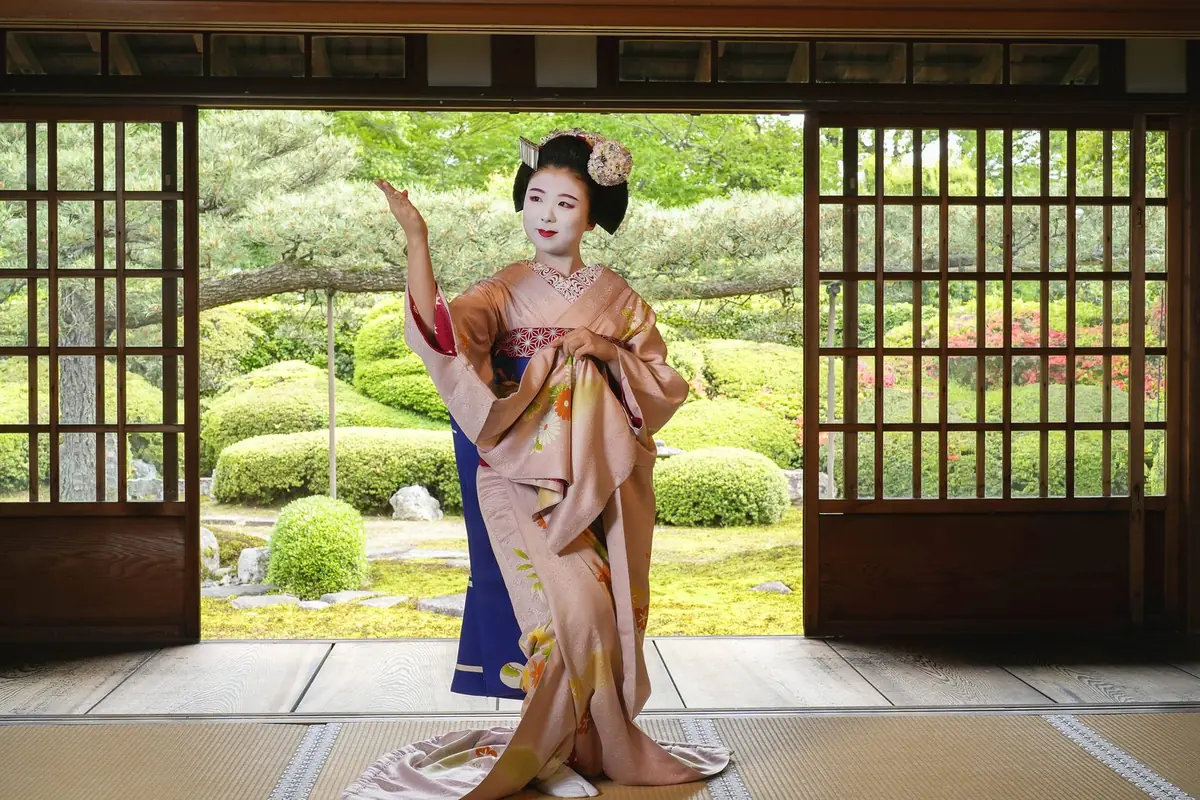
A maiko dance session at a Zen temple near Kyoto Station
Rake a Zen garden, watch two maiko dances and share green tea at Ikka-in, a temple rarely open to the public, one stop from Kyoto Station. Sessions start at 2:00 pm and 3:30 pm.
See the 2:00 pm and 3:30 pm sessions →Sources
- Names of Tea Rooms (Chashitsu) — Urasenke
- Konnichian — Urasenke
- An Introduction to Chado — Urasenke