Matcha vs. Green Tea: How They Differ, from Field to Cup
We operate the Maiko & Zen Kyoto experience mentioned in this guide.
Matcha and green tea are not two separate drinks: matcha is one kind of green tea. What sets it apart is how the leaves are grown, whether they are rolled, and the fact that the tea is ground to a powder and whisked into water. This guide compares matcha with three other green teas: sencha, gyokuro, and hojicha. It draws on descriptions from Japan's Ministry of Agriculture, Forestry and Fisheries (MAFF) and the national food composition tables.
The Short Answer: Matcha Is Ground Tencha
Matcha is made from a tea called tencha. Growers shade the tea plants, pick the new buds, steam them, and dry them without rolling, then remove the stems and veins. Grinding that tencha with a stone mill or similar grinder turns it into matcha.
Sencha, the tea Japan produces most, takes a different path. Its leaves grow in the sun, and after steaming they are rolled and dried into needle shapes.
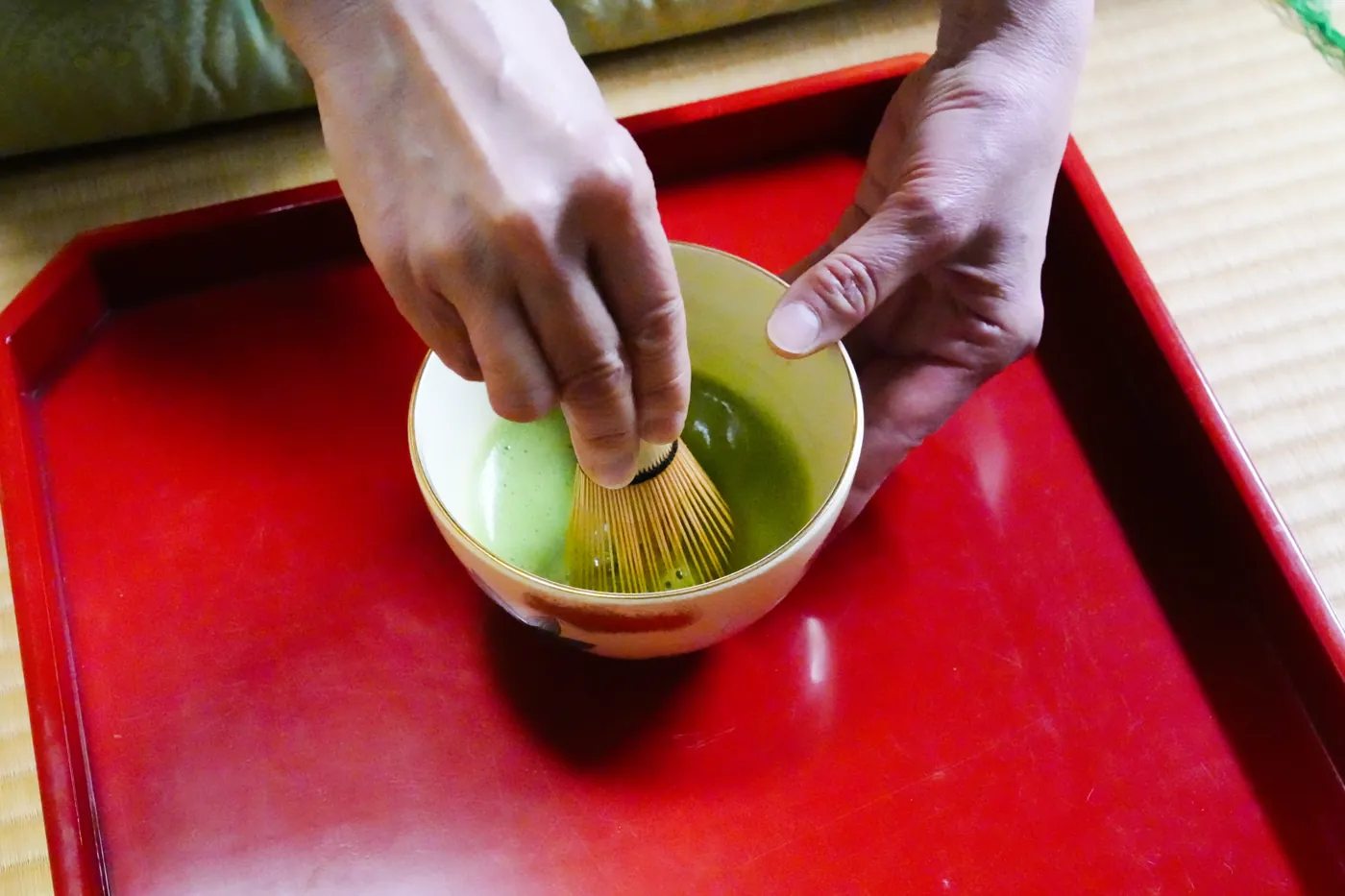
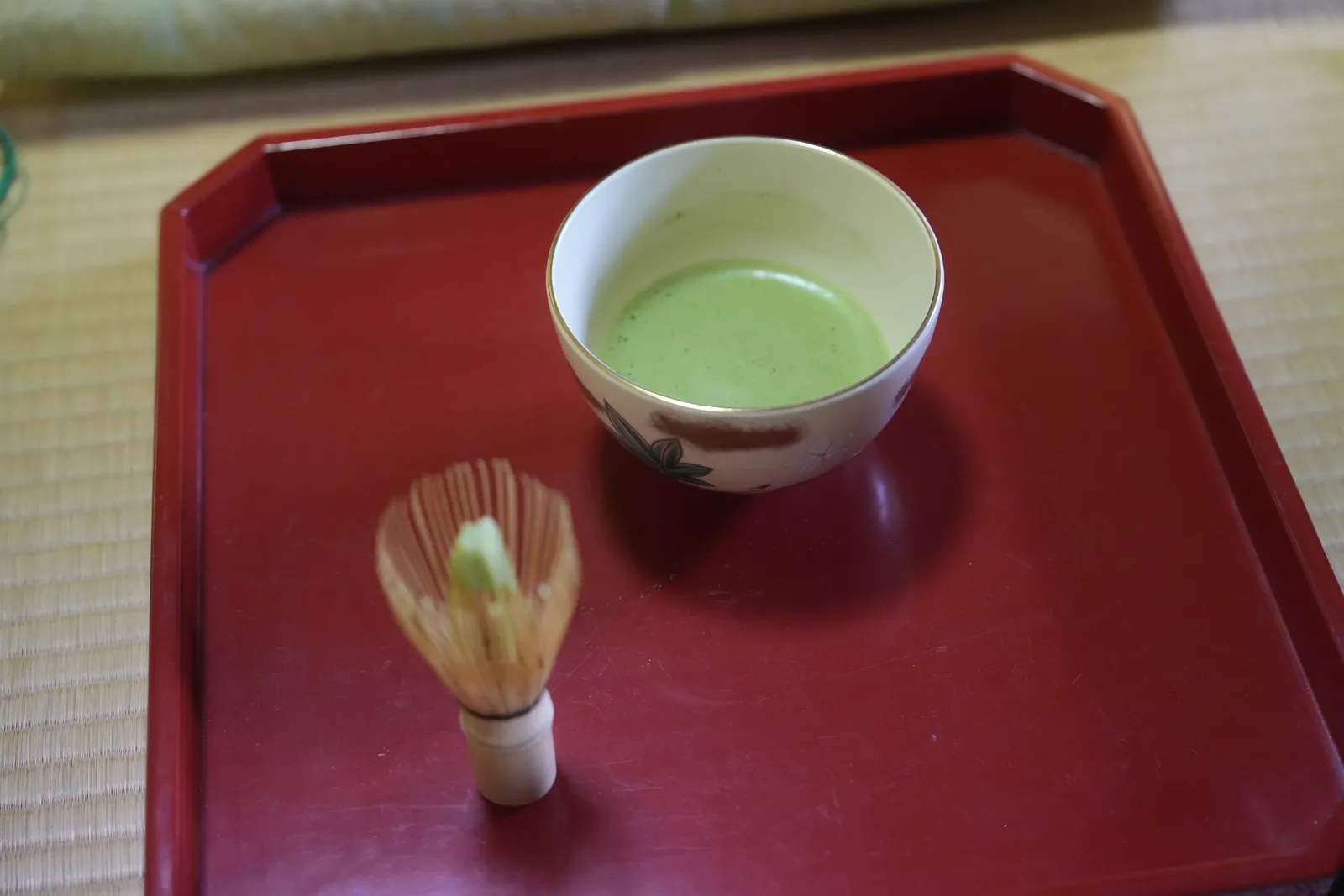
The way you drink them differs too. Matcha powder and hot water are mixed with a bamboo whisk called a chasen. Sencha leaves are steeped in water, and you drink the liquid.
Shade or Sun: How the Leaves Are Grown
Much of the difference starts in the field. MAFF explains that theanine, the compound behind tea's umami, turns into astringent catechins when the leaves are exposed to sunlight.
Shading the plants therefore keeps more umami and less astringency in the leaves. Tencha, gyokuro, and kabusecha all come from shade-grown leaves, while sencha and hojicha come from leaves grown in the sun.
The length of shading varies by tea. According to MAFF, gyokuro plants are covered for about 20 days as the first buds begin to grow, and kabusecha is covered for about a week before picking.
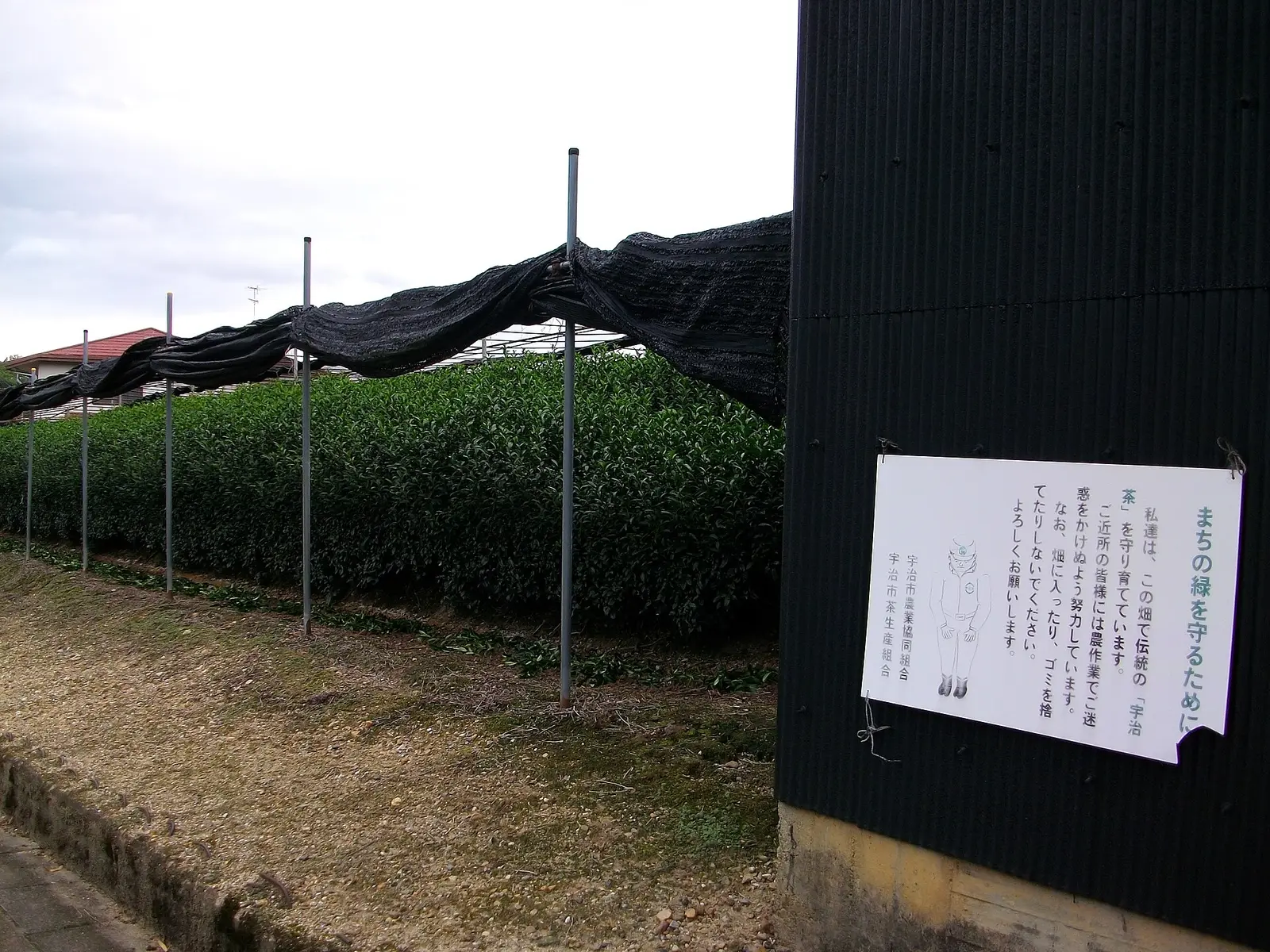
Kyoto Prefecture describes the shaded field: a frame of bamboo or steel pipes is covered with reed screens, straw, mats, or synthetic fabric until the field is dim. The photo below shows the frame and shade cloth at a tea field in Uji.
Rolled or Not: From Leaf to Tea
Sencha, as described above, is rolled after steaming, and gyokuro is rolled too, even though its leaves are shaded. According to MAFF, Nagatani Soen created the hand-rolling method, also called the Uji method, in 1738, and Uji combined shade growing with that hand-rolling to create gyokuro.
Tencha is the one that skips rolling.
Hojicha is a roasted tea. It is made by roasting bancha, sencha, or similar teas, and bancha itself is made from mature, tougher leaves and stems by the same method as sencha.
Taste and Brewing Temperature
MAFF describes each tea's character this way:
- Sencha has a moderate astringency and a fresh green aroma.
- Gyokuro has a strong umami with little bitterness, and brewing it with water at 50-60°C brings out that umami.
- Tencha, the base of matcha, has little astringency, strong umami, and a seaweed-like aroma that comes from the shading.
- Hojicha has a roasted aroma with almost no astringency or bitterness.
If you like a mellow, savory cup, try gyokuro or matcha first. If you prefer a brisk, fresh taste, start with sencha, and for a gentle, toasty tea, choose hojicha.
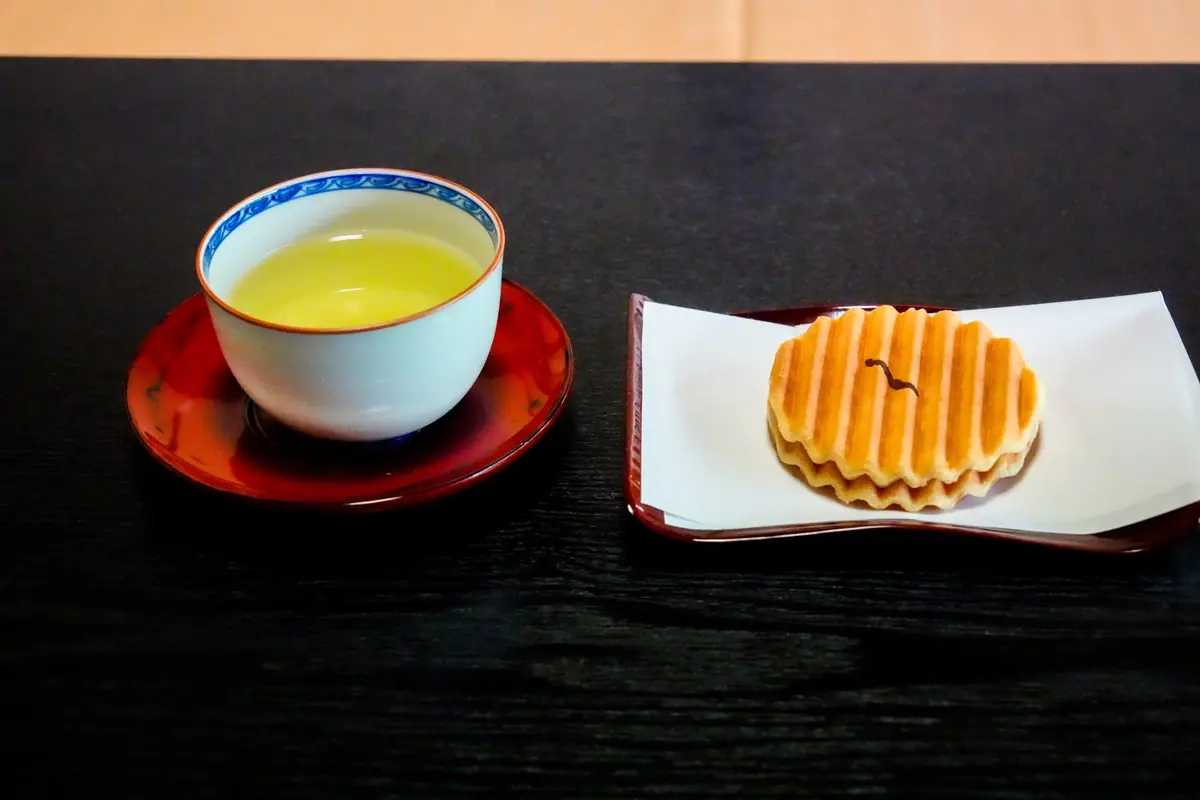
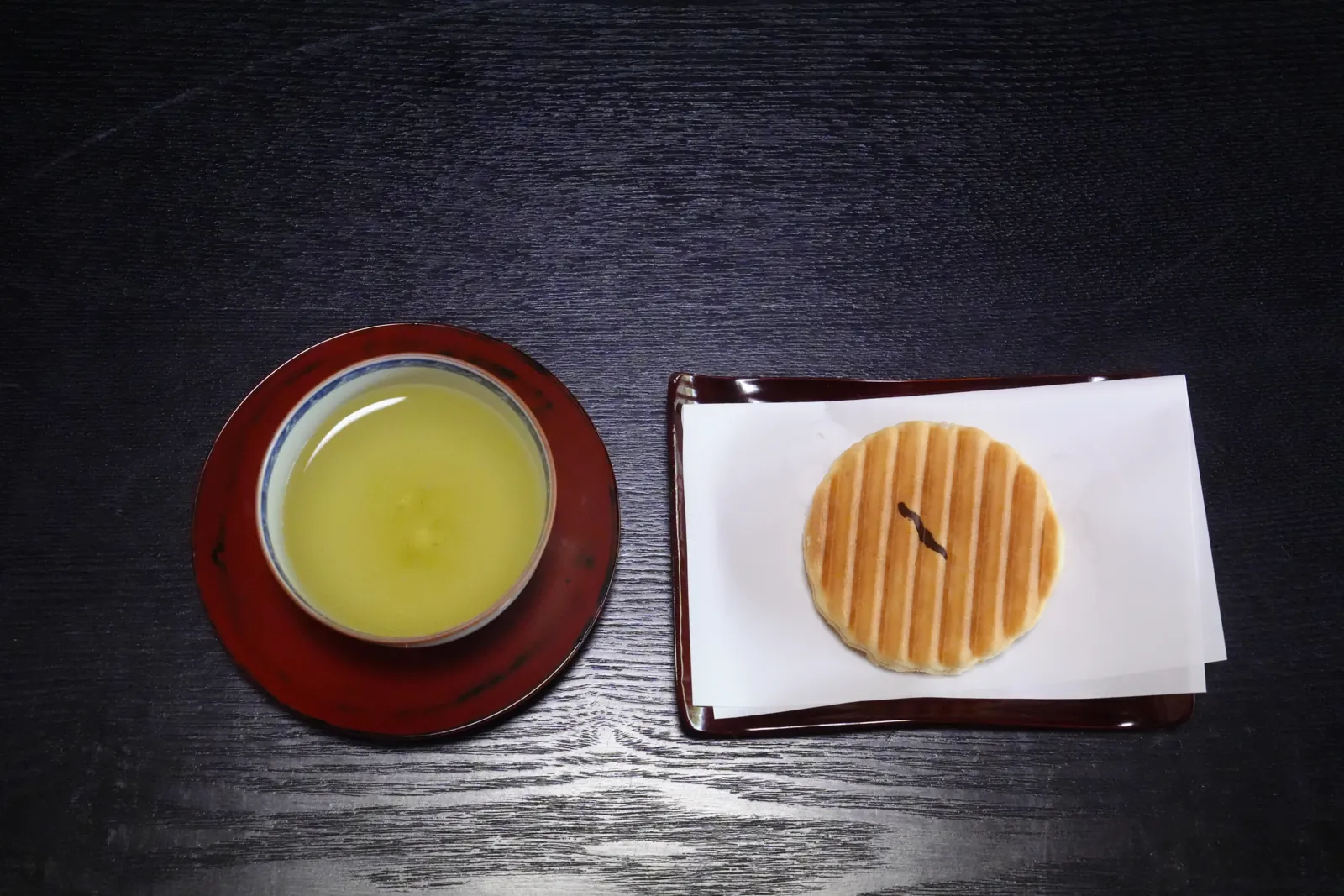
The photo below shows a cup of sencha. Compare its pale yellow-green with the bright green of the whisked matcha at the top of this page.
Caffeine: What Japan's Food Tables Show
Japan's official food composition tables list caffeine for each of these teas, but they measure different things.
Matcha powder contains 3.2 g of caffeine per 100 g of powder.
For brewed tea, the tables measure the liquid. Under the tables' test conditions, gyokuro brewed with 10 g of leaves in 60 mL of water at 60°C for 2.5 minutes has 0.16 g of caffeine per 100 g. Sencha brewed with 10 g of leaves in 430 mL of water at 90°C for 1 minute has 0.02 g per 100 g.
The gyokuro test uses far more leaf for the water than the sencha test, 10 g in 60 mL against 10 g in 430 mL, so the two brewed figures reflect the brewing method as much as the leaf.
The matcha figure covers the dry powder itself, so it cannot be set directly against the brewed figures. With matcha you drink the whole powder whisked into water, while with sencha and gyokuro the leaves stay behind.
Thin Tea and Thick Tea
In the tea ceremony, matcha is prepared in two ways. Omotesenke, one of the three Sen schools of tea, explains that usucha (thin tea) is made by adding hot water to one and a half scoops of powdered tea and whisking it. For koicha (thick tea), three scoops of powdered tea per person are measured out to make a bowl.
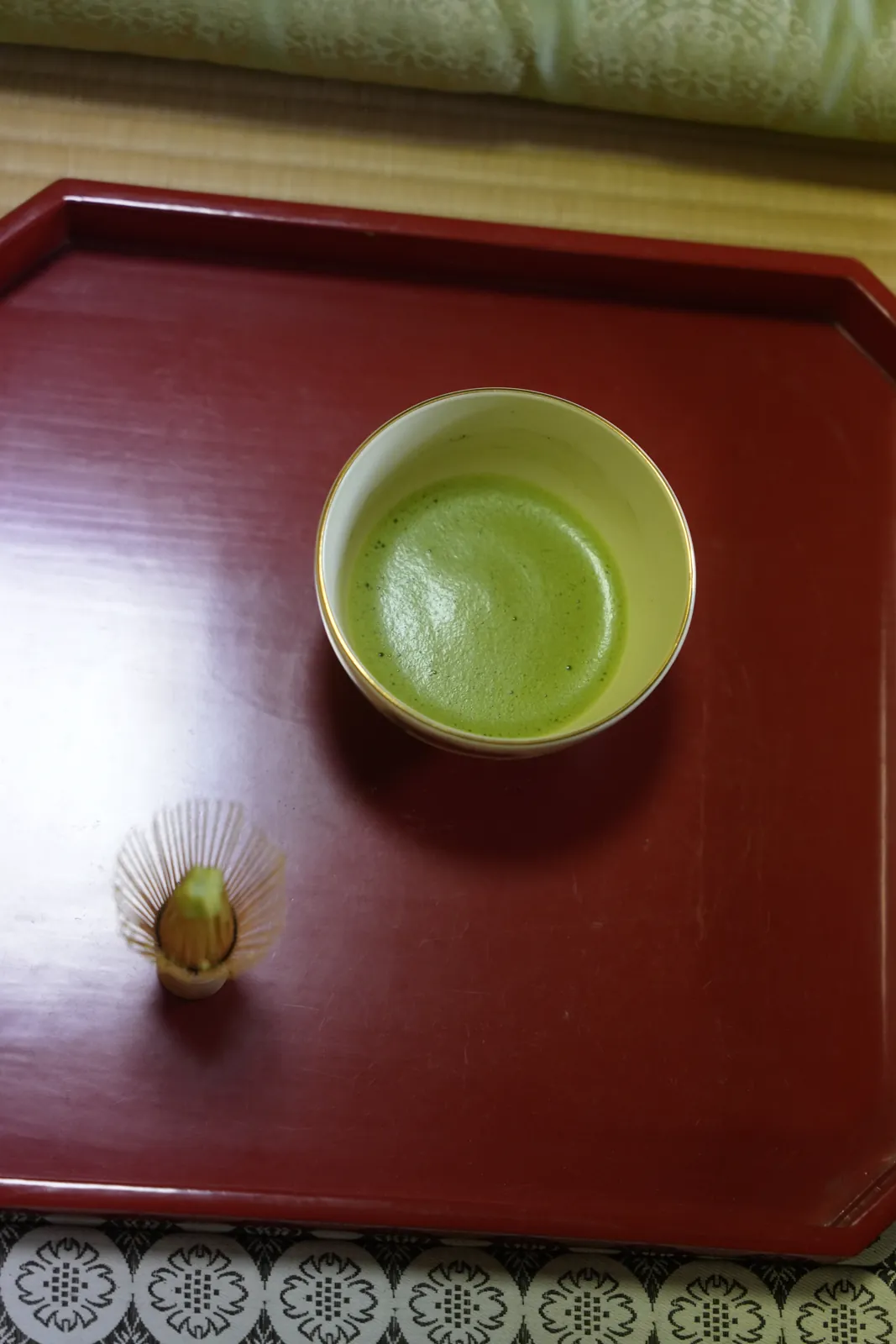
For what to do when a bowl is handed to you, see our guide to tea ceremony etiquette.
Uji and the Story of Kyoto Tea
MAFF describes Ujicha as green tea made from leaves grown in Kyoto, Nara, Shiga, and Mie prefectures and finished by Kyoto Prefecture businesses using methods that come from the Uji area.
MAFF's page on Uji tea also traces how matcha came to be. In the 16th century, as the tea ceremony flourished, shade growing that holds down astringency was developed in response to demand from tea masters such as Sen no Rikyu, and deep green, umami-rich matcha was born.
The same page explains the picking seasons. In Uji, the first-flush buds from late April to late May are hand-picked one by one and go mainly to tencha and gyokuro. There, sencha uses leaves up to the second flush, which comes from late June to early July.
Today many tea gardens and shops with histories of several hundred years still operate, mainly in the cities of Uji and Kyoto.
Matcha is not only a Uji product, though. MAFF notes that in recent years, as demand has grown, tencha production has been rising quickly in Kagoshima and Shizuoka.
Trying Both in Kyoto
On a menu or a package, check whether the tea is a powder to be whisked or leaves to be steeped, and whether it is shade-grown, like gyokuro, or sun-grown, like sencha. Those two points tell you most of what to expect in the cup.
For a whisked bowl of matcha with a sweet, a tea ceremony is the classic setting. Gion Corner also pairs tea with a performance, and a seat that includes tea costs 6,050 yen.
Our guide to choosing a tea ceremony in Kyoto compares the options, and our guide to maiko and tea in Kyoto covers experiences that combine the two.
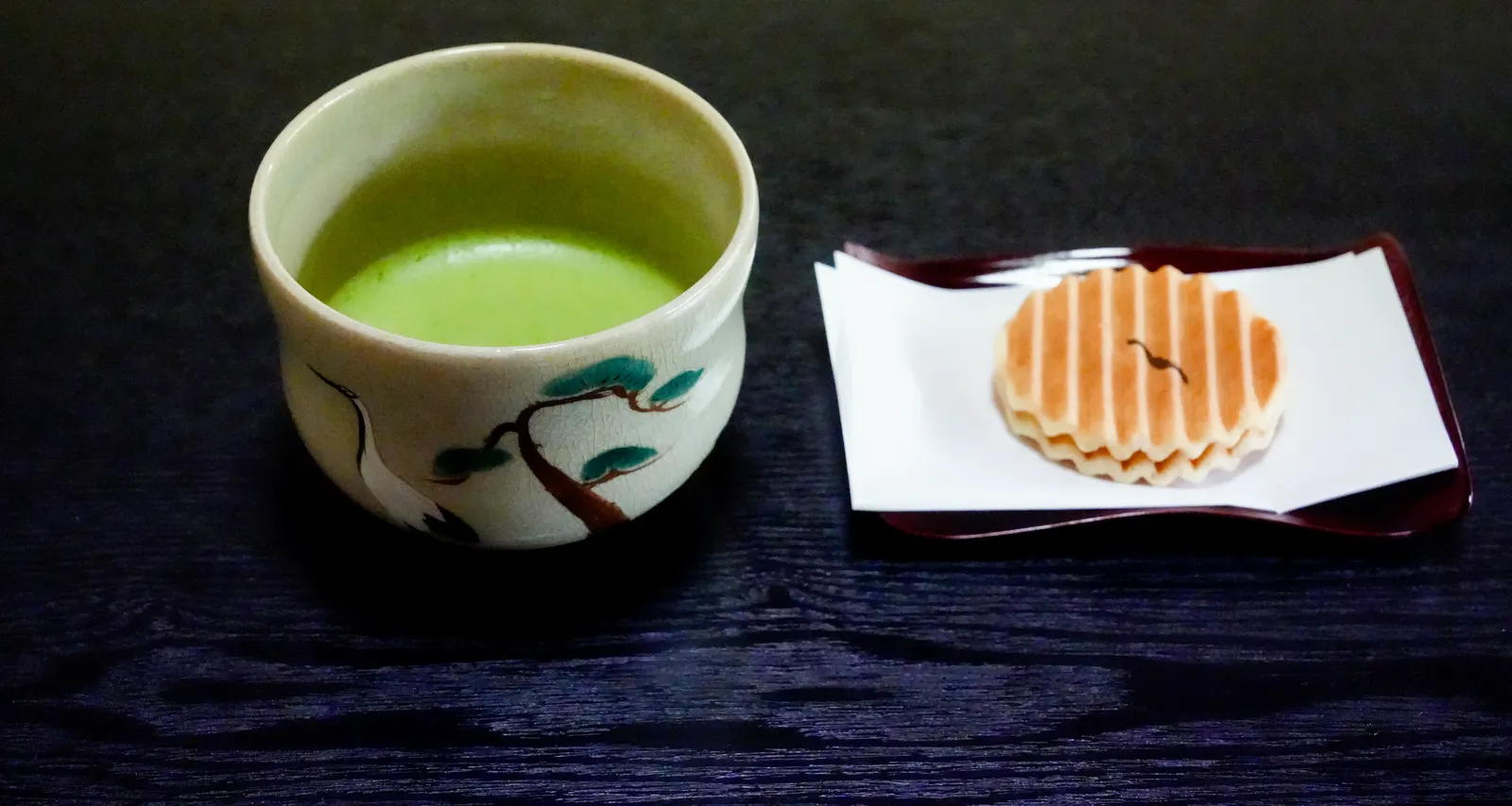
We operate Maiko & Zen Kyoto at Ikka-in, a sub-temple of Tofuku-ji that is rarely open to the public. Guests are served sencha and a sweet in the temple hall.
Add a quiet temple stop to your day. We operate Maiko & Zen Kyoto, a 90-minute session at Ikka-in, a sub-temple of Tofuku-ji, where a maiko dances in the same temple hall with no stage between you, then takes time for your questions and photos. See current session times and prices.
Frequently asked questions
Is matcha the same as green tea?
Matcha is one type of green tea. It is made by grinding tencha, a shade-grown tea that is steamed and dried without rolling, while sencha is grown in the sun and rolled.
Does matcha have more caffeine than green tea?
Japan's food composition tables list 3.2 g of caffeine per 100 g of matcha powder, 0.16 g per 100 g of brewed gyokuro, and 0.02 g per 100 g of brewed sencha. The powder figure is for the dry tea, so it is not directly comparable with the brewed figures, and the gyokuro test uses far more leaf for the water than the sencha test.
What is the difference between matcha and gyokuro?
Both come from shade-grown leaves. Gyokuro is rolled, and MAFF notes that brewing it at 50-60°C brings out its umami, while tencha for matcha is dried without rolling and ground to a powder.
What is hojicha?
Hojicha is roasted bancha, sencha, or a similar tea. It has a roasted aroma and almost no astringency or bitterness.
Is all matcha from Uji?
No. Tencha production has been rising quickly in Kagoshima and Shizuoka. Ujicha is green tea from leaves grown in Kyoto, Nara, Shiga, and Mie prefectures and finished by Kyoto Prefecture businesses using methods that come from the Uji area.
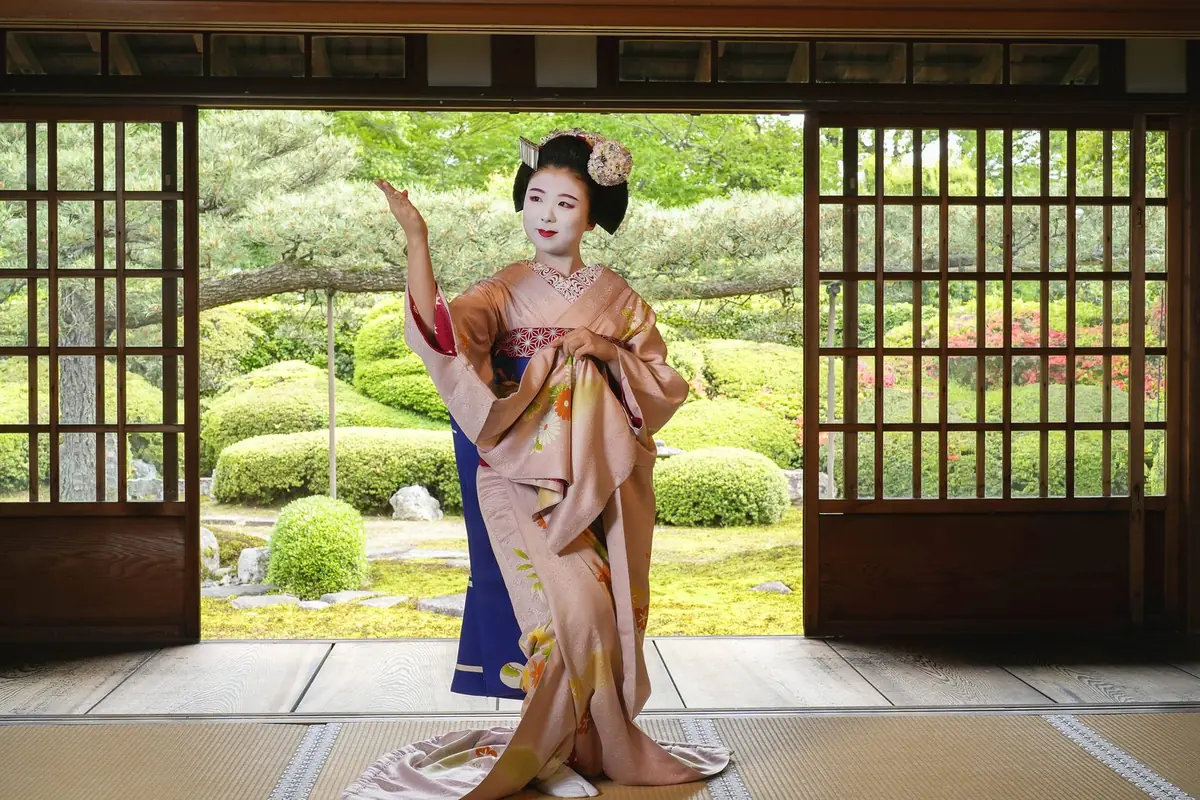
A maiko dance session at a Zen temple near Kyoto Station
Rake a Zen garden, watch two maiko dances and share green tea at Ikka-in, a temple rarely open to the public, one stop from Kyoto Station. Sessions start at 2:00 pm and 3:30 pm.
See the 2:00 pm and 3:30 pm sessions →Sources
- Kinds of Japanese tea (Aff, April 2022) — Ministry of Agriculture, Forestry and Fisheries
- Ujicha (Japanese traditional foods) — Ministry of Agriculture, Forestry and Fisheries
- Food composition database: matcha — Ministry of Education, Culture, Sports, Science and Technology
- Food composition database: gyokuro infusion — Ministry of Education, Culture, Sports, Science and Technology
- Food composition database: sencha infusion — Ministry of Education, Culture, Sports, Science and Technology
- About the Premium Uji Tea Certification System — Kyoto Prefecture
- Gion Corner: performances and tickets — Kyoto Traditional Musical Art Foundation
- Chanoyu Glossary — Omotesenke
- About Chado — Urasenke