Tofuku-ji Temple Guide: What to See, How to Get There, and When to Go
We operate the Maiko & Zen Kyoto experience mentioned in this guide.
Tofuku-ji is a large Zen temple complex in southeastern Kyoto. This guide is based on the temple's own visitor pages.
What to See at Tofuku-ji
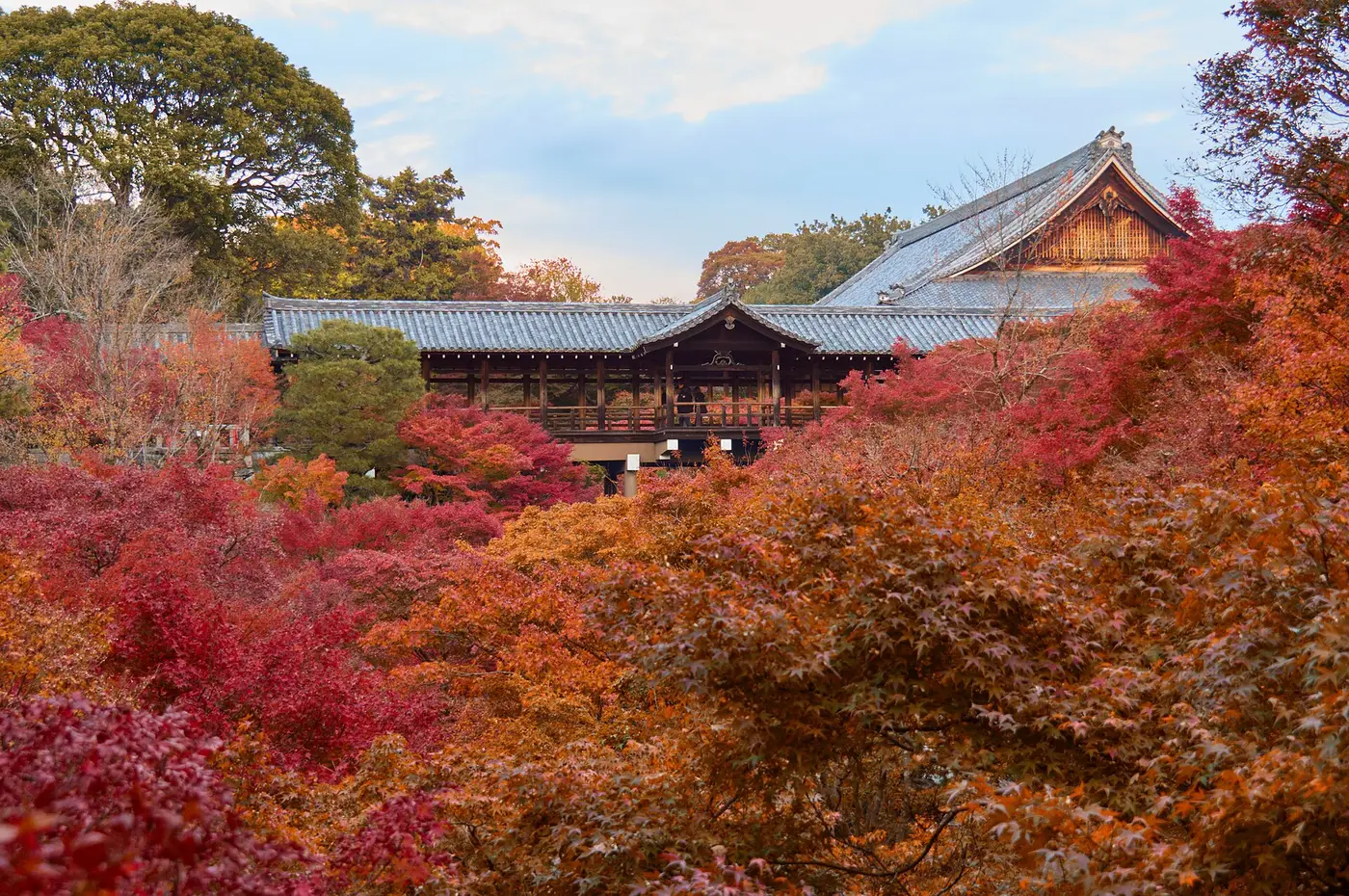
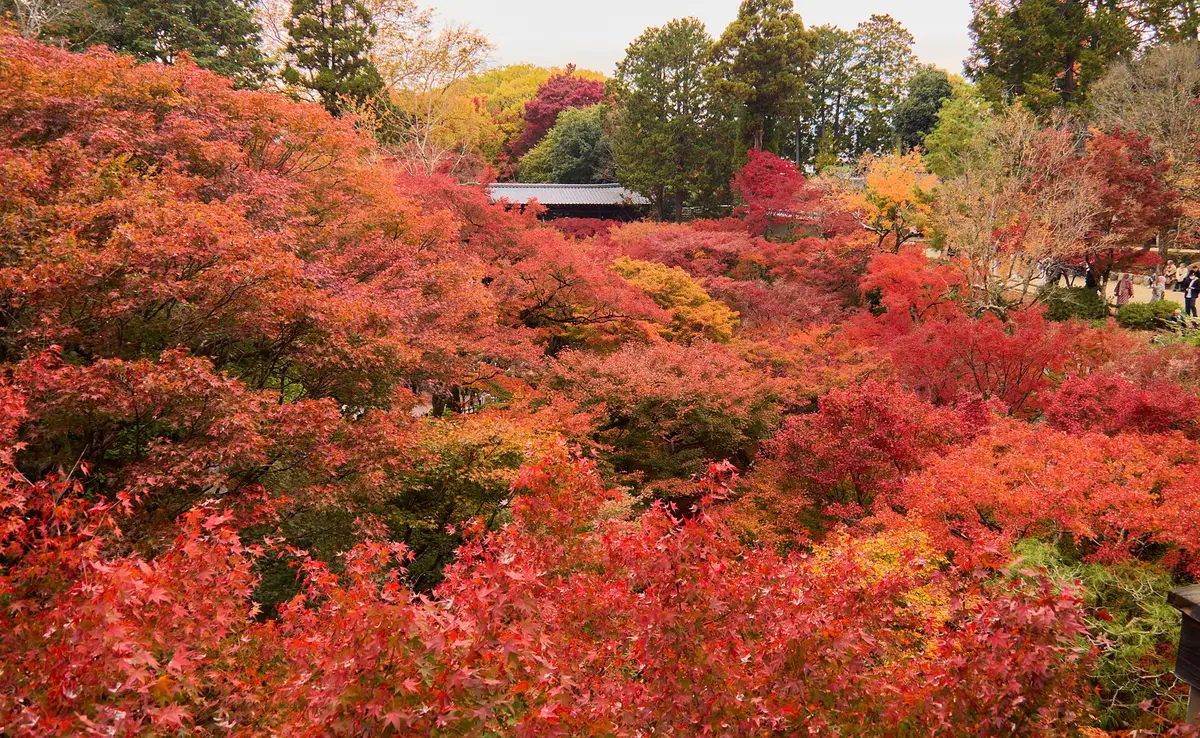
Tofuku-ji's maples are not all red. Its rare three-leaf maples turn golden, and the temple says Shoichi Kokushi brought this Chinese maple back from Song China, so look for gold among the leaves. The place to see them is Tsutenkyo Bridge. Stop on the bridge and look down into the Sengyokukan ravine as well as across it: in autumn it is full of color, and when the new leaves come out it turns fresh green. The bridge is also your path between two parts of the temple, the Hojo on one side and the Kaisando on the other.
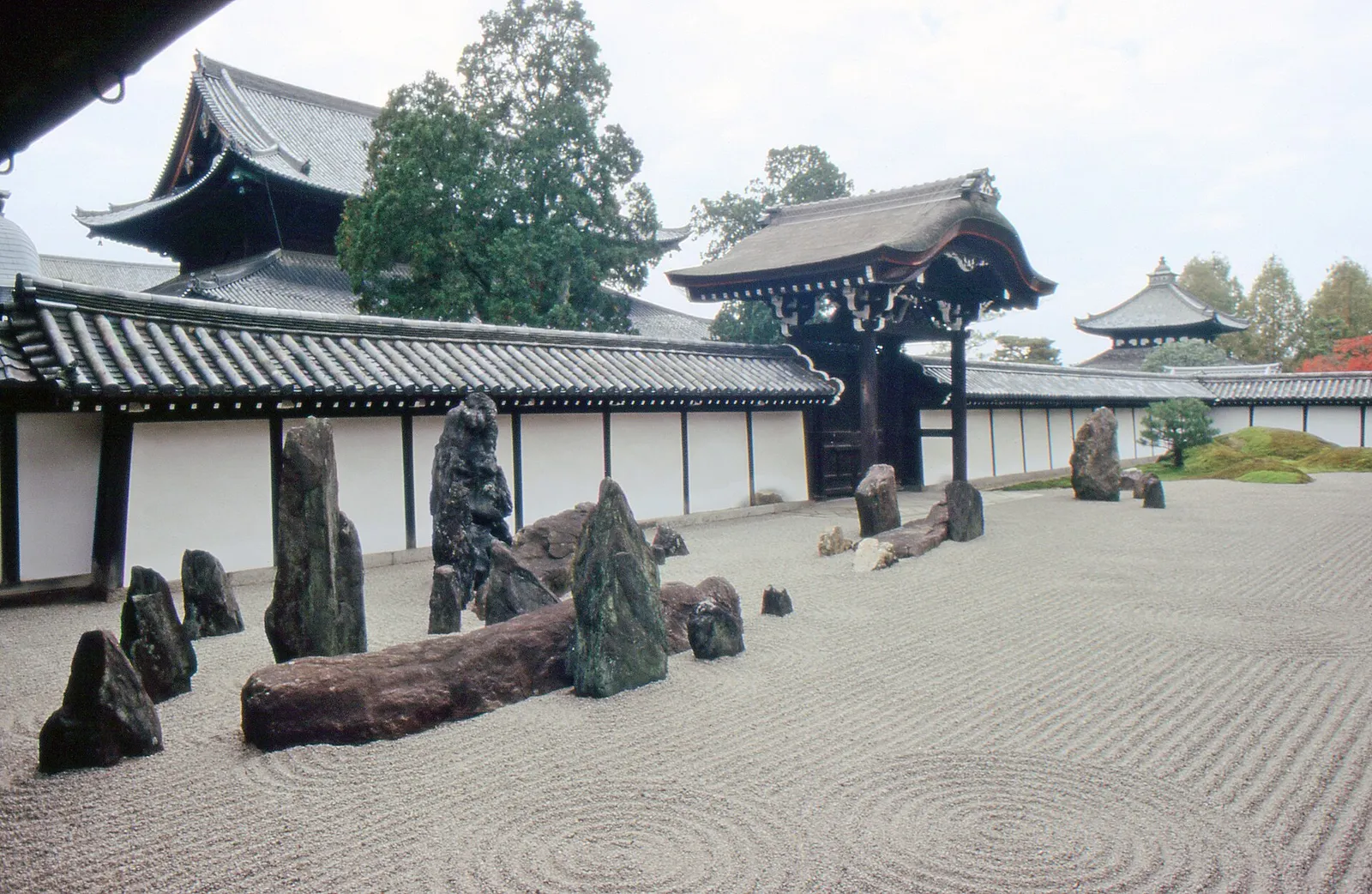
After the bridge, the Hojo gardens ask you to slow down. Walk all the way around the building rather than stopping at one spot, because there is a garden on every side of it, east, west, south, and north. Together they are called the Hasso no Niwa, and they are the work of the garden designer Mirei Shigemori in 1939.
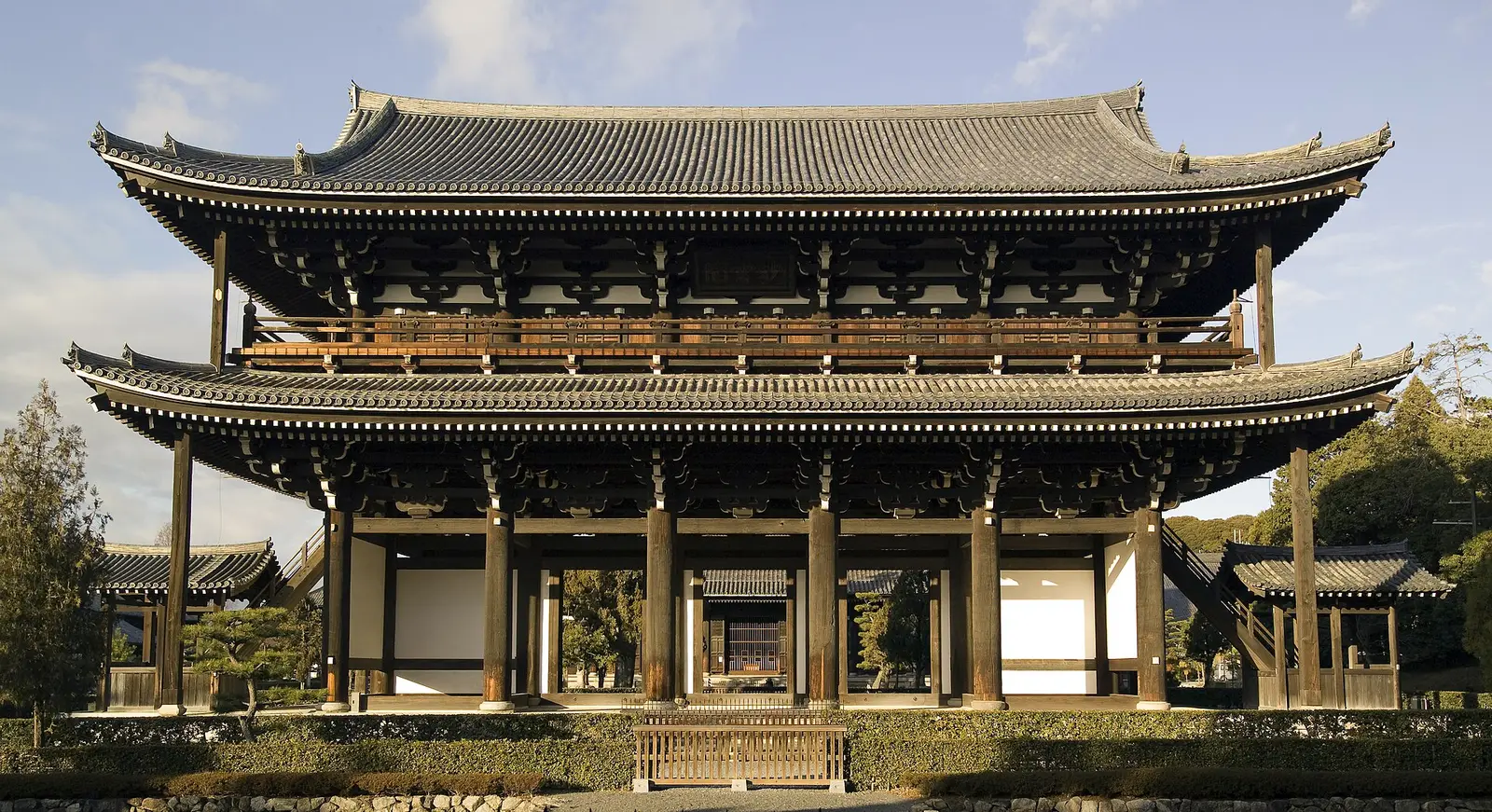
Give the Sanmon gate a few minutes on your way in or out. Look up at its plaque, which reads Myounkaku and is in the hand of Ashikaga Yoshimochi; the gate itself dates from a rebuilding in the early Muromachi period and is a National Treasure. Spring visitors can see something more: during the Nehan-e, the main hall shows Mincho's large Nehan-zu painting.
The temple lists two visitor areas with separate tickets: the Tsutenkyo Bridge together with Kaisando, and the Hojo gardens. If you want to see both, the temple offers a combined ticket.
Photography comes with limits. During the autumn special opening, visitors may be asked not to take photos on Tsutenkyo and Gaun bridges, so treat photos there as a bonus rather than the goal. The temple also asks visitors not to use tripods or eat and drink on the grounds.
How to Plan Your Route
Outside the autumn period, adults pay 600 yen for Tsutenkyo and Kaisando and 500 yen for the Hojo gardens. The price of the Hojo gardens rises to 600 yen from November 1, 2026. The combined ticket for the gardens and Tsutenkyo and Kaisando costs 1,000 yen for adults.
The autumn period works differently. From November 14 to December 6, adults pay 1,000 yen for Tsutenkyo and Kaisando, and the combined ticket is not sold.
Two rules shape the order of your visit. The temple does not allow re-entry, so finish everything before you leave. Ticket sales also end before the gates close, so start with the part you care about most and do not leave it for the last hour.
Getting to Tofuku-ji
From Kyoto Station, take the JR Nara Line to Tofukuji Station (about 3 minutes), then walk about 10 minutes. Keihan Tofukuji Station is also about 10 minutes on foot.
You can also take Kyoto City Bus 88 or 208 from Kyoto Station, and the ride takes about 15 minutes, followed by about 4 minutes on foot.
Seasons and Hours
From April 1 to November 13, the temple is open from 9:00 am to 4:00 pm, and ticket sales end at 4:00 pm. The gates close at 4:30 pm. If you have other plans that afternoon, see the temple first, because ticket sales end at 4:00 pm for most of the year.
From November 14 to December 6, the Tsutenkyo Bridge opens at 8:30 am, while the Hojo gardens open at 9:00 am. Both close at 4:00 pm, and the gates close at 4:30 pm.
From December 7 to March 31, the temple is open from 9:00 am to 3:30 pm, and ticket sales end at 3:30 pm. The gates close at 4:00 pm.
The autumn viewing dates and hours change every year, so check the temple's visitor page for the current schedule before you plan a trip around them.
Other Temples to Pair With Tofuku-ji
Each temple below sets its own terms, so plan each stop separately.
Sanjusangendo is open from 8:30 am to 5:00 pm between April 1 and November 15, and from 9:00 am to 4:00 pm between November 16 and March 31. Last entry is 30 minutes before closing, and adults pay 600 yen.
Sennyu-ji is open from 9:00 am to 4:30 pm from March to November, and from 9:00 am to 4:00 pm from December to February. Adults pay 500 yen for the temple grounds.
Fushimi Inari is the other easy addition. On the JR Nara Line, Inari is the next station after Tofukuji, about 2 to 3 minutes by local train.
Add a Maiko Session After Your Visit
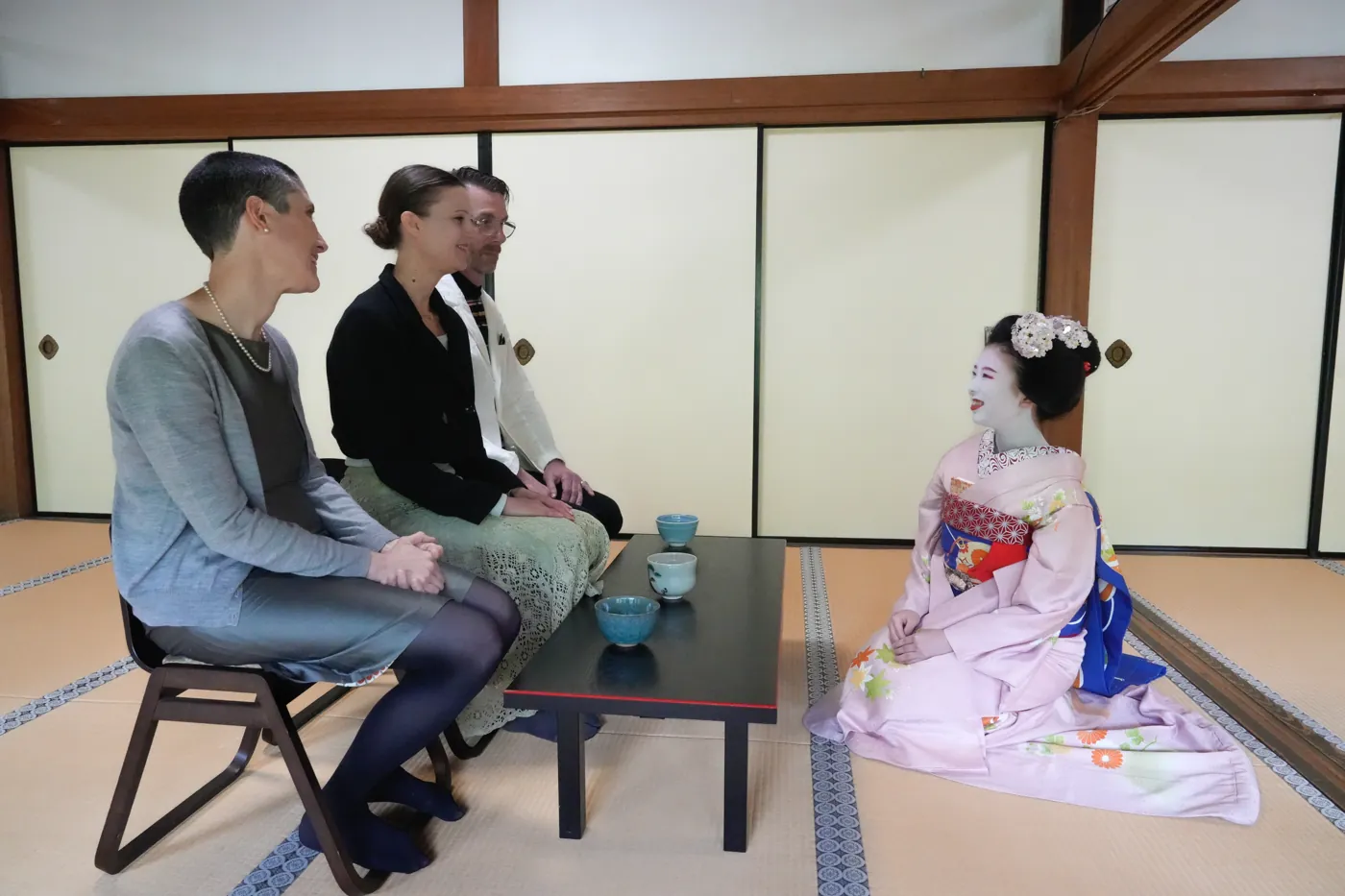
Add a quiet temple stop to your day. We operate Maiko & Zen Kyoto, a 90-minute session at Ikka-in, a sub-temple of Tofuku-ji, where a maiko dances in the same temple hall with no stage between you, then takes time for your questions and photos. See current session times and prices.
To compare formats before you decide, read our guide to maiko experiences in Kyoto and our guide to tea ceremony in Kyoto. For how tea and maiko fit together, see maiko and tea in Kyoto.
Frequently asked questions
How do I reach Tofuku-ji?
The simplest way is the JR Nara Line from Kyoto Station to Tofukuji Station, which takes about 3 minutes, followed by about 10 minutes on foot.
Can I take photos at Tofuku-ji?
Mostly yes, with limits. During the autumn special opening, visitors may be asked not to take photos on Tsutenkyo and Gaun bridges, and the temple asks visitors not to use tripods on the grounds.
Can I leave Tofuku-ji and come back in the same day?
No. The temple does not allow re-entry, so finish every part you want to see before you leave.
Does the schedule change during the year?
Yes. The temple closes earlier from December 7 to March 31, and the autumn viewing dates and hours change every year, so check the temple's page before you go.
How is Fushimi Inari connected to Tofuku-ji?
On the JR Nara Line, Inari is the next station after Tofukuji, about 2 to 3 minutes by local train.
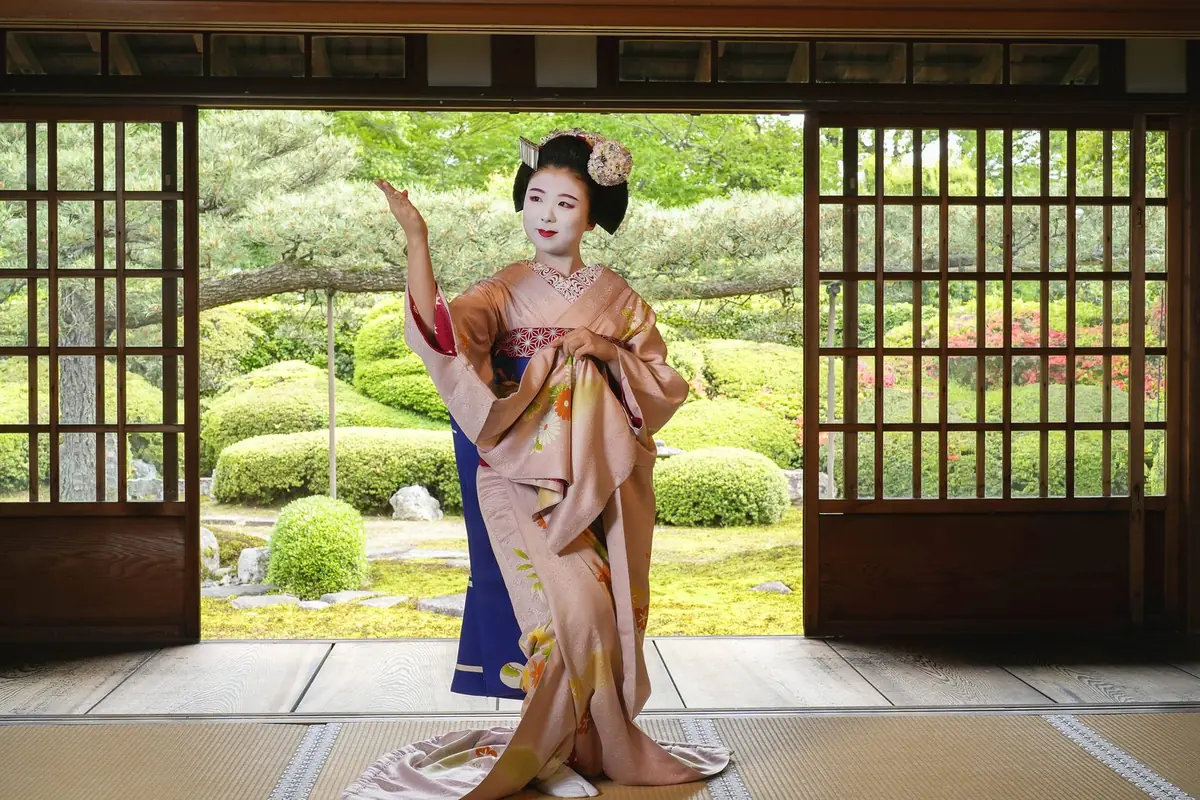
A maiko dance session at a Zen temple near Kyoto Station
Rake a Zen garden, watch two maiko dances and share green tea at Ikka-in, a temple rarely open to the public, one stop from Kyoto Station. Sessions start at 2:00 pm and 3:30 pm.
See the 2:00 pm and 3:30 pm sessions →Sources
- Tofuku-ji: Visitor guide — Tofuku-ji
- Tofuku-ji: Access — Tofuku-ji
- JR Nara Line timetable — JR West
- Sennyu-ji: Visitor guide — Sennyu-ji
- Sanjusangendo: Visit — Sanjusangendo