Geisha in Kyoto: Where to See Geiko & Maiko, and How to Meet a Maiko
We operate the Maiko & Zen Kyoto experience mentioned in this guide.
Kyoto's five geisha districts still train apprentices and stage public dances every year, and visitors have more ways to see geiko and maiko perform than most people expect. This guide covers who they are and how to tell them apart, where and when to see them, how to behave if you meet them in the street, and how to spend time with a maiko without an insider's introduction.
Quick answers
- Where to see them: at ticketed performances, such as Gion Corner (most evenings) and the annual public dances (odori) in spring and early November.
- How to meet a maiko: through a small-group session, or at an ochaya evening arranged through a top hotel or ryokan concierge.
- What it costs: from about 4,000 yen for a dance ticket or 5,500 yen for a Gion Corner seat; dinners and banquets with maiko cost much more. See the comparison below.
- Etiquette: do not follow geiko and maiko or photograph them without permission, and do not take photos on private property such as shop fronts, or enter it without permission.
Geiko, Maiko, and Geisha: What Is the Difference?
Geisha is the general Japanese word for professional entertainers trained in music, dance, and conversation. In Kyoto they are called geiko. A maiko is an apprentice training to become a geiko. Read more about what geiko and maiko actually do.
| Maiko | Geiko | |
|---|---|---|
| Role | Apprentice | Fully trained professional |
| Who can start | Girls who have finished junior high school | Maiko who complete their apprenticeship |
| Training | About a year as shikomi (living in an okiya and learning manners, the Kyoto dialect, and dance), then about a month as minarai before debut | Ongoing; geiko continue to practice their arts |
| Where you see them | Dances, banquets, and events | Dances, banquets, and events |
Source: Kyoto Traditional Musical Art Foundation.
Despite the image many visitors bring from novels and films, geiko and maiko are performers of the arts. They spend years in daily lessons in dance, music, and etiquette, and they entertain guests at banquets with performance and conversation.
How to Tell a Maiko from a Geiko
The Kyoto Traditional Musical Art Foundation describes several visible differences:
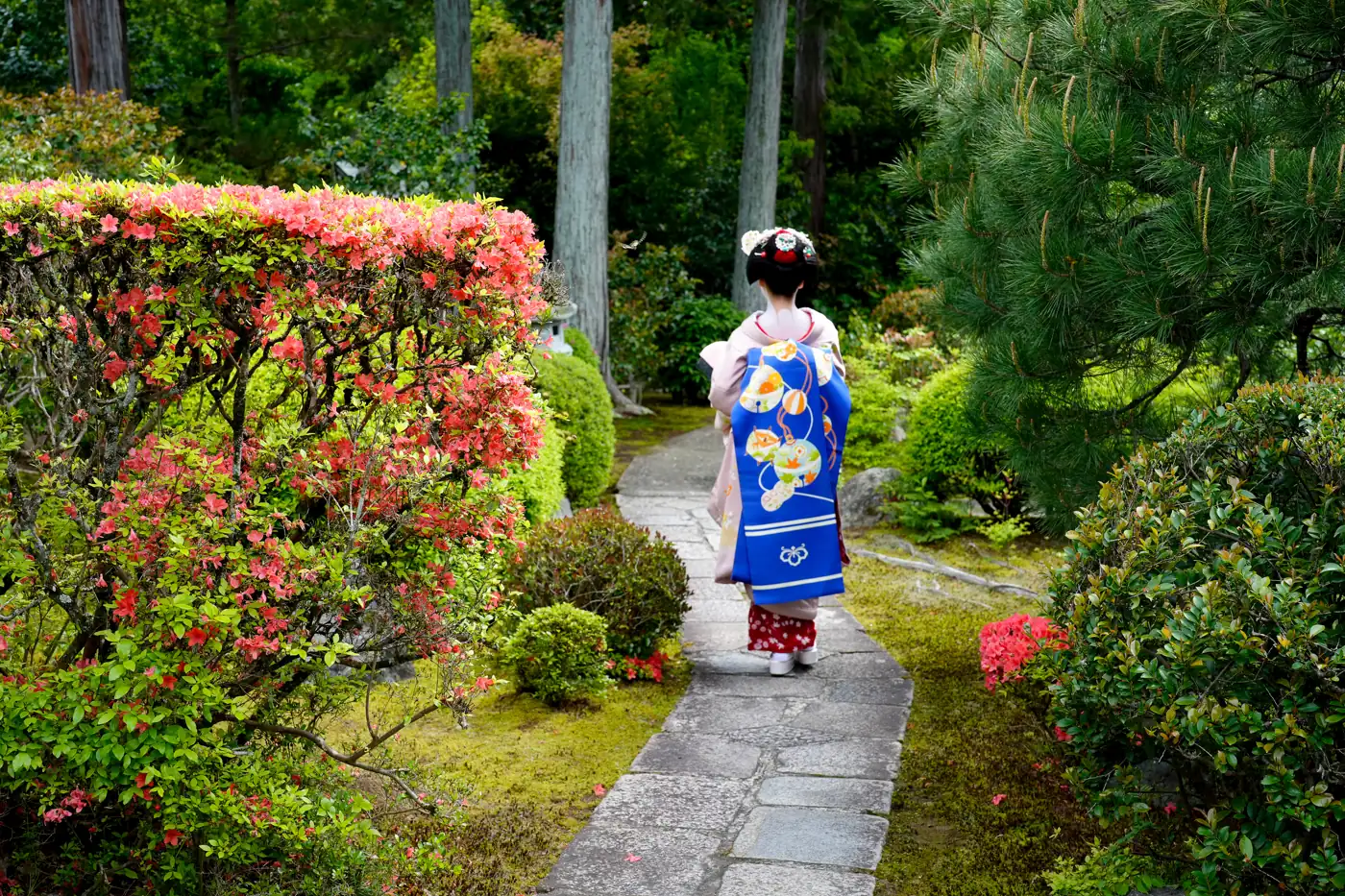
- Hair: a maiko styles her own hair in a classic Japanese hairstyle, decorated with flower hairpins (hana kanzashi) that follow the seasons. A geiko wears a wig.
- Hairstyle stages: a new maiko's hair is arranged in the wareshinobu style; after about two years (two or three in Miyagawacho, for example), it changes to the ofuku style.
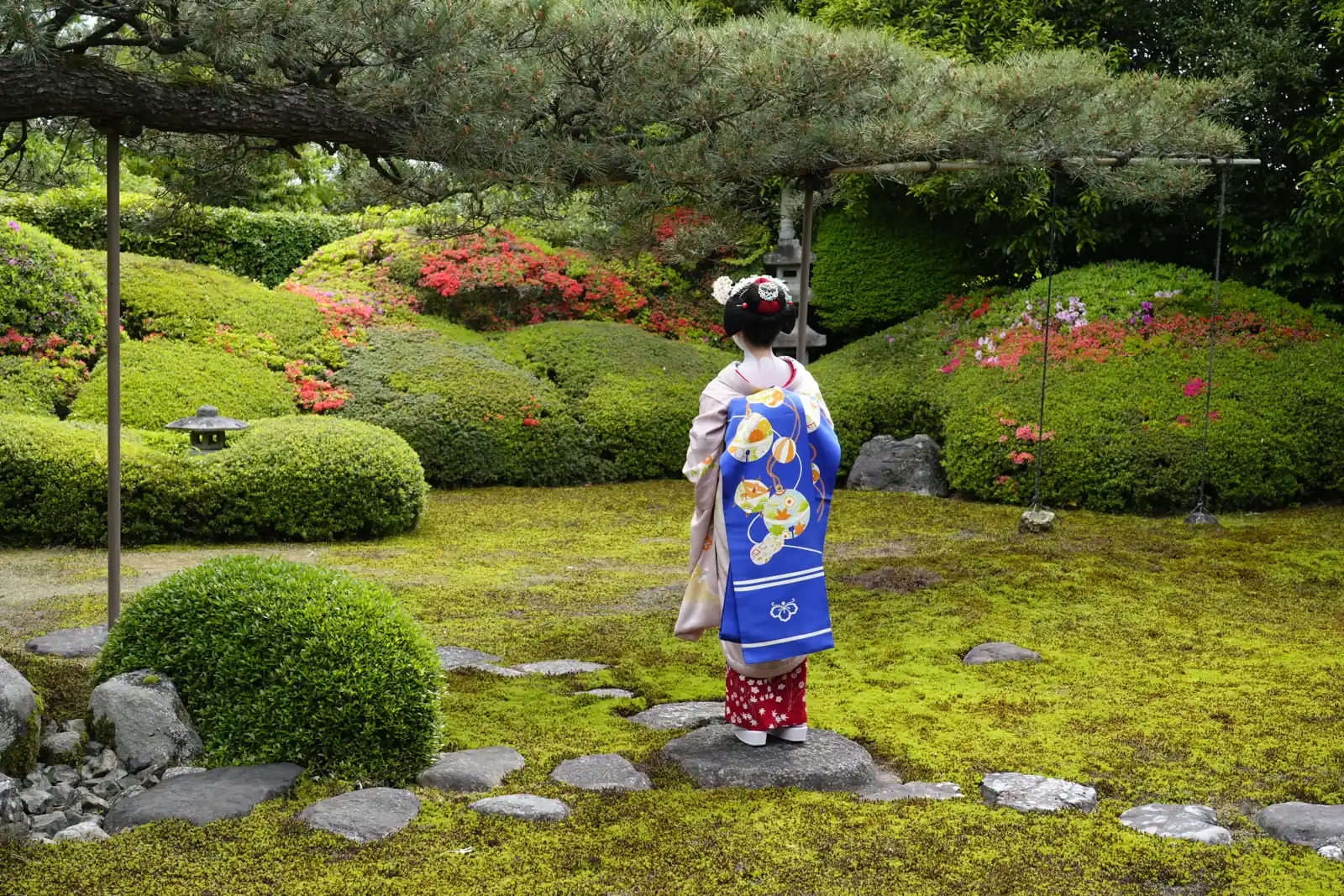
- Obi: a maiko wears the darari obi, a long hanging sash, much longer than an ordinary obi. During the short minarai stage before her debut, she wears a half-length version.
- Footwear: maiko walk in tall wooden sandals called okobo.
- Lips: newly debuted maiko paint only the lower lip.
Not every geiko wears white makeup: geiko who specialize in shamisen and song (jikata) wear neither wigs nor white makeup. For a fuller side-by-side comparison, see maiko vs. geiko.
Each of Kyoto's five geisha districts has its own customs, so some details described here may differ from one district to another.
Kyoto's Five Geisha Districts (Hanamachi)
Kyoto has five geisha districts, called hanamachi: Gion Kobu, Gion Higashi, Pontocho, Miyagawacho, and Kamishichiken. Each has its own annual dance. Our guide to Kyoto's five geisha districts covers each district's history, theater, and school of dance.
| District | Annual public dance | Season (2026–27) |
|---|---|---|
| Kamishichiken | Kitano Odori | Late March to early April |
| Gion Kobu | Miyako Odori | About a month from April 1 |
| Miyagawacho | Kyo Odori | Early to mid-April |
| Pontocho | Kamogawa Odori | May |
| Gion Higashi | Gion Odori | November 1–10, 2026 |
Gion Kobu is also home to Gion Corner, and Kamishichiken sits beside Kitano Tenmangu Shrine.
Each district runs on a partnership of houses, as the City of Kyoto explains:
- Okiya: houses where maiko live, learn the arts and customs of the district, and are sent out to entertain.
- Ochaya: teahouses that host guests and arrange geiko, maiko, and food for each banquet.
- Restaurants and caterers: they prepare the banquet meals, because the ochaya does not cook.
In Miyagawacho, an okiya often also serves as an ochaya.
At banquets, guests play games such as tora tora, a variation of rock-paper-scissors, and konpira fune fune, played to shamisen music.
Where to See Geisha in Kyoto, Respectfully
Ticketed performances let you watch geiko and maiko perform for an audience: at Gion Corner, at the annual dances, or at an event you have booked. Many visitors also hope to glimpse a maiko on the street in Gion. If you do, remember that she is usually on her way to work.
A City of Kyoto notice on its tourism site says that in the Gion-machi Minamigawa area and elsewhere, people have been seen following geiko and maiko, photographing them without permission, taking photos on private property such as shop fronts, and entering without permission.
Ways to Meet a Maiko, by Budget
| Option | What you get | Typical length | Cost (as of Oct 2026) |
|---|---|---|---|
| Gion Corner | A roughly one-hour sampler of seven arts; the maiko dance is one part | About 1 hour | 5,500 yen (adults 23+); 6,050 yen with tea |
| Annual odori (Miyako Odori and others) | A full stage production by one district | About 1 hour | Roughly 4,000–8,000 yen |
| Tea and dance in a small room | A maiko dances for a small audience while tea is served | Varies by venue | Higher than a theater seat; varies by operator |
| Dinner or banquet with maiko | A meal with dance, conversation, and banquet games | 2–3 hours | Usually the highest; varies with the number of guests and the menu |
| Ochaya evening | A banquet in a historic teahouse | An evening | Requires an introduction; ask a top hotel or ryokan concierge |
| Maiko & Zen Kyoto (our session) | Two dances in the same temple hall with no stage between you, then time to talk and take photos | 90 minutes | 23,000 yen, including an English-speaking guide, the Zen garden, two dances with tea and a sweet, and time with the maiko |
Compare the Formats
| Format | Meal | Time to talk with a maiko | Photos | English | Setting | Time of day | Good to know |
|---|---|---|---|---|---|---|---|
| Gion Corner | No | No | With a maiko after winter-season shows | English information available | Small theater in Gion Kobu | Evening | The winter schedule (Tuesday–Friday only) |
| Annual odori | No (some tickets include tea) | No | Check the theater's rules | English sites for several dances | The district's own theater | Afternoon | Ticket sale dates |
| Tea and dance in a small room | Tea and a sweet | Often a short Q&A | Often | Varies | Teahouse or event room | Varies | Whether a geiko or a maiko performs |
| Dinner or banquet | Yes | Yes, during the meal | Usually | Interpreter varies | Restaurant, ryotei, or hotel | Evening | The menu and interpreter |
| Ochaya evening | Yes | Yes | Ask the host | Arranged by the concierge | Historic teahouse | Evening | An introduction is required |
| Maiko & Zen Kyoto (ours) | Sencha and a sweet | Dedicated time at the end | Yes | English-speaking guide | Temple with no general visitors | Afternoon | Children under 6 cannot join |
A maiko makeover is a different thing: it dresses you as a maiko for photos and does not include meeting one.
Our guide to maiko experiences in Kyoto explains each format and who it suits, and geisha shows in Kyoto covers what you can watch in any season.
Best Time to See Geisha in Kyoto
- Late March to May: the four spring dances. Miyako Odori runs for about a month from April 1; in 2026, its tickets went on sale on January 6.
- October and November: autumn recitals and Gion Odori (November 1–10).
- Any time of year: Gion Corner (Tuesday to Friday only from December 1 to March 11, and closed on a few days; see our guide to geisha shows in Kyoto) and small-group sessions.
Dates, prices, and ticket sale dates for every dance are in our Kyoto geisha dance calendar.
Common Mistakes to Avoid
- Waiting in Gion to photograph maiko. Following them is one of the problems the City of Kyoto has pointed out. A performance lets you see them dance.
- Stepping onto private property. Taking photos on private property such as shop fronts, or entering without permission, is one of the problems the City of Kyoto has pointed out in Gion.
- Treating a makeover as meeting a maiko. A makeover is a costume photo shoot, not time with a working apprentice.
- Booking the spring dances late. Tickets for popular dates go on sale months ahead; in 2026, Miyako Odori tickets opened on January 6.
Seeing a Maiko at a Zen Temple
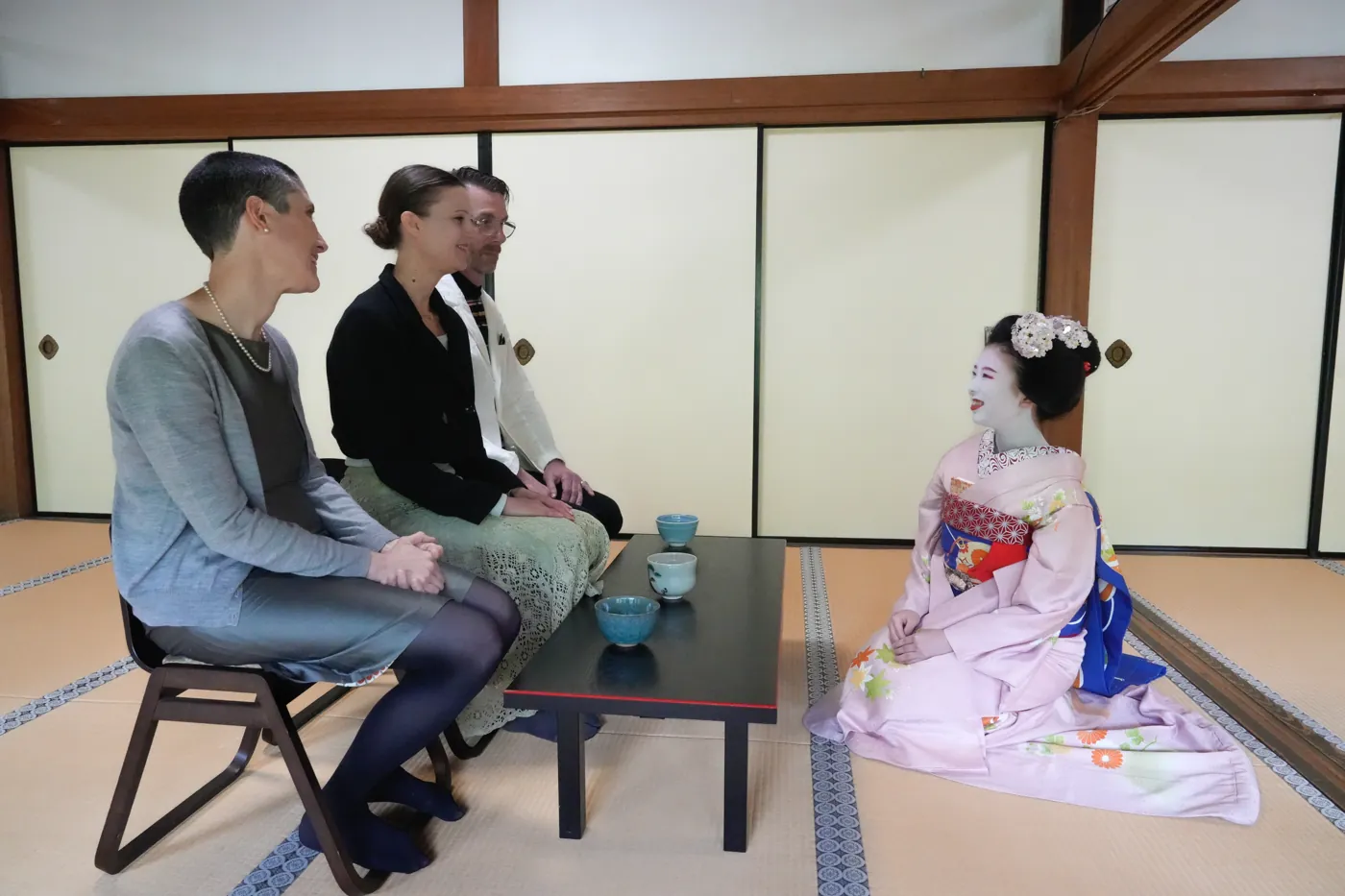
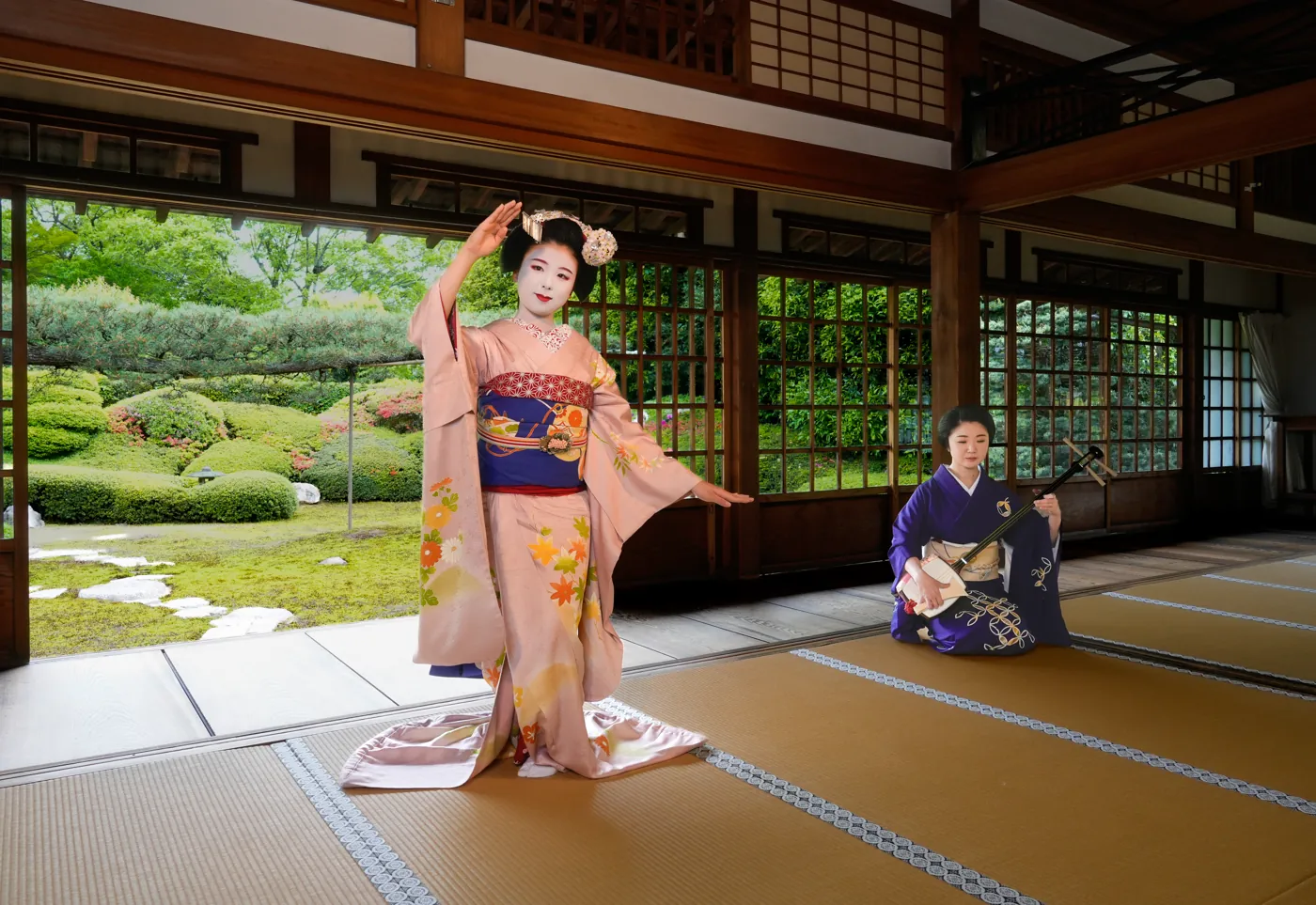
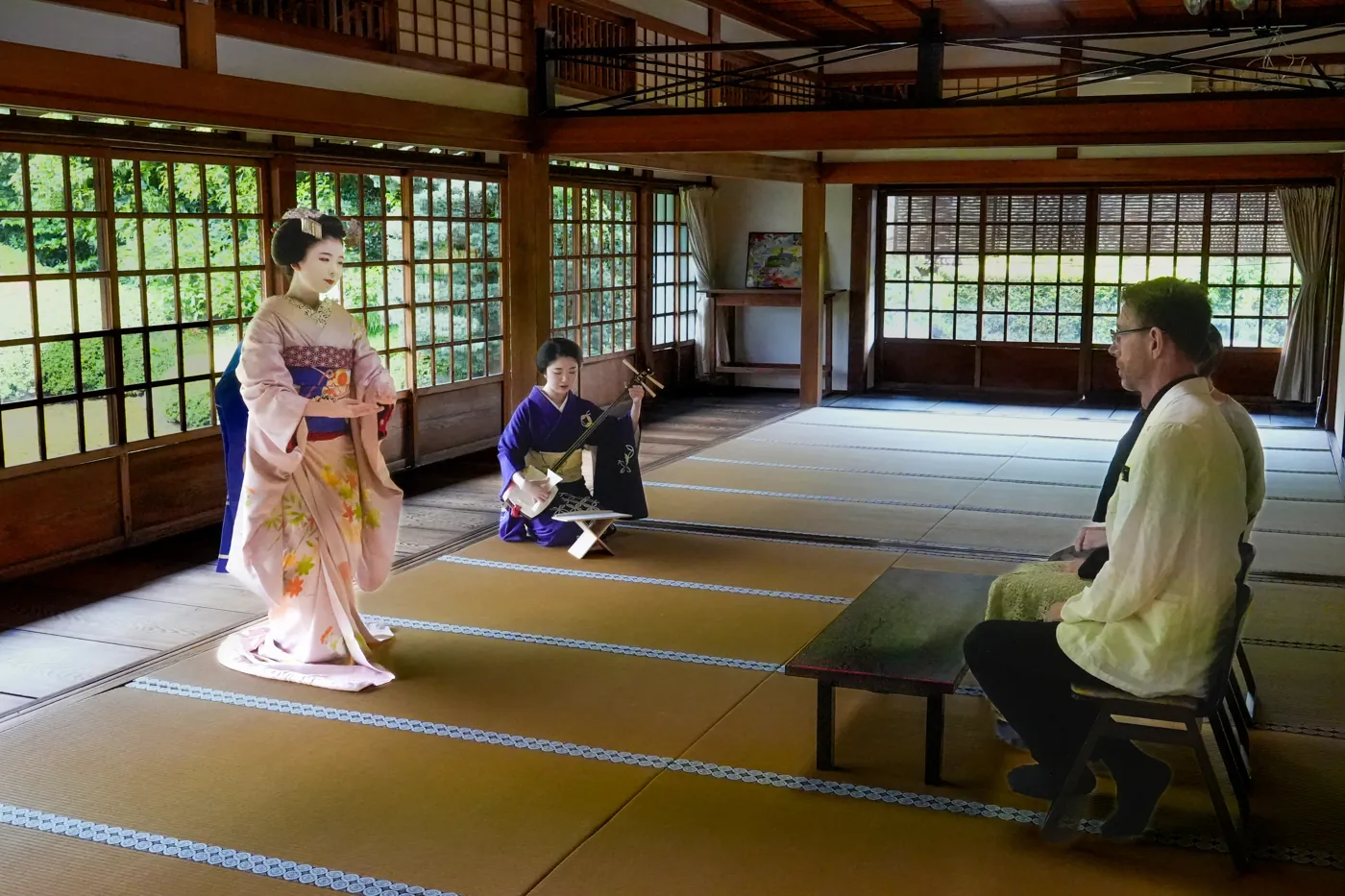
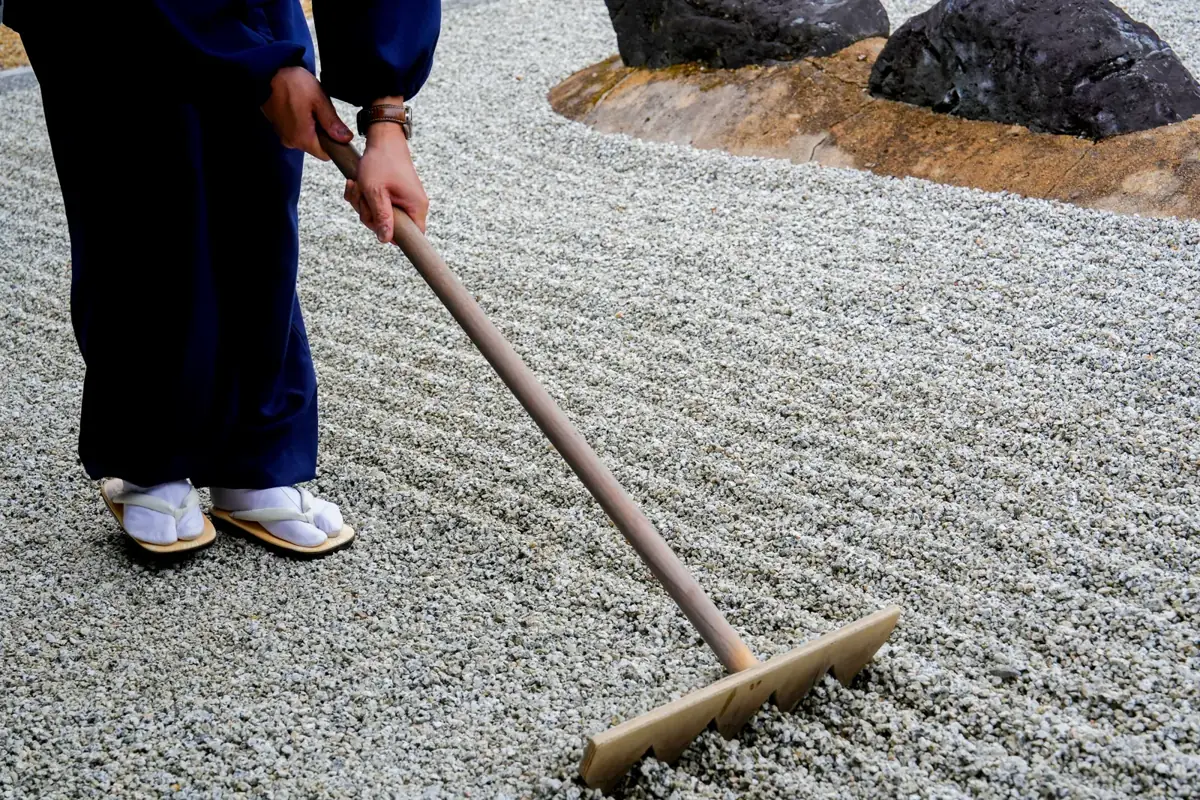
We operate Maiko & Zen Kyoto, a 90-minute session at Ikka-in, a sub-temple of Tofuku-ji founded in 1382 and rarely open to the public. Unlike a theater program, where you watch from a seat facing a stage, the maiko dances in the same temple hall as you, with no stage between you. An English-speaking guide introduces the temple and maiko culture, you create your own patterns in the gravel of the Zen garden with a wooden rake, and you watch two dances while enjoying fragrant sencha green tea and a delicate Japanese sweet, then talk with the maiko, ask her questions, and take photos together.
What sets it apart
- No stage between you and the maiko: she dances in the same temple hall, at close range.
- Time to talk: the session ends with time to ask her questions and take photos together.
- A quiet temple: no general visitors during the session; you share it with a small group of fellow travelers.
- More than a show: an English-speaking guide and a hands-on Zen garden activity are included.
- Easy to reach: near Tofukuji Station, one stop from Kyoto Station on the JR Nara Line, with afternoon start times that fit a sightseeing day.
Is it right for you? If a small group, time to talk with a maiko, English support, and photos matter to you, the session fits easily into a Kyoto sightseeing day. Tea is a relaxed accompaniment rather than a formal tea ceremony.
Sessions start at 2:00 pm and 3:30 pm, and cost 23,000 yen per person as of October 2026 (children 6 and older pay the same price; children under 6 cannot join). Sessions are listed on JTB Sunrise Tours, and prices may change by season, so check current session times and prices before you plan. It is held in the Tofuku-ji temple area rather than in Gion.
Getting to Ikka-in from Kyoto Station
Take the JR Nara Line one stop from Kyoto Station to Tofukuji Station; Tofukuji Station is also served by the Keihan Main Line. Ikka-in, within the Tofuku-ji precinct, is a short walk from the station. Please arrive at least 5 minutes before your start time.
Frequently asked questions
Are geisha, geiko, and maiko the same?
Geisha is the general Japanese word for professional entertainers trained in traditional arts. In Kyoto they are called geiko, and maiko are apprentices training to become geiko.
How can I tell a maiko from a geiko?
Maiko style their own hair and decorate it with flower hairpins, wear a long hanging obi (darari obi), and walk in tall wooden sandals called okobo. Geiko wear wigs.
Where is the best place to see geisha in Kyoto?
Ticketed performances are the surest way: Gion Corner holds a short show with a maiko dance most evenings, and each of the five geisha districts stages a public dance once a year, in spring or early November.
Can I take photos of geisha in Gion?
On public streets, never follow geiko and maiko or photograph them without permission; they are usually on their way to work. Taking photos in front of shops, or entering their premises without permission, is also one of the problems the City of Kyoto has pointed out in Gion.
Can tourists visit an ochaya?
Ochaya traditionally accept only guests introduced by existing patrons. The Japan National Tourism Organization (JNTO) suggests that guests of top hotels and ryokan ask their concierge, who may be able to arrange a visit.
How far ahead should I book?
Book the spring dances as soon as tickets go on sale; in 2026, for example, Miyako Odori tickets went on sale on January 6. For small-group sessions, book as early as your dates allow.
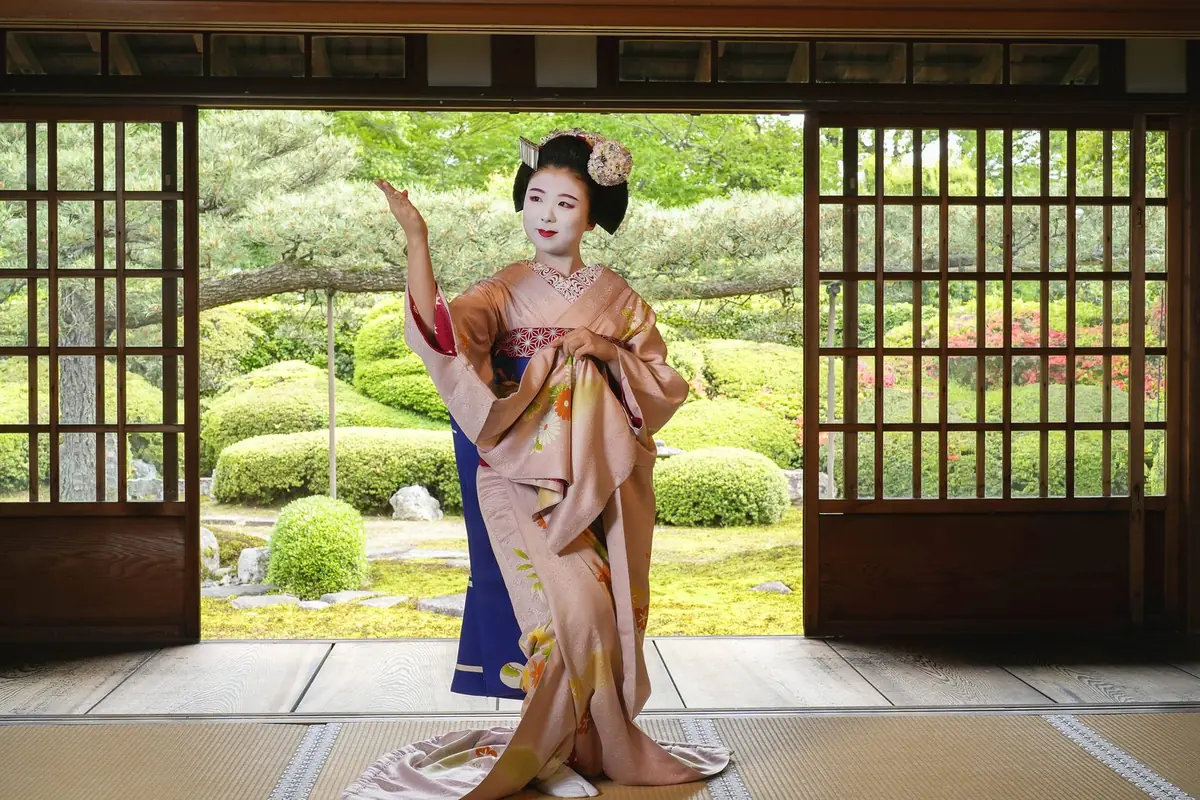
A maiko dance session at a Zen temple near Kyoto Station
Rake a Zen garden, watch two maiko dances and share green tea at Ikka-in, a temple rarely open to the public, one stop from Kyoto Station. Sessions start at 2:00 pm and 3:30 pm.
See the 2:00 pm and 3:30 pm sessions →Sources
- Kyoto Hanamachi Official Site: Maiko — Kyoto Traditional Musical Art Foundation (Ookini Zaidan)
- Maiko: costume, makeup, and hairstyle — Kyoto Traditional Musical Art Foundation (Ookini Zaidan)
- Geiko — Kyoto Traditional Musical Art Foundation (Ookini Zaidan)
- Kyoto Hanamachi Official Site: The five hanamachi — Kyoto Traditional Musical Art Foundation (Ookini Zaidan)
- Kagai: hospitality in Kyoto's geisha districts — City of Kyoto
- Gion Corner: performances and tickets — Kyoto Traditional Musical Art Foundation
- Kyoto Hanamachi Official Site: The year in the hanamachi — Kyoto Traditional Musical Art Foundation (Ookini Zaidan)
- Miyako Odori 2026 — City of Kyoto (Kyoto Kanko Navi)
- Maiko spring dances — Kyoto City Tourism Association
- Maiko autumn dances — Kyoto City Tourism Association
- How to meet with a geisha in Kyoto — Japan National Tourism Organization
- マナーを守って素晴らしい京都観光を — City of Kyoto (Kyoto Kanko Navi)