Maiko vs. Geiko: How to Tell Kyoto's Apprentices from Geisha
We operate the Maiko & Zen Kyoto experience mentioned in this guide.
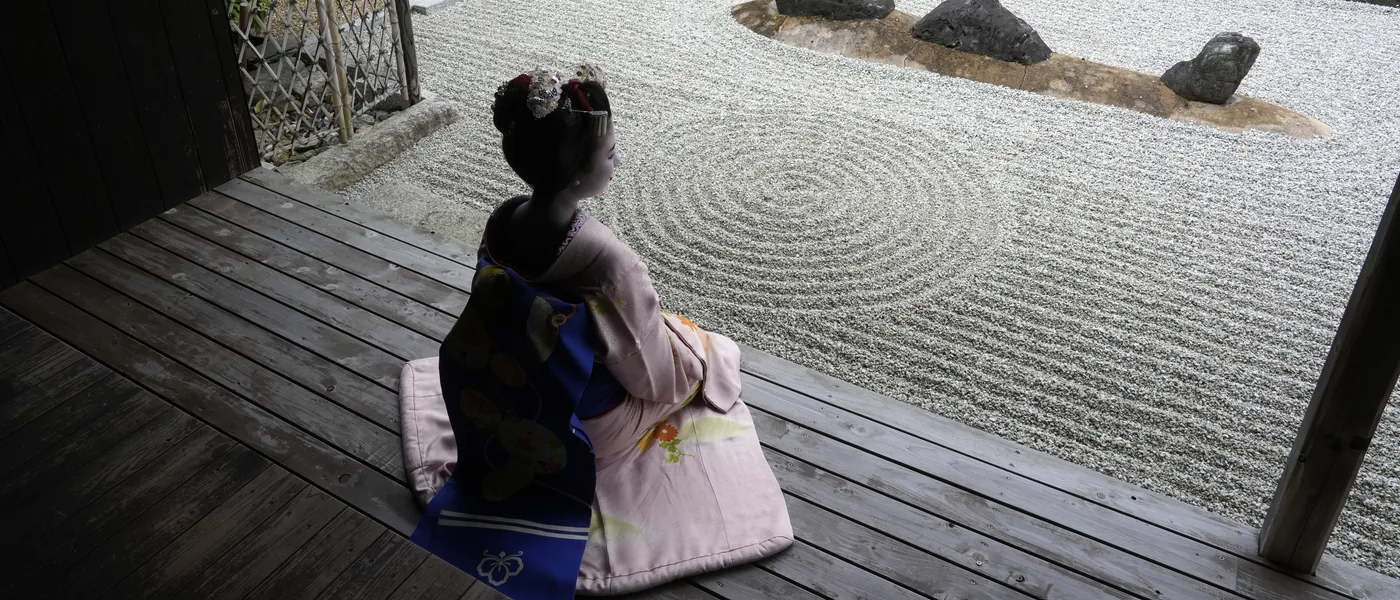
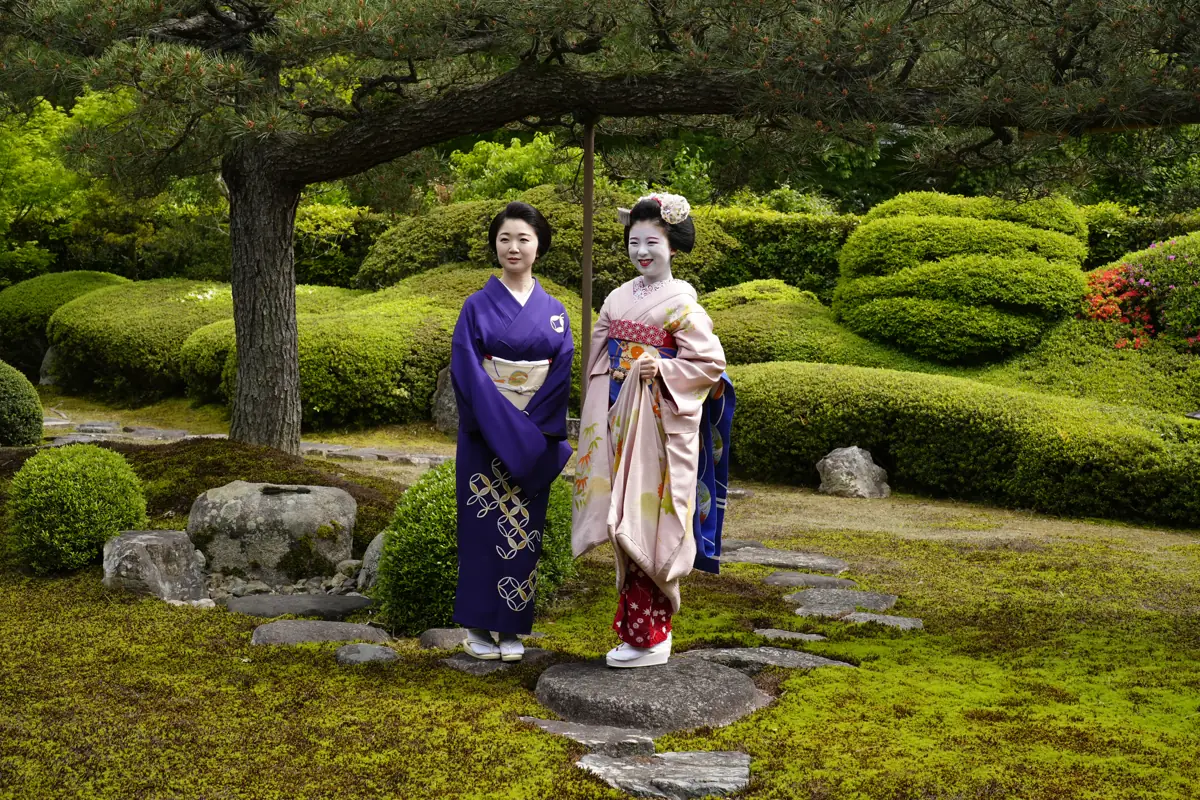
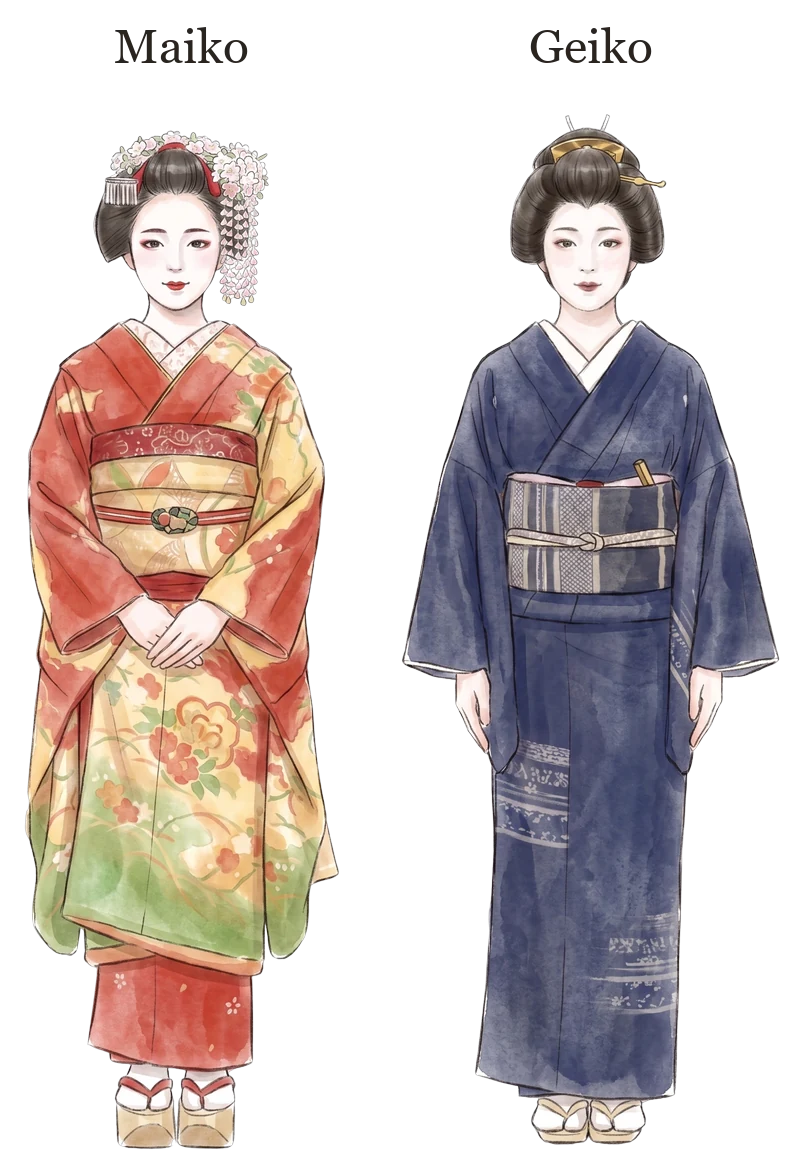
A maiko is an apprentice; a geiko (Kyoto's word for geisha) is a fully trained professional. The difference shows clearly in how they dress: a maiko's hair, hairpins, collar, obi, and footwear all mark her as an apprentice, and they change when she becomes a geiko. Here is how to tell them apart, based on the Kyoto Traditional Musical Art Foundation and the City of Kyoto.
Maiko vs. Geiko at a Glance
| Maiko | Geiko | |
|---|---|---|
| Role | Apprentice | Fully trained professional |
| Who | Girls who have finished junior high school | Maiko who complete their apprenticeship, usually around age 20 |
| Hair | Her own hair, styled in a Japanese hairstyle | Usually a wig in the shimada style |
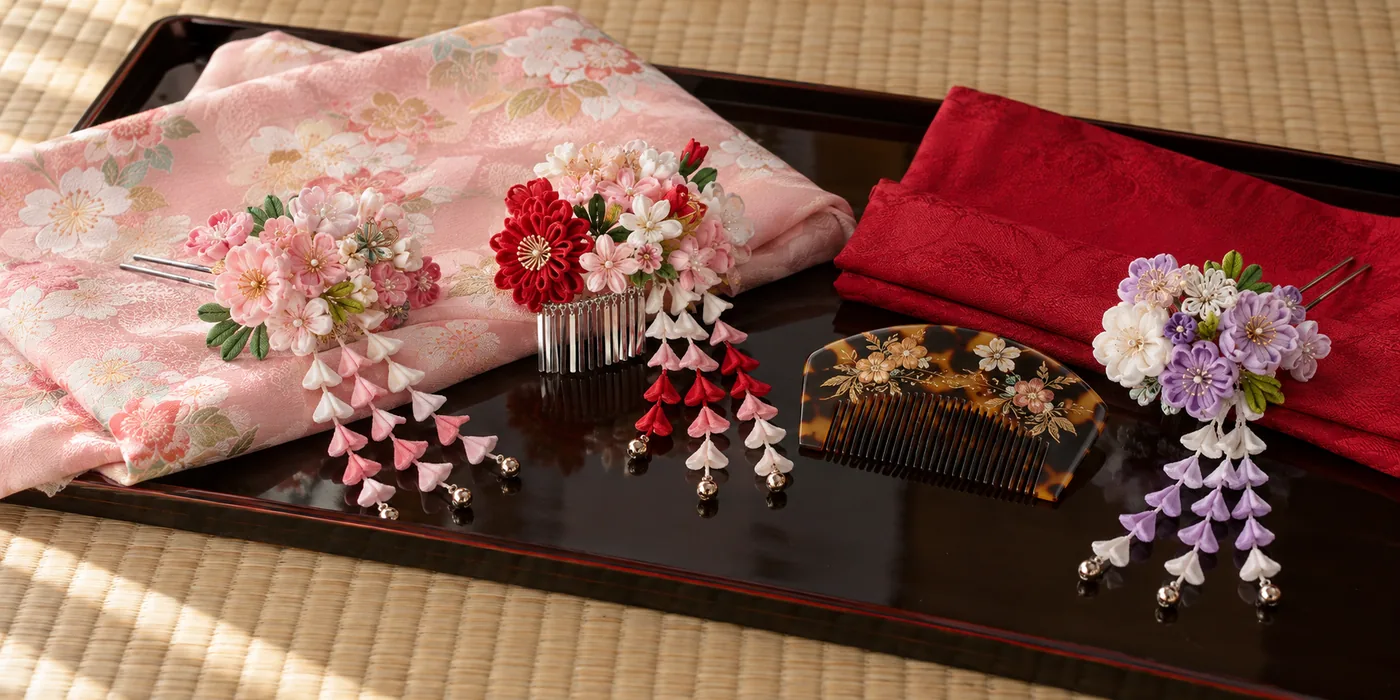
| Hair ornaments | Large flower hairpins (hana kanzashi) that change with the seasons | Small, understated ornaments |
| Collar | Red, with gold thread | White |
| Lips | Newly debuted maiko paint only the lower lip | — |
| Kimono | A furisode in bright colors with a trailing hem (susohiki), with tucks sewn at the shoulders and sleeves | Refined, subdued colors and patterns |
| Obi | The darari obi, with ends hanging nearly to the feet | Shorter, tied in a box-shaped taiko knot |
| Footwear | Tall wooden okobo, about 10–15 cm (4–6 in.) high | Lower sandals instead of okobo |
Hair: Her Own Hair vs. a Wig
The clearest difference is the hair. A maiko styles her own hair, which the foundation calls the big difference from geiko, most of whom wear wigs. A maiko's hairstyle also changes as she gains experience:
- Wareshinobu: the style of a new maiko, with red tie-dyed cloth showing at the front and back.
- Ofuku: after about two years (two or three in Miyagawacho, for example), the tied cloth shows only from behind.
- Sakko: worn just before she becomes a geiko.
Her flower hairpins change every month to match the season. Our guide to maiko hairstyles and kimono explains what each style and month means.
Obi, Collar, and Footwear
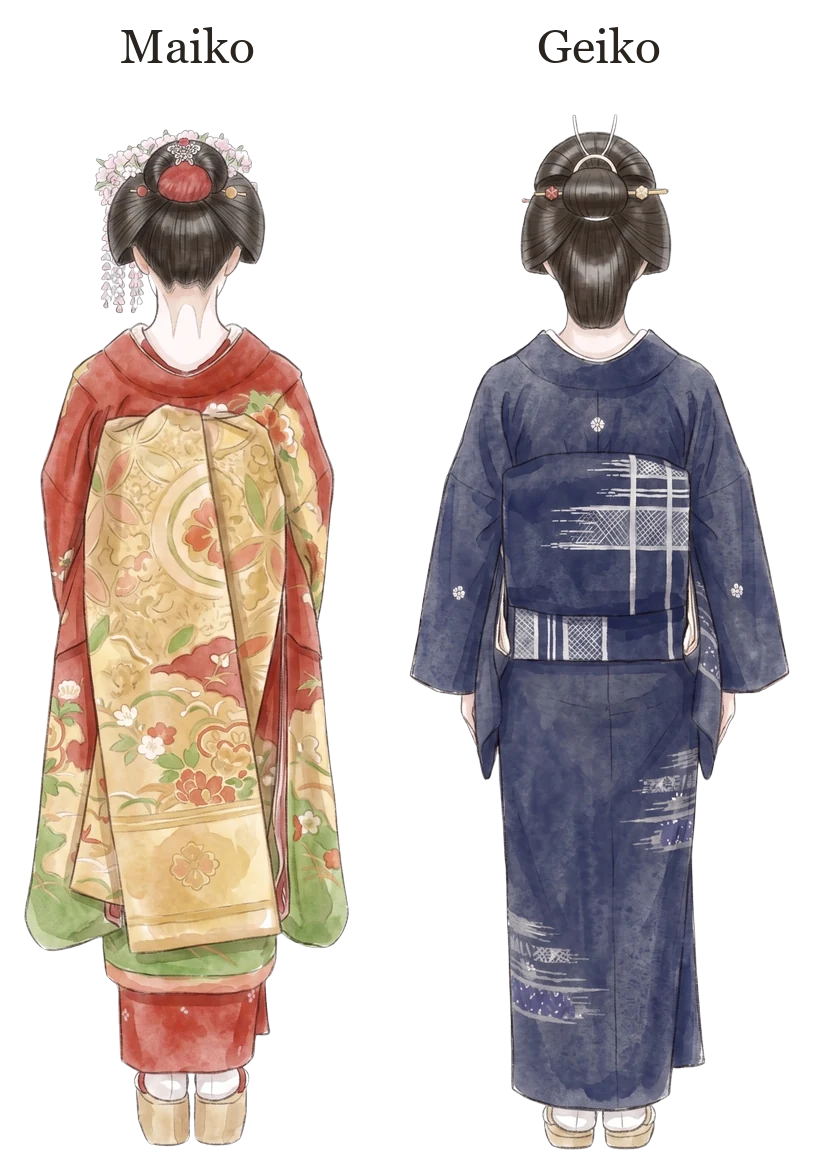
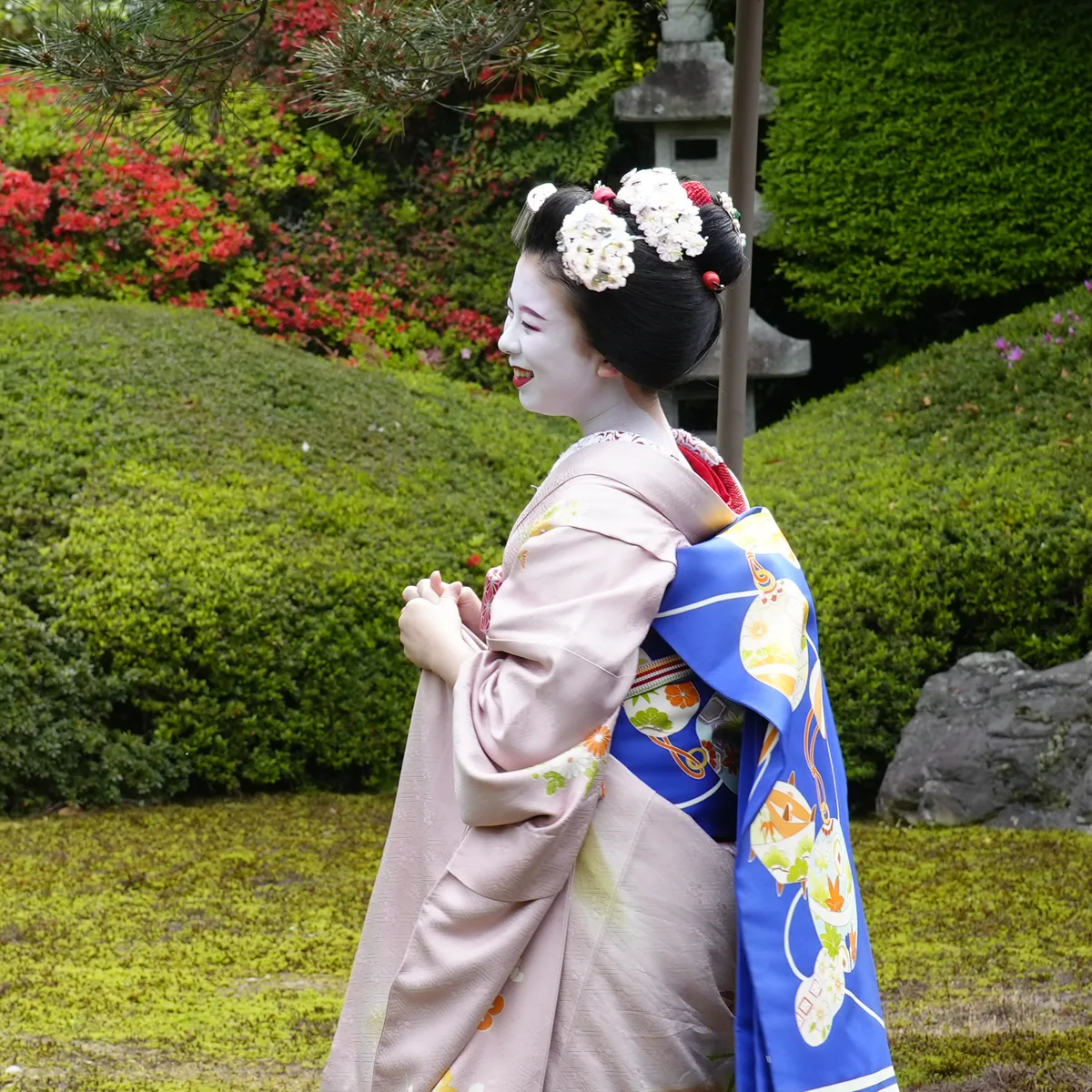
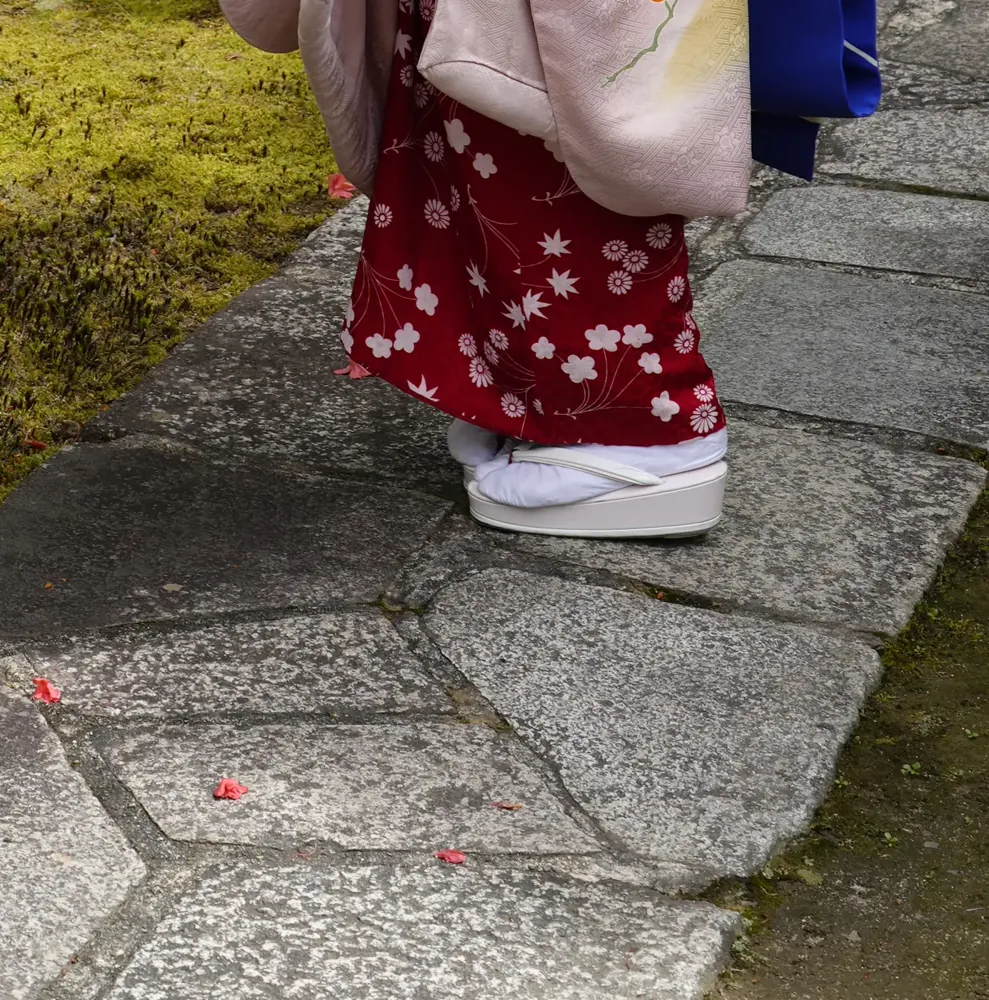
- The darari obi. A maiko's obi is much longer than an ordinary obi, and its two ends hang down almost to her feet. The bottom of the obi bears the crest of her okiya (the house where she lives). During the month of training before her debut, she wears a half-length version.
- A geiko's obi. Shorter than a maiko's, it is tied in a box-shaped taiko knot and does not hang down.
- The collar. A maiko's collar is red. When she becomes a geiko, it changes to white.
- Okobo. These tall wooden sandals, typically about 10–15 cm (4–6 in.) high, are worn only by maiko; geiko wear lower sandals.
- Pocchiri. With kimono other than formal crested ones, a maiko wears a large ornamental obi clasp, often of coral or jade, and often passed down through generations within an okiya.
- The basket. Maiko carry a small basket (ozashiki kago) with essentials such as lipstick, paper, a dance handkerchief, a fan, and name cards.
Each of Kyoto's five geisha districts has its own customs, so some details described here may differ from one district to another.
Makeup
Maiko wear white makeup, applied as a paste with a brush and patted down with a puff. A newly debuted maiko paints only her lower lip. Not every geiko wears white makeup: geiko who specialize in music and song (jikata) wear neither wigs nor white makeup.
Erikae: When a Maiko Becomes a Geiko
The step takes its name from the collar: a maiko's red collar becomes a geiko's white one, so it is called erikae, "turning the collar." It comes after five to six years as a maiko, at around age 20, when she decides whether to become a geiko or leave the district. On the day she puts on a new wig and a black crested kimono and pays courtesy calls to the teahouses that support her. For about two weeks before (two to three weeks in Miyagawacho, for example), she wears the sakko hairstyle and blackens her teeth.
As a geiko, she is expected to stand on her own talent, and a geiko who becomes independent can keep working for life. Read more about their work in what geisha actually do.
Seeing the Difference in Person
Both maiko and geiko perform in the annual dances. See our Kyoto geisha dance calendar.
| Way to see them | What you get |
|---|---|
| The annual dances | Both maiko and geiko perform |
| Maiko & Zen Kyoto (our session) | 90 minutes at Ikka-in, a sub-temple of Tofuku-ji. A maiko dances in the same temple hall with no stage between you, then takes time for your questions and photos, so you can see her hair, hairpins, and obi up close |
Frequently asked questions
Is a maiko a geisha?
A maiko is an apprentice training to become a geiko, Kyoto's word for geisha. She becomes a geiko after five to six years, at a ceremony called erikae.
How can you tell a maiko from a geiko?
A maiko wears her own hair with flower hairpins, a red collar, a long hanging darari obi, and tall okobo sandals. A geiko wears a white collar and lower sandals instead of okobo, dresses in quieter colors, and in most cases wears a wig.
How old are maiko?
Girls can begin training only after finishing junior high school, and a maiko usually becomes a geiko at around 20, according to the Kyoto Traditional Musical Art Foundation.
What is erikae?
Erikae means 'turning the collar.' It is the ceremony in which a maiko becomes a geiko: her red collar changes to white, and most new geiko begin wearing a wig.
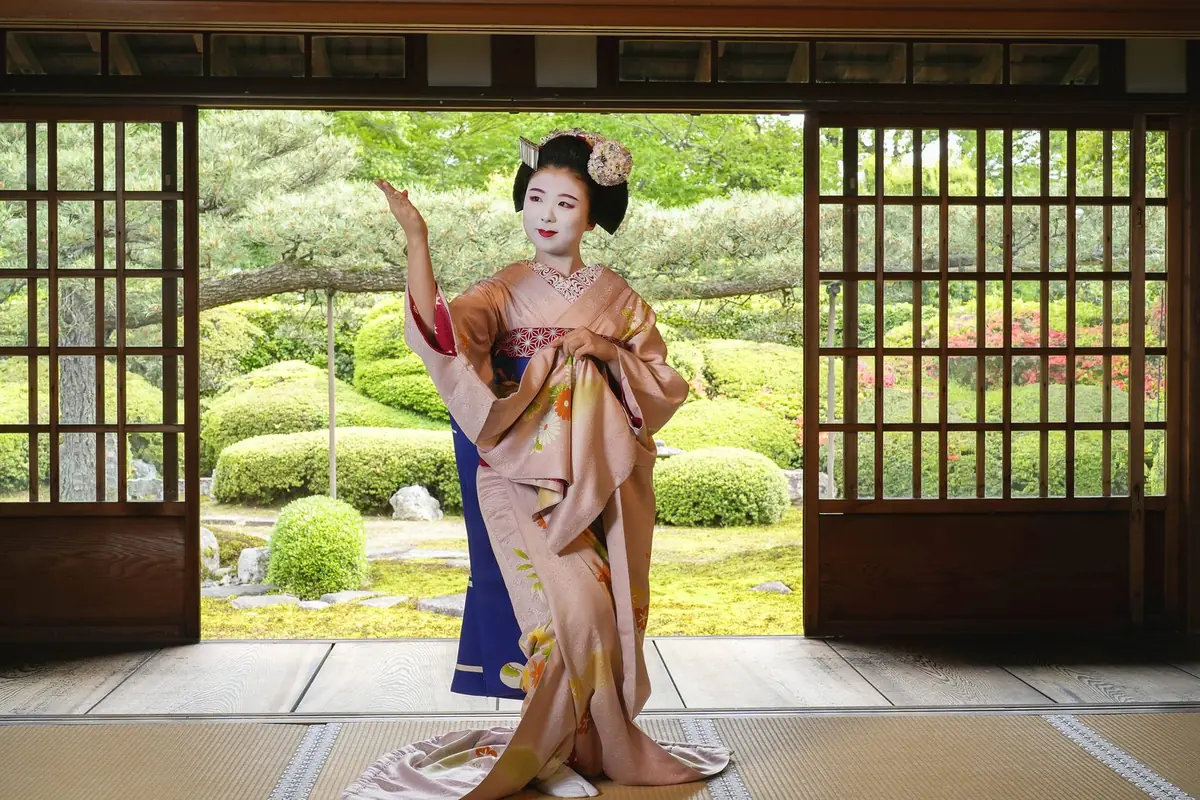
A maiko dance session at a Zen temple near Kyoto Station
Rake a Zen garden, watch two maiko dances and share green tea at Ikka-in, a temple rarely open to the public, one stop from Kyoto Station. Sessions start at 2:00 pm and 3:30 pm.
See the 2:00 pm and 3:30 pm sessions →Sources
- Maiko — Kyoto Traditional Musical Art Foundation (Ookini Zaidan)
- Maiko: costume, makeup, and hairstyle — Kyoto Traditional Musical Art Foundation (Ookini Zaidan)
- Erikae — Kyoto Traditional Musical Art Foundation (Ookini Zaidan)
- What a maiko carries — Kyoto Traditional Musical Art Foundation (Ookini Zaidan)
- Geiko — Kyoto Traditional Musical Art Foundation (Ookini Zaidan)
- The people, skills, and things that support the hanamachi — City of Kyoto
- What are Kyoto's five hanamachi and maiko? — Kyoto City Tourism Association
- Seasons told by a maiko's flower hairpins — Nikkei