What Is a Geisha? What Kyoto's Geiko and Maiko Actually Do
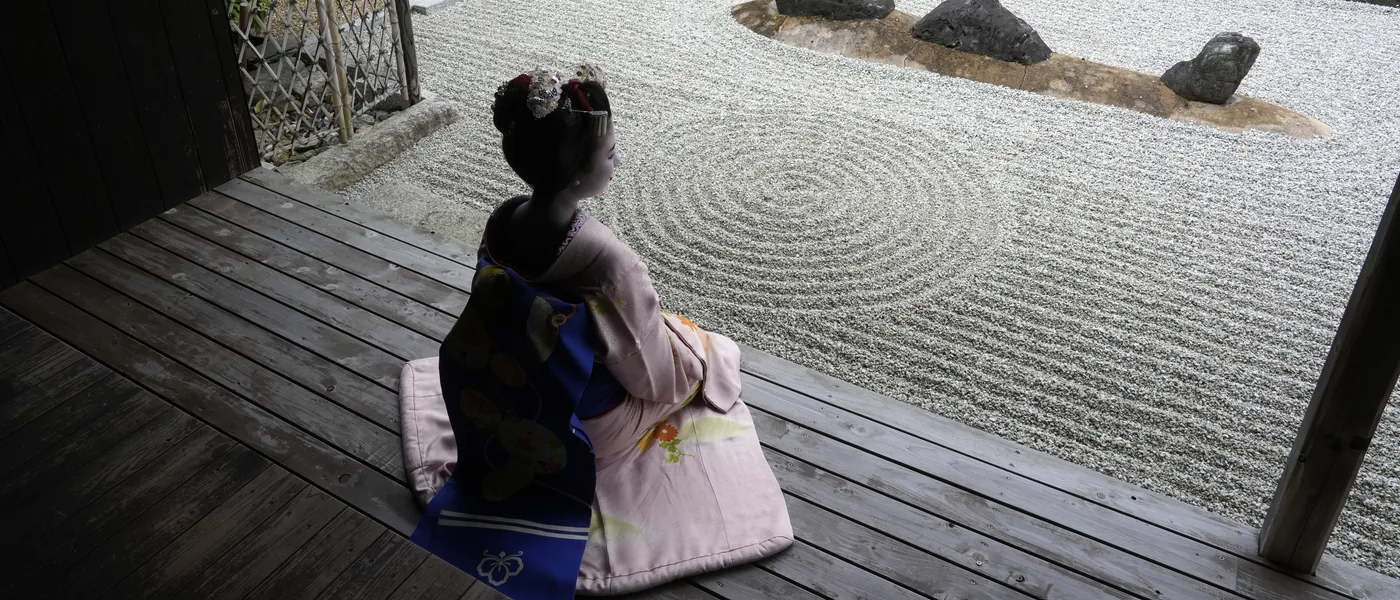
We operate the Maiko & Zen Kyoto experience mentioned in this guide.
A geisha is a professional entertainer, trained in traditional Japanese music and dance, who entertains guests at banquets. In Kyoto, geisha are called geiko, and their apprentices are called maiko. Kyoto still has five geisha districts, where geiko and maiko perform at banquets and on stage. Here is what their work involves, how they train, and how a maiko becomes a geiko.
Geisha, Geiko, and Maiko
- Geisha is the broader Japanese term for professional women who entertain at banquets with dance and music.
- Geiko is the word used in Kyoto and the wider Kansai region for fully fledged geisha. Some specialize in dance, others in music.
- Maiko are apprentices training to become geiko, usually for five to six years.
The City of Kyoto describes geiko and maiko as bearers of traditional performing arts and of hospitality. Their banquets take place in teahouses that usually welcome guests only by introduction, so most travelers see them at public dances and performances instead.
What Geiko and Maiko Do
The Japanese dictionary definition is simple: a geiko is a woman whose profession is to add to the enjoyment of a banquet with dance and music. In practice, the work has three parts:
- Banquets (ozashiki). Maiko and dancer geiko perform dances, geiko musicians play the shamisen and sing, and all of them entertain guests and lead banquet games such as tora tora, a variation of rock-paper-scissors, and konpira fune fune, played to shamisen music. Banquets are held in ochaya, teahouses that arrange the performers, the food, and the room for each guest. Many ochaya follow the custom of ichigen-san okotowari, not accepting first-time guests without an introduction, which the City of Kyoto describes as a way to know each guest well and offer better hospitality.
- Public performances. Each district stages its own public dances, and the five districts also perform together at joint events.
- Lessons. Regular practice in dance, music, and etiquette.
Kyoto has five geisha districts, or hanamachi: Gion Kobu, Miyagawacho, Pontocho, Kamishichiken, and Gion Higashi. For how the districts run, see our guide to geisha in Kyoto.
Two Roles: Dancers and Musicians
The City of Kyoto explains that geiko specialize in one of two roles:
| Role | What they do |
|---|---|
| Tachikata (dancers) | Perform the dances. |
| Jikata (musicians) | Play the shamisen, keep time on the tsuzumi hand drums and taiko drum, play the nokan and shinobue flutes, and sing to accompany the dancers. |
A geiko interviewed by the Kyoto Traditional Musical Art Foundation describes learning the shamisen by watching and listening to a senior geiko, then repeating what she heard, alongside her formal lessons.
How a Maiko Becomes a Geiko
The road to geiko is long. The years a visitor might notice are the five to six she spends as a maiko, training in dance, shamisen, music, song, tea ceremony, and etiquette, until she is judged ready to "turn her collar" in erikae and become a geiko. She becomes a maiko at misedashi, three days of formal greeting rounds of the teahouses in a black crested kimono. Before that come about a year as a shikomi, living in an okiya (a geisha house) after junior high school, and about a month as a minarai, learning at banquets beside an "older sister" geiko.
As a geiko, she is expected to stand on her own talent. A geiko who becomes independent (jimae) has no retirement age and can keep working for life, according to the foundation.
A Day in the Life of a Maiko
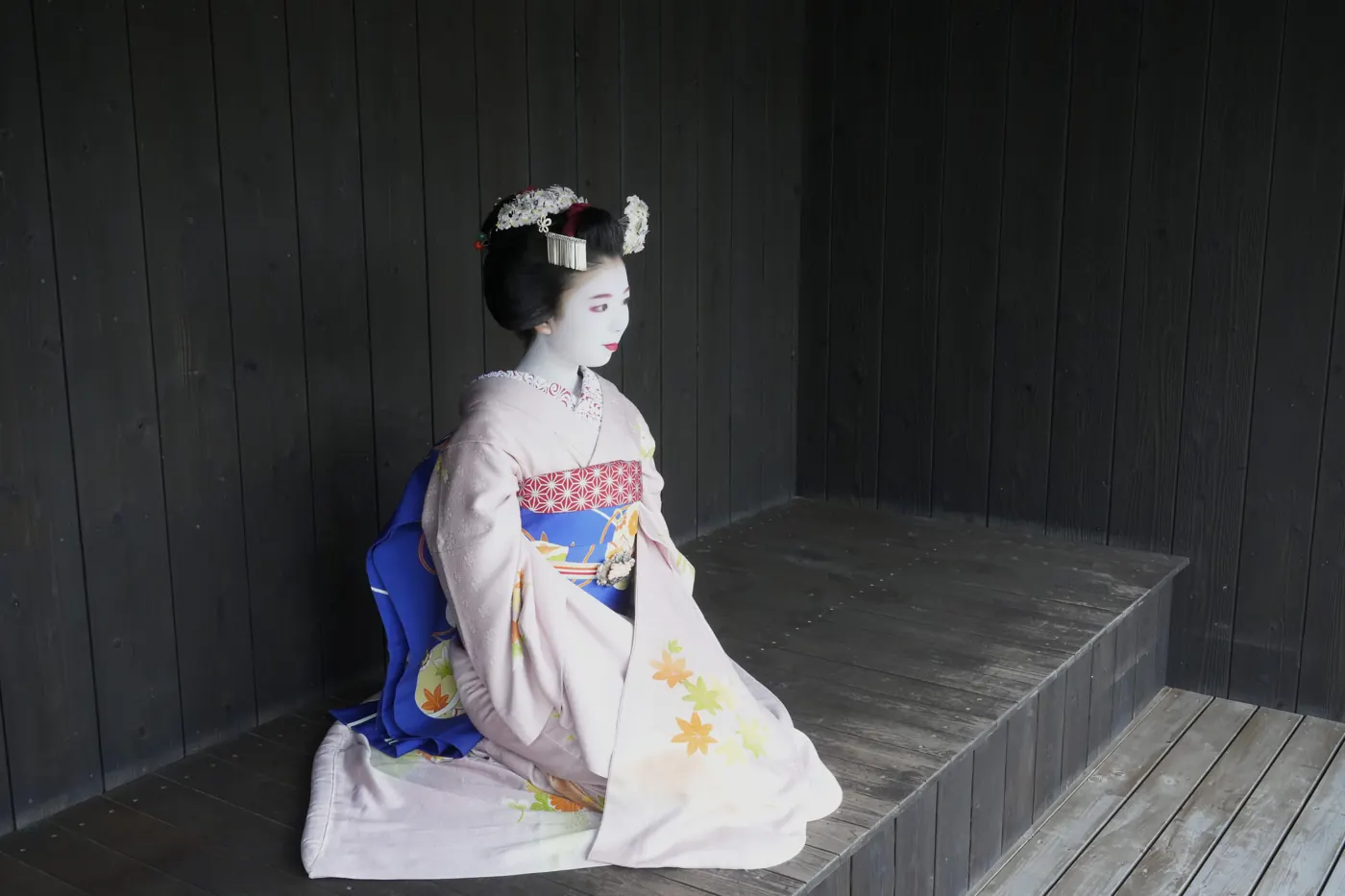
Evening banquets are one part of a maiko's day. According to the foundation, they begin around 6:00 pm, and she often gets to bed after midnight, sometimes after 1:00 am. Before the evening come a late lunch and time to get ready, and before those, lessons such as dance from about 10:00 am until midday or early afternoon at a training school (nyokoba) or theater (kaburenjo). She rises between 8:00 and 10:00 am.
Each of Kyoto's five geisha districts has its own customs, so some details described here may differ from one district to another.
Lessons and Schools
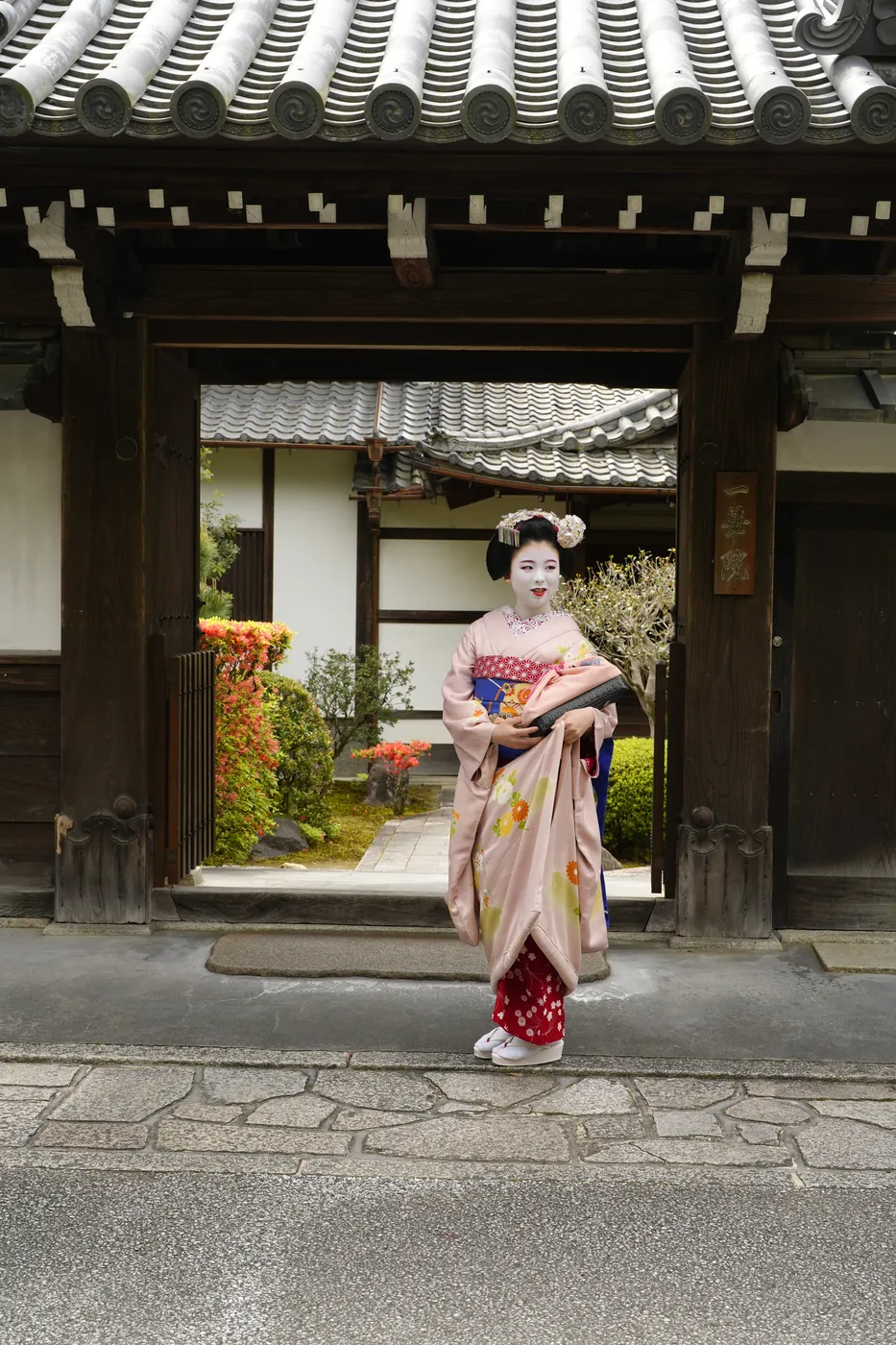
Geiko and maiko study a wide range of performing arts. A City of Kyoto report lists dance; the vocal and shamisen styles nagauta, kouta, tokiwazu, and kiyomoto; percussion; flute; and koto; as well as tea ceremony, calligraphy, and flower arrangement. Each district has its own training facilities, and each follows its own school of dance:
| District | School of dance |
|---|---|
| Gion Kobu | Kyomai Inoue-ryu |
| Miyagawacho | Wakayagi-ryu |
| Pontocho | Onoe-ryu |
| Kamishichiken | Hanayagi-ryu |
| Gion Higashi | Fujima-ryu |
Two of the training schools, Yasaka Nyokoba Gakuen in Gion Kobu and Higashiyama Joshi Gakuen in Miyagawacho, are incorporated as school corporations.
Do Geisha Still Exist Today?
Yes. Kyoto still has five geisha districts, and each stages its own public dances. Around 70 geiko and maiko from the five districts rehearsed together for the joint performance Miyako no Nigiwai in June 2026, and 173 geiko and maiko attended the foundation's 30th-anniversary celebration in January 2026. These are event figures, not a count of all geiko and maiko.
The foundation also honors veteran geiko. Since 1996, it has certified geiko aged 60 and over with long careers as holders of traditional arts (dento gigei hojisha), recognizing their role in preserving and passing on the arts.
Seeing Geiko and Maiko Perform
Ticketed ways to see them include the districts' dances in spring and autumn, and Gion Corner's evening program of traditional arts. See our Kyoto geisha dance calendar and our guide to geisha shows in Kyoto. To learn how to tell an apprentice from a geiko, read maiko vs. geiko.
| Way to see them | What you get |
|---|---|
| The districts' dances | Ticketed, in spring and autumn, on stage |
| An evening program of traditional arts | Ticketed |
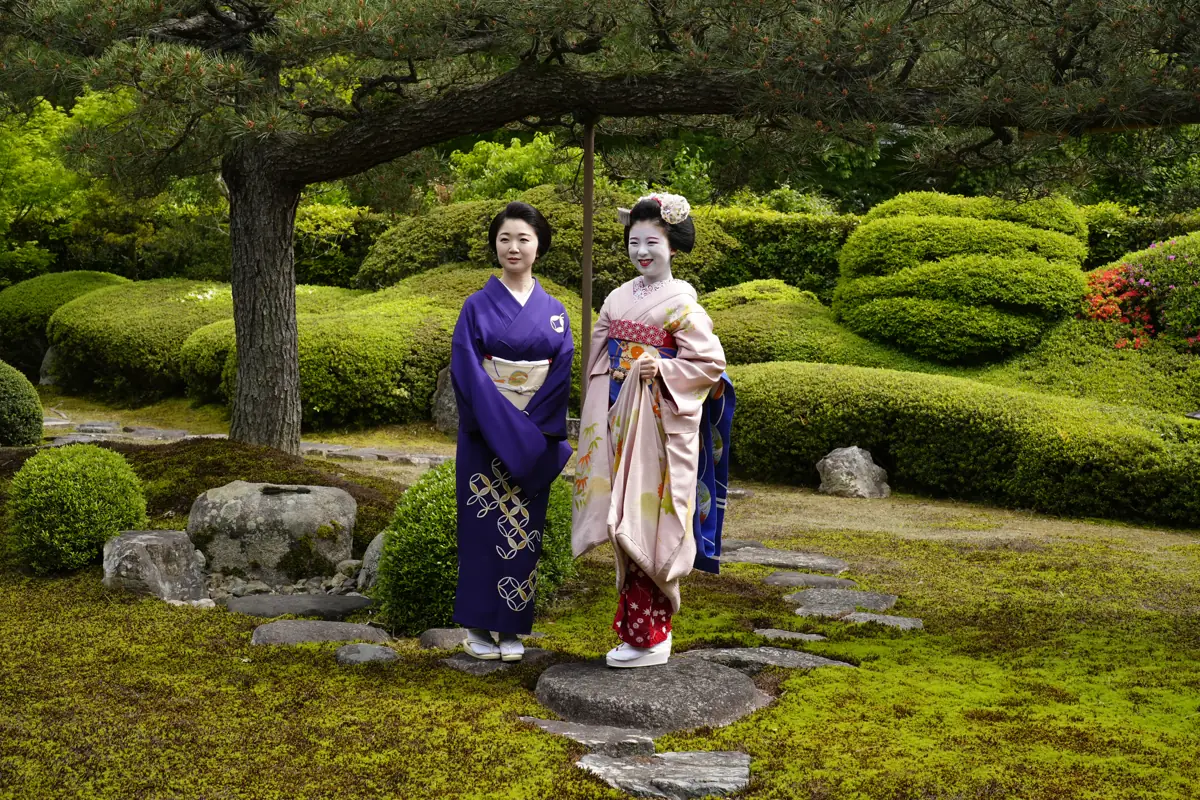
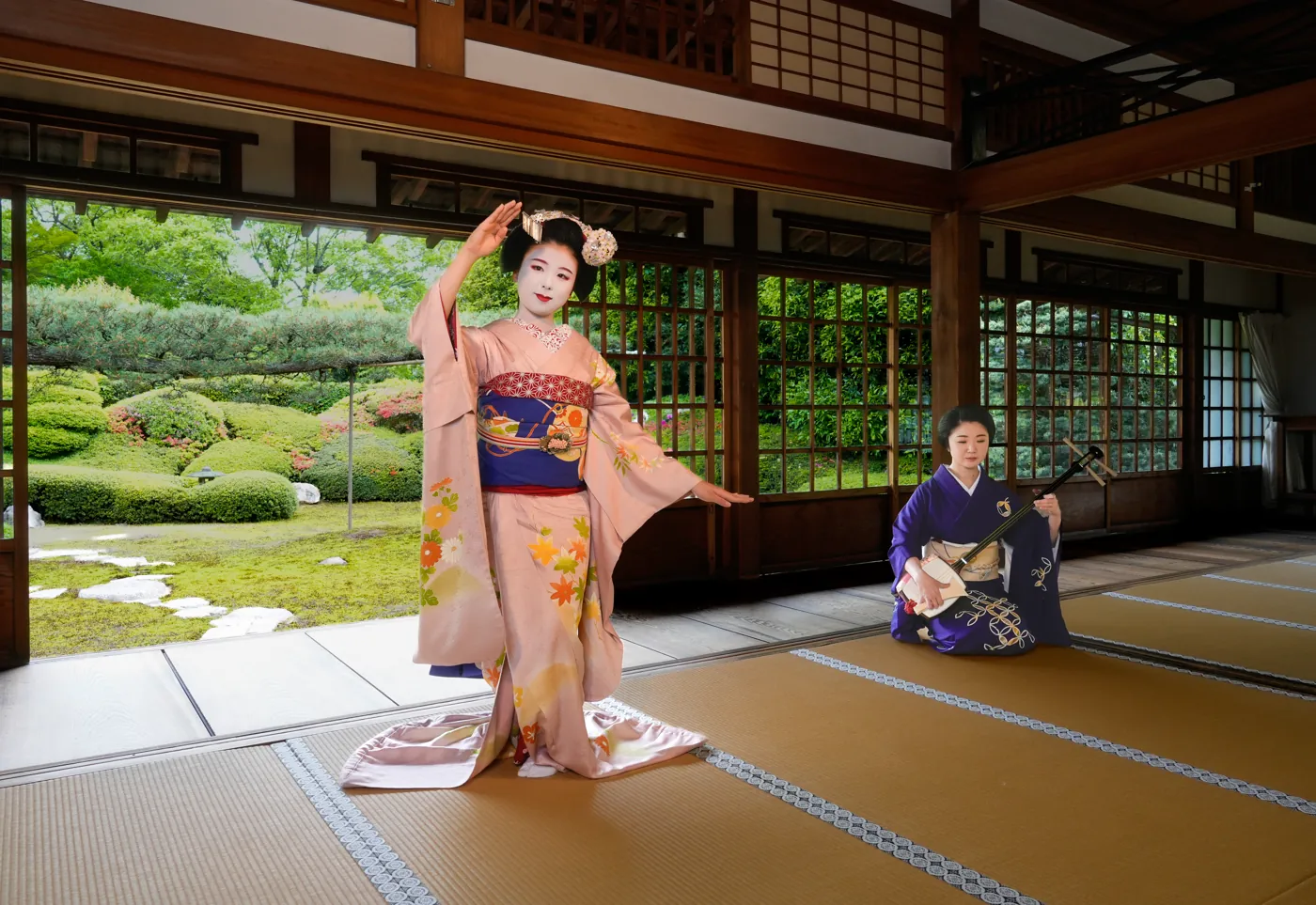
| Maiko & Zen Kyoto (our session) | 90 minutes at Ikka-in, a sub-temple of Tofuku-ji. A maiko dances in the same temple hall with no stage between you, then answers your questions and poses for photos |
Frequently asked questions
Do geisha still exist in Kyoto?
Yes. Kyoto still has five geisha districts, where geiko (Kyoto's geisha) and maiko perform at banquets and in public dances.
What is the difference between a geisha and a geiko?
Geisha is the broader term. In Kyoto and the Kansai region, fully fledged geisha are commonly called geiko. Maiko are apprentices training to become geiko.
How long does it take to become a geiko?
After about a year of training as shikomi and about a month as minarai, a girl debuts as a maiko. According to the Kyoto Traditional Musical Art Foundation, a maiko becomes a geiko after five to six years as a maiko.
Do geiko retire?
A geiko who has become independent (jimae) has no retirement age and can keep working for life, according to the Kyoto Traditional Musical Art Foundation.
What do geiko and maiko do at a banquet?
Maiko and dancer geiko perform dances, geiko musicians (jikata) play the shamisen and sing, and all of them entertain guests and lead banquet games such as tora tora and konpira fune fune.
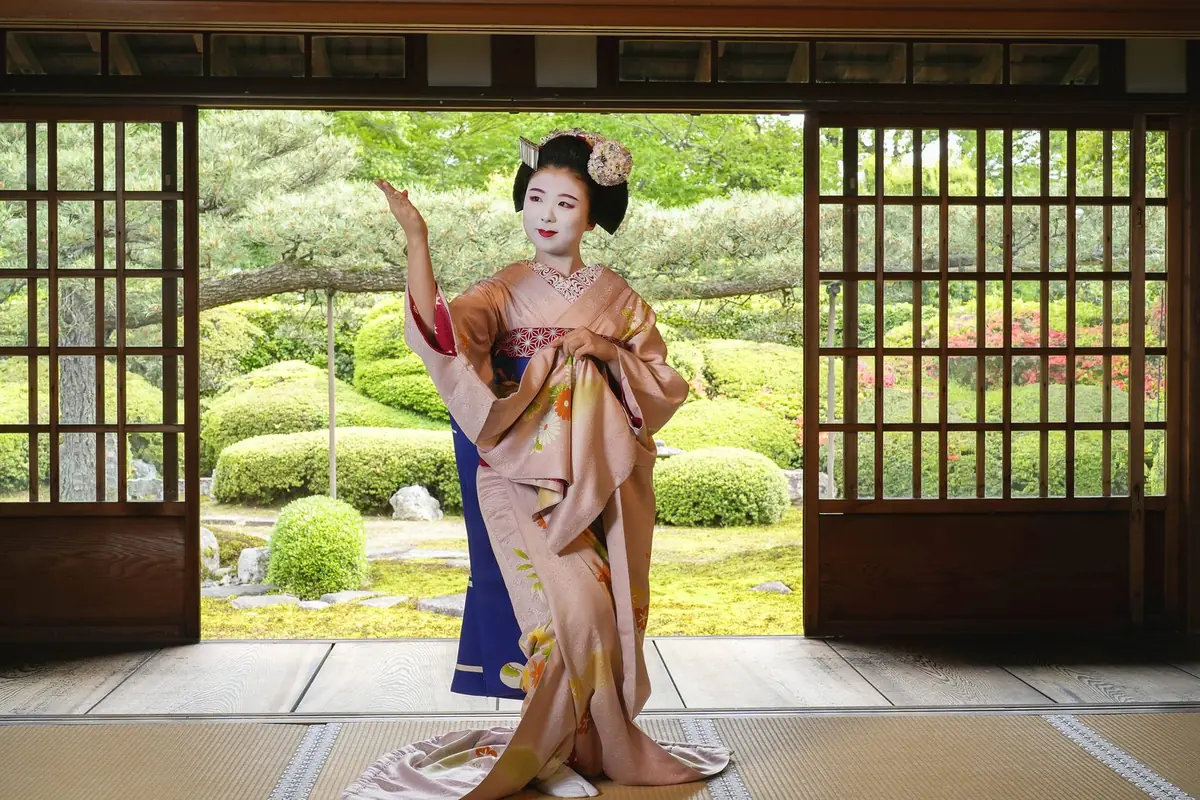
A maiko dance session at a Zen temple near Kyoto Station
Rake a Zen garden, watch two maiko dances and share green tea at Ikka-in, a temple rarely open to the public, one stop from Kyoto Station. Sessions start at 2:00 pm and 3:30 pm.
See the 2:00 pm and 3:30 pm sessions →Sources
- Maiko — Kyoto Traditional Musical Art Foundation (Ookini Zaidan)
- How to become a maiko — Kyoto Traditional Musical Art Foundation (Ookini Zaidan)
- A day in the life of a maiko — Kyoto Traditional Musical Art Foundation (Ookini Zaidan)
- Geiko — Kyoto Traditional Musical Art Foundation (Ookini Zaidan)
- Holders of traditional arts — Kyoto Traditional Musical Art Foundation (Ookini Zaidan)
- Geiko and maiko: bearers of traditional arts and hospitality — City of Kyoto
- Kagai: hospitality in Kyoto's geisha districts — City of Kyoto
- Kyoto intangible cultural heritage review materials (January 2014) — City of Kyoto
- 芸妓 (geiko): Digital Daijisen — Kotobank
- Geiko and maiko of the five districts rehearse for Miyako no Nigiwai — Kumamoto Nichinichi Shimbun (Kyodo News)
- Okini Foundation marks its 30th anniversary with 173 geiko and maiko — Kyoto Shimbun
- Becoming a maiko (recruitment) — Kyoto Traditional Musical Art Foundation (Ookini Zaidan)