Kyoto's Five Geisha Districts (Hanamachi) Explained
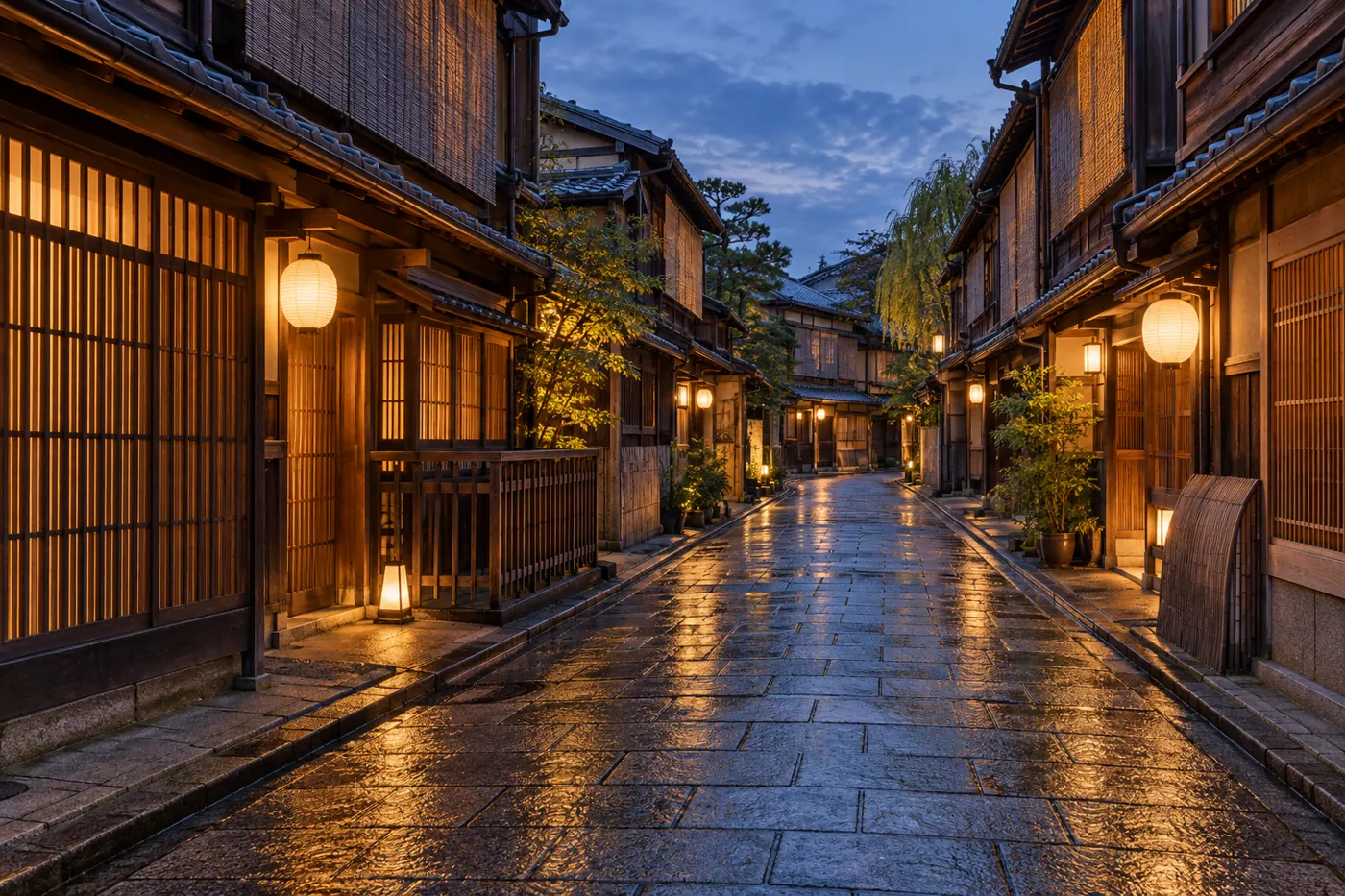
We operate the Maiko & Zen Kyoto experience mentioned in this guide.
Kyoto has five geisha districts, or hanamachi ("flower towns"): Gion Kobu, Miyagawacho, Pontocho, Kamishichiken, and Gion Higashi. Together they are called the gokagai, the five hanamachi. Each has its own teahouses, its own performance venue, its own school of dance, and its own annual public dance. Here is where each district is, what it stages, and how it began.
The Five Districts at a Glance
| District | Where | School of dance | Spring dance | Autumn performance |
|---|---|---|---|---|
| Gion Kobu | Higashiyama Ward, between the Kamo River and Higashioji-dori | Kyomai Inoue-ryu | Miyako Odori | Onshukai |
| Miyagawacho | Higashiyama Ward, on the east bank of the Kamo River | Wakayagi-ryu | Kyo Odori | Mizuekai |
| Pontocho | Nakagyo Ward, a narrow street along the west bank of the Kamo River | Onoe-ryu | Kamogawa Odori | Suimeikai |
| Kamishichiken | Kamigyo Ward, beside Kitano Tenmangu Shrine | Hanayagi-ryu | Kitano Odori | Kotobukikai |
| Gion Higashi | Higashiyama Ward, north of Shijo-dori between Higashioji-dori and Hanamikoji | Fujima-ryu | — | Gion Odori |
Source: Kyoto Traditional Musical Art Foundation. For this year's dates and tickets, see our Kyoto geisha dance calendar.
Gion Kobu
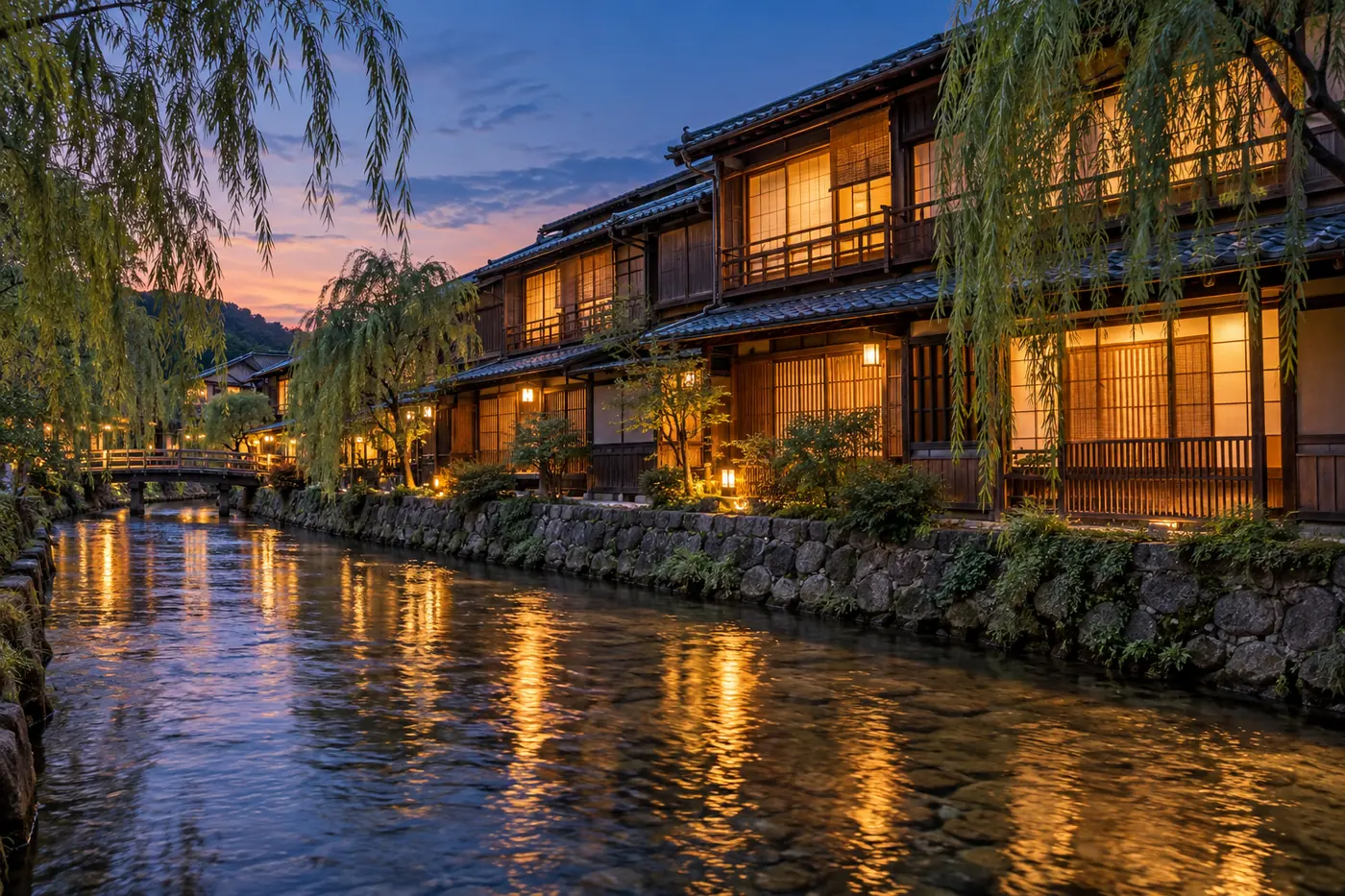
Gion Kobu is Kyoto's largest hanamachi, according to the Kyoto Traditional Musical Art Foundation, and includes the Gion Shirakawa preservation district. Gion grew up as the gate town of Gion Shrine, now Yasaka Shrine, from the Kan'ei era (1624–1644).
Its Miyako Odori was first staged in 1872, as a side attraction of Japan's first exposition, held to help Kyoto recover after the capital moved to Tokyo. It is performed at the Gion Kobu Kaburenjo, a wooden theater completed in 1913. The district's autumn recital is the Onshukai.
Miyagawacho
Miyagawacho lies on the east bank of the Kamo River. Its history is tied to kabuki: after embankment works on the Kamo River in 1670, teahouses multiplied in the area, according to the City of Kyoto. The name is said to come from the stretch of the river where the Gion Festival's portable shrines were washed.
Its Kyo Odori began in 1950 and is staged each spring at the Miyagawacho Kaburenjo, a theater built in 1916, renovated in 1970, and rebuilt to reopen in 2025. Each October, the district also holds the Mizuekai, an autumn recital revived in 2006.
Pontocho
Pontocho is a narrow street of about 500 meters running along the west bank of the Kamo River, from Shijo-dori to just south of Sanjo-dori. According to the district, it was created on land formed by riverbank works in 1670, teahouses appeared around 1712, and geiko licensing is said to date from 1813. The origin of the name is debated; one theory links it to the Portuguese word ponta or ponte.
Its Kamogawa Odori was first staged in 1872, also for the Kyoto Exposition. Today it is held at the Pontocho Kaburenjo, completed in 1927. The autumn recital, the Suimeikai, takes its name from the clear water of the river beside the theater.
Kamishichiken
Kamishichiken, beside Kitano Tenmangu Shrine, is described by Japan's tourism agency as Kyoto's oldest hanamachi. Its name means "seven upper houses." According to the district, seven teahouses were built in 1444 from timber left over from rebuilding the shrine, as rest houses for worshippers.
The district flourished after Toyotomi Hideyoshi held his Grand Kitano Tea Ceremony at the shrine in 1587. According to tradition, he praised the teahouses' mitarashi dango (sweet dumplings), and the district's crest of five dumplings comes from this story. Its Kitano Odori has been performed every spring at the Kamishichiken Kaburenjo since 1952, and its autumn performance is the Kotobukikai.
Gion Higashi
Gion Higashi spans the streets north of Shijo-dori between Higashioji-dori and Hanamikoji. It stands on the site of a former Kyoto residence of the Zeze domain, cleared in 1870, after which teahouses were built; in the Meiji era, Gion was divided into Kobu and Otsubu. According to the City of Kyoto, Otsubu was renamed Higashi Shinchi in 1949 and became Gion Higashi around 1955.
Unlike the other districts, Gion Higashi stages its main dance in autumn. Its Gion Odori has been held since 1952 and runs for 10 days from November 1 at the Gion Kaikan theater.
When the Five Districts Perform Together
The Kyoto Traditional Musical Art Foundation brings the districts together for joint performances. One joint show, Miyako no Nigiwai, began in 1994 to mark the 1,200th anniversary of the founding of Heian-kyo, Kyoto's ancient capital, and features around 70 geiko and maiko from all five districts. For more on who performs, read what geisha actually do.
Visiting the Districts Respectfully
The districts are working neighborhoods, not theme parks. Residents and the local teahouse and geiko associations in Gion have asked visitors not to stop, touch, follow, or photograph geiko and maiko without permission, and not to enter private property. The respectful way to see them is at a performance; our guide to geisha in Kyoto explains the options.
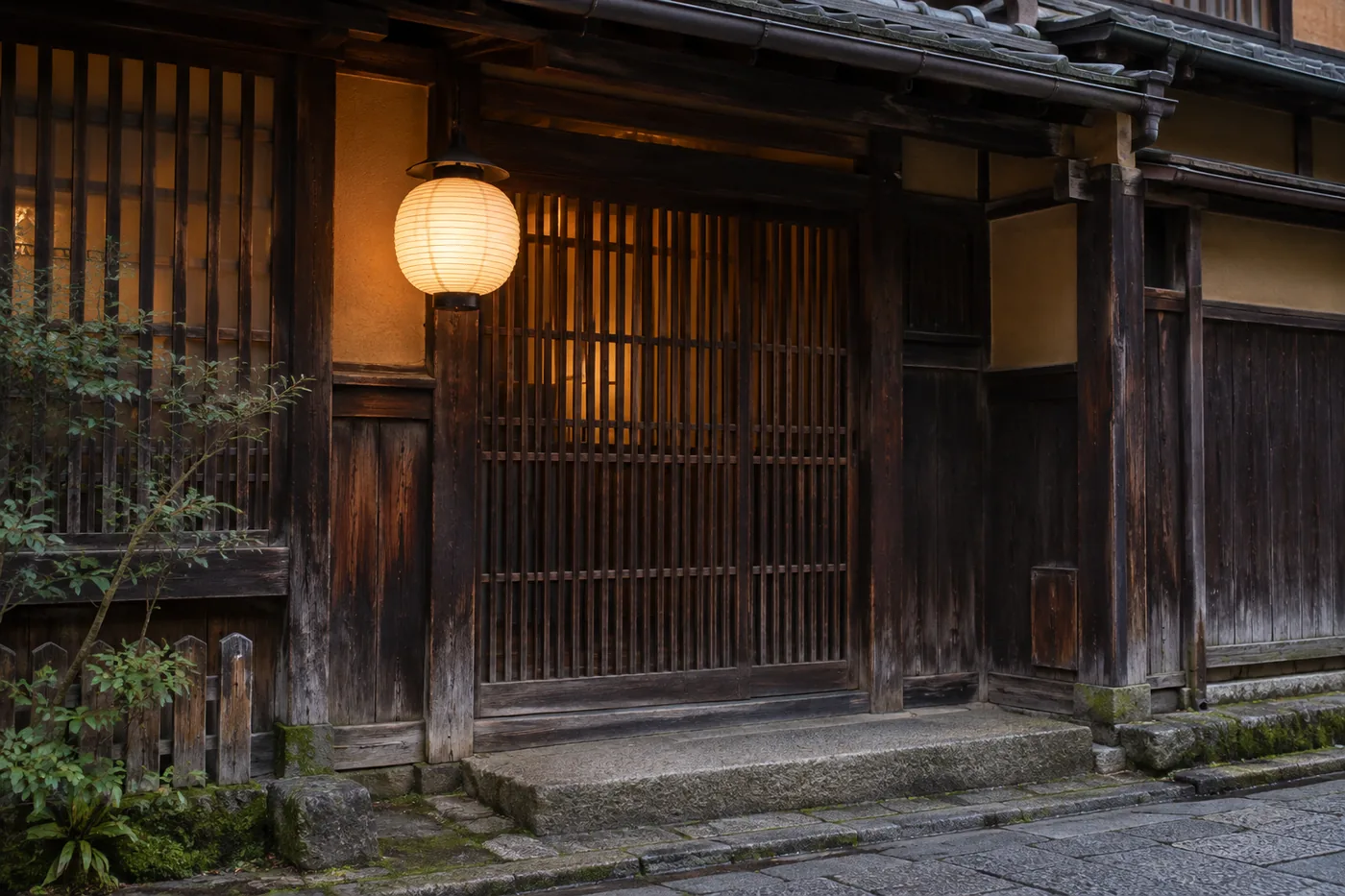
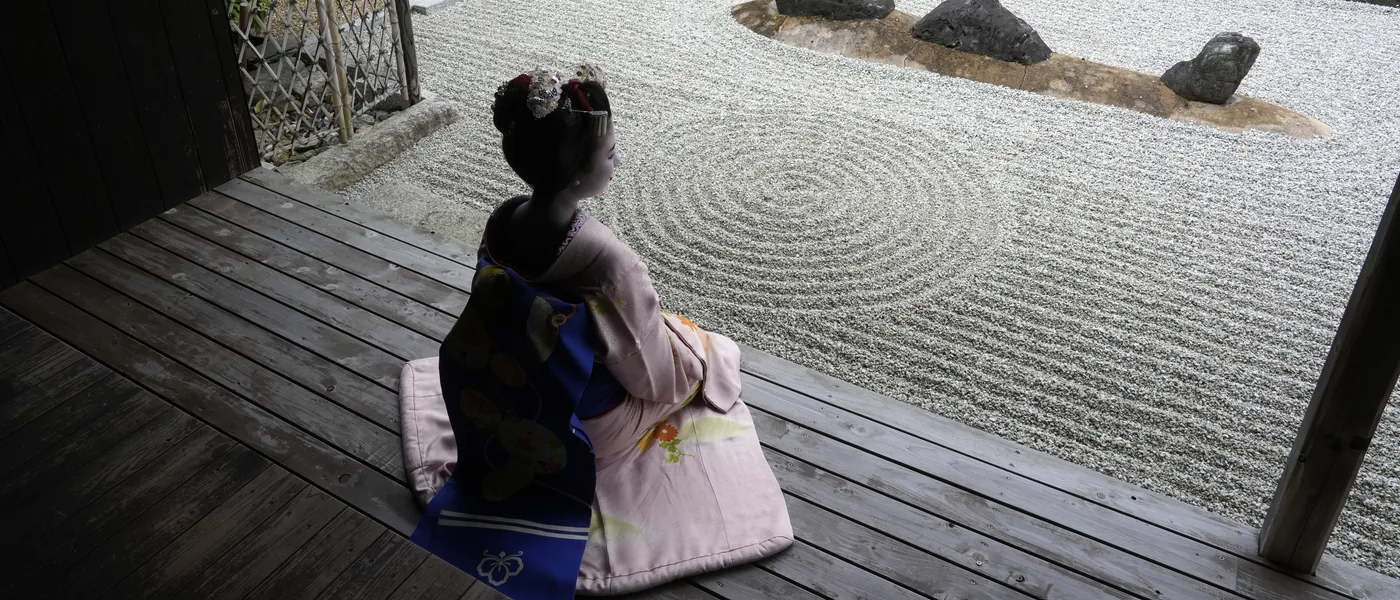
See a maiko up close, away from the crowds. We operate Maiko & Zen Kyoto, a 90-minute session at Ikka-in, a sub-temple of Tofuku-ji, where a maiko dances in the same temple hall with no stage between you, then takes time for your questions and photos. See current session times and prices.
Frequently asked questions
What are Kyoto's five geisha districts?
Gion Kobu, Miyagawacho, Pontocho, Kamishichiken, and Gion Higashi. Together they are called the gokagai, the five hanamachi.
Which is the largest geisha district in Kyoto?
Gion Kobu, according to the Kyoto Traditional Musical Art Foundation. It stages the Miyako Odori every April.
Which is the oldest geisha district in Kyoto?
Japan's tourism agency describes Kamishichiken, beside Kitano Tenmangu Shrine, as Kyoto's oldest. Its own history dates its first teahouses to 1444.
Do the five districts ever perform together?
Yes. Since 1994, geiko and maiko from all five districts have performed together in Miyako no Nigiwai, a joint show organized by the Kyoto Traditional Musical Art Foundation.
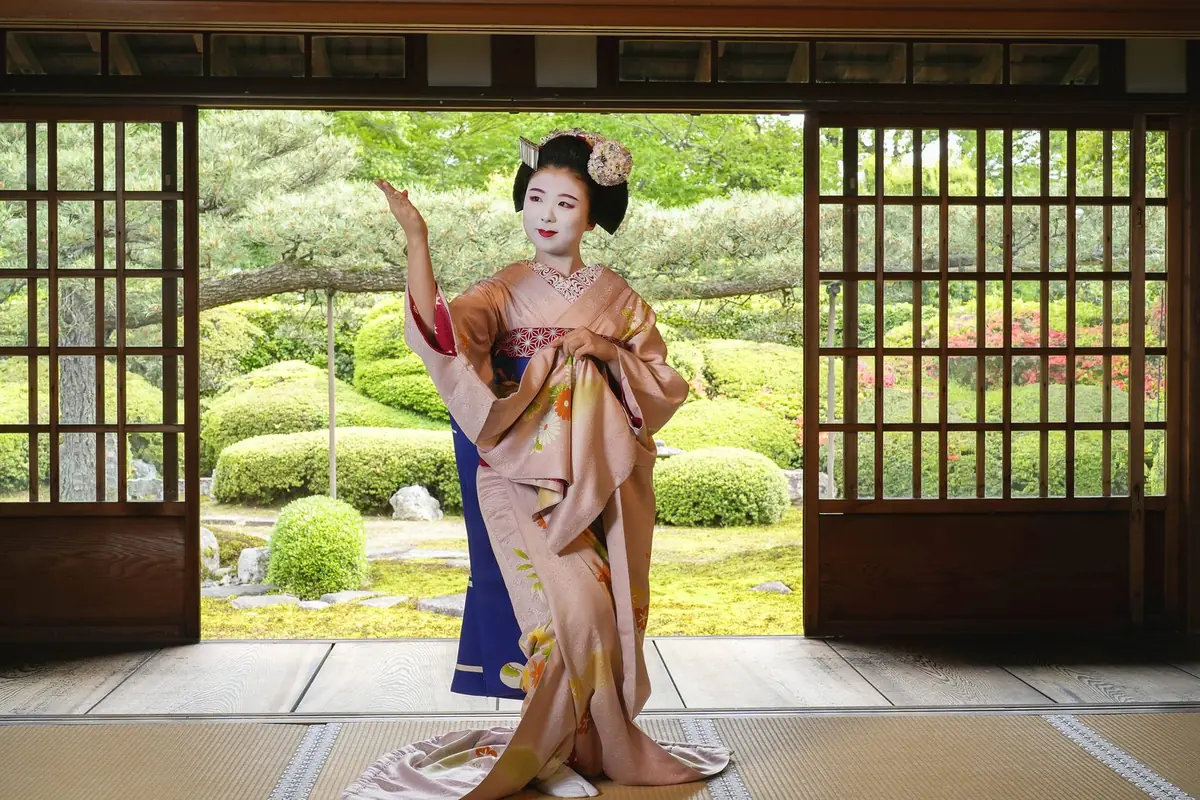
A maiko dance session at a Zen temple near Kyoto Station
Rake a Zen garden, watch two maiko dances and share green tea at Ikka-in, a temple rarely open to the public, one stop from Kyoto Station. Sessions start at 2:00 pm and 3:30 pm.
See the 2:00 pm and 3:30 pm sessions →Sources
- Kyoto's five hanamachi — Kyoto Traditional Musical Art Foundation (Ookini Zaidan)
- Miyako no Nigiwai — Kyoto Traditional Musical Art Foundation (Ookini Zaidan)
- Miyako Odori — Gion Kobu Kaburenjo
- Kamogawa Odori: history — Pontocho Kaburenjo
- About Pontocho — Pontocho Kaburenjo
- Kyo Odori — Miyagawacho
- About Miyagawacho — Miyagawacho
- Miyagawacho Kaburenjo — Miyagawacho
- Kamishichiken — Kamishichiken Kabukai
- Kamishichiken (multilingual explanation) — Japan Tourism Agency
- Maiko autumn dances — Kyoto City Tourism Association
- Historic landscape maintenance plan (hanamachi section) — City of Kyoto