Geisha Shows in Kyoto: Where to Watch Maiko Dance in Any Season
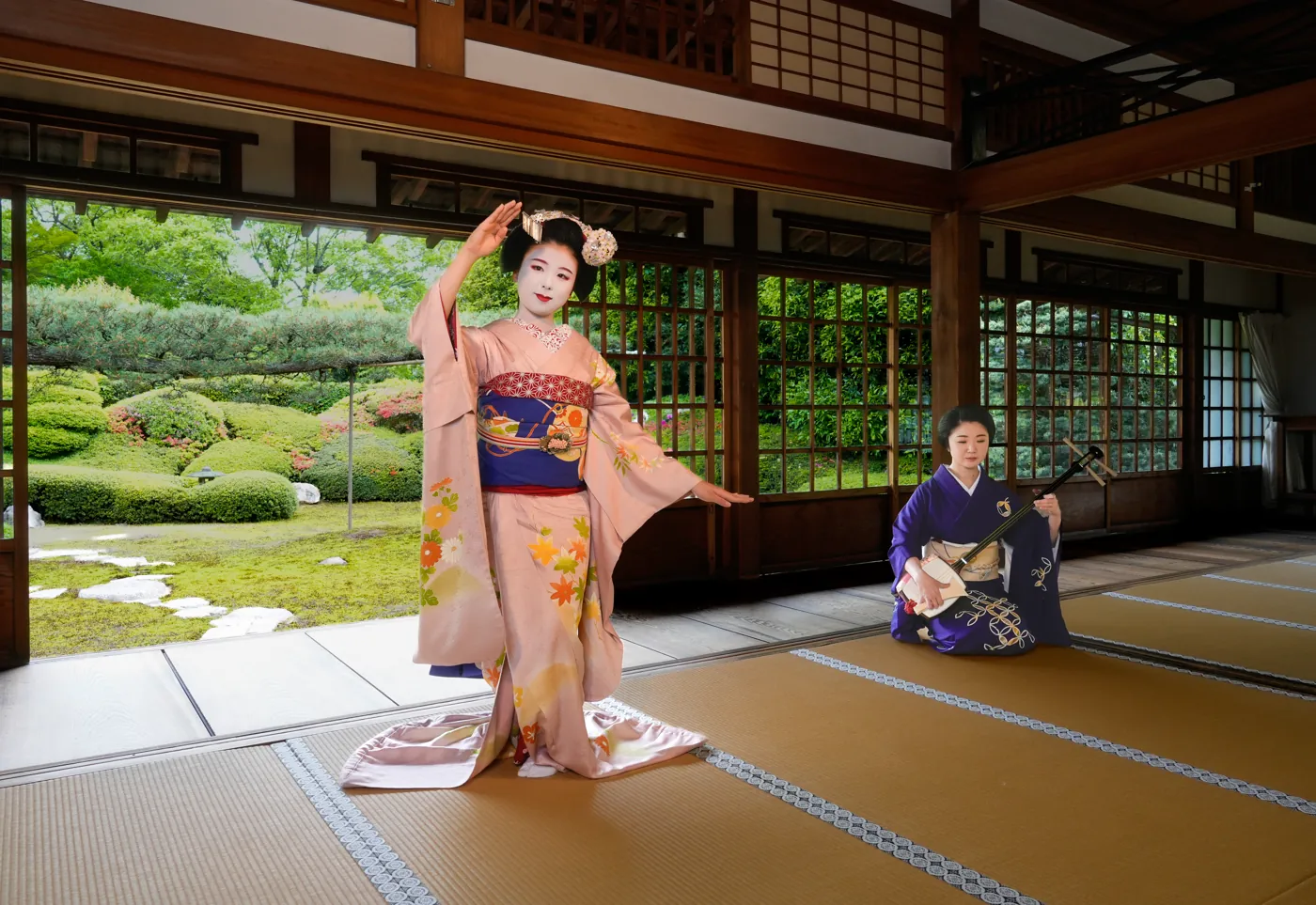
We operate the Maiko & Zen Kyoto experience mentioned in this guide.
You can watch maiko dance in Kyoto in any month. Gion Corner stages a short show most evenings for much of the year; each geisha district holds a full public dance once a year, in spring or early November; and small-group sessions let you watch a maiko dance at close range and talk with her afterward. Here is how the options compare, with times and prices checked in October 2026.
Geisha Show Options at a Glance
| Option | When | What you see | Length | Price (as of Oct 2026) |
|---|---|---|---|---|
| Gion Corner | Daily, 6:00 pm and 7:00 pm (Tue–Fri only, Dec 1–Mar 11; closed a few days a year) | A sampler of seven arts; the kyomai dance by a maiko is one part | About 1 hour | 5,500 yen (adults 23+); 6,050 yen with tea |
| Spring odori | Late March to May | A full stage production by one district's geiko and maiko | About 1 hour (Miyako Odori) | Roughly 4,000–8,000 yen |
| Gion Odori | November 1–10 | Gion Higashi's autumn stage production | About 1 hour | 6,000 yen; 7,000 yen with tea (2026) |
| Tea and dance in a small room | Varies by operator | A maiko dances for a small audience while tea is served | Varies by venue | Higher than a theater seat; varies by operator |
| Dinner or banquet with maiko | Mostly evenings | A meal with dance, conversation, and banquet games | 2–3 hours | Usually the highest; varies with the number of guests and the menu |
| Maiko & Zen Kyoto (our session) | 2:00 pm and 3:30 pm | Two dances in the same temple hall with no stage between you, then time to talk and take photos | 90 minutes | 23,000 yen, including an English-speaking guide, the Zen garden, two dances with tea and a sweet, and time with the maiko |
What Each Show Is Like
| Format | How close you sit | Talk with the maiko | Photos | English | When |
|---|---|---|---|---|---|
| Gion Corner | Theater seat | No | With a maiko after winter-season shows | English information available | Most evenings |
| Annual odori | Theater seat | No | Check the theater's rules | English sites for several dances | Spring and early November, afternoons |
| Tea and dance in a small room | In the room | Often a short Q&A | Often | Varies | Varies |
| Dinner or banquet | At the table | Yes, during the meal | Usually | Interpreter varies | Evenings |
| Maiko & Zen Kyoto (ours) | Same temple hall, no stage | Dedicated time at the end | Yes | English-speaking guide | Afternoons |
Gion Corner: A Show Most Evenings
Gion Corner, run by the Kyoto Traditional Musical Art Foundation in Gion Kobu, is a practical choice if your dates miss the seasonal dances. Each roughly one-hour program samples seven Japanese arts (six in winter): kyomai (the Kyoto-style dance performed by maiko), tea ceremony, flower arrangement, koto music, court dance, kyogen comedy, and either bunraku puppetry or noh.
- Times: 6:00 pm and 7:00 pm daily. From December 1 to March 11, performances run Tuesday to Friday only and are not held on public holidays.
- Closed: July 16, August 16, and December 26 to January 4.
- Tickets: 5,500 yen (23 and over), 3,850 yen (16–22), 3,300 yen (7–15); premium seats 6,600 yen; a seat that includes tea 6,050 yen.
- Photos with a maiko: offered after winter-season performances.
The maiko dance is one part of a varied program, so Gion Corner suits travelers who want a broad introduction to traditional Japanese arts in a single evening.
The Odori: Full Stage Productions
Each of Kyoto's five geisha districts stages one major public dance a year. Four are held in spring (Kitano Odori, Miyako Odori, Kyo Odori, and Kamogawa Odori), and Gion Odori is held November 1–10. These are full stage productions by each district's geiko and maiko, and some tickets include tea served before the show. See our Kyoto geisha dance calendar for 2026–2027 dates, prices, and ticket sale dates.
Small-Group Sessions with a Maiko
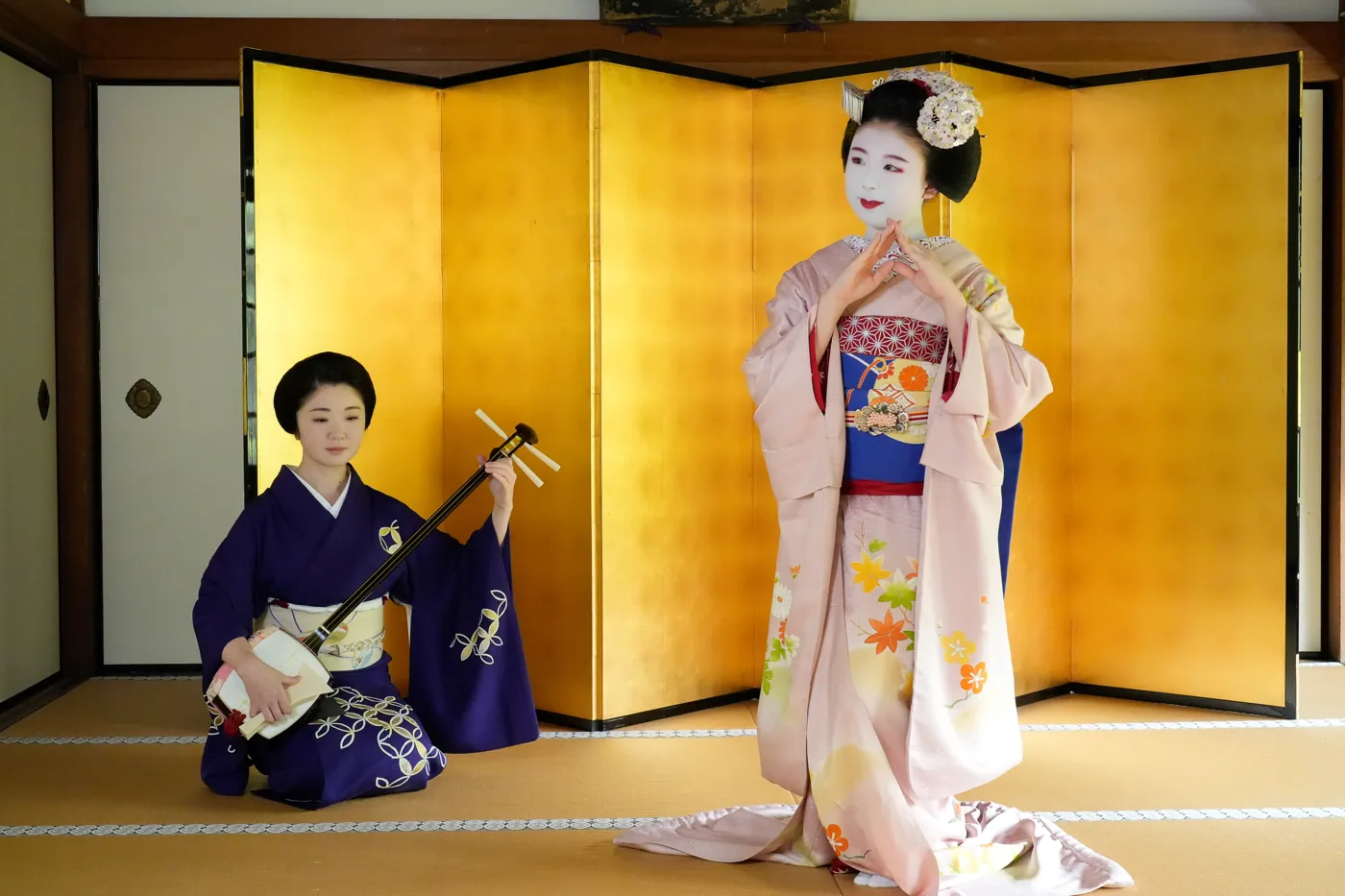
If you want to see a maiko dance up close and talk with her, a small-group session lets you get close without an introduction to an ochaya (a traditional teahouse where geiko and maiko entertain). Formats vary, from a Noh stage to a temple. Because the audience is small, prices are typically higher than for a theater seat.
Our guide to maiko experiences in Kyoto compares these formats in more detail.
Our Session at Ikka-in
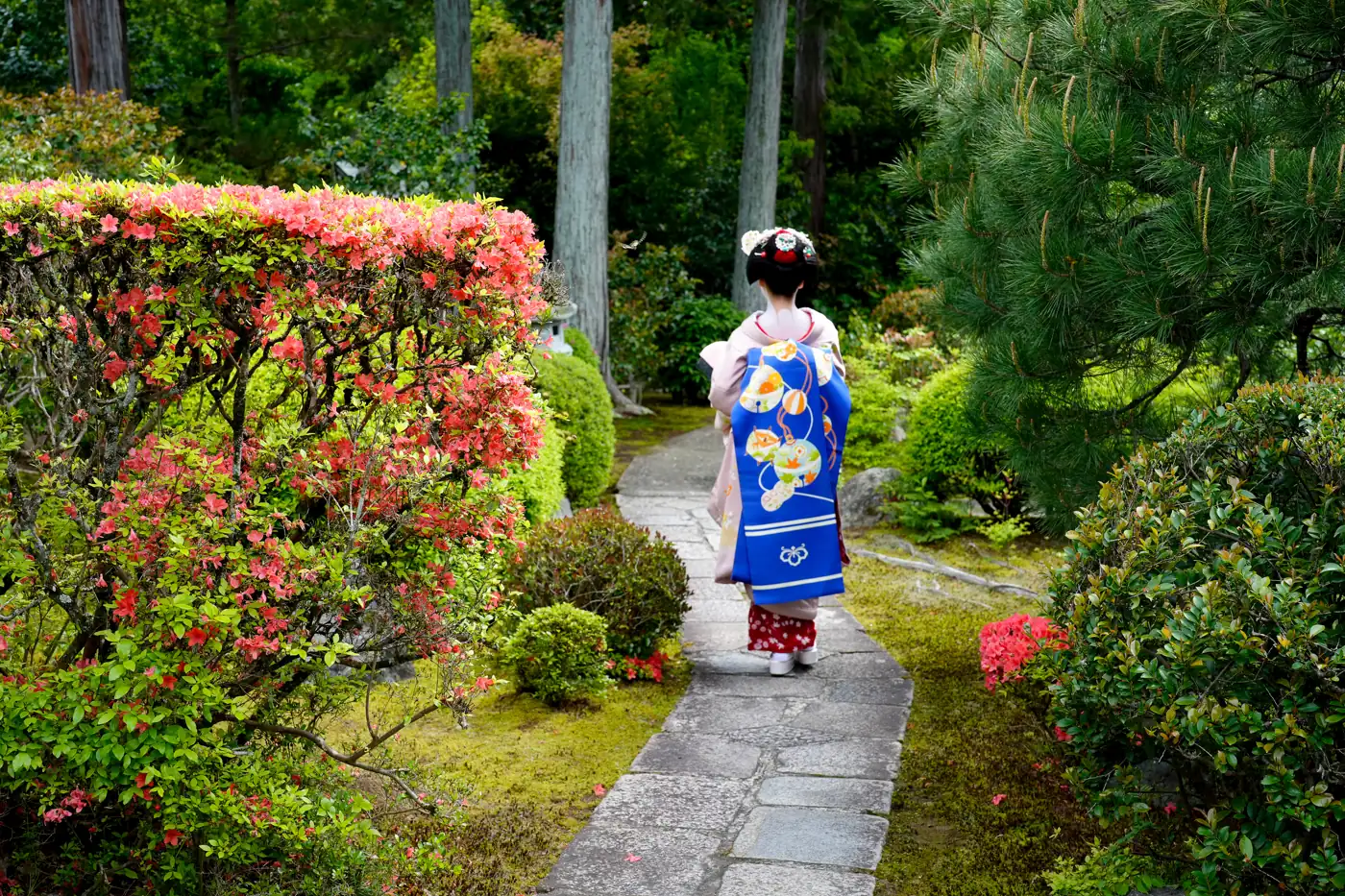
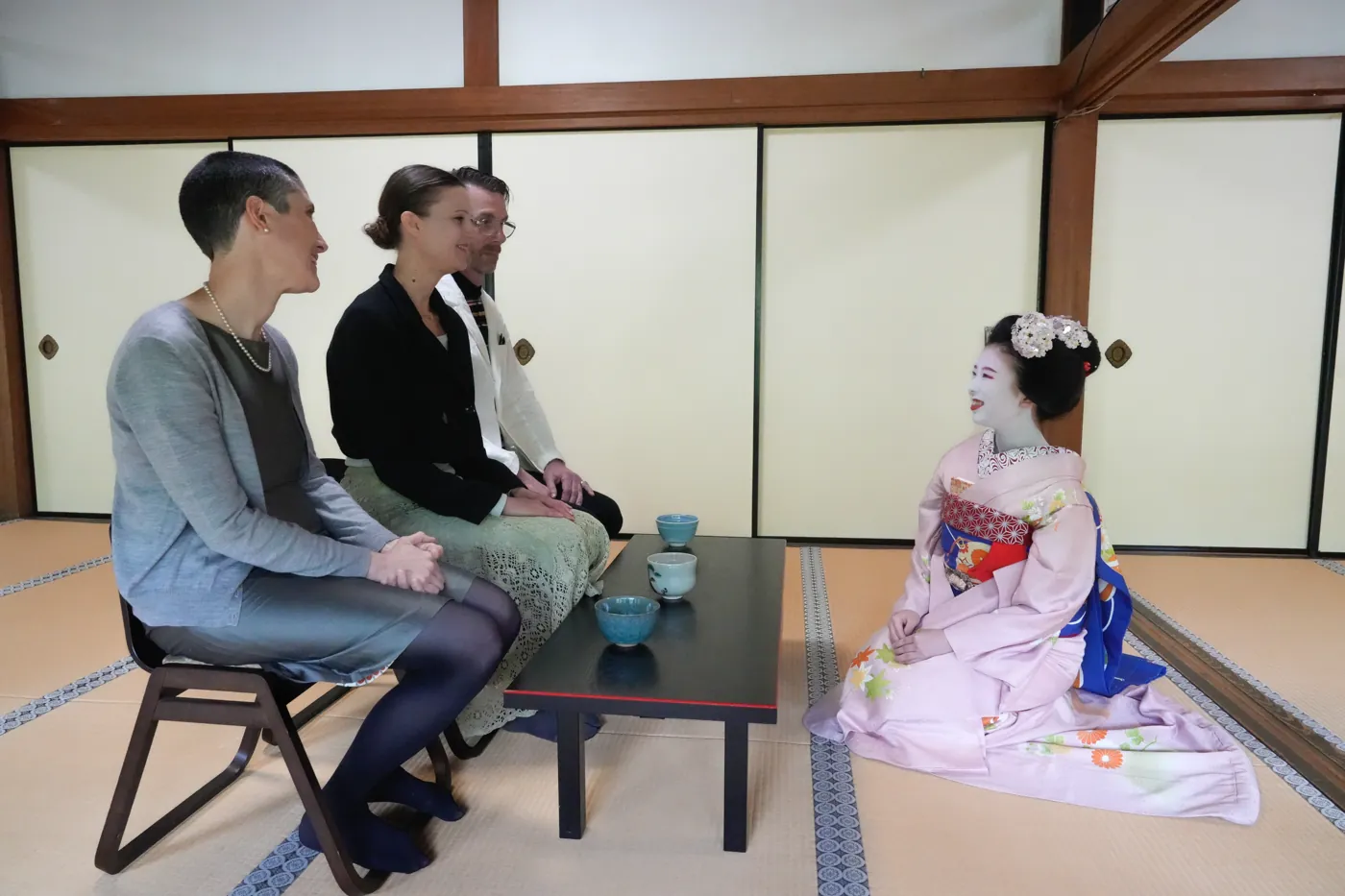
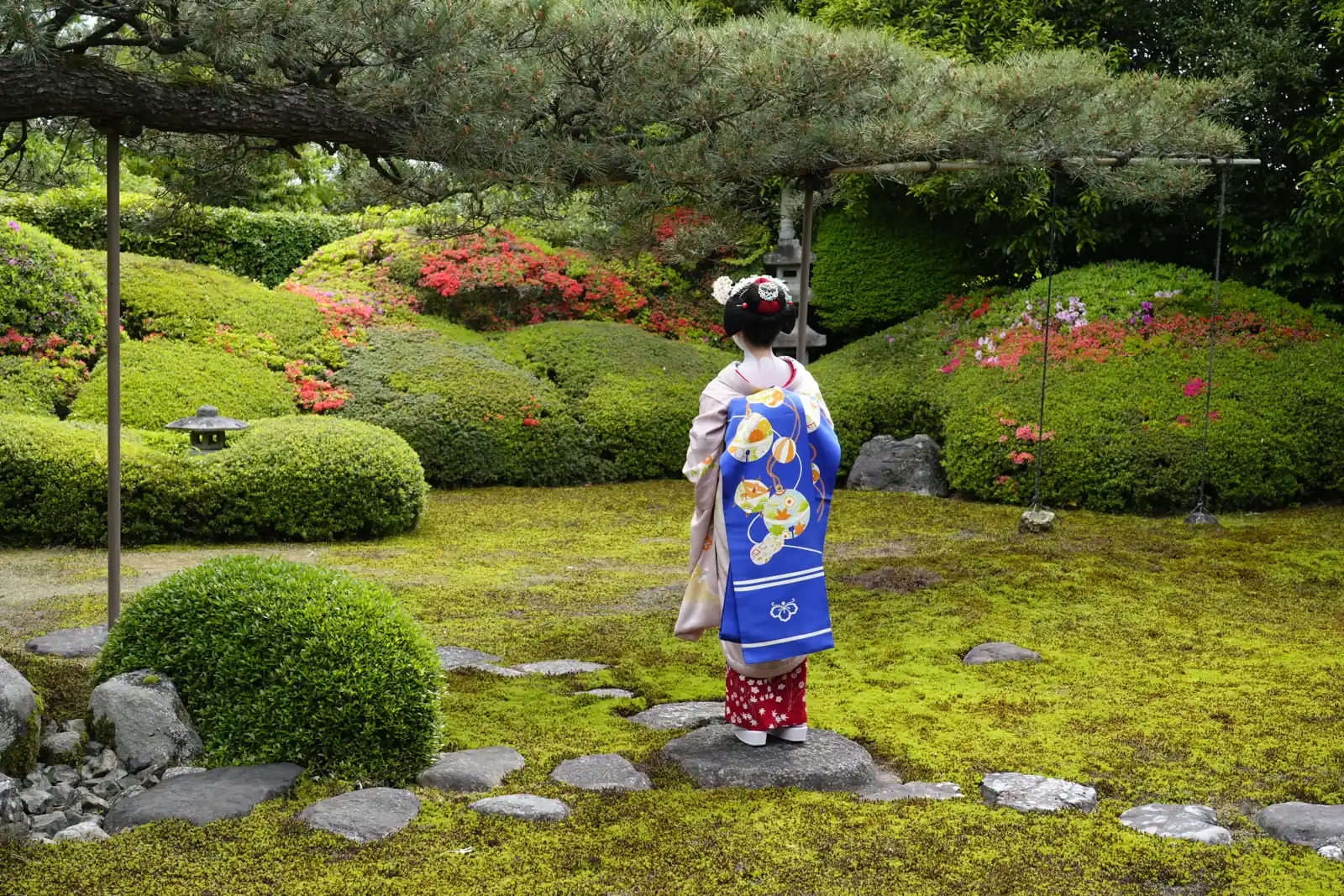
We operate Maiko & Zen Kyoto, a 90-minute session at Ikka-in, a sub-temple of Tofuku-ji founded in 1382 and rarely open to the public. Unlike a theater program, where you watch from a seat facing a stage, the maiko dances in the same temple hall as you, with no stage between you. An English-speaking guide introduces the temple and maiko culture, you create your own patterns in the gravel of the Zen garden with a wooden rake, and you watch two dances while enjoying fragrant sencha green tea and a delicate Japanese sweet, then talk with the maiko, ask her questions, and take photos together.
What sets it apart
- No stage between you and the maiko: she dances in the same temple hall, at close range.
- Time to talk: the session ends with time to ask her questions and take photos together.
- A quiet temple: no general visitors during the session; you share it with a small group of fellow travelers.
- More than a show: an English-speaking guide and a hands-on Zen garden activity are included.
- Easy to reach: near Tofukuji Station, one stop from Kyoto Station on the JR Nara Line, with afternoon start times that fit a sightseeing day.
Is it right for you? If a small group, time to talk with a maiko, English support, and photos matter to you, the session fits easily into a Kyoto sightseeing day. Tea is a relaxed accompaniment rather than a formal tea ceremony. It is held in the Tofuku-ji temple area rather than in Gion.
- Times: 2:00 pm and 3:30 pm.
- Price: 23,000 yen per person as of October 2026, listed on JTB Sunrise Tours. Children 6 and older pay the same price; children under 6 cannot join. Prices may change by season, so check current session times and prices for the latest.
Common Questions Before You Book
Is a geisha show worth the price? It depends on what you want to see. Gion Corner is an affordable way to watch a maiko dance on almost any evening, but the dance is one short part of a mixed program. The odori are full productions and good value if your dates match. Small-group sessions and dinners cost more because the audience is small and you get time to talk with the maiko.
Can I take photos? Rules differ by venue, so check before the show. At Gion Corner, photos with a maiko are offered after winter-season performances. Small-group sessions, including ours, set aside time for photos.
Is it just for tourists? Small-group sessions are usually designed with visitors in mind, with English-speaking guides. The odori are different: each is a geisha district's own main production of the year, staged by its geiko and maiko.
How far ahead should I book? For the odori, tickets go on sale months ahead; Miyako Odori 2027 tickets open on January 6, 2027. For small-group sessions and dinners, book as early as your dates allow, especially in spring and autumn.
What should I wear? Comfortable clothes are fine for most visitors. If a session takes place on tatami, you will take your shoes off, so socks are a good idea.
How to Choose
- You are in Kyoto for one evening and want the classic overview: Gion Corner.
- You are visiting in spring or early November: an odori, for the full stage production.
- You want to see a maiko up close and ask questions: a small-group session.
- You are traveling with young children: check age limits first; some small-group sessions do not admit young children.
For the bigger picture of where and how to see geiko and maiko respectfully, start with our guide to geisha in Kyoto.
Frequently asked questions
Is there a geisha show in Kyoto every night?
Gion Corner in Gion Kobu holds performances daily at 6:00 pm and 7:00 pm, except on a few closing days. From December 1 to March 11, shows run Tuesday to Friday only.
How much does a geisha show in Kyoto cost?
As of October 2026, a general ticket to Gion Corner costs 5,500 yen for adults 23 and over, and the public odori dances cost roughly 4,000–8,000 yen. Small-group sessions where a maiko dances for a few guests cost more; ours is 23,000 yen per person as of October 2026, and prices may change by season.
Do I need to speak Japanese?
No. Dance needs no translation, and Miyako Odori, Kyo Odori, and Kamogawa Odori publish information in English. Our session includes an English-speaking guide; check other operators' listings for language support.
Can I take photos with a maiko after the show?
At Gion Corner, photos with a maiko are offered after winter-season performances. Small-group sessions, including ours, set aside time for conversation and photos.
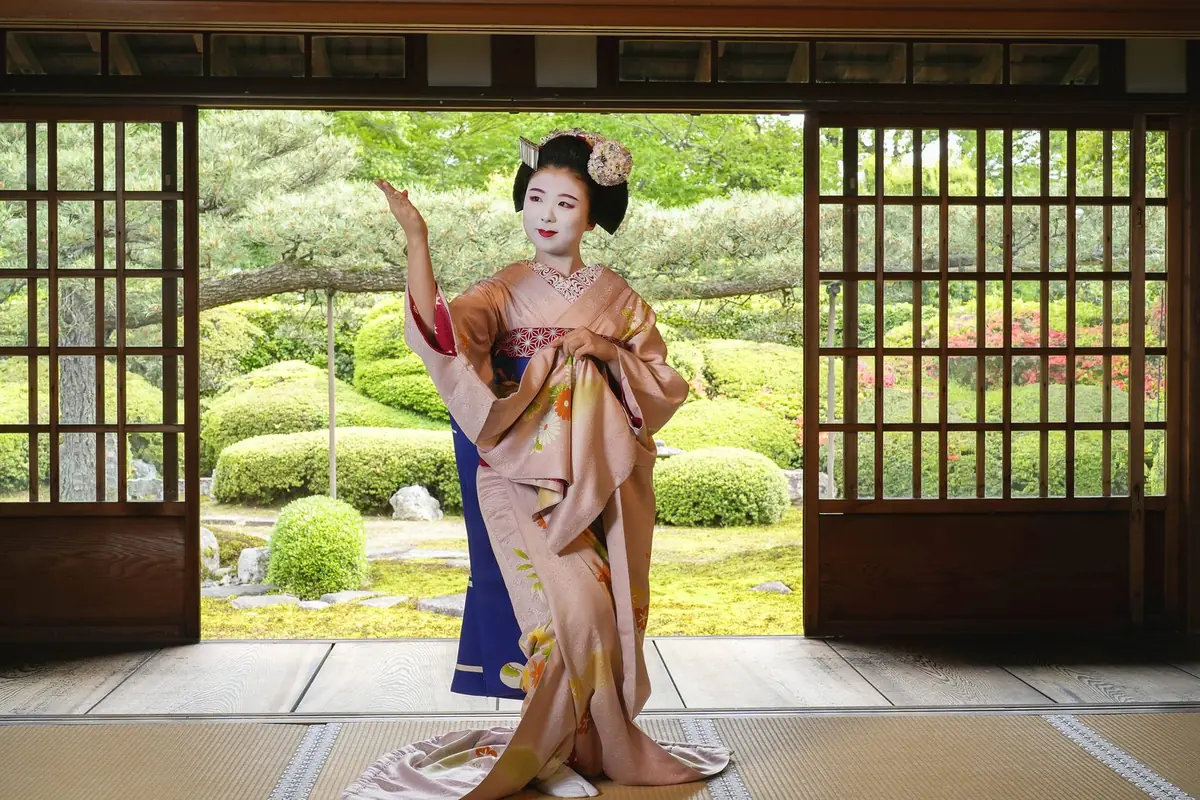
A maiko dance session at a Zen temple near Kyoto Station
Rake a Zen garden, watch two maiko dances and share green tea at Ikka-in, a temple rarely open to the public, one stop from Kyoto Station. Sessions start at 2:00 pm and 3:30 pm.
See the 2:00 pm and 3:30 pm sessions →Sources
- Gion Corner: performances and tickets — Kyoto Traditional Musical Art Foundation
- Miyako Odori (English) — Gion Kobu Kaburenjo
- Maiko autumn dances — Kyoto City Tourism Association