Maiko Experiences in Kyoto: How to Choose the Right One for Your Trip
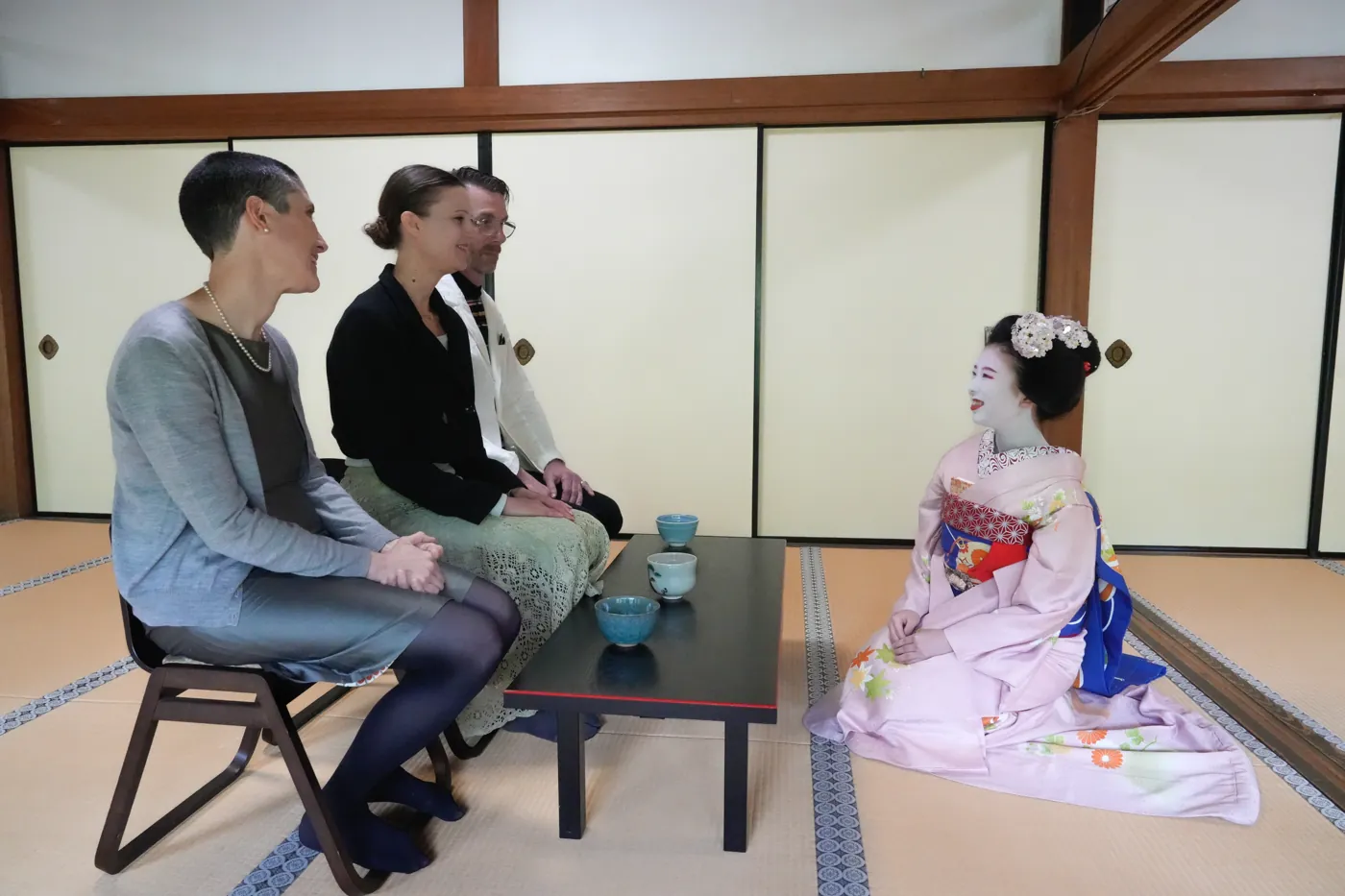
We operate the Maiko & Zen Kyoto experience mentioned in this guide.
"Maiko experience" can mean very different things in Kyoto: a seat in a theater, a bowl of tea served before a dance, an evening banquet, or a small session where a maiko dances a few steps away and then answers your questions. This guide sorts the options by what you actually get, so you can pick the one that fits your trip.
The Main Types of Maiko Experience
| Type | What you see and do | Typical length | Price (as of Oct 2026) | Good for |
|---|---|---|---|---|
| Watch a show: Gion Corner | A maiko dance as part of a program of seven arts | About 1 hour | 5,500 yen (ages 23+) | A first look on a modest budget |
| Watch a show: the annual odori | A full stage production by one geisha district | About 1 hour | Roughly 4,000–8,000 yen | Travelers in Kyoto in spring or early November |
| Tea and dance at a venue | A maiko dances for an audience, often a medium or large group, while tea and a sweet are served | Varies by venue | Roughly 7,000–22,000 yen for group formats | Seeing a maiko up close without a big budget |
| Dinner or banquet with maiko | A meal with dance, conversation, and banquet games | 2–3 hours | Roughly 40,000–80,000 yen; varies with the number of guests, the season, and the menu | Special occasions and groups |
| Small-group session: Maiko & Zen Kyoto (ours) | Dances at close range in a Zen temple hall rarely open to the public, with no stage between you; raking the Zen garden; then relaxed time to talk with the maiko and take photos | 90 minutes | 23,000 yen, everything included: English-speaking guide, Zen garden activity, sencha and a sweet, and time with the maiko | Seeing a maiko up close and talking with her, in a quiet temple within a sightseeing day |
| Makeover (not a real maiko) | You are dressed and made up as a maiko for photos | Varies | Varies | A costume souvenir |
Prices for formats run by individual operators vary with the season, the number of guests and performers, and what is included, so check what each price covers before you book.
The Formats Side by Side
| Theater show | Tea and dance at a venue | Dinner or banquet | Maiko & Zen Kyoto (ours) | |
|---|---|---|---|---|
| Distance from the maiko | A seat in the audience | Same room | Same room | Same temple hall, no stage between you |
| Meal | No | Tea and a sweet | Yes | Sencha and a Japanese sweet |
| Time to talk with a maiko | No | Often a short Q&A | Yes, during the meal | Relaxed conversation time with the maiko at the end |
| Photos | Limited | Often | Usually | Photo time with the maiko |
| English support | Varies | Varies | Interpreter varies | English-speaking guide included |
| Zen garden | Varies by operator | Varies by operator | Varies by operator | Rake your own patterns in the Zen garden |
| Setting | Theater | Teahouse or event room | Restaurant, ryotei, or hotel | A Zen temple rarely open to the public, founded in 1382, one stop from Kyoto Station |
| Time of day | Afternoon or evening | Varies | Evening | 2:00 pm or 3:30 pm |
| Good to know | Check schedule and ticket dates | Ask who performs | Ask about the menu and interpreter | Ages 6 and older; children pay the same price |
Which Format Fits Your Goal?
| If you want to… | Look for |
|---|---|
| See a maiko dance on a small budget | Gion Corner, or an annual odori if your dates match |
| Ask questions and have a real conversation | A small-group session or a dinner with time set aside for talk |
| Take photos with a maiko | A session that includes photo time (at Gion Corner, photos are offered after winter-season shows only) |
| Combine the evening with a meal | A dinner or banquet with maiko |
| Bring children | Check age limits first; they differ from one experience to another |
| Experience a traditional banquet | An ochaya evening arranged through a top hotel or ryokan concierge |
Watch a Show
The simplest way to see a maiko dance is from a theater seat. Gion Corner, run by the Kyoto Traditional Musical Art Foundation in Gion Kobu, holds a roughly one-hour program of seven traditional arts most evenings, including kyomai, the Kyoto-style dance performed by maiko. In spring and early November, each geisha district stages its own full-length dance. Read more in our guide to geisha shows in Kyoto.
Tea with a Performance
Some performances pair a dance with tea. At Miyako Odori, for example, tickets with tea let guests "savor a bowl of tea while observing the graceful movements of the geiko and maiko." Other programs serve tea and a sweet while a maiko dances at a venue. See maiko and tea in Kyoto for what each format includes.
Banquet (Ozashiki)
An ozashiki is an evening banquet in a tatami room, with conversation and banquet games led by geiko and maiko. Traditionally, ochaya (the teahouses where these banquets are held) accept only guests introduced by existing patrons; the Japan National Tourism Organization (JNTO) suggests that guests of top hotels and ryokan ask their concierge, who may be able to arrange a visit.
Small-Group Session
A small-group session sits between a show and a banquet: you see a maiko dance at close range, then have time to talk with her and take photos, without needing an introduction. Formats vary, from Noh stages to temples, and some include tea.
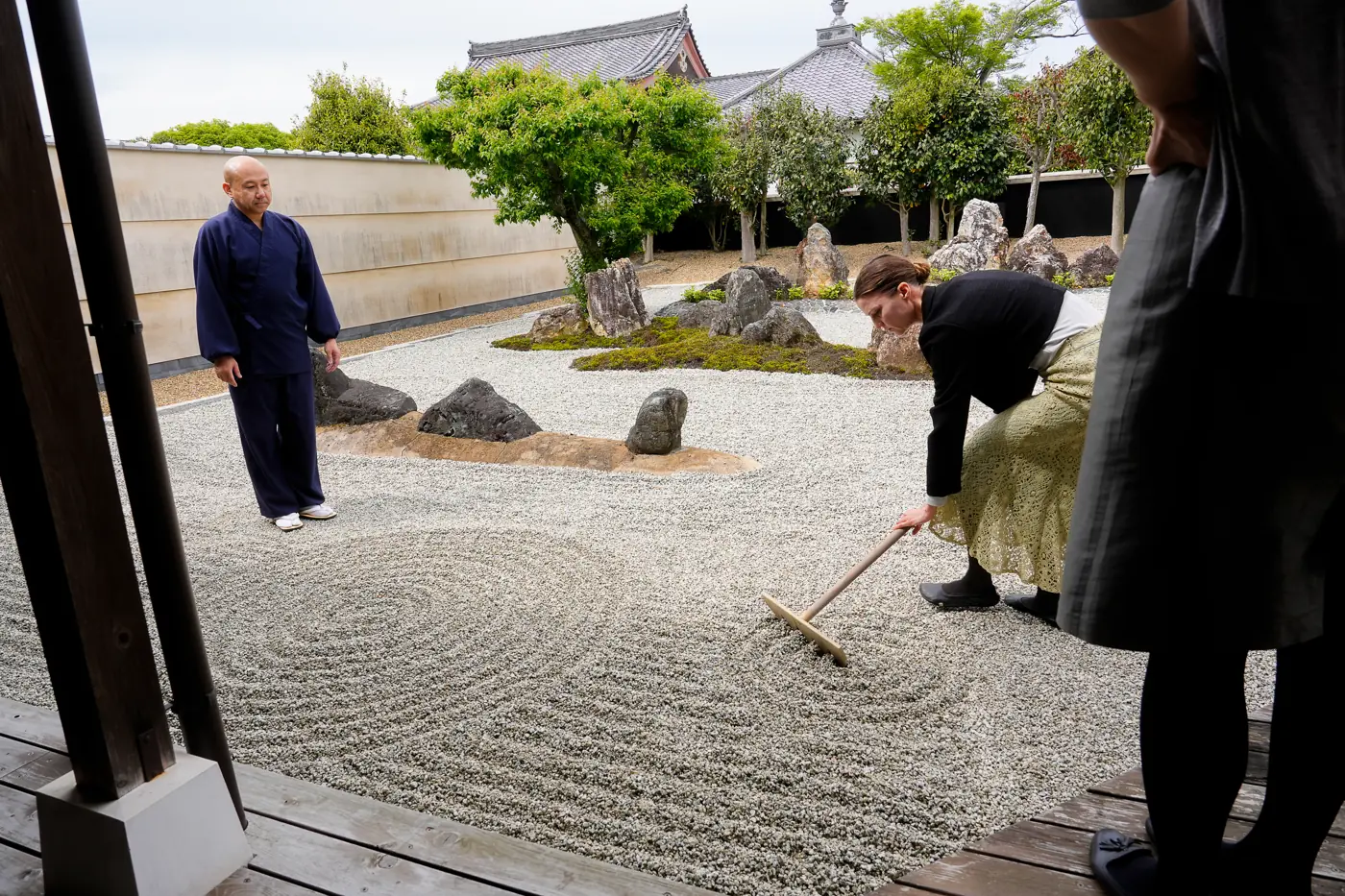
Our Session at Ikka-in
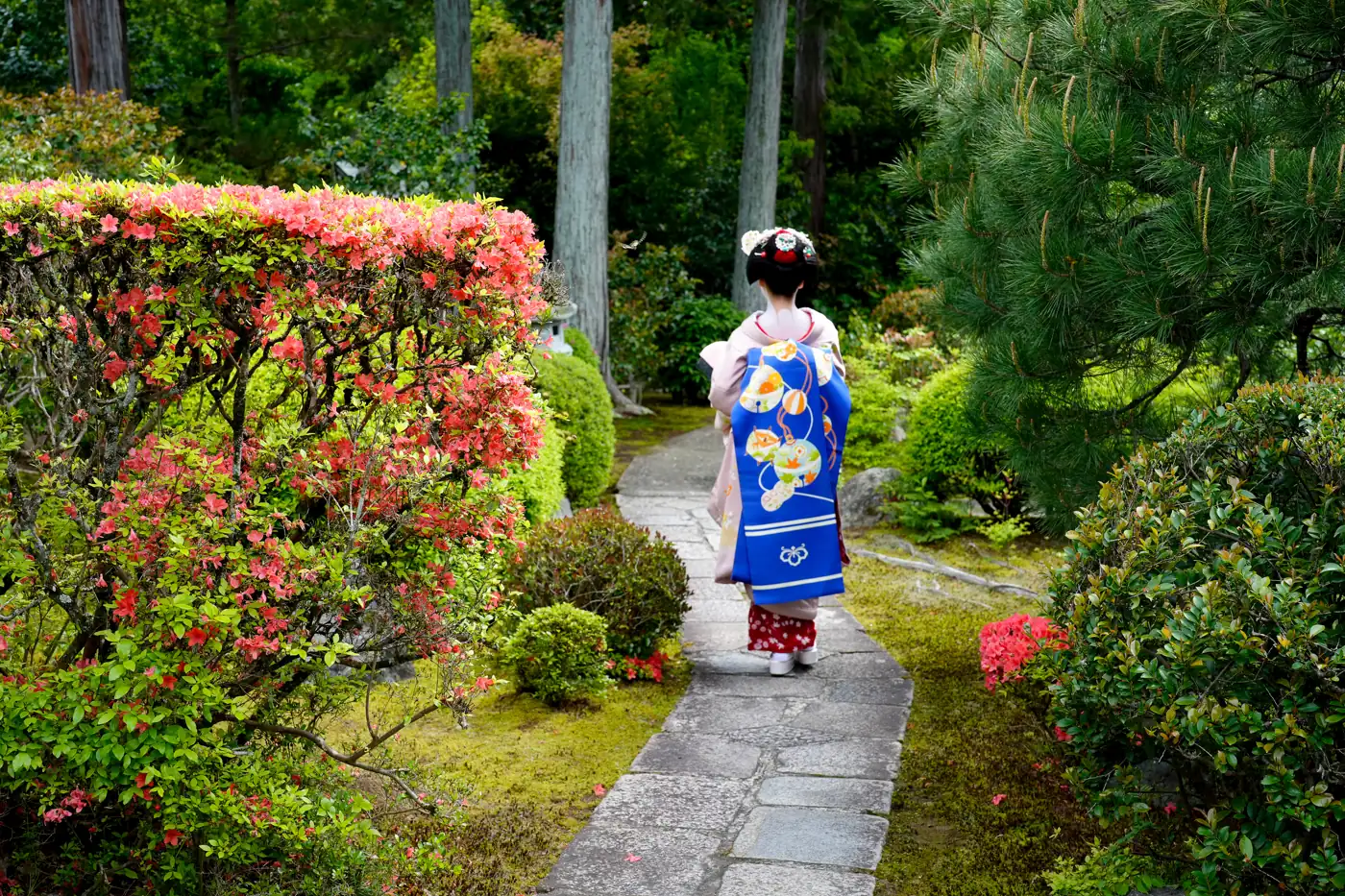
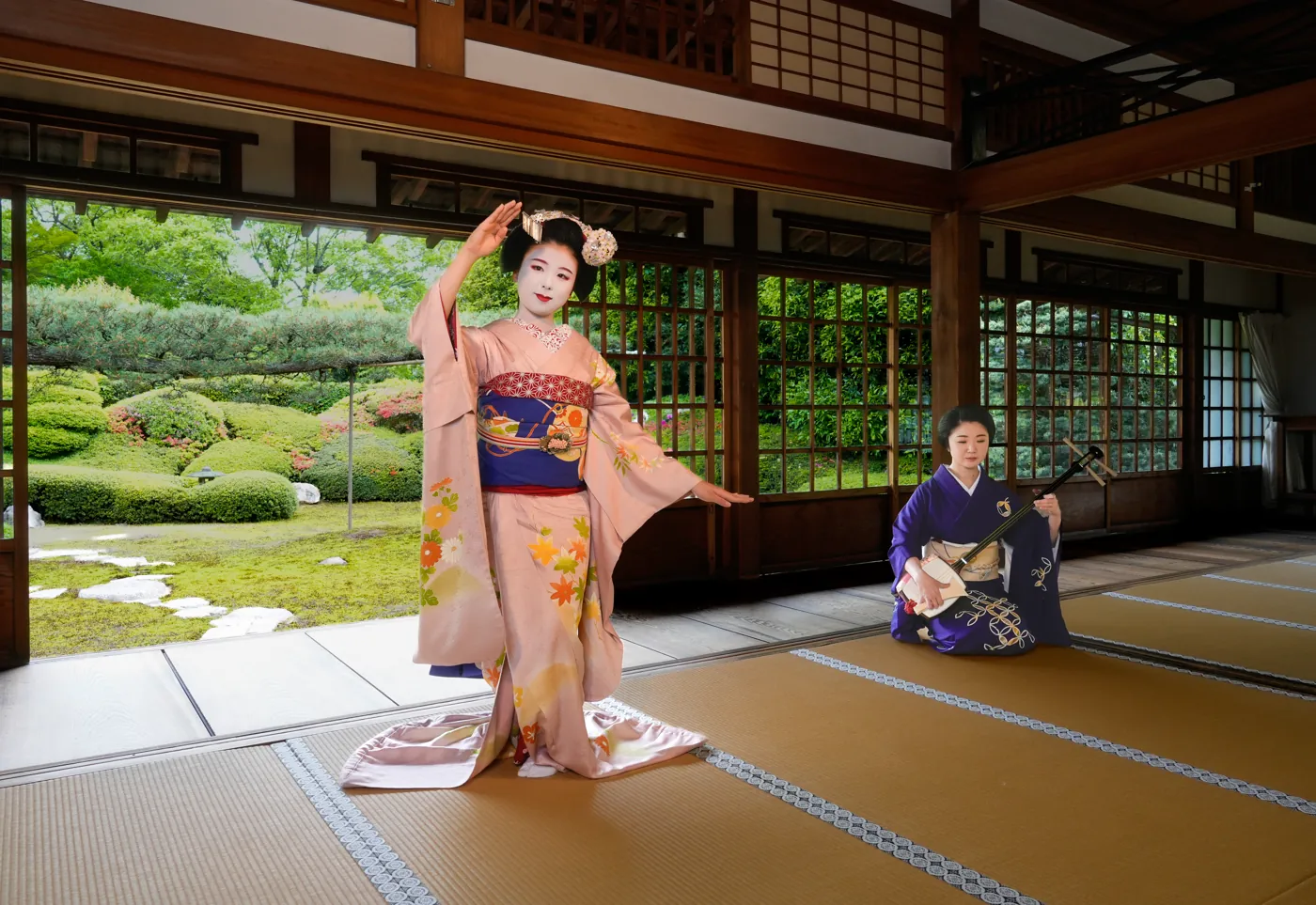
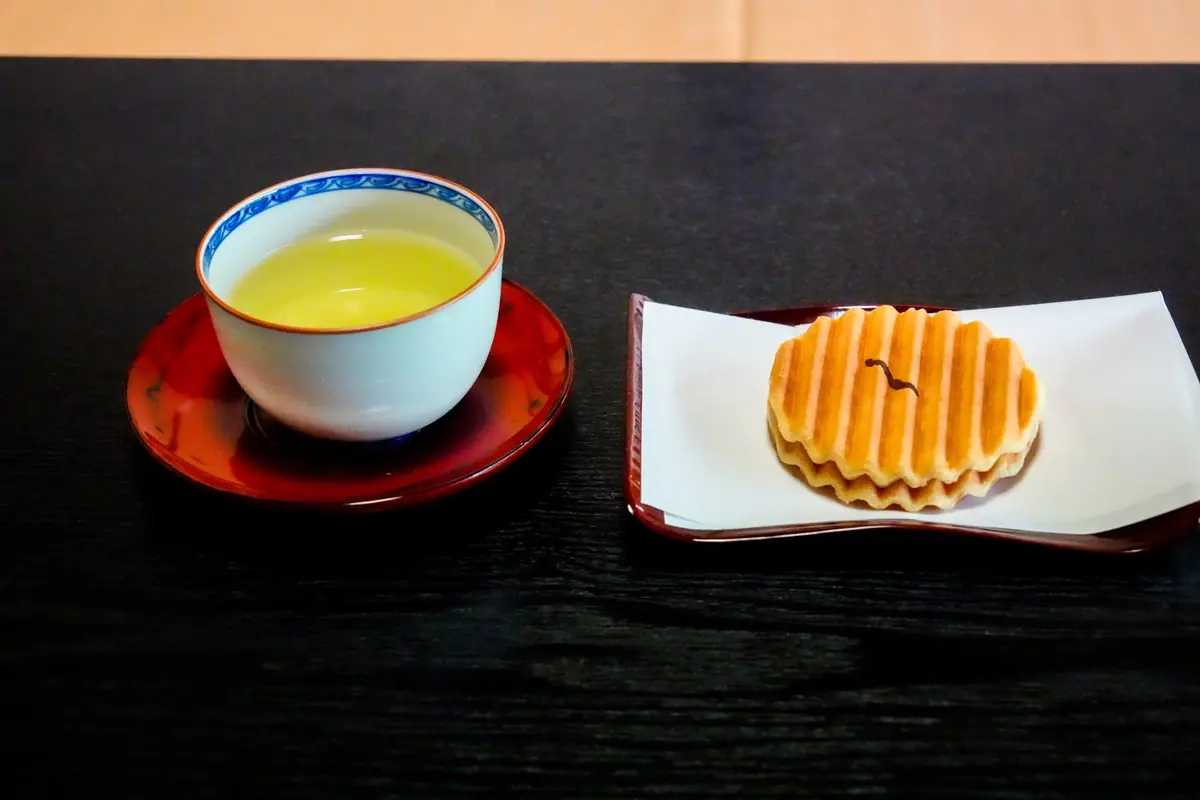
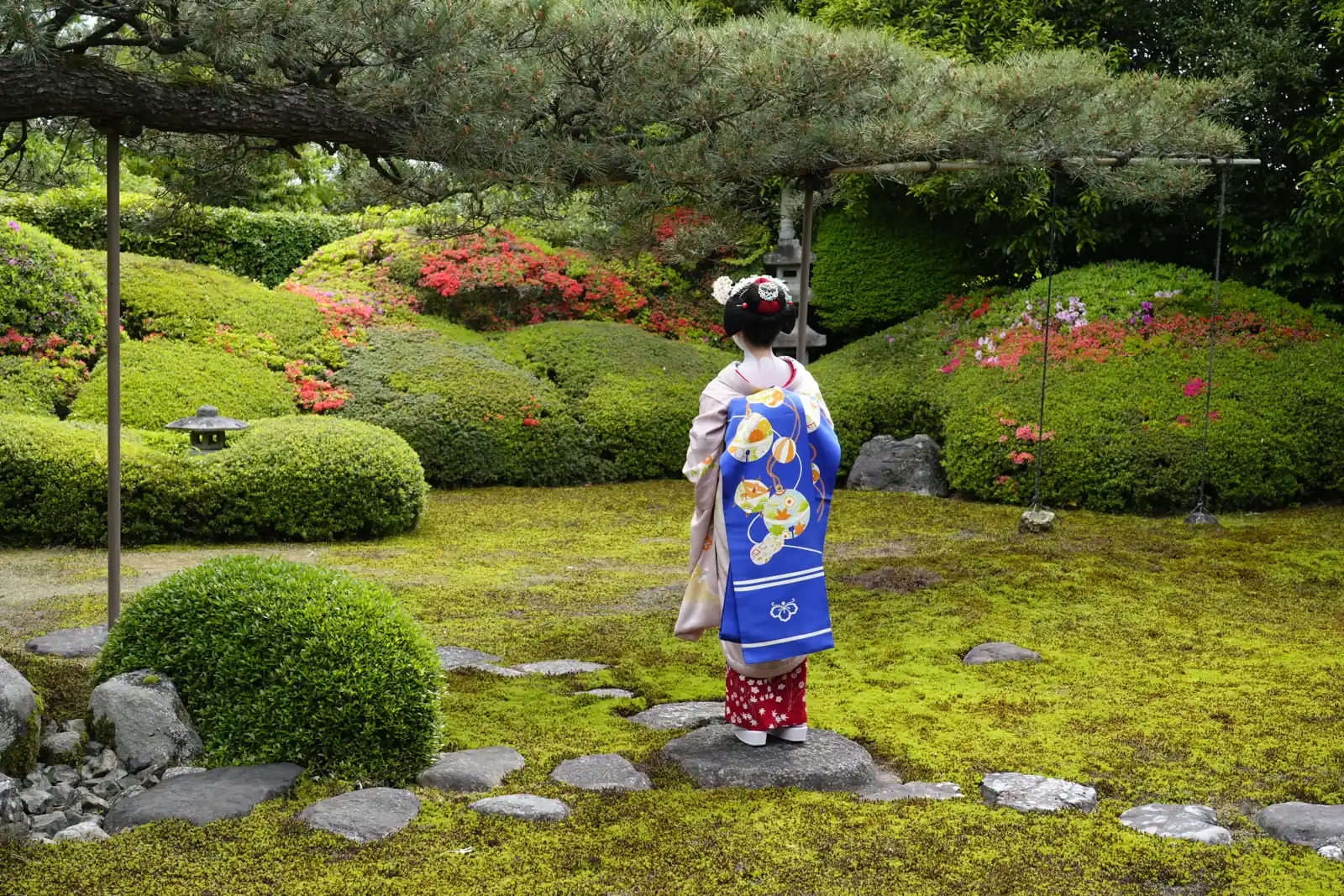
We operate Maiko & Zen Kyoto, a 90-minute session at Ikka-in, a sub-temple of Tofuku-ji founded in 1382 and rarely open to the public. Unlike a theater program, where you watch from a seat facing a stage, the maiko dances in the same temple hall as you, with no stage between you. An English-speaking guide introduces the temple and maiko culture, you create your own patterns in the gravel of the Zen garden with a wooden rake, and you watch two dances while enjoying fragrant sencha green tea and a delicate Japanese sweet, then talk with the maiko, ask her questions, and take photos together.
What sets it apart
- No stage between you and the maiko: she dances in the same temple hall, at close range.
- Time to talk: the session ends with time to ask her questions and take photos together.
- A quiet temple: no general visitors during the session; you share it with a small group of fellow travelers.
- More than a show: an English-speaking guide and a hands-on Zen garden activity are included.
- Easy to reach: near Tofukuji Station, one stop from Kyoto Station on the JR Nara Line, with afternoon start times that fit a sightseeing day.
Is it right for you? If a small group, time to talk with a maiko, English support, and photos matter to you, the session fits easily into a Kyoto sightseeing day. Tea is a relaxed accompaniment rather than a formal tea ceremony, and the session does not include a meal or banquet games.
Times and price: 2:00 pm and 3:30 pm; 23,000 yen per person as of October 2026 (children aged 6 and older are welcome at the same price; children under 6 cannot join). Prices may change by season, so check current session times and prices.
Makeover Is Not Meeting a Maiko
Studios across Kyoto offer "maiko makeovers," dressing visitors in kimono and white makeup for photos. It is a costume photo shoot. A real maiko is an apprentice who lives in an okiya (a geisha house) and trains in dance, manners, and the Kyoto dialect before her debut, according to the Kyoto Traditional Musical Art Foundation.
How to Choose
- Decide what matters most: watching a performance, talking with a maiko, tea, or a meal.
- Check the format, not just the name: "show," "session," and "dinner" are used loosely. Look for what is included, how long it lasts, and how many guests share the session.
- Check who performs. Some listings say "geiko or maiko" because the performer depends on the date.
- Check age limits, language support, and the cancellation policy before you book; policies differ by operator.
- Book early for spring and autumn, when the seasonal dances and travel peaks overlap.
A note on walking tours: guided evening walks through Gion explain the district's history, but they cannot promise that you will meet a maiko. If meeting one matters to you, choose a format where a maiko is booked to appear.
For the bigger picture, start with our guide to geisha in Kyoto.
Frequently asked questions
What is the difference between watching a geisha show and a maiko experience?
A show, such as Gion Corner or an annual odori, puts you in a theater audience. A maiko experience usually means a smaller setting where a maiko dances for a few guests and then has time to talk with them and take photos.
Is a maiko makeover the same as meeting a maiko?
No. A makeover dresses you in kimono and white makeup for photos. Meeting a maiko means seeing an apprentice who lives in an okiya and trains in dance, manners, and the Kyoto dialect.
Can children join a maiko experience?
It depends on the operator. Age limits differ, so check each listing before you book.
Do I need to speak Japanese?
No. Many experiences aimed at visitors include an English-speaking guide or interpreter; check each listing.
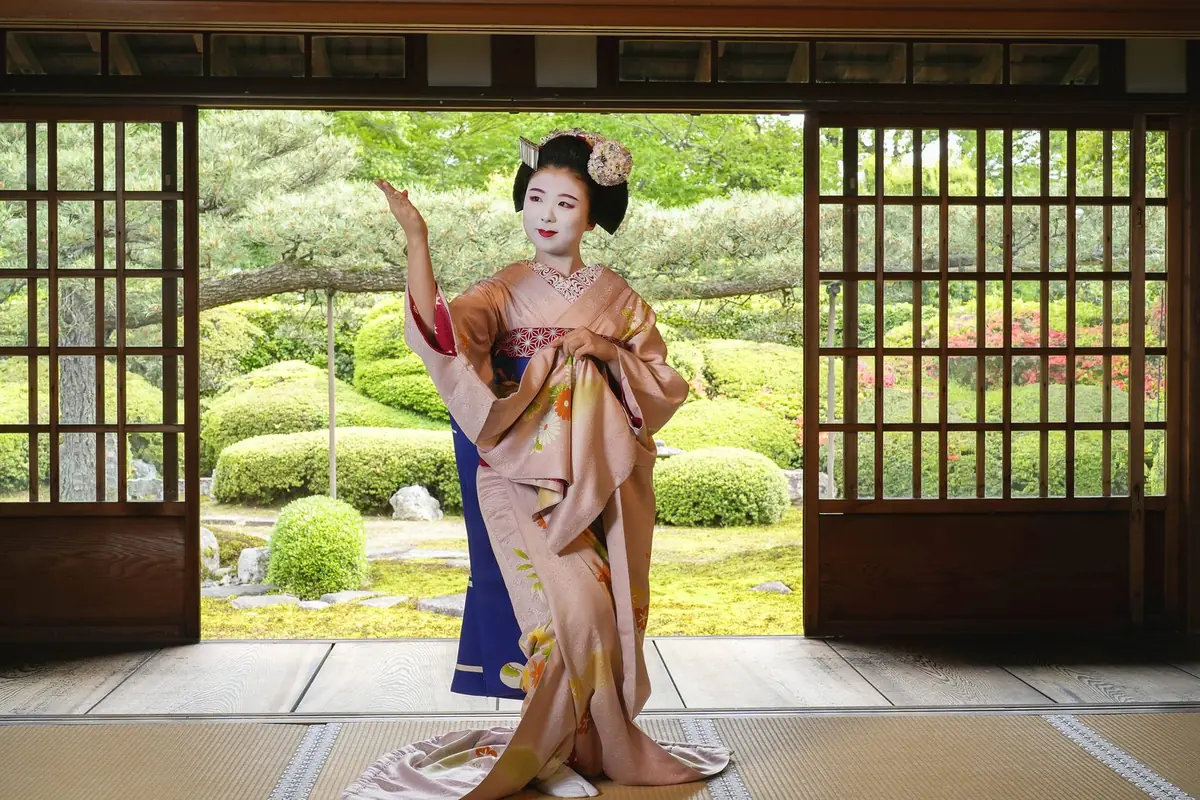
A maiko dance session at a Zen temple near Kyoto Station
Rake a Zen garden, watch two maiko dances and share green tea at Ikka-in, a temple rarely open to the public, one stop from Kyoto Station. Sessions start at 2:00 pm and 3:30 pm.
See the 2:00 pm and 3:30 pm sessions →Sources
- Kyoto Hanamachi Official Site: Maiko — Kyoto Traditional Musical Art Foundation (Ookini Zaidan)
- Gion Corner: performances and tickets — Kyoto Traditional Musical Art Foundation
- How to meet with a geisha in Kyoto — Japan National Tourism Organization
- Miyako Odori (English) — Gion Kobu Kaburenjo