Geisha Experience With Kids in Kyoto: A Family Guide
We operate the Maiko & Zen Kyoto experience mentioned in this guide.
Can children join a geisha experience in Kyoto? Often, yes, but every performance and session sets its own age rule. This guide helps you choose a format that suits your family, prepare for the day, and know what children notice about a maiko and what they can ask her. It is written for parents of school-age children and for teenagers who are curious about Japanese arts, so everyone can decide together.
Can Children Join a Geisha Experience in Kyoto?
Often, yes, though the answer depends on the experience. Kyoto has several kinds, from public dance performances in spring and autumn to evening shows and small-group sessions, and each one sets its own rules for children. Age rules and ticket types differ by theater; in 2026, for example, Miyako Odori sold a separate student ticket. Check each theater's official page for its age rule before you buy tickets.
Before you plan the day, check three things on the page of the experience you choose: the minimum age, whether children pay a different price, and how long the program lasts. Think, too, about how long your child enjoys sitting and watching, so the length of the program suits your family.
If you are comparing ways to see a maiko perform, our guide to geisha shows in Kyoto explains the theater options, and our overview of geisha in Kyoto gives the wider background for the whole family.
How to Choose an Experience With Children
Once you know the options, a short checklist helps you pick the one that suits your family. Look for:
- An age rule that fits your youngest child. Each experience sets its own minimum age.
- A length your child can enjoy. A shorter program, or one with a pause in the middle, is easier for younger guests.
- Where you sit. In a theater you watch from a seat; in a smaller room or hall, children can see the sleeves and the steps clearly.
- Time to talk. Some formats include questions or photos with the maiko; many stage shows do not.
- Language support. An English-speaking guide or interpreter lets children ask their own questions.
| Format | Where you sit | Time to talk with a maiko | Language support | Age rule |
|---|---|---|---|---|
| Spring and autumn dances, evening shows | From a theater seat | Usually not; photos at some shows | English information varies | Set by each theater |
| Tea and dance at a venue | Same room, often with a medium or large group | Varies by operator | Varies | Set by each operator |
| Maiko & Zen Kyoto (ours) | Same temple hall, no stage between you | Time to talk and take photos | English-speaking guide | Ages 6 and older |
Before You Go: Shoes, Socks, and a Spot List
A little preparation helps children enjoy the time. If the experience takes place in a tatami room, everyone takes off their shoes before stepping in, so pack clean socks and choose shoes that are easy to slip on and off. Comfortable clothes work well for children.
- Before it starts. Visit the restroom, and put phones on silent.
- During the dance. Watch quietly from your seat, and save questions for the time to talk.
- Photos. Wait for the host or guide to say when photos are welcome, and never touch the maiko.
- On the street. If you pass a maiko on the street, let her pass. In the Gion-machi Minamigawa area and elsewhere, the City of Kyoto has pointed out problems such as following geiko and maiko and photographing them without permission.
To keep younger children watching, give them a spot list before the dance: the long hanging obi, the flowers in her hair, the tall okobo sandals, and the fan. Our maiko etiquette guide explains the rest.
What Children Notice About a Maiko
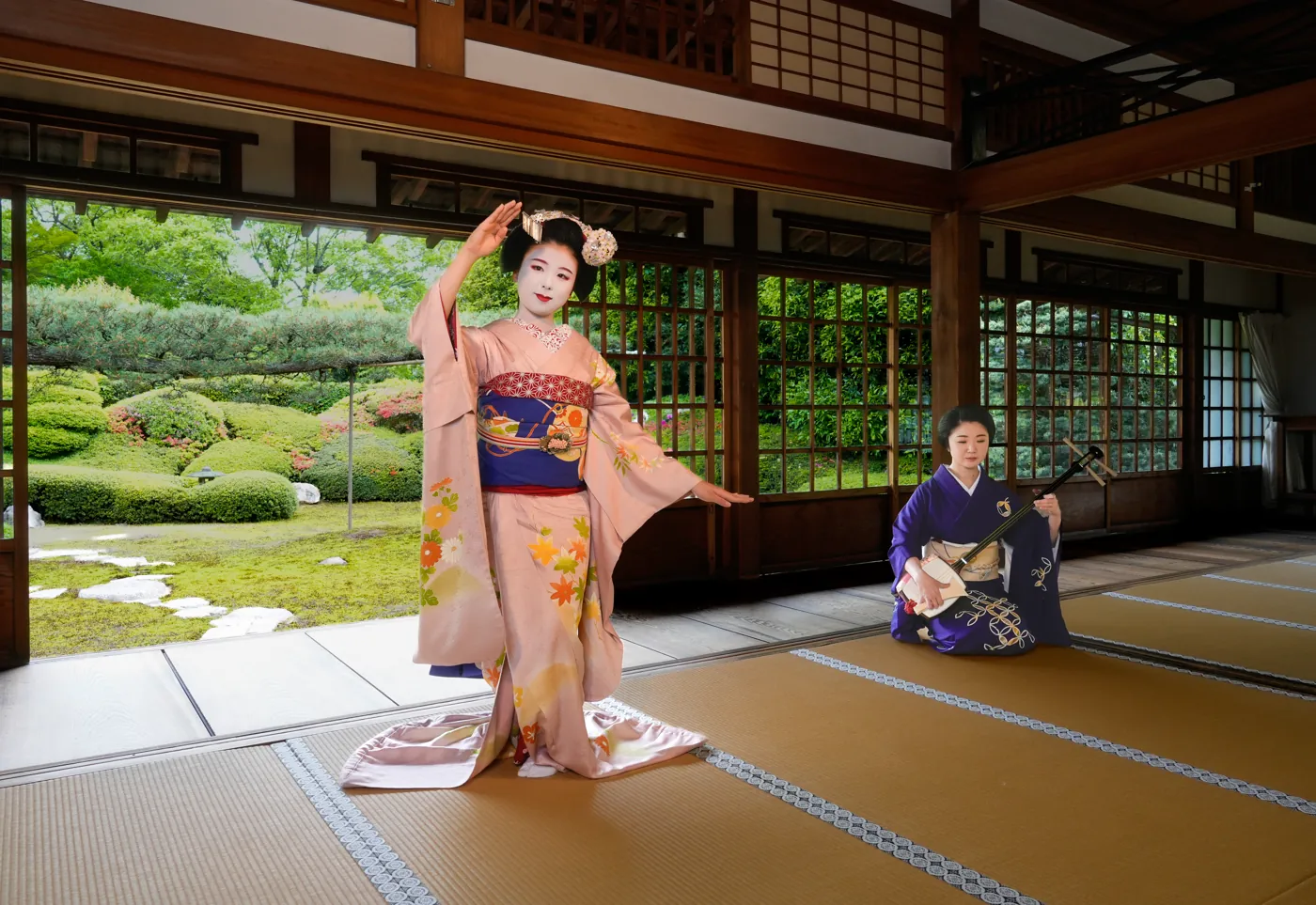
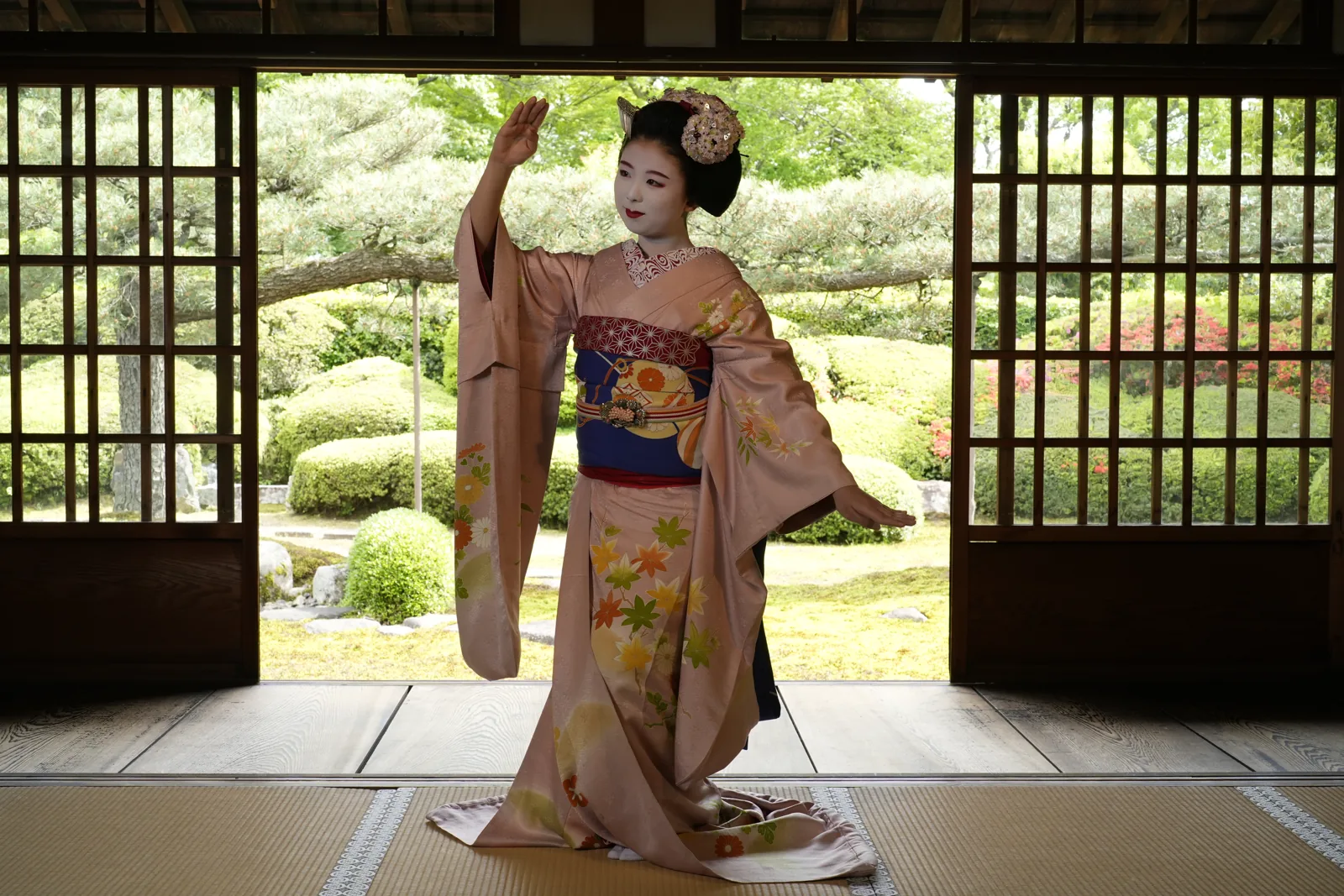
Part of the fun is looking closely. A maiko wears a furisode, and the shoulders and sleeves are sewn up in tucks. The word maiko literally means “dancing child,” a friendly starting point for younger guests, and her sleeves swing with every turn of the dance.
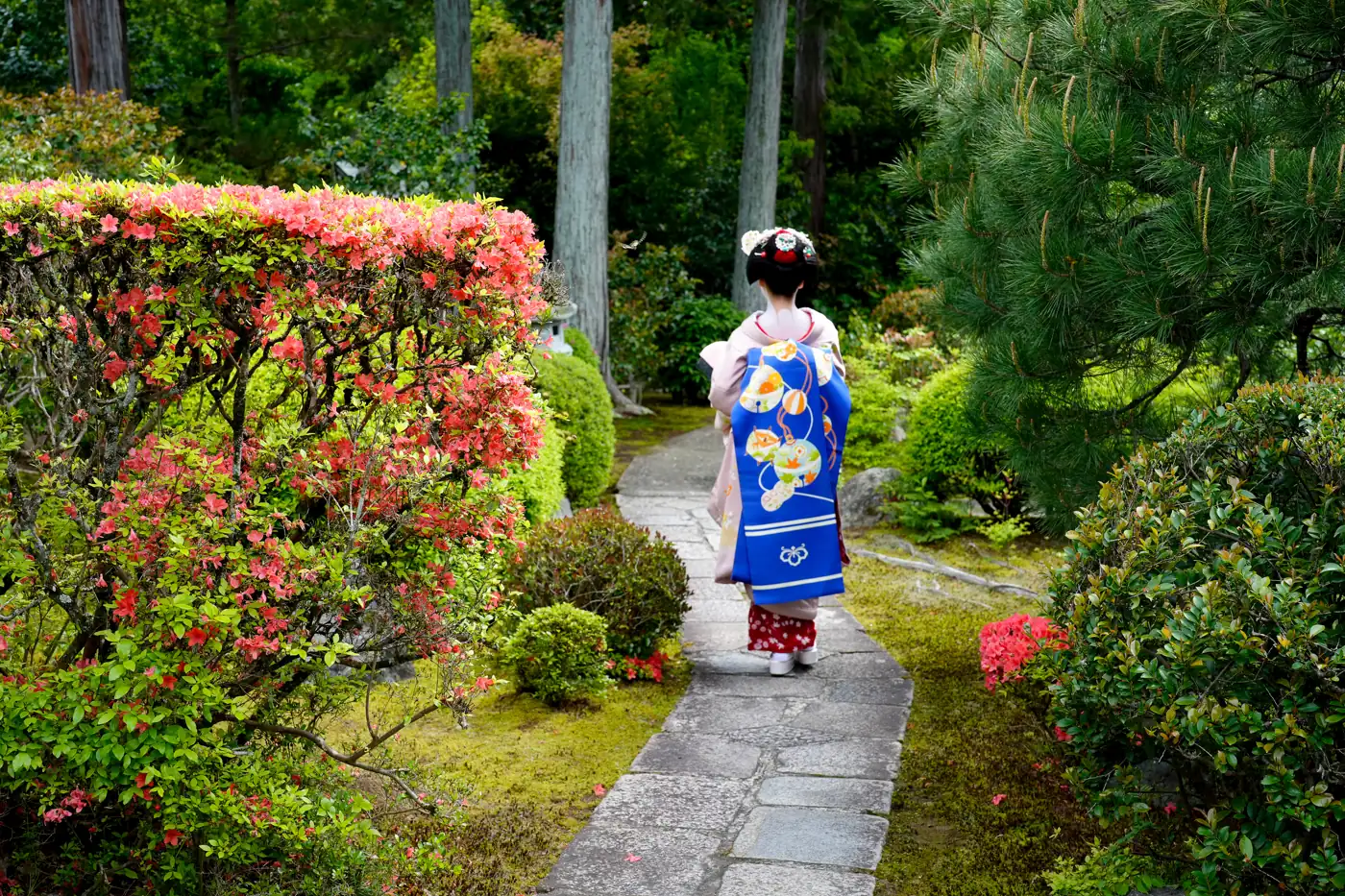
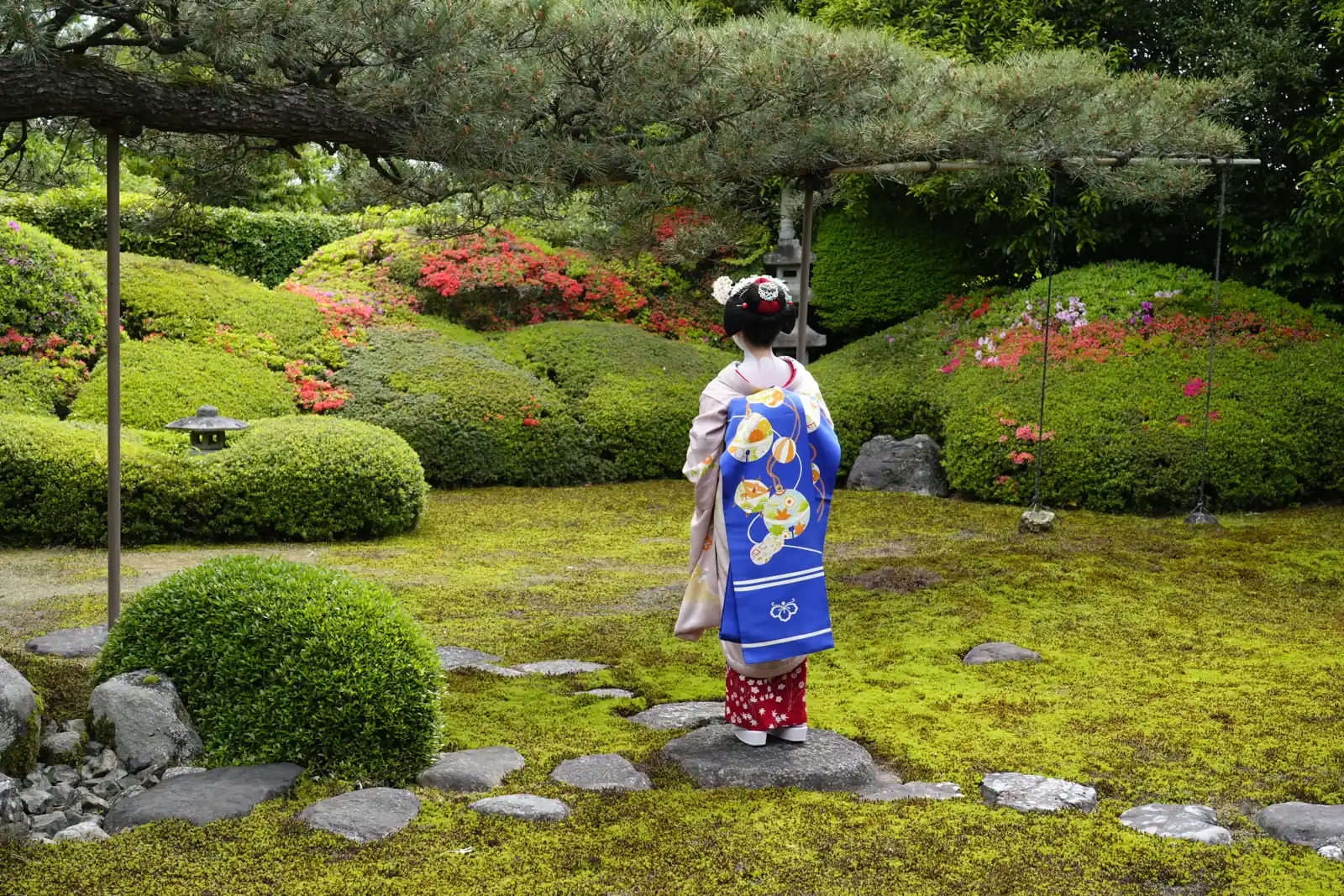
The obi is another detail children remember. A maiko wears a darari obi that falls toward the ankles, and it is about 5 meters (16 ft) long; during minarai, the short apprenticeship just before her debut, she wears one about half that length. Her hair is her own, and it carries large, elaborate kanzashi with seasonal flowers. On her feet are okobo sandals about 10-15 cm (4-6 in.) high, which adds to her height. If your family would like to compare a maiko with a geiko before the day, our guide to maiko vs. geiko explains the differences in plain language.
Each of Kyoto's five geisha districts has its own customs, so some details described here may differ from one district to another.
Questions Children Can Ask a Maiko
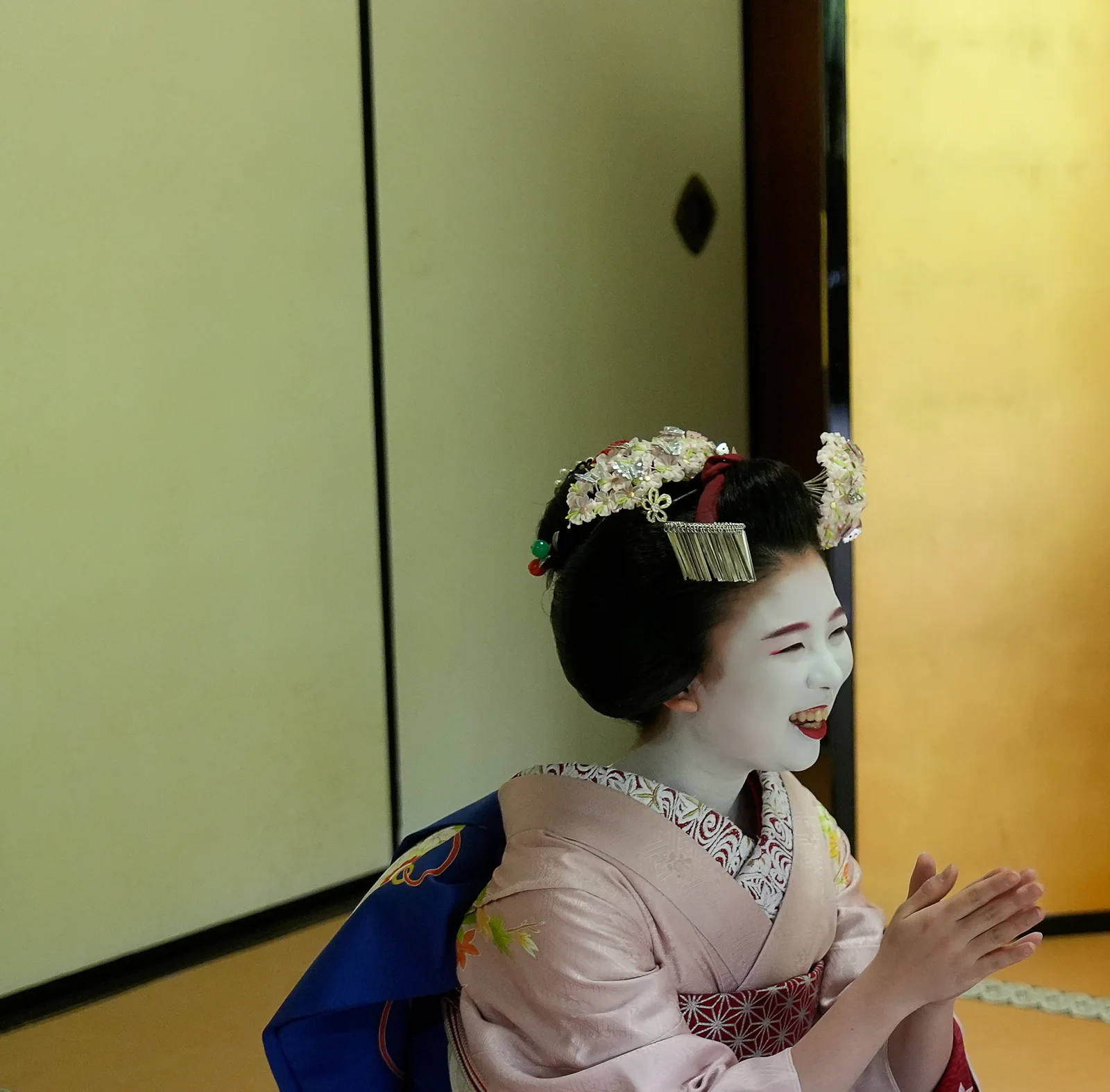
If the experience you choose includes time to talk, it helps to bring a few ideas. Younger children might ask about the flowers in her hair, how it feels to wear the kimono, or how tall the okobo make her. Older children and teens might like to hear about her path. Keep questions to her dance, her kimono, and her training, and leave out personal ones such as her age or family.
In general, a maiko begins after junior high school, spends about 1 year as a shikomi trainee and about 1 month as a minarai, and then makes her debut. For a teenager in the family, that is a thoughtful way into a conversation about practice, patience, and growing up in a traditional art. Let your children lead, and if your experience includes a guide, let them help with any word that needs interpreting.
A Temple Hall Session That Fits the Checklist
If the checklist above points you to a small room, time to ask questions, and English support, here is one example of a session built around those points.
Our Session at Ikka-in
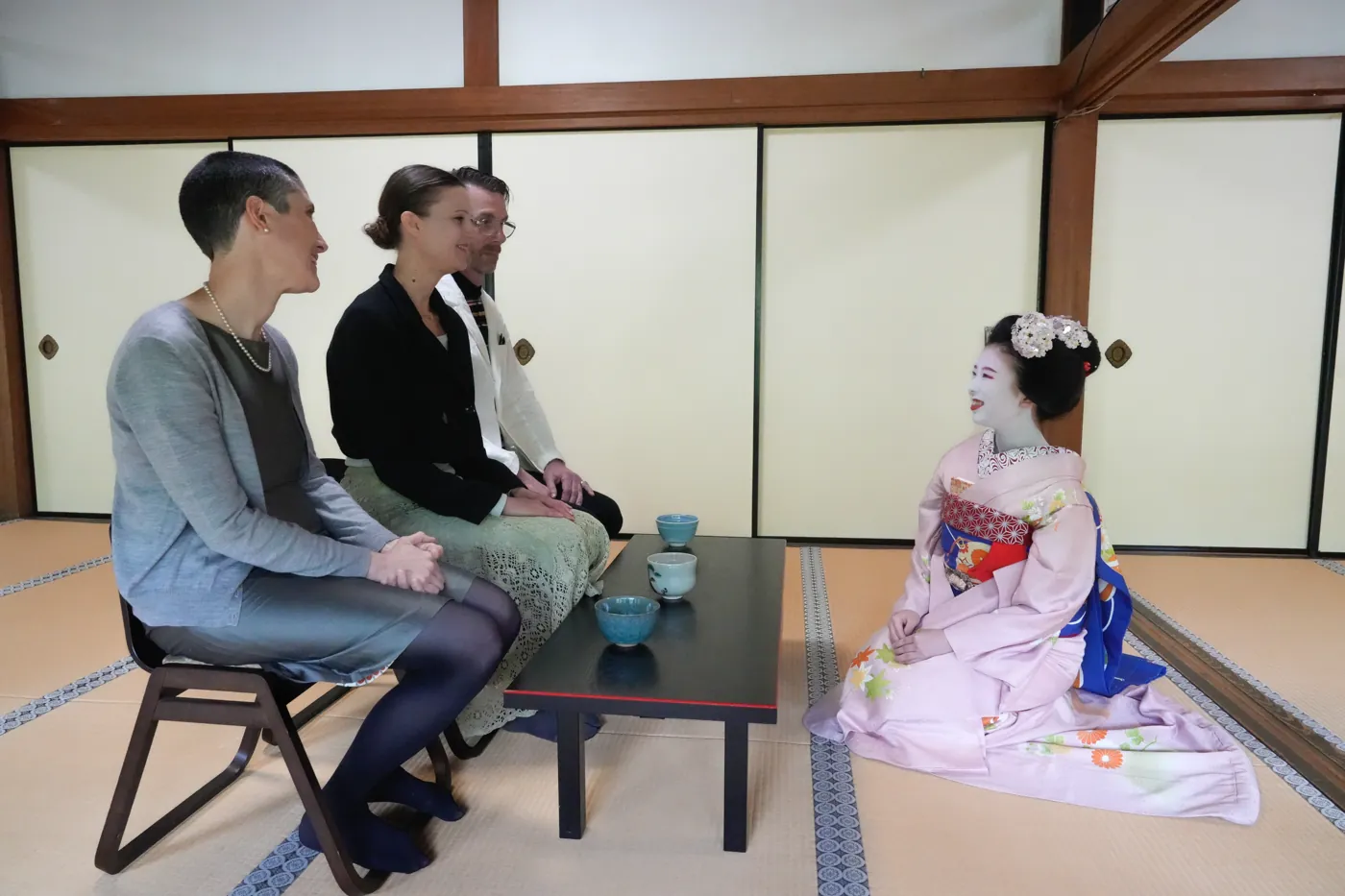
We operate Maiko & Zen Kyoto at Ikka-in, a sub-temple of Tofuku-ji that is rarely open to the public. Unlike a theater program, where children watch the dances from a seat, our session is a shared small group with an English-speaking guide, and after the dance there is time to talk with the maiko and take photos together. If a small group, unhurried time to talk, English support, and photos matter to your family, the session is built around those points.
A maiko dances in the temple hall with no stage separating her from the guests, so children watch the sleeves, the fan, and the footwork from close by. After the dance, she takes time for conversation and your questions, and then everyone gathers for photographs together.
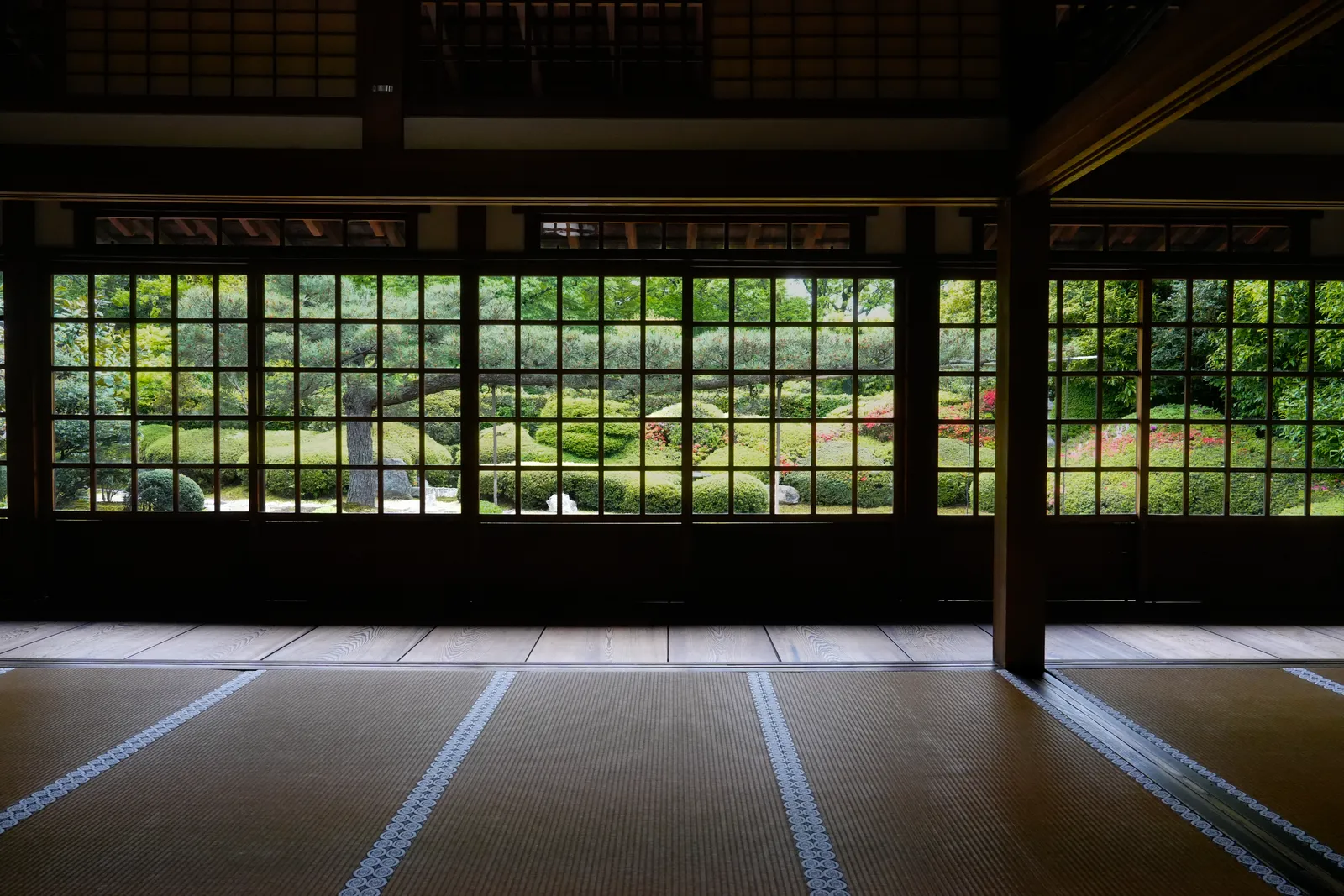
You join a shared small group, and an English-speaking guide stays with you, so parents and children follow each moment together. Sencha and a sweet are part of the session, a gentle pause in the middle of the afternoon.
Sessions start at 2:00 pm and 3:30 pm and last 90 minutes. The price is 23,000 yen per person, and children aged 6 and older join at the same price as adults. Our session is for guests aged 6 and older, so if you are traveling with younger children, the other formats described earlier, such as the theater options in our guide to geisha shows in Kyoto, may suit you better; check each one's age rule first.
Planning a Family Afternoon in South Kyoto
An afternoon performance fits well between a morning of sightseeing and an evening meal, which keeps the day relaxed for younger travelers. One way to shape the day is a morning at Fushimi Inari. Inari is the next station after Tofukuji on the JR Nara Line, and the ride takes about 2 to 3 minutes by local train, so the two stops sit close together in a half day. For more ways to shape a day around a maiko experience, see our guide to maiko experiences in Kyoto.
Getting There
The venue is a sub-temple in the grounds of Tofuku-ji. From Kyoto Station, the JR Nara Line reaches Tofukuji Station in about 3 minutes, and the walk from there takes about 10 minutes.
If you prefer the bus, Kyoto City Bus 88 or 208 from Kyoto Station takes about 15 minutes, followed by about 4 minutes on foot. The Keihan line's Tofukuji Station is also about 10 minutes on foot from Tofuku-ji. On the grounds of Tofuku-ji, visitors are asked to refrain from eating, drinking, and using tripods for photography, so it helps to have snacks before or after your visit.
Plan Your Afternoon
See a maiko dance at a Zen temple. We operate Maiko & Zen Kyoto, a 90-minute session at Ikka-in, a sub-temple of Tofuku-ji, where a maiko dances in the same temple hall with no stage between you, then takes time for your questions and photos. See current session times and prices.
Frequently asked questions
What age can children join a geisha experience in Kyoto?
It depends on the experience. Age rules differ from one performance or session to another, so check the minimum age on the page of the experience you choose before you plan the day.
Will my children understand what is happening?
If the experience includes an English-speaking guide or interpreter, children can follow the dance more easily and ask their own questions.
What do children notice first about a maiko?
The hanging obi, the seasonal flowers in her hair, and her tall okobo sandals are easy details for children to spot.
What should children wear?
Comfortable clothes and clean socks work well, because rooms with tatami floors are entered without shoes.
Can children take photos with a maiko?
It depends on the format. Theater performances rarely include photos with a maiko, while some smaller sessions set aside time for photos; check the page of the experience you choose.
How can a family prepare before the day?
Read a little about maiko together, and let each child choose one question to ask if the experience includes time to talk.
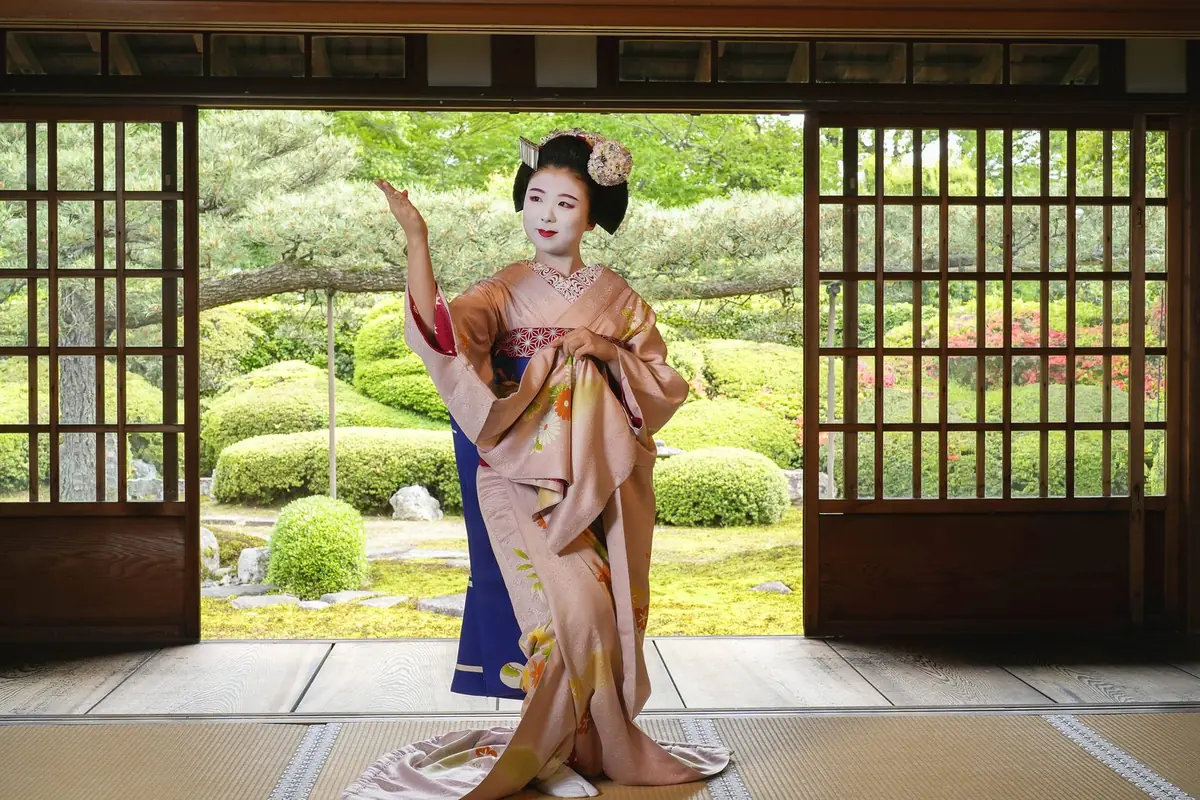
A maiko dance session at a Zen temple near Kyoto Station
Rake a Zen garden, watch two maiko dances and share green tea at Ikka-in, a temple rarely open to the public, one stop from Kyoto Station. Sessions start at 2:00 pm and 3:30 pm.
See the 2:00 pm and 3:30 pm sessions →Sources
- Kyoto Hanamachi Official Site: Maiko — Kyoto Traditional Musical Art Foundation (Ookini Zaidan)
- Kyoto Hanamachi Official Site: Maiko dressed — Kyoto Traditional Musical Art Foundation (Ookini Zaidan)
- Kyoto Hanamachi Official Site: The five hanamachi — Kyoto Traditional Musical Art Foundation (Ookini Zaidan)
- Miyako Odori 2026 — City of Kyoto (Kyoto Kanko Navi)
- マナーを守って素晴らしい京都観光を — City of Kyoto (Kyoto Kanko Navi)
- Tofuku-ji: Access — Tofuku-ji
- Tofuku-ji: Visitor guide — Tofuku-ji