Kyoto on a Rainy Day: Temple Halls and Palaces to Visit
We operate the Maiko & Zen Kyoto experience mentioned in this guide.
A wet day in Kyoto still leaves plenty to see. Many of the city's well-known sights are temple halls and palace buildings that you walk through under a roof, and you can link several of them without long walks in the rain. This guide picks five such places, gives the official details for each one, and then shows how to fit them into a rainy afternoon.
Planning a Day Around the Rain
A simple rule is to choose sights with buildings you can walk through, such as temple halls and palace rooms, and to save mountain trails and wide gravel gardens for a dry day.
Keep each day in one part of the city. Sanjusangendo, Tofuku-ji, and Sennyu-ji make one group, Nijo-jo Castle is a stop on its own, and Tenryu-ji is out in Arashiyama. Picking one or two of these groups cuts down the time you spend crossing the city with a wet umbrella.
Pack for halls as well as rain. You may need to take off your shoes in temple buildings, so shoes that slip on and off easily help, and a plastic bag for a folded umbrella keeps tatami and wooden floors dry. Details on this page can change, so check each official page before you go.
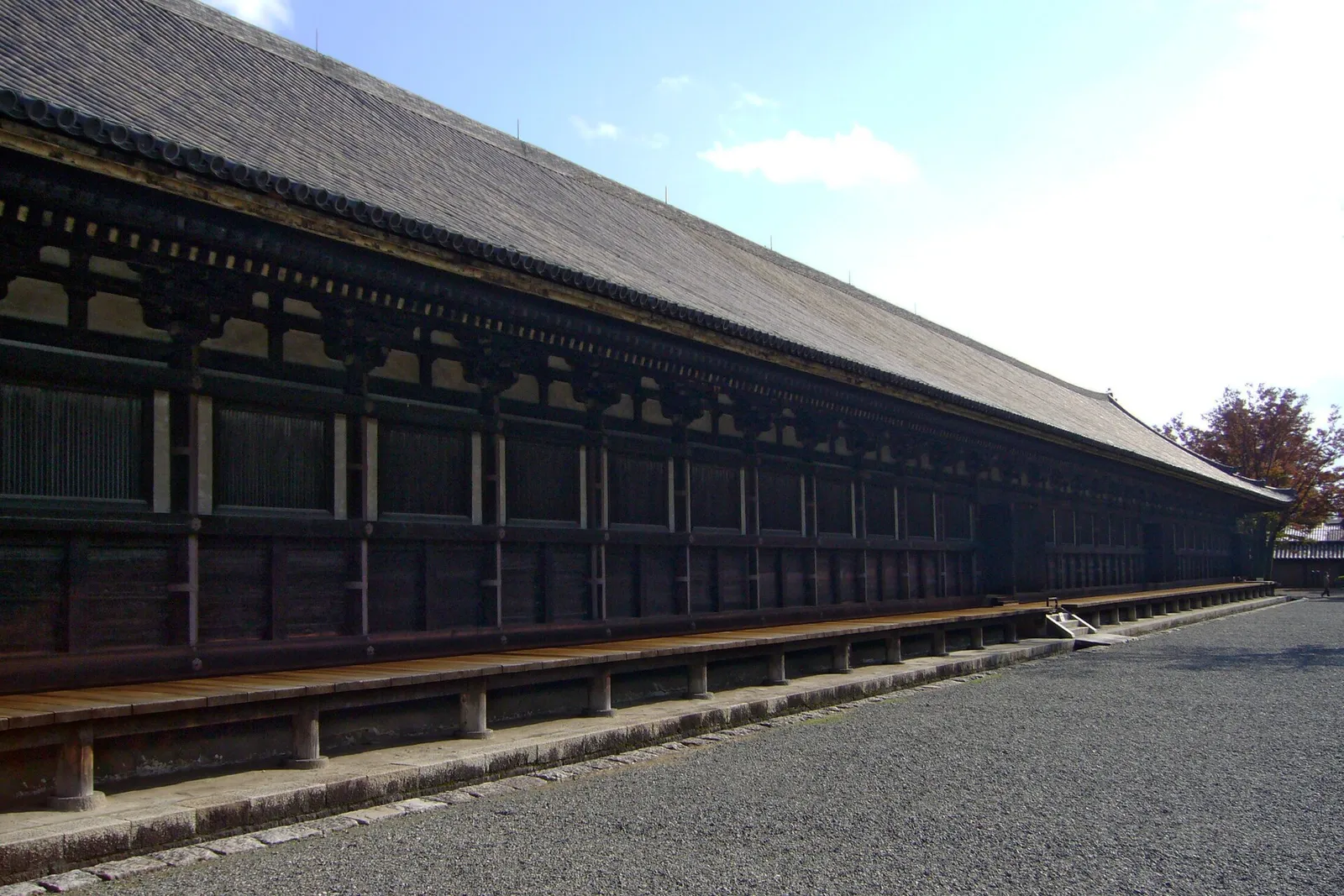
Sanjusangendo Near Kyoto Station
Sanjusangendo is an easy first stop on a rainy morning, because it is close to Kyoto Station.
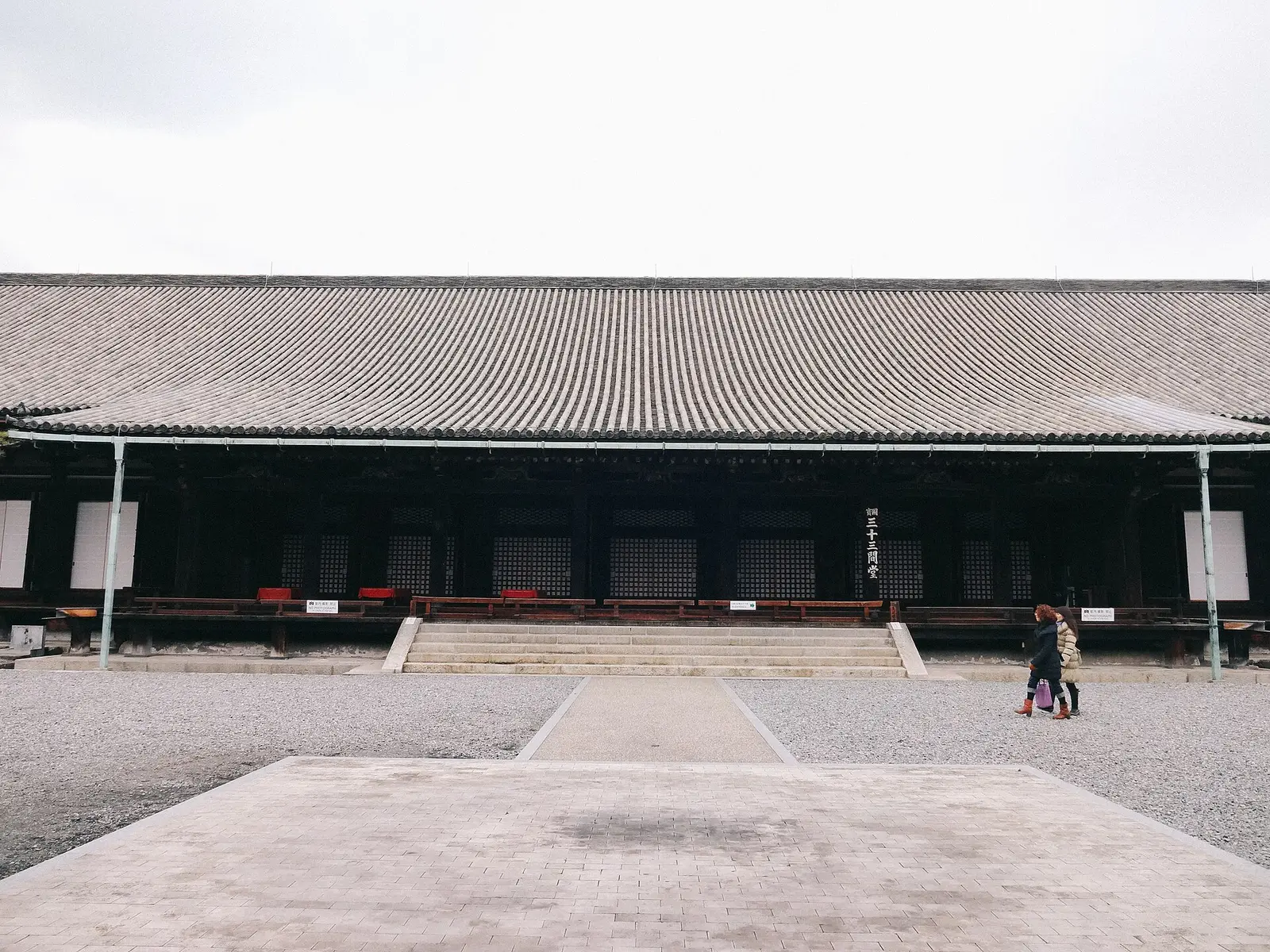
It is open from 8:30 am to 5:00 pm between April 1 and November 15, and from 9:00 am to 4:00 pm between November 16 and March 31, with last entry 30 minutes before closing. Sanjusangendo is open every day of the year, and adult admission is 600 yen.
From Kyoto Station it is about 18 minutes on foot. If the rain is heavy, City Bus 106 (the Rakuraku Higashiyama Line) runs year-round to the area. Our Sanjusangendo guide covers the hall in more detail.
Tofuku-ji: Gardens Around the Hojo
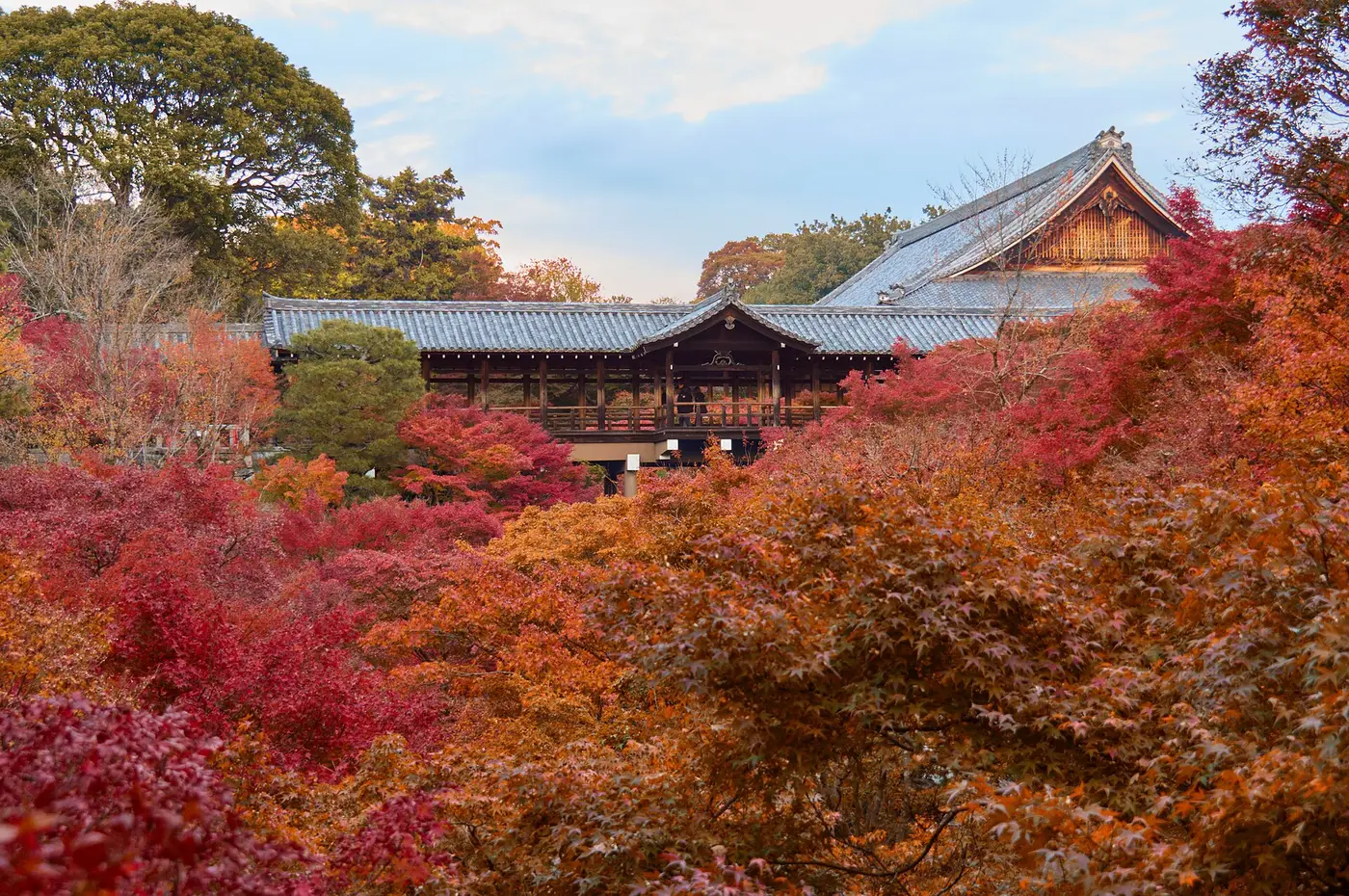
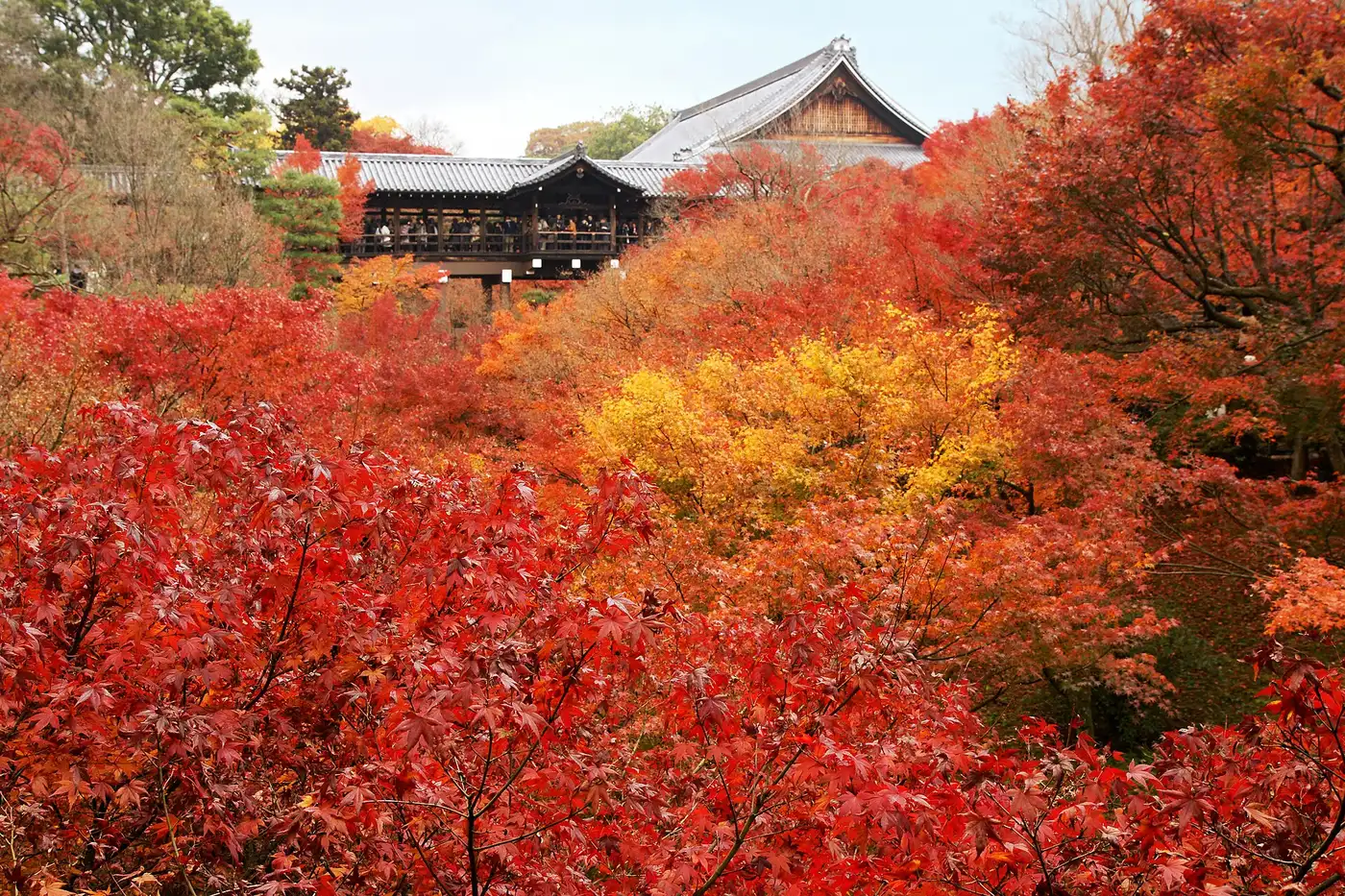
Tofuku-ji is one stop from Kyoto Station on the JR line, so it is an easy addition on a rainy day. The Hojo gardens were designed by Mirei Shigemori in 1939 and are called Hasso no Niwa, with four gardens on the east, west, south, and north of the Hojo, so you move from one garden view to the next around a single building. Tsutenkyo Bridge links the Hojo and the Kaisando, and the Sengyokukan ravine below it is known for fresh green and autumn leaves. Much of the visit here is outdoors, so keep your umbrella with you.
From April 1 to November 13 the temple opens at 9:00 am, ticket sales end at 4:00 pm, and the gates close at 4:30 pm. From November 14 to December 6, Tsutenkyo Bridge is open from 8:30 am to 4:00 pm and the Hojo gardens from 9:00 am to 4:00 pm, and the gates close at 4:30 pm. From December 7 to March 31, ticket sales end at 3:30 pm and the gates close at 4:00 pm. The autumn viewing dates and hours change every year.
Adult entry to the Hojo gardens is 600 yen from November 1, 2026 (500 yen before that). Tsutenkyo Bridge and the Kaisando cost 1,000 yen for adults from November 14 to December 6. Outside the autumn period, Tsutenkyo Bridge and the Kaisando cost 600 yen for adults.
Tofukuji Station is one stop from Kyoto Station on the JR Nara Line, a ride of about 3 minutes, and the temple is then about 10 minutes on foot. For a full walk-through of the grounds, see our Tofuku-ji temple guide.
Sennyu-ji and the Gozasho Viewing
Sennyu-ji has temple halls and a special viewing of the Gozasho and its garden.
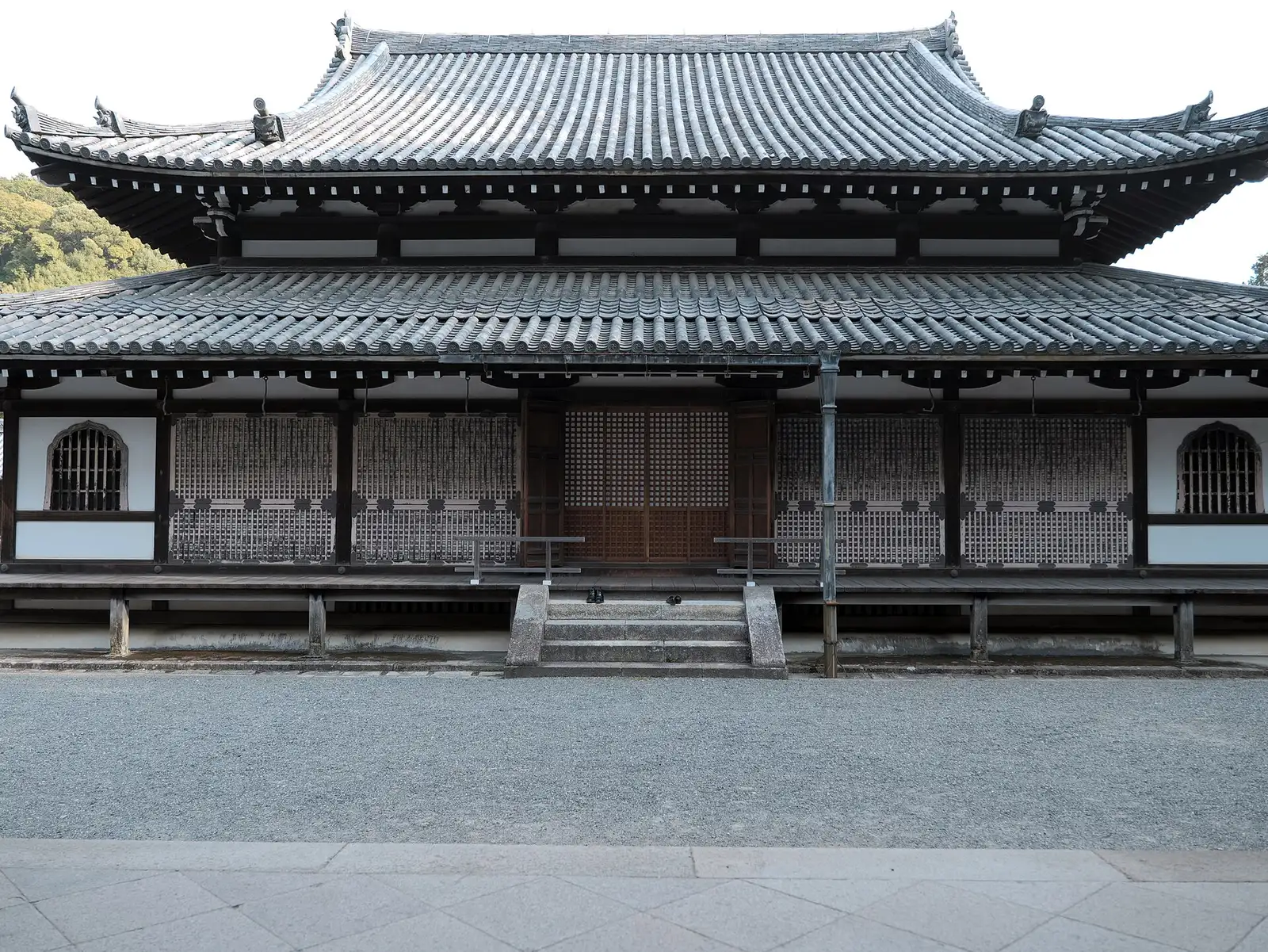
From March to November it is open from 9:00 am to 4:30 pm, and the gate closes at 5:00 pm. From December to February it is open from 9:00 am to 4:00 pm, and the gate closes at 4:30 pm. Admission to the temple grounds is 500 yen for adults, and the special viewing of the Gozasho and garden costs another 500 yen.
Nijo-jo Castle and the Ninomaru Palace
Nijo-jo Castle is a good choice for a wet day, since you can add the Ninomaru Palace to your ticket. The castle opens at 8:45 am, last entry is 4:00 pm, and it closes at 5:00 pm. It is closed from December 29 to 31.
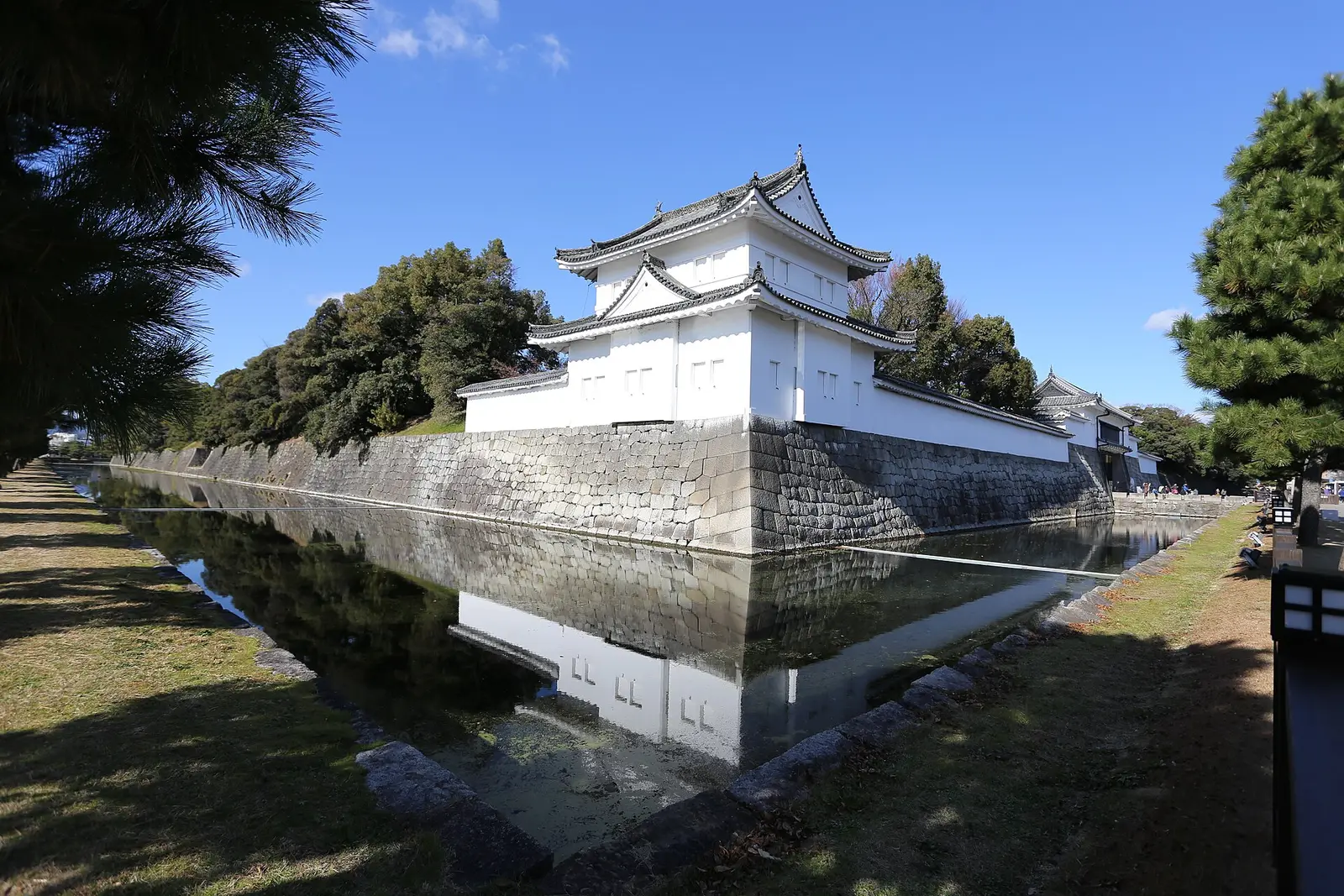
Adult admission is 800 yen, or 1,300 yen including the Ninomaru Palace. The Honmaru Palace costs another 1,000 yen and needs an advance reservation, so book ahead if you want to see it.
The Dharma Hall at Tenryu-ji
If your rainy day falls in Arashiyama, the Dharma Hall at Tenryu-ji shows the Cloud-Dragon Painting. The Dharma Hall is open on Saturdays, Sundays, and holidays only, and during specially designated periods in spring and autumn. Entry to see the Cloud-Dragon Painting costs 500 yen, separate from the fee for Tenryu-ji's garden and buildings.
The temple garden is open from 8:30 am to 5:00 pm (last entry 4:50 pm), with early opening from 7:30 am from November 14 to 30, 2026, and the garden costs 500 yen for adults. Tenryu-ji is 13 minutes on foot from Saga-Arashiyama Station on the JR Sagano Line, or about 5 minutes on foot from Arashiyama Station on the Keifuku Arashiyama Line. Our Arashiyama guide covers the rest of the area.
A Rainy Half-Day Near Kyoto Station
On a rainy day, you can keep your stops close to Kyoto Station: Sanjusangendo is about 18 minutes on foot from the station, and Tofukuji Station is one stop away on the JR Nara Line. Start with Sanjusangendo in the morning, head to Tofuku-ji for the gardens around the Hojo, and save the later part of the day for a stop where you sit indoors.
Our Session at Ikka-in
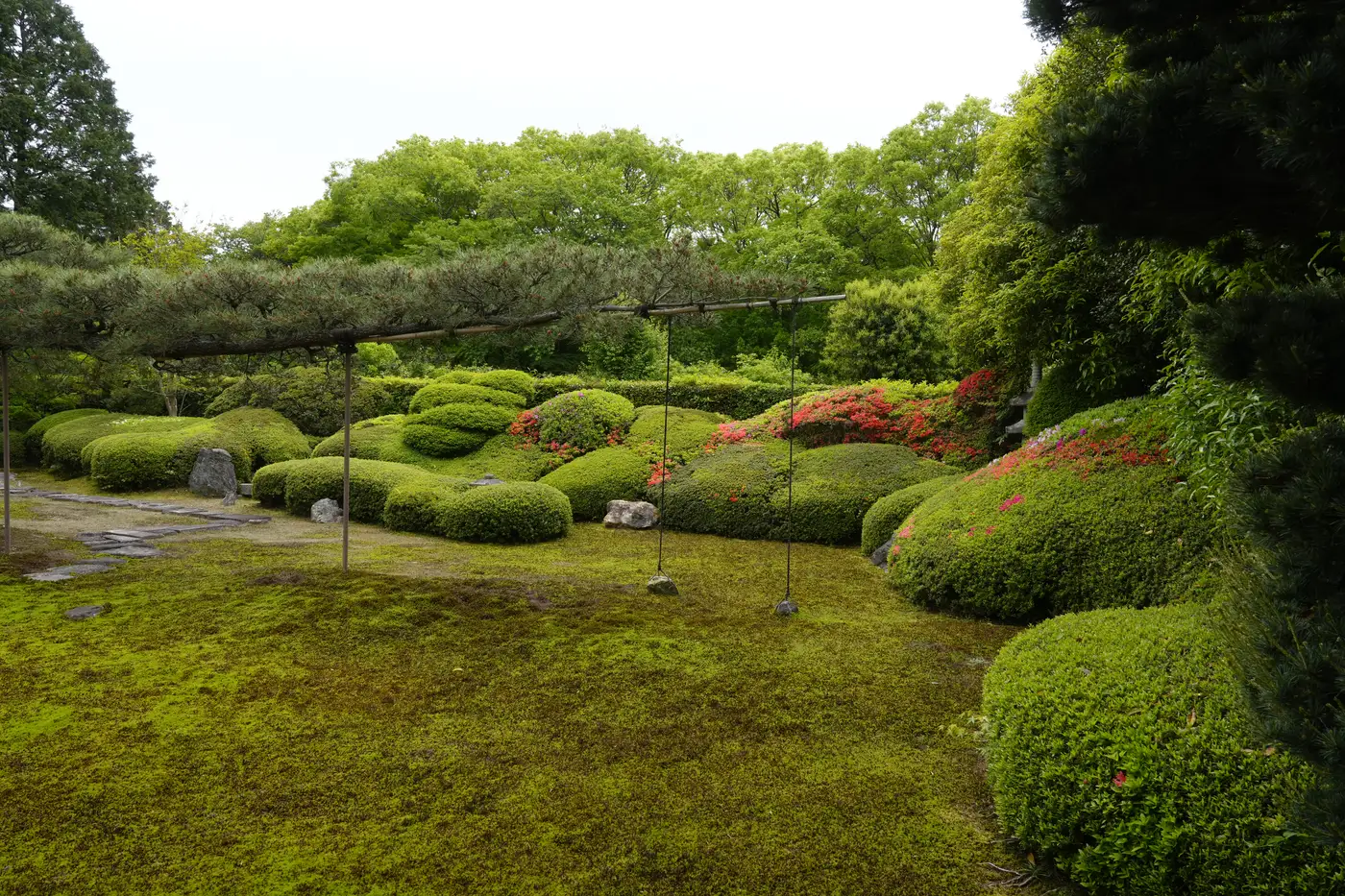
We operate Maiko & Zen Kyoto at Ikka-in, a sub-temple of Tofuku-ji founded in 1382 that is rarely open to the public. A maiko dances in the temple hall with no stage between you, then there is time to talk, ask questions, and take photographs together, all under the temple roof. If you want time to talk with a maiko, a small group, and an English-speaking guide, this is a calm way to spend a wet afternoon.
The session lasts 90 minutes and starts at 2:00 pm or 3:30 pm, and sencha and a sweet are part of it. The price is 23,000 yen per person, and children aged 6 and over pay the same price; children under 6 cannot join.
Whichever session you choose, see Tofuku-ji's gardens before it: ticket sales end at 4:00 pm for most of the year, and at 3:30 pm from December 7 to March 31. Our guide to maiko experiences in Kyoto explains the different formats if you want to compare first.
Getting Around Kyoto in the Rain
Short rail rides keep you drier than long walks. The JR Nara Line runs from Kyoto Station to Tofukuji Station in about 3 minutes, and Rapid Service trains on the JR Sagano Line reach Saga-Arashiyama Station in about 11 minutes.
Buses cover most other gaps. An adult pays 230 yen for each Kyoto City Bus ride inside the flat-fare zone, and a Subway & Bus 1-Day Pass costs 1,100 yen for adults. For ways to group these areas over several days, see our Kyoto itinerary.
Add a quiet temple stop to your day. We operate Maiko & Zen Kyoto, a 90-minute session at Ikka-in, a sub-temple of Tofuku-ji, where a maiko dances in the same temple hall with no stage between you, then takes time for your questions and photos. See current session times and prices.
Frequently asked questions
What is there to do in Kyoto when it rains?
Pick places with buildings you can walk through, such as Sanjusangendo or the Ninomaru Palace at Nijo-jo Castle, and keep each day in one part of the city.
Is Sanjusangendo open every day?
Sanjusangendo is open every day of the year, and adult admission is 600 yen.
Can I see the cloud dragon at Tenryu-ji on any day?
The Dharma Hall is open on Saturdays, Sundays, and holidays, and during specially designated periods in spring and autumn, so check the temple's official page before you plan around it.
How much does it cost to ride the bus between sights?
Inside the flat-fare zone, an adult pays 230 yen for each Kyoto City Bus ride, and a Subway & Bus 1-Day Pass costs 1,100 yen for adults.
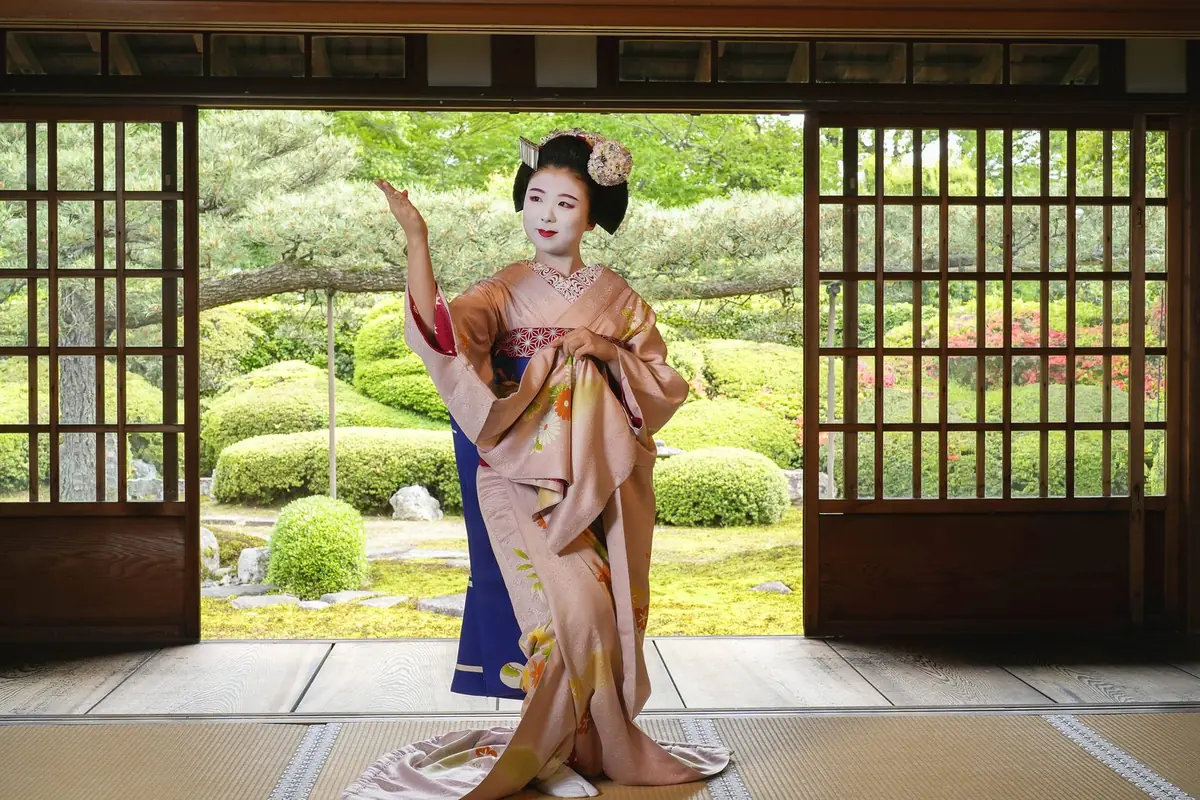
A maiko dance session at a Zen temple near Kyoto Station
Rake a Zen garden, watch two maiko dances and share green tea at Ikka-in, a temple rarely open to the public, one stop from Kyoto Station. Sessions start at 2:00 pm and 3:30 pm.
See the 2:00 pm and 3:30 pm sessions →Sources
- Sanjusangendo: visiting — Sanjusangendo
- Comfortable access to Higashiyama and Sanjusangen-do — Kyoto City Tourism Association
- Tofuku-ji: visitor guide — Tofuku-ji
- Tofuku-ji: access — Tofuku-ji
- Sennyu-ji: visitor guide — Sennyu-ji
- Nijo-jo Castle — City of Kyoto
- Nijo-jo Castle: admission fees — City of Kyoto
- Tenryu-ji: visit — Tenryu-ji
- Tenryu-ji: hours, fees, and access — Tenryu-ji
- Getting to Saga-Arashiyama — Kyoto City Tourism Association
- Kyoto City Bus fares — Kyoto City Transportation Bureau
- Subway & Bus 1-Day Pass — Kyoto City Transportation Bureau