Wagashi in Kyoto: A Guide to Japanese Tea Sweets
We operate the Maiko & Zen Kyoto experience mentioned in this guide.
Wagashi, the traditional sweets of Japan, can look like tiny works of art, and in Kyoto they are closely tied to the tea room. If you have ever seen a flower or a leaf shaped from bean paste and wondered what it is, why it looks that way, and how it is meant to be eaten, this guide is a calm place to start. It covers the main words for tea sweets, how they pair with thick and thin tea, what a sweet can say through color, shape, and name, and what to keep in mind before you taste one in Kyoto.
What Wagashi Are and Where They Meet Tea
The word wagashi simply means Japanese sweets, and the range is wide. This guide focuses on the sweets served with tea, because that is where many visitors to Kyoto first meet them. Sweets made in Kyoto's own style are called kyogashi.
Kyoto's official tourism site explains that kyogashi developed along with chanoyu, the tea ceremony. That shared history is the key to understanding a tea sweet. It is not an afterthought or a snack on the side. It is chosen to belong to the gathering, to the tea, and to the moment.
For a first-time visitor, a useful mindset is curiosity. You do not need to memorize terms before you arrive. Knowing a few words, and knowing that a sweet carries thought in its design, is enough to turn a small plate into a conversation with your host. Questions about a sweet are a welcome way to show interest.
Namagashi and Higashi: Two Words for Tea Sweets
Two words come up whenever tea sweets are explained: namagashi and higashi. Learning them will make an explanation from a host easier to follow.
Kyoto's official tourism site describes namagashi as the collective term for fresh sweets that are made chiefly with sweet bean paste. Higashi is the other kind of tea sweet, and you will meet it alongside namagashi.
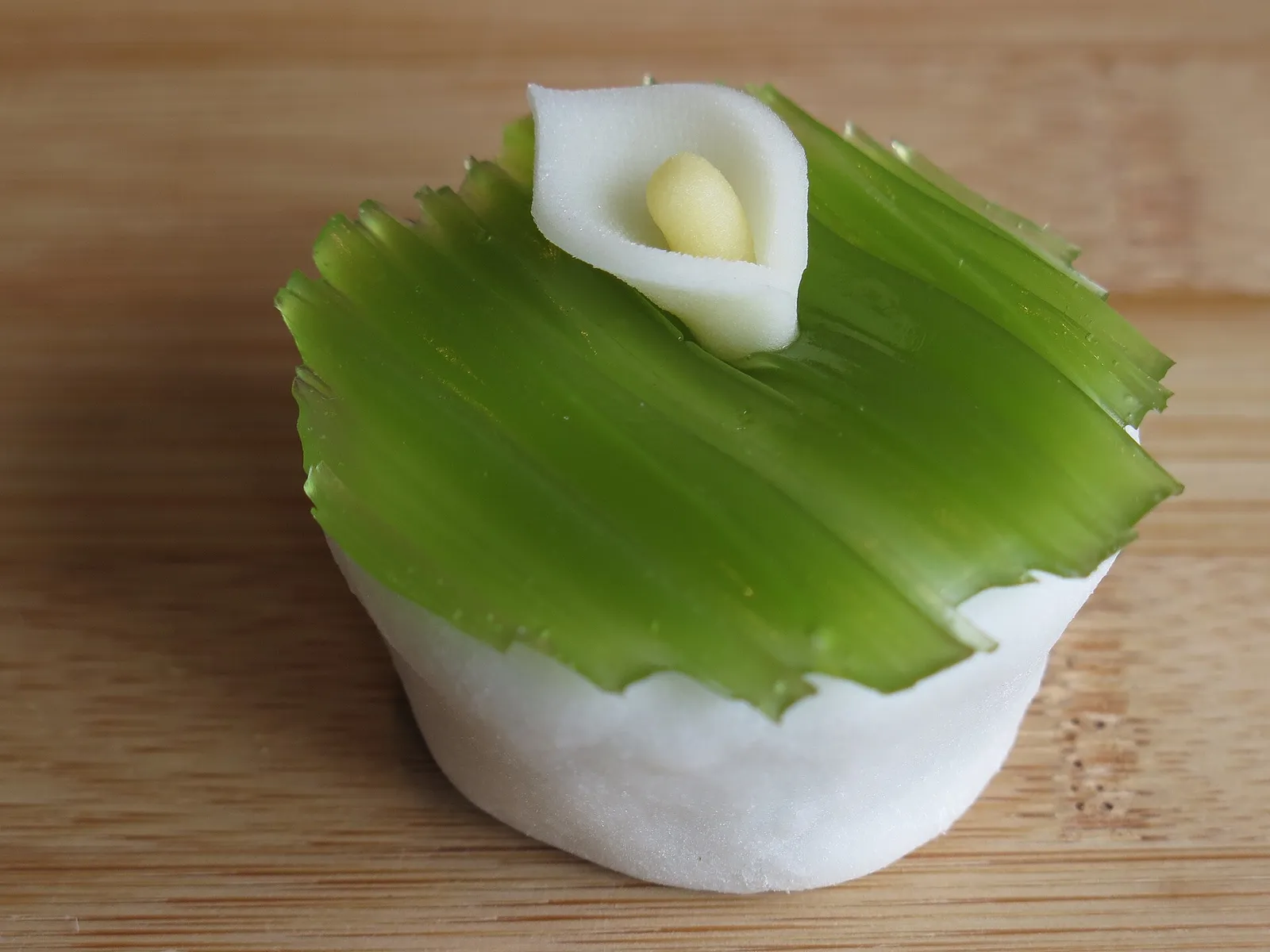
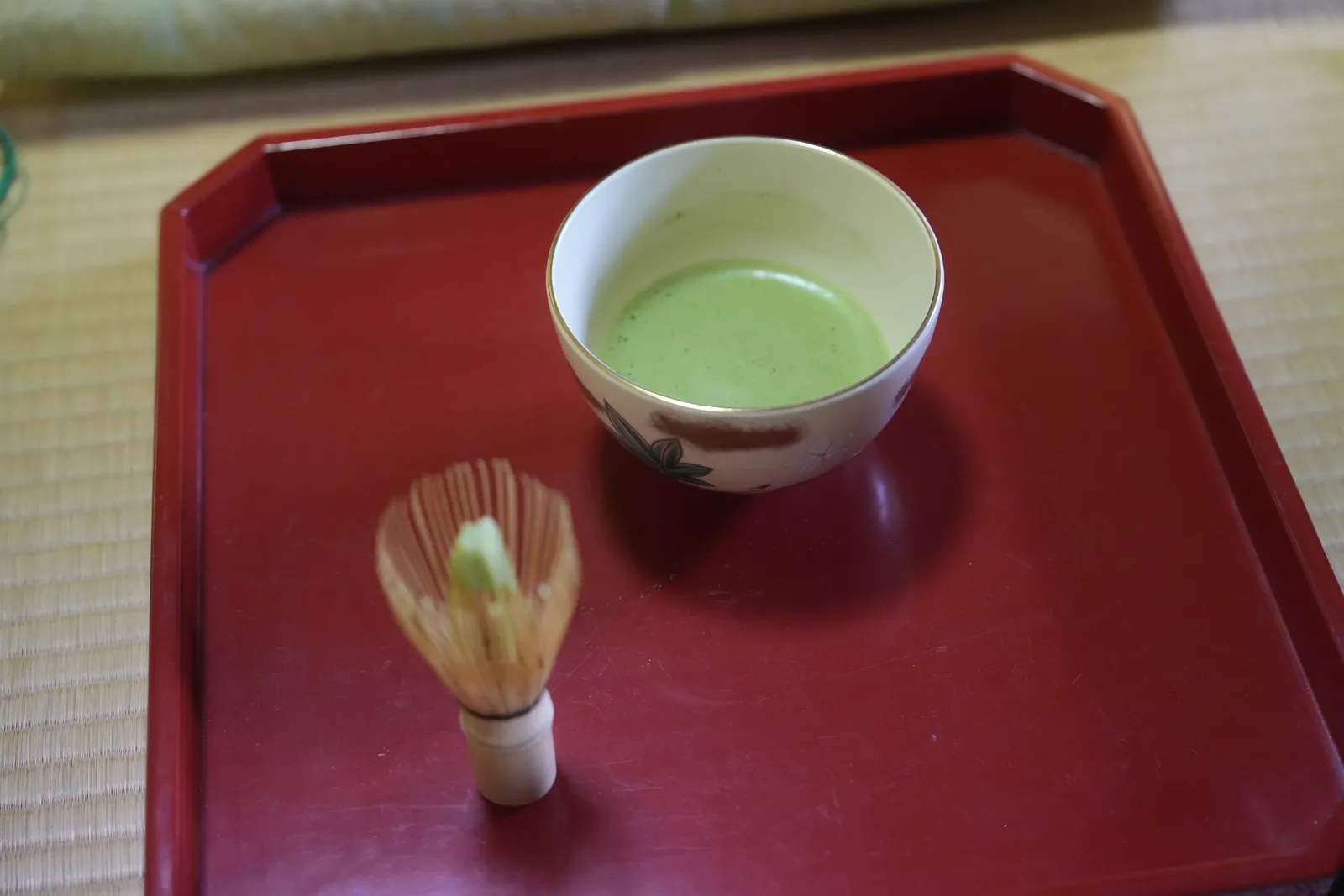
Look closely at a wagashi sweet like the green one above and you can see how much is packed into a small piece: a glossy, sharp-edged green top, a pale base, and one small flower shape. Nothing on it is accidental, and that care is part of what visitors come to enjoy.
Sweets With Thick Tea and Thin Tea
Namagashi sweets are usually served with koicha, thick matcha, in the more formal sessions of tea gatherings, according to Kyoto's official tourism site. The Omotesenke school of tea uses the word omogashi in its English glossary: omogashi are served with thick tea at a chaji, a formal tea gathering.
The same glossary notes that thin tea is usually served with tea sweets to visitors. Put together, these descriptions show a simple pattern. The sweet and the tea are meant to be enjoyed as a pair, and the formality of the gathering shapes which sweet appears beside the bowl.
The glossary also explains that guests always carry a pack of paper, called kaishi, inside their kimonos in the tea room. You do not need to arrange anything like this yourself as a visitor, but it shows how carefully each small part of the gathering has been planned. Schools of tea differ in their details, so when you join a gathering, follow the guidance of your host.
Color, Shape, and Name: How a Sweet Speaks
A tea sweet is made to be looked at before it is eaten. Color, shape, and name are three small clues, and together they let a sweet tell you something before you taste it.
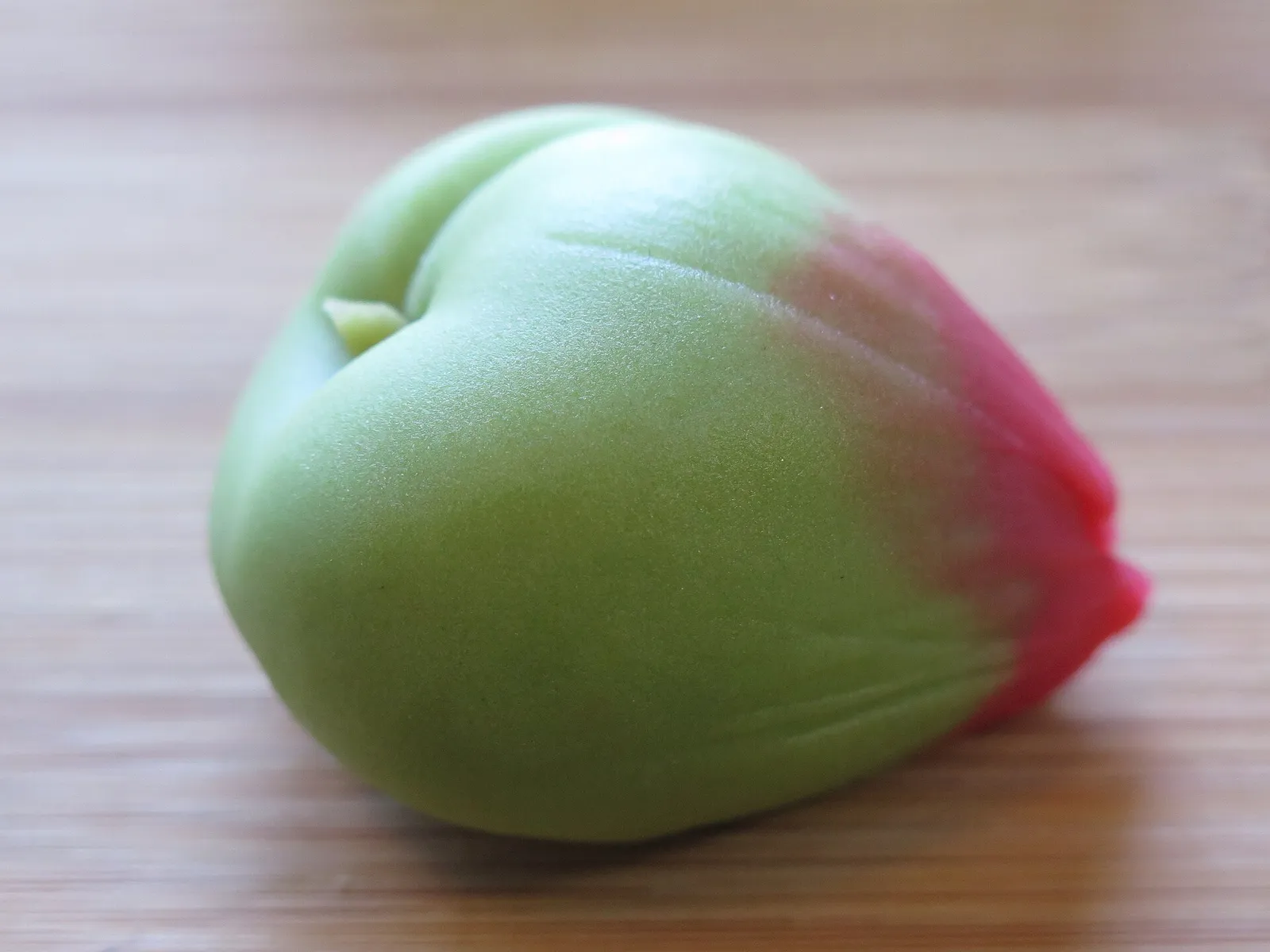
Here is an easy way to read a sweet at a glance:
- Color: notice the main color and any accent, such as the red-pink tip on the green sweet above.
- Shape: ask yourself what the form suggests, whether a flower, a leaf, or a bud.
- Name: if the host shares the name, hold it next to the shape and see how the two fit.
You do not have to find the "right" answer. A sweet is an invitation to look slowly, and the pleasure comes from noticing. If the name is not mentioned, it is polite to ask your host what it is called and what it is meant to suggest.
Trying Wagashi in Kyoto: What to Know First
A few simple habits will help you enjoy a tea sweet with confidence:
- Because namagashi are made chiefly with sweet bean paste, mention any allergy or dietary need when you book.
- Follow your host's guidance on how and when to eat the sweet, since details can differ from one school to another.
- Ask before you photograph the sweet, and give your host a moment to finish serving first.
- Take your time. A tea sweet is meant to be tasted slowly, together with the tea.
If tea itself is new to you, our guide to tea ceremony etiquette explains what to expect as a guest, and our notes on choosing a tea experience in Kyoto can help you decide where to begin. For a calm setting to pair with a sweet, Kyoto's Zen gardens are a gentle next step.
Add a Quiet Temple Stop to Your Day
Add a quiet temple stop to your day. We operate Maiko & Zen Kyoto, a 90-minute session at Ikka-in, a sub-temple of Tofuku-ji, where a maiko dances in the same temple hall with no stage between you, then takes time for your questions and photos. See current session times and prices.
Wherever you taste wagashi, ask your host about the details and enjoy the small moment of beauty on the plate. For the latest information, check the official page of the place you plan to visit.
Frequently asked questions
What is the difference between namagashi and higashi?
Namagashi are fresh sweets made chiefly with sweet bean paste, and higashi is the other kind of tea sweet. Both words appear in explanations of the tea gathering, and your host can tell you which one is being served.
Which tea goes with wagashi?
Fresh sweets are paired with thick matcha at a formal gathering, and thin tea is served with tea sweets too. Your host will guide you through the order.
How can I tell what a sweet is meant to show?
Look at its color, shape, and name, the three small clues a sweet offers. If the name is not mentioned, it is polite to ask your host.
Should I tell the host about food allergies?
Yes. Many sweets are made with sweet bean paste, so mention any allergy or dietary need when you book, before the day of your visit.
May I take a photo of the sweet?
Ask your host first. The sweet is part of the gathering, and a quick question shows respect before you lift a camera.
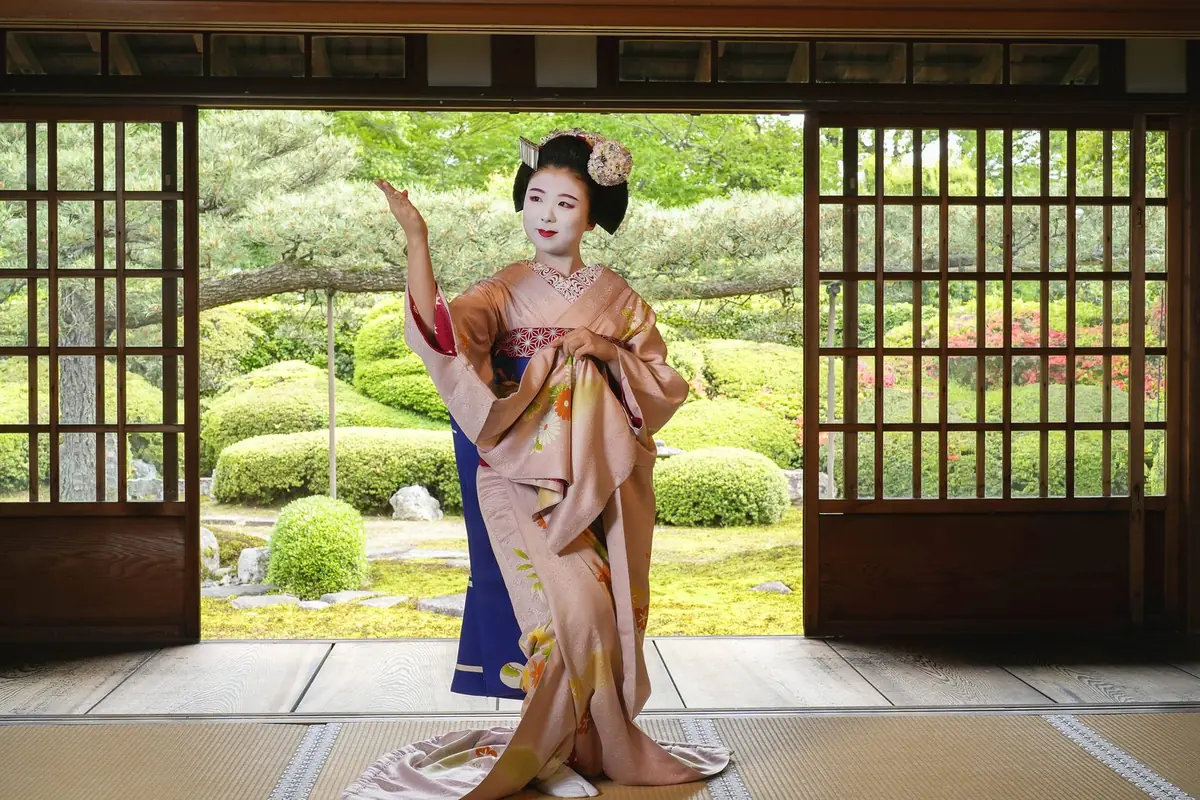
A maiko dance session at a Zen temple near Kyoto Station
Rake a Zen garden, watch two maiko dances and share green tea at Ikka-in, a temple rarely open to the public, one stop from Kyoto Station. Sessions start at 2:00 pm and 3:30 pm.
See the 2:00 pm and 3:30 pm sessions →Sources
- Enjoying Kyogashi, the Traditional Sweets of Kyoto — Kyoto City Tourism Association
- Chanoyu Glossary — Omotesenke
- Basics of Kyoto sweets — Keihan Electric Railway