Maiko Hairstyles, Hairpins, and Kimono: How to Read the Seasons
We operate the Maiko & Zen Kyoto experience mentioned in this guide.
A maiko's appearance tells you two things: how long she has been a maiko, and what time of year it is. Her hairstyle changes with her seniority and with special occasions, and her flower hairpins (hana kanzashi) change every month. Here is how to read them.
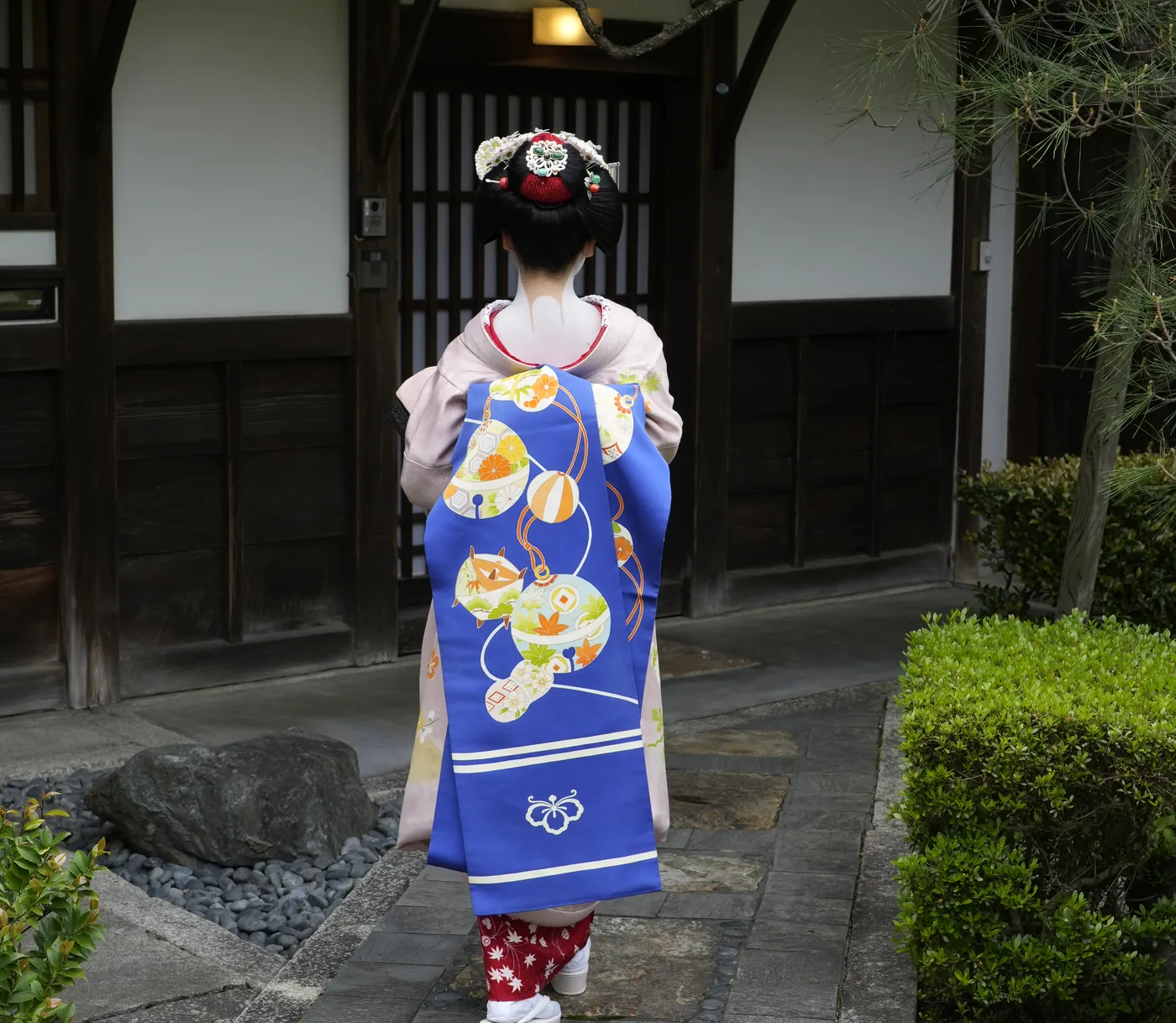
Hairstyles: Seniority and Occasions
Maiko style their own hair, and the style changes as they gain experience. The City of Kyoto lists five hairstyles:
| Hairstyle | When it is worn |
|---|---|
| Wareshinobu | By new maiko. Red tie-dyed cloth shows at the front and back of the hair. Trainees in the month before debut already wear it. |
| Ofuku | After about two years (two or three in Miyagawacho, for example). The tied cloth shows only from behind. |
| Yakko shimada | On formal occasions such as New Year and Hassaku (August 1). |
| Katsuyama | During the Gion Festival. |
| Sakko | For about two weeks (two to three weeks in Miyagawacho, for example) before she becomes a geiko, together with blackened teeth. It was once the style of newly married women. |
When she becomes a geiko, she usually stops styling her own hair; most geiko wear a wig. See maiko vs. geiko for the other differences.
Flower Hairpins: A Monthly Calendar
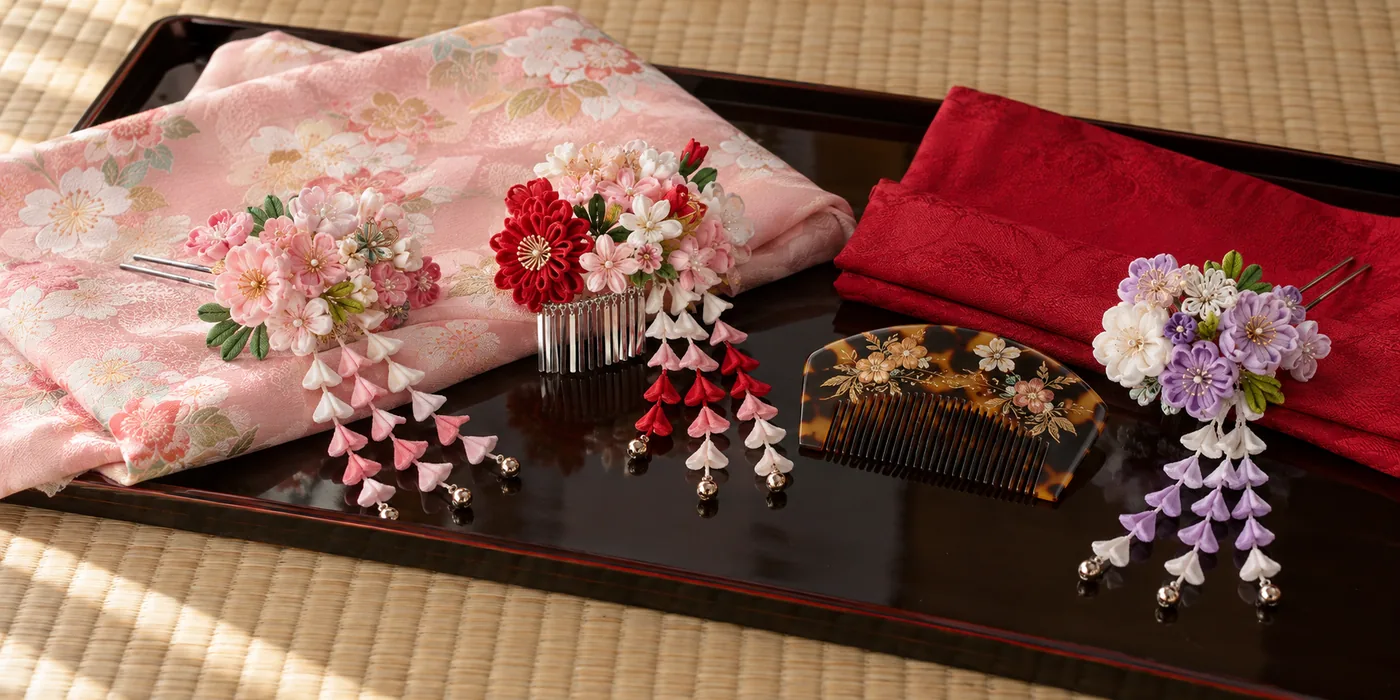
The City of Kyoto notes that a maiko's finely made hairpins change every month to match the season, with special designs for New Year, the Gion Festival, and the December Kaomise kabuki season. The hairpins are handmade by specialist craftsmen.
Kanzashi maker Kintakedo described a typical year to Nikkei (designs can vary by district and maker):
| Month | Motif |
|---|---|
| January | Pine, bamboo, and plum |
| February | Plum |
| March | Rapeseed blossoms |
| April | Cherry blossoms |
| May | Wisteria |
| June | Willow |
| July | Round fans (uchiwa) |
| August | Japanese silver grass (susuki) |
| September | Bellflowers (kikyo) |
| October | Chrysanthemums |
| November | Autumn leaves (momiji) |
| December | Maneki, modeled on the actors' name boards hung for the Kaomise kabuki performances at the Minamiza theater |
The hairpins also signal seniority. According to the same article, junior maiko wear small, clustered flowers in bright red, while senior maiko wear larger flowers in softer, paler pink. At the New Year opening ceremony in early January, geiko and maiko wear black crested kimono with hairpins decorated with ears of rice.
Kimono and Collar
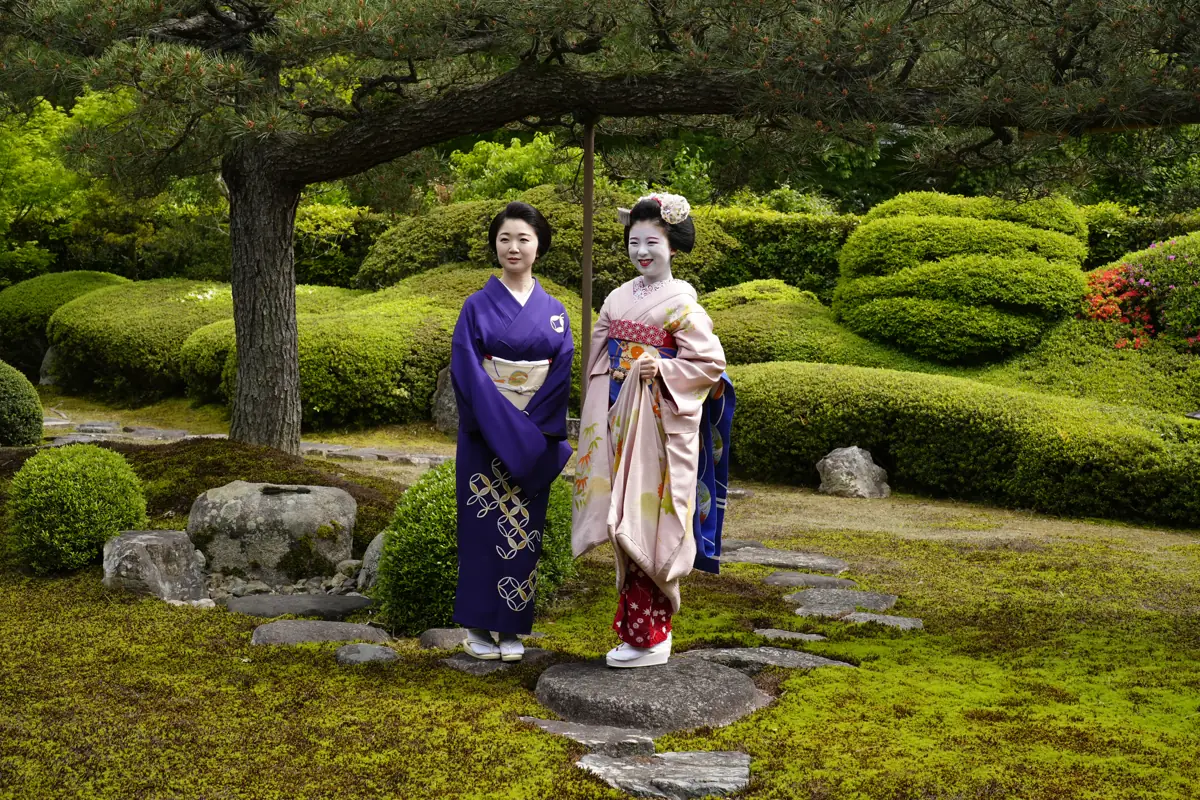
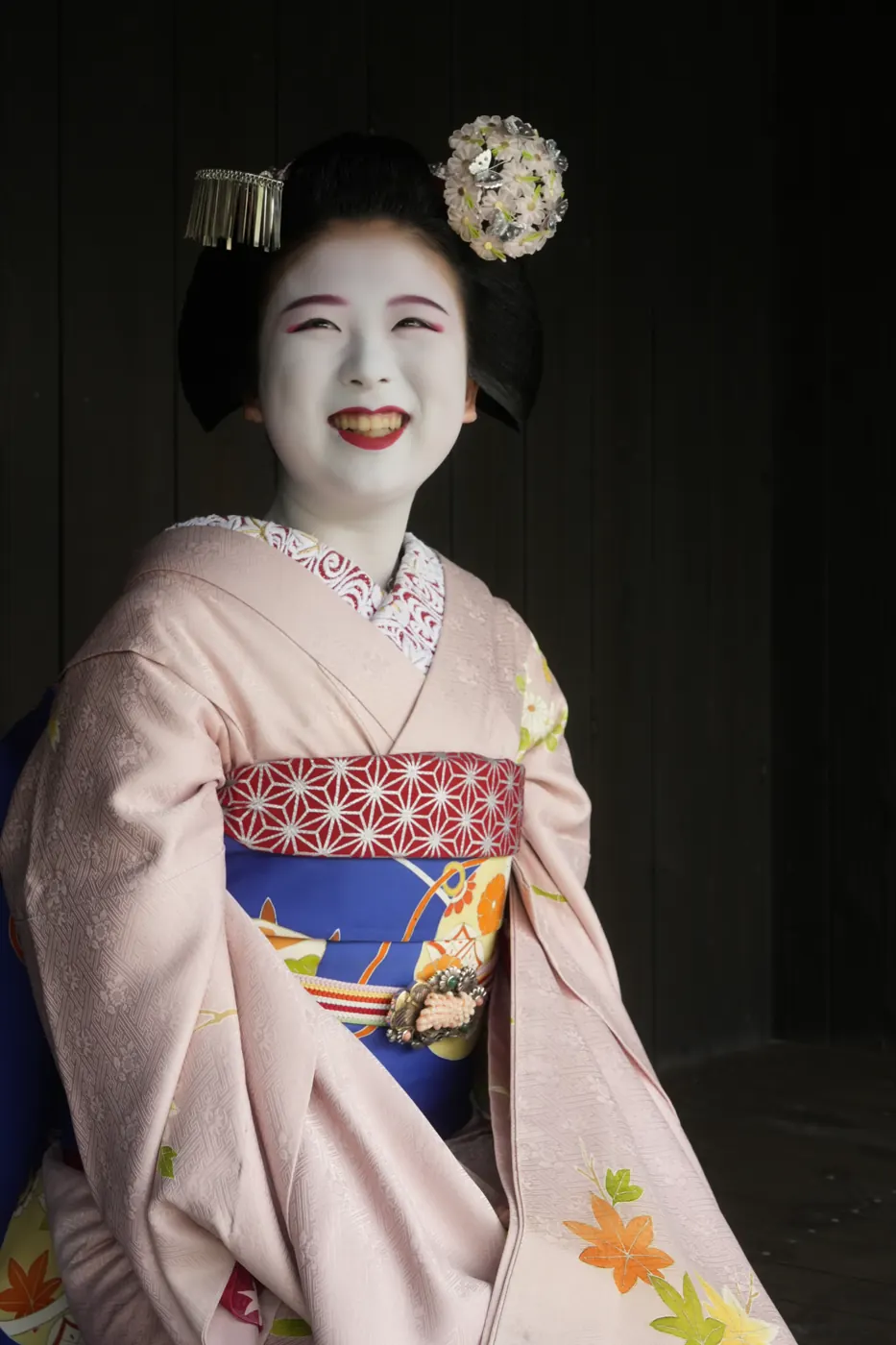
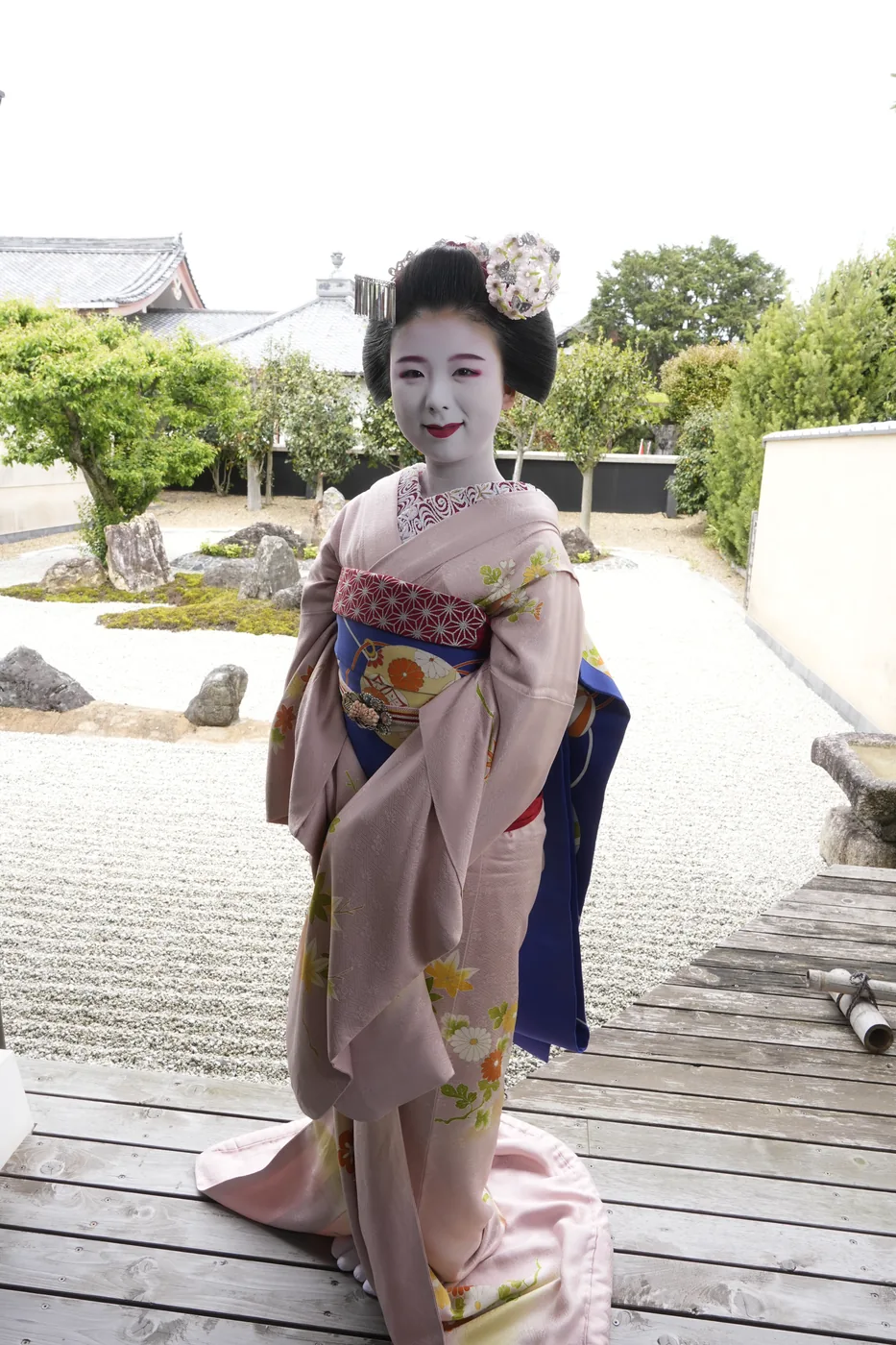
- Seasonal kimono. A maiko's kimono is a furisode with tucks sewn at the shoulders and sleeves, a reminder that maiko literally means "dancing child." Maiko wear kimono dyed in the Kyo-yuzen style with seasonal designs, and black crested kimono for key occasions such as their debut, the New Year ceremony, and erikae.
- The collar. A maiko's collar is red silk crepe with gold thread. When she becomes a geiko, it changes to plain white.
- The darari obi. Much longer than an ordinary obi, it hangs with its ends nearly reaching her feet, with her okiya's crest at the bottom.
Each of Kyoto's five geisha districts has its own customs, so some details described here may differ from one district to another.
Seasonal Details Beyond the Kimono
The season shows in smaller things, too. The foundation describes how the cloth of a maiko's small basket switches to sheer ro or sha fabric with pale, summery motifs such as morning glories in summer, and the basket turns darker in winter. Her name cards (senjafuda) also carry seasonal designs.
Seasonal events bring their own looks: costumes for Setsubun, formal visits on Hassaku (August 1), and theater visits during Kaomise in December.
See the Season in Person
The annual dances are a good chance to see seasonal hairpins and kimono on stage; see our Kyoto geisha dance calendar.
| Way to see them | What you get |
|---|---|
| The annual dances | Seasonal hairpins and kimono, on stage |
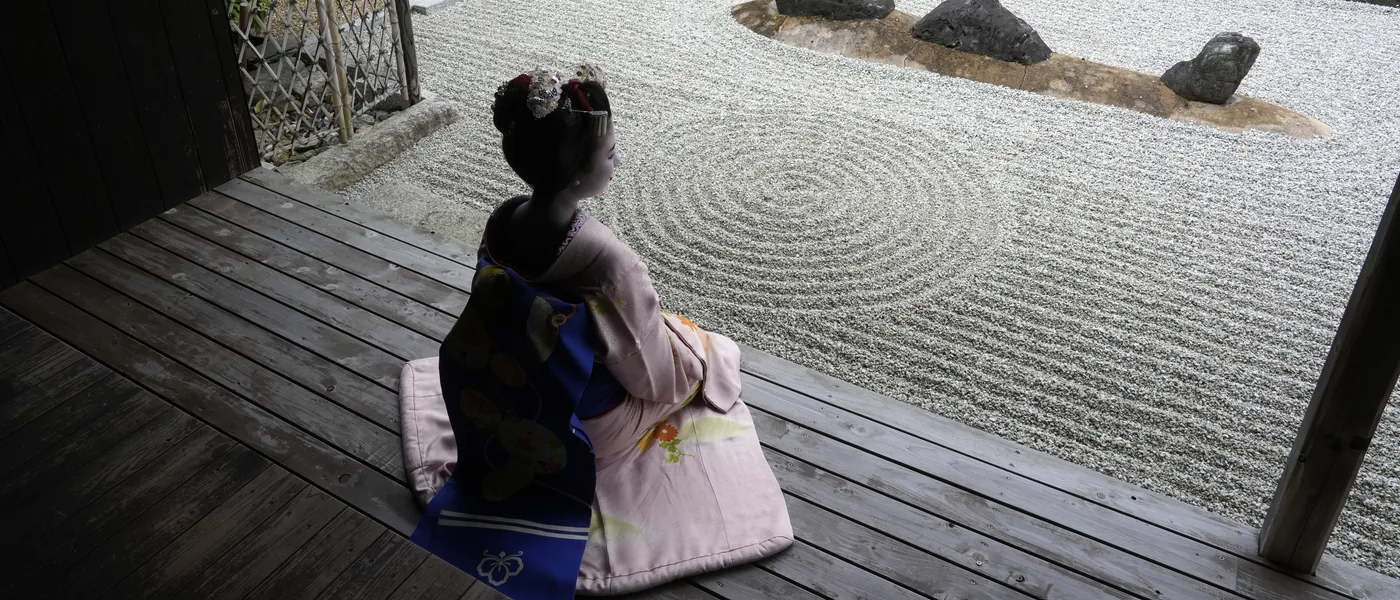
| Maiko & Zen Kyoto (our session) | 90 minutes at Ikka-in, a sub-temple of Tofuku-ji. A maiko dances in the same temple hall with no stage between you, then takes time for your questions and photos |
Frequently asked questions
Why do maiko hairstyles change?
A maiko's hairstyle shows how long she has been a maiko and the occasion. She starts with wareshinobu, moves to ofuku after about two years (two or three in Miyagawacho, for example), and wears sakko just before she becomes a geiko.
Do maiko change their hairpins every month?
Yes. The City of Kyoto notes that a maiko's hairpins change every month to match the season, with special ones for New Year, the Gion Festival, and the Kaomise kabuki season.
What do maiko wear in November?
According to kanzashi maker Kintakedo, speaking to Nikkei, November's hairpins feature autumn leaves (momiji). Designs can vary by district and maker.
Do maiko wear their own hair?
Yes. Maiko style their own hair; most geiko wear wigs.
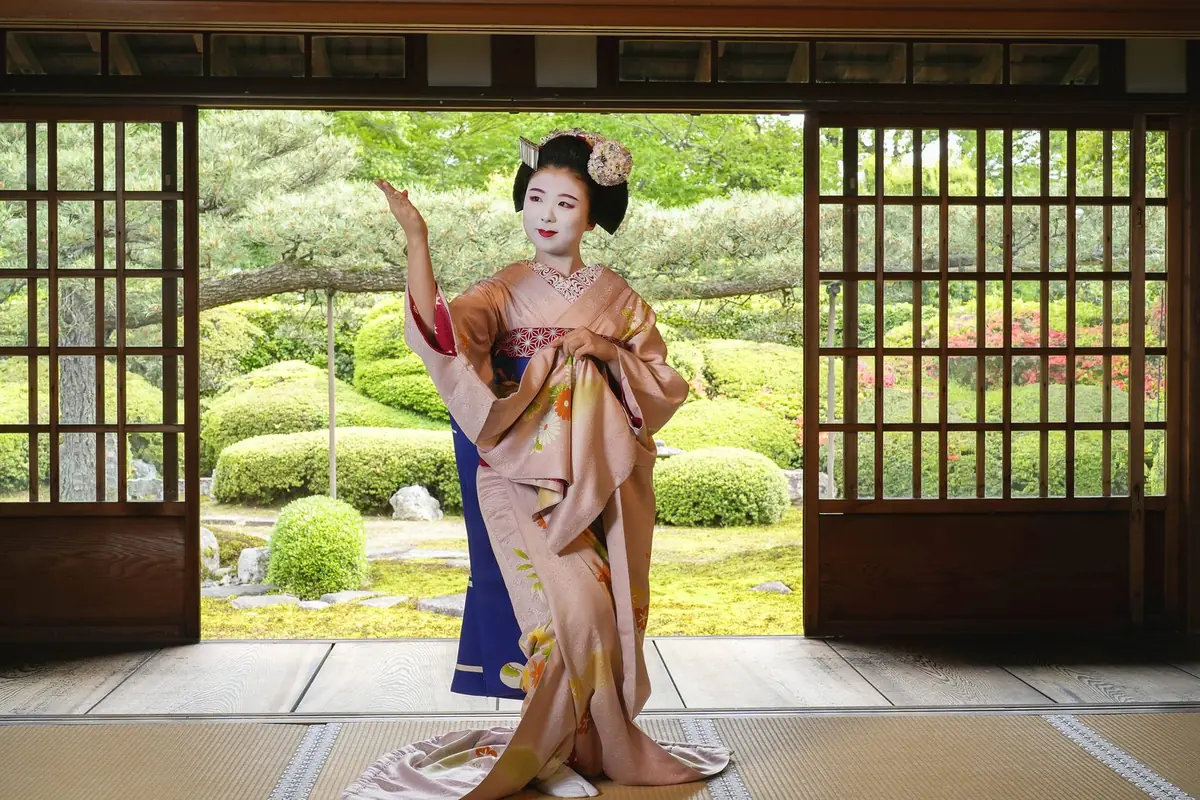
A maiko dance session at a Zen temple near Kyoto Station
Rake a Zen garden, watch two maiko dances and share green tea at Ikka-in, a temple rarely open to the public, one stop from Kyoto Station. Sessions start at 2:00 pm and 3:30 pm.
See the 2:00 pm and 3:30 pm sessions →Sources
- Maiko: costume, makeup, and hairstyle — Kyoto Traditional Musical Art Foundation (Ookini Zaidan)
- Erikae — Kyoto Traditional Musical Art Foundation (Ookini Zaidan)
- What a maiko carries — Kyoto Traditional Musical Art Foundation (Ookini Zaidan)
- The people, skills, and things that support the hanamachi — City of Kyoto
- Kyoto intangible cultural heritage review materials (January 2014) — City of Kyoto
- Seasons told by a maiko's flower hairpins — Nikkei