Kimono Photo Spots in Autumn Kyoto: Temple Rules and How to Plan
We operate the Maiko & Zen Kyoto experience mentioned in this guide.
Wearing a kimono for photos among the leaves is a lovely idea, and it works well with a little planning. This guide covers the practical side: what the temples themselves ask of photographers, how each place changes your plan, and how to prepare for a day on foot.
What to Know Before You Go
Each temple and shrine sets its own rules for photography, and the rules differ from one place to the next. Reading the visitor page of each place before you go is a simple way to avoid surprises.
A kimono also changes how you move. Steps, gravel, and long walks take more effort in a kimono and traditional footwear, so choose one or two places for the day rather than five. The sections below rely on each place's own published details.
A day in a kimono moves at a slower pace than a day in everyday clothes, so leave space for rests and agree on a few photo spots in advance instead of searching for them as you walk. It also helps to settle the small details at each stop: who takes the photo, which side to stand on, and where to step aside so that other visitors can pass.
Keep your list of places short and your expectations flexible. A garden, a hall, or a bridge may look different from the pictures you have seen, and a quiet moment of looking is as much a part of the visit as a photograph.
Photo Etiquette and Dress Basics
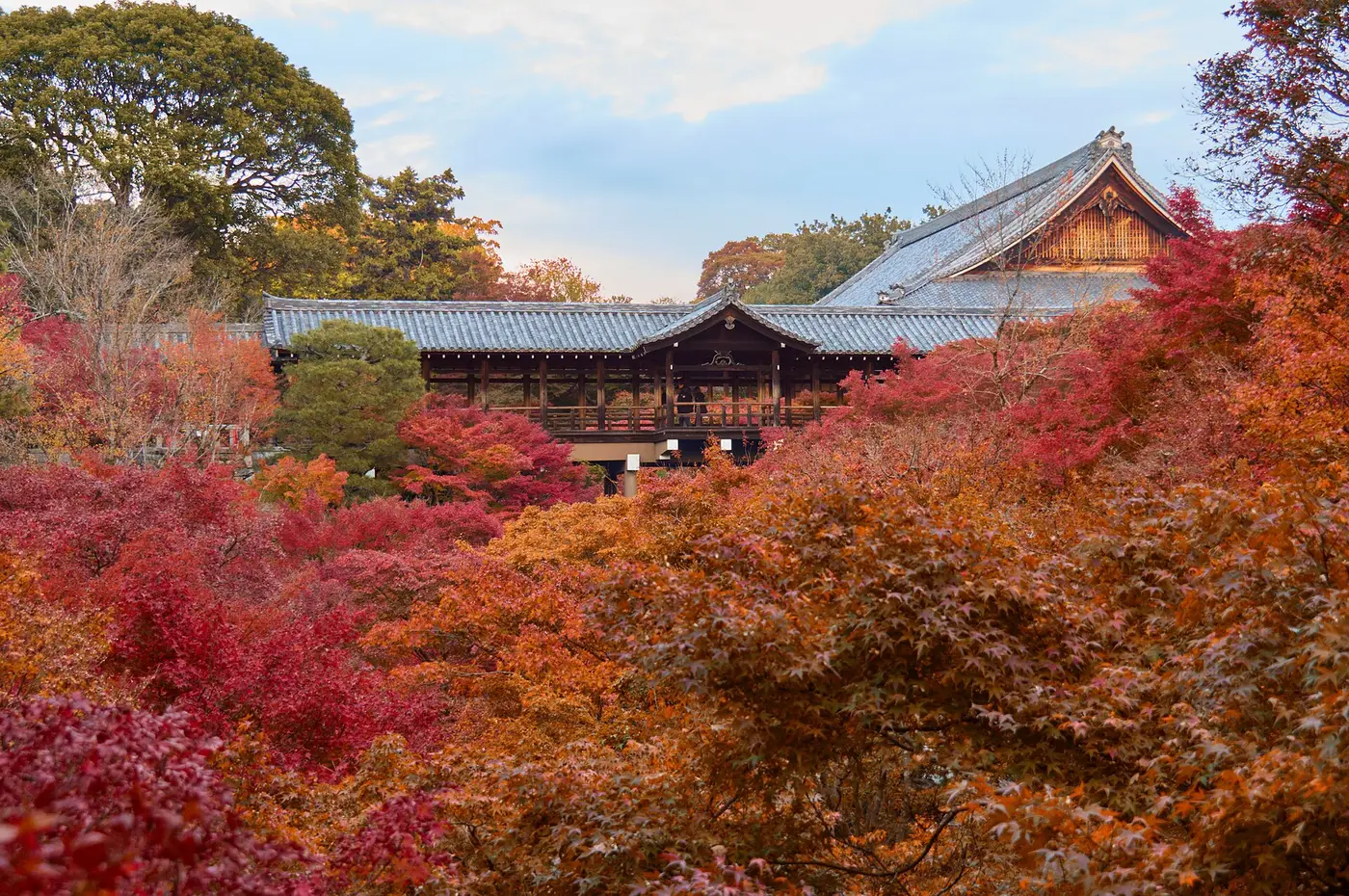
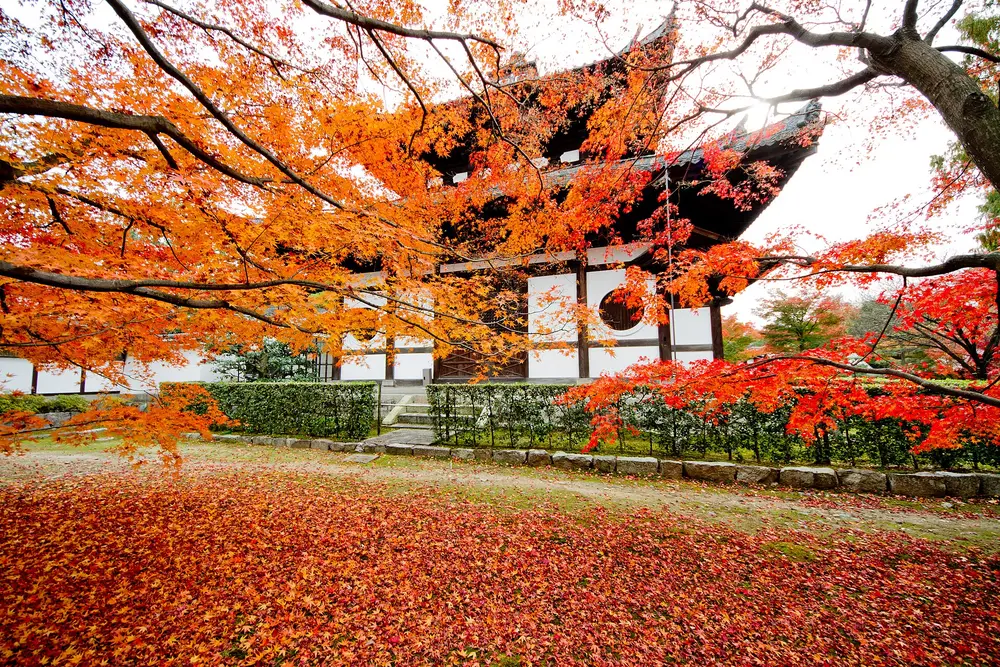
Tofuku-ji asks visitors not to use tripods for photography, and not to eat or drink on the grounds. During the autumn special opening, visitors may be asked not to take photos on Tsutenkyo and Gaun bridges. Treat those bridges as places to look rather than to pose.
At Fushimi Inari, the shrine asks visitors not to hold up worshippers by taking photographs or filming on narrow paths. Step to the side, take your photo, and let others pass.
Wherever you are, ask before you photograph other visitors, do not block a path or a doorway, and keep your group small when you stop for pictures. If a sign or a staff member asks you not to take photos, follow the request.
Choose footwear you can walk in on gravel and stone steps. Carry a light layer that fits over your kimono, and ask the shop or place where you dress whether it can keep your bag.
How Each Place Changes Your Plan
Tofuku-ji
To reach Tofuku-ji from Kyoto Station, take the JR Nara Line to Tofukuji Station, which takes about 3 minutes, and then walk about 10 minutes. The autumn color of the Sengyokukan ravine by Tsutenkyo Bridge is the view to see, but photos on the bridge may not be allowed during the special opening, so ask the staff where you can take pictures.
The temple does not allow re-entry, so finish every part you want to see before you leave. From November 14 to December 6, Tsutenkyo Bridge is open from 8:30 am to 4:00 pm, and the Hojo gardens are open from 9:00 am to 4:00 pm. For more on the temple, see our Tofuku-ji temple guide.
Kiyomizu-dera
From Kyoto Station, take Kyoto City Bus 206 or 100 to Gojozaka, then walk about 10 minutes. The walk from the bus stop is part of the visit, so plan your footwear for it.
Kiyomizu-dera is usually open from 6:00 am to 6:00 pm, and until 6:30 pm in July and August. During special night viewings it stays open until 9:30 pm, with the last entry at 9:00 pm.
Tenryu-ji and Arashiyama
Tenryu-ji is a 13 minute walk from Saga-Arashiyama Station on the JR Sagano Line, and it is about 5 minutes on foot from Arashiyama Station on the Keifuku Arashiyama Line.
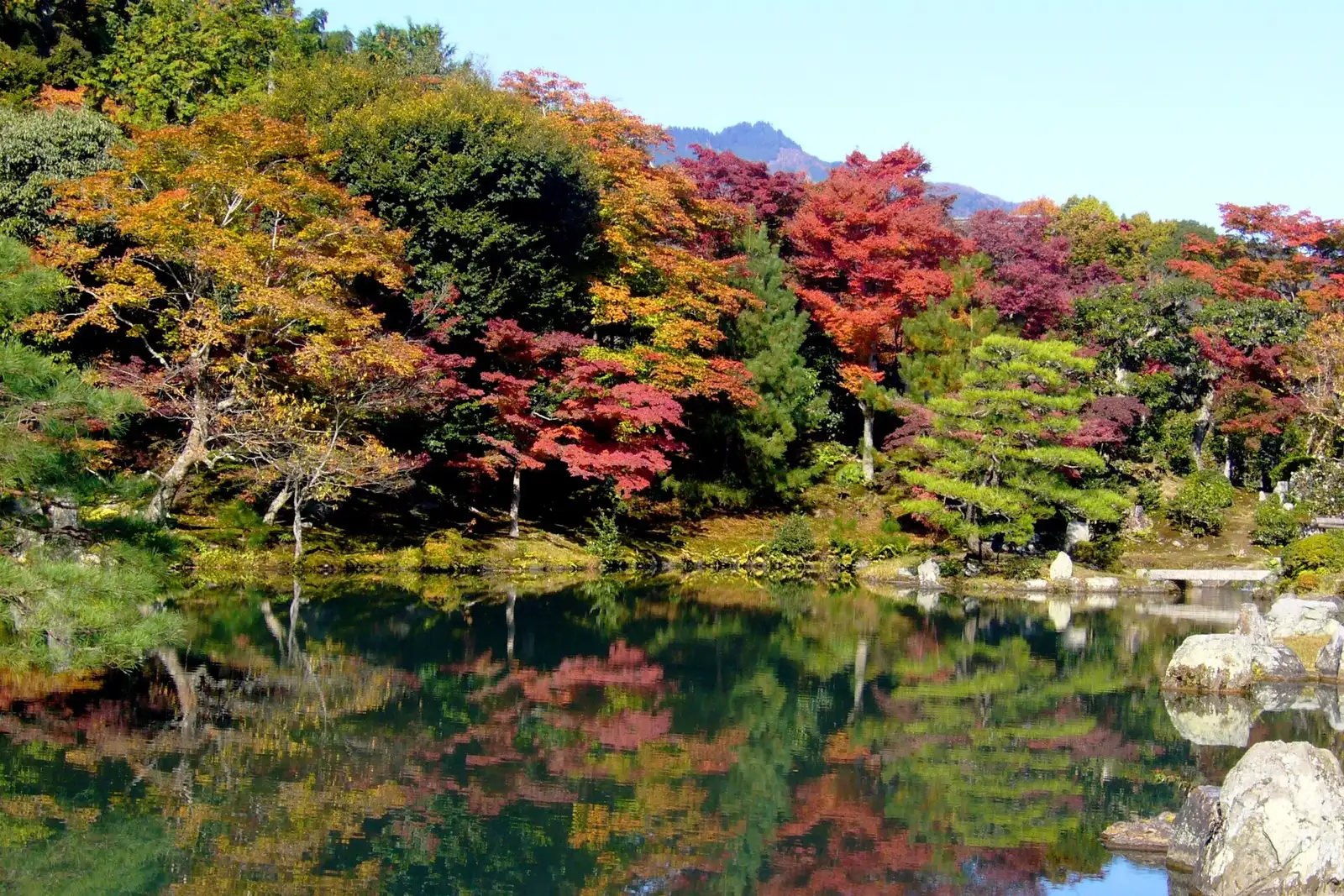
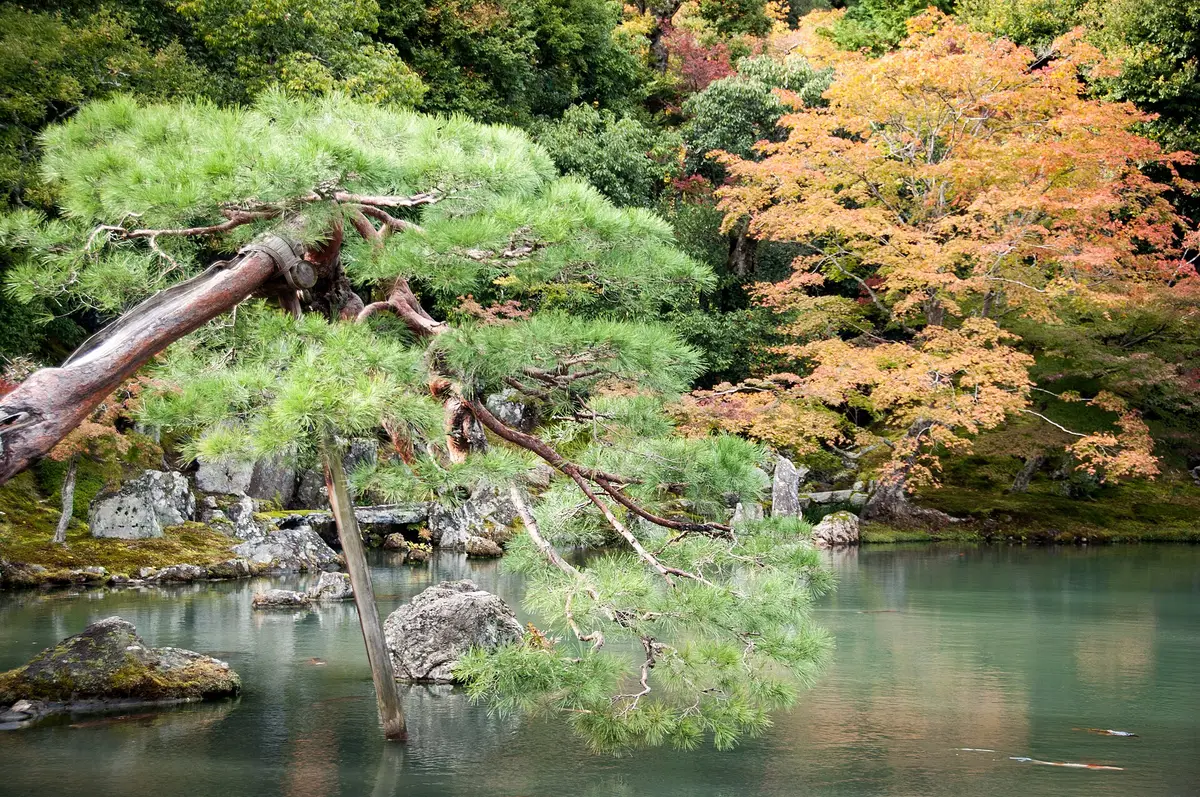
Here the background is the garden itself: the pond, the rocks and pines at its edge, and the maples behind them, as in the photo below.
The garden is open from 8:30 am to 5:00 pm, and the last entry is at 4:50 pm. Adults pay 500 yen for the garden, and the main halls cost 300 yen extra. The Arashiyama Bamboo Light-up runs from September 30 to November 8, 2026.
Fushimi Inari
Fushimi Inari is right next to JR Inari Station, which is 2 stations and 5 minutes from Kyoto Station on the JR Nara Line. The shrine's paths continue up Inariyama, a 233 m holy mountain, so decide in advance how far you will walk in a kimono.
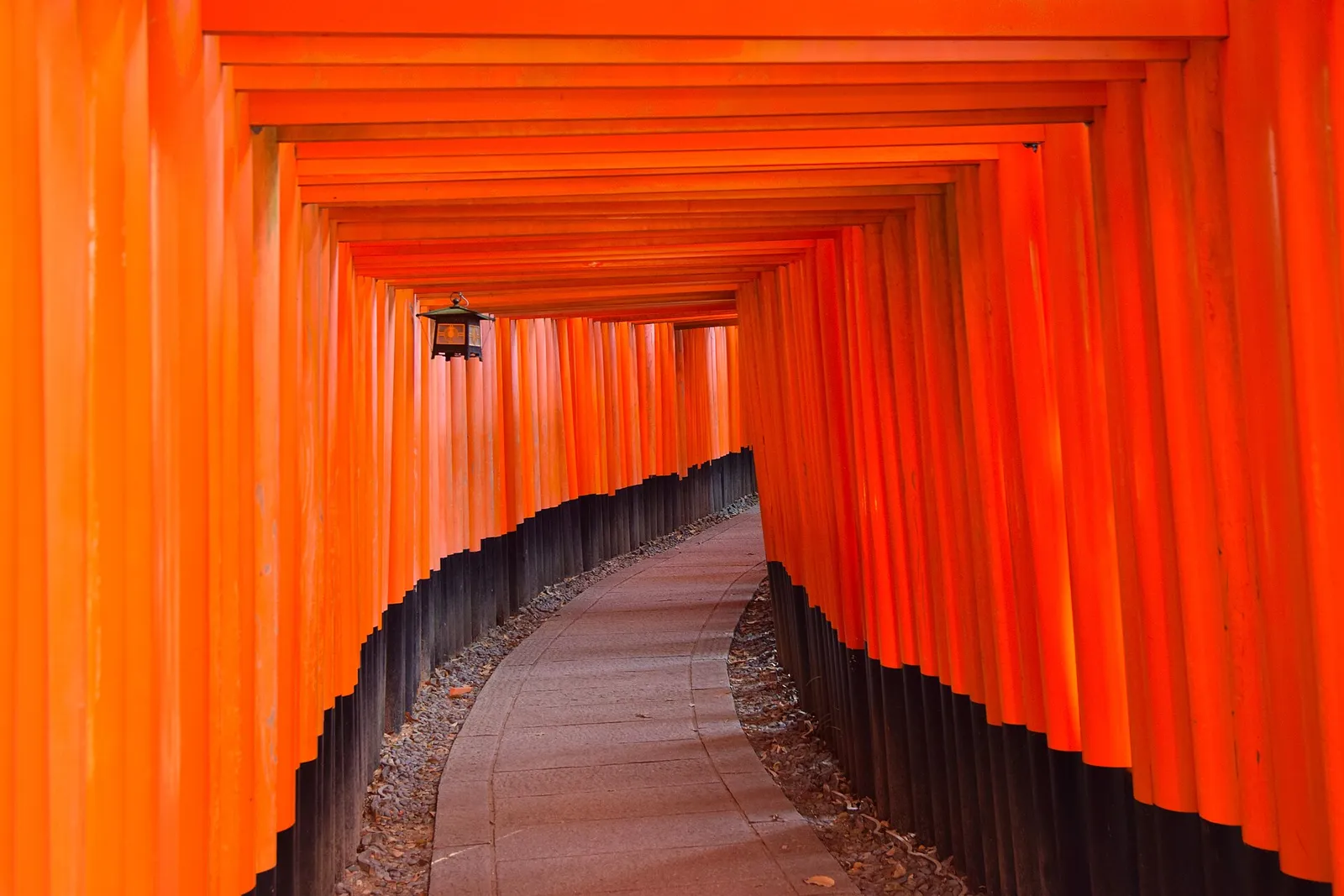
Here the background is mostly the torii gates themselves, standing one after another along the paths, as in the photo below.
What Changes With the Leaves and the Weather
Leaf color and special openings move from year to year. Tofuku-ji says its autumn viewing dates and hours change every year. Kiyomizu-dera says the same about its night viewings, which run from November 21 to 30 in 2026.
Check the official pages shortly before you go. Tenryu-ji opens its garden from 7:30 am on November 14 to 30, 2026.
Weather matters too. A kimono needs more care in wet or windy conditions, so keep a second plan, such as a shorter outing to a single place.
Add a Quiet Temple Stop to Your Day
Add a quiet temple stop to your day. We operate Maiko & Zen Kyoto, a 90-minute session at Ikka-in, a sub-temple of Tofuku-ji, where a maiko dances in the same temple hall with no stage between you, then takes time for your questions and photos. See current session times and prices.
If you are spending the afternoon in the south of the city, sessions start at 2:00 pm and 3:30 pm. For a wider plan, read our Kyoto itinerary for the leaves or our guide to Zen gardens in Kyoto.
Frequently asked questions
Can I use a tripod at Tofuku-ji?
The temple asks visitors not to use tripods for photography, so plan to take photos by hand.
Can I take photos on the bridges at Tofuku-ji in autumn?
During the autumn special opening, visitors may be asked not to take photos on Tsutenkyo and Gaun bridges. Follow the signs and the staff.
Is there a night viewing at Kiyomizu-dera in 2026?
The 2026 autumn night viewing runs from November 21 to 30, and the dates change every year.
How do I get to Tenryu-ji in Arashiyama?
Tenryu-ji is a 13 minute walk from Saga-Arashiyama Station on the JR Sagano Line, and it is about 5 minutes on foot from Arashiyama Station on the Keifuku Arashiyama Line.
Do the autumn dates at Tofuku-ji stay the same each year?
No. The temple says its autumn viewing dates and hours change every year, so check its page before you plan a trip.
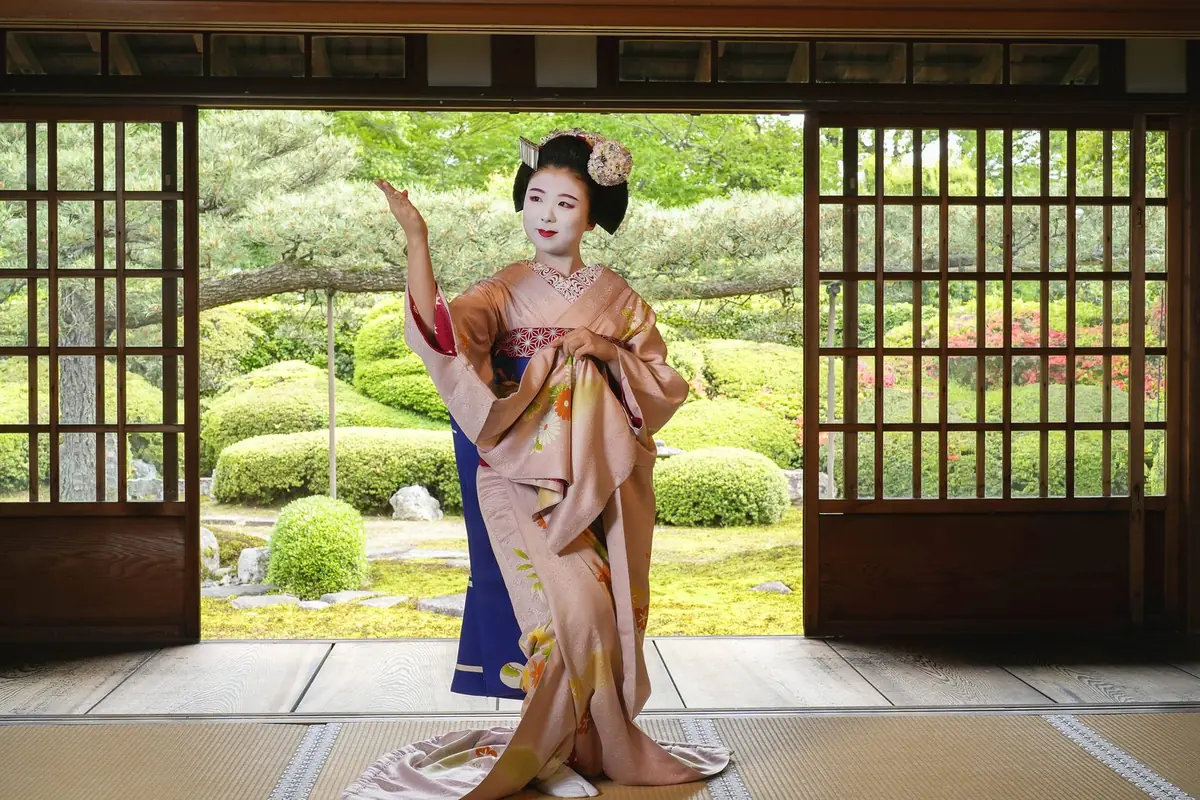
A maiko dance session at a Zen temple near Kyoto Station
Rake a Zen garden, watch two maiko dances and share green tea at Ikka-in, a temple rarely open to the public, one stop from Kyoto Station. Sessions start at 2:00 pm and 3:30 pm.
See the 2:00 pm and 3:30 pm sessions →Sources
- Tofuku-ji: Visitor guide — Tofuku-ji
- Tofuku-ji: Access — Tofuku-ji
- Kiyomizu-dera: Opening hours — Kiyomizu-dera
- Tenryu-ji: Visit — Tenryu-ji
- Fushimi Inari Taisha: Request to visitors — Fushimi Inari Taisha