Kyo-Yuzen and Nishijin-Ori: How Kyoto Kimono Fabric Is Dyed and Woven
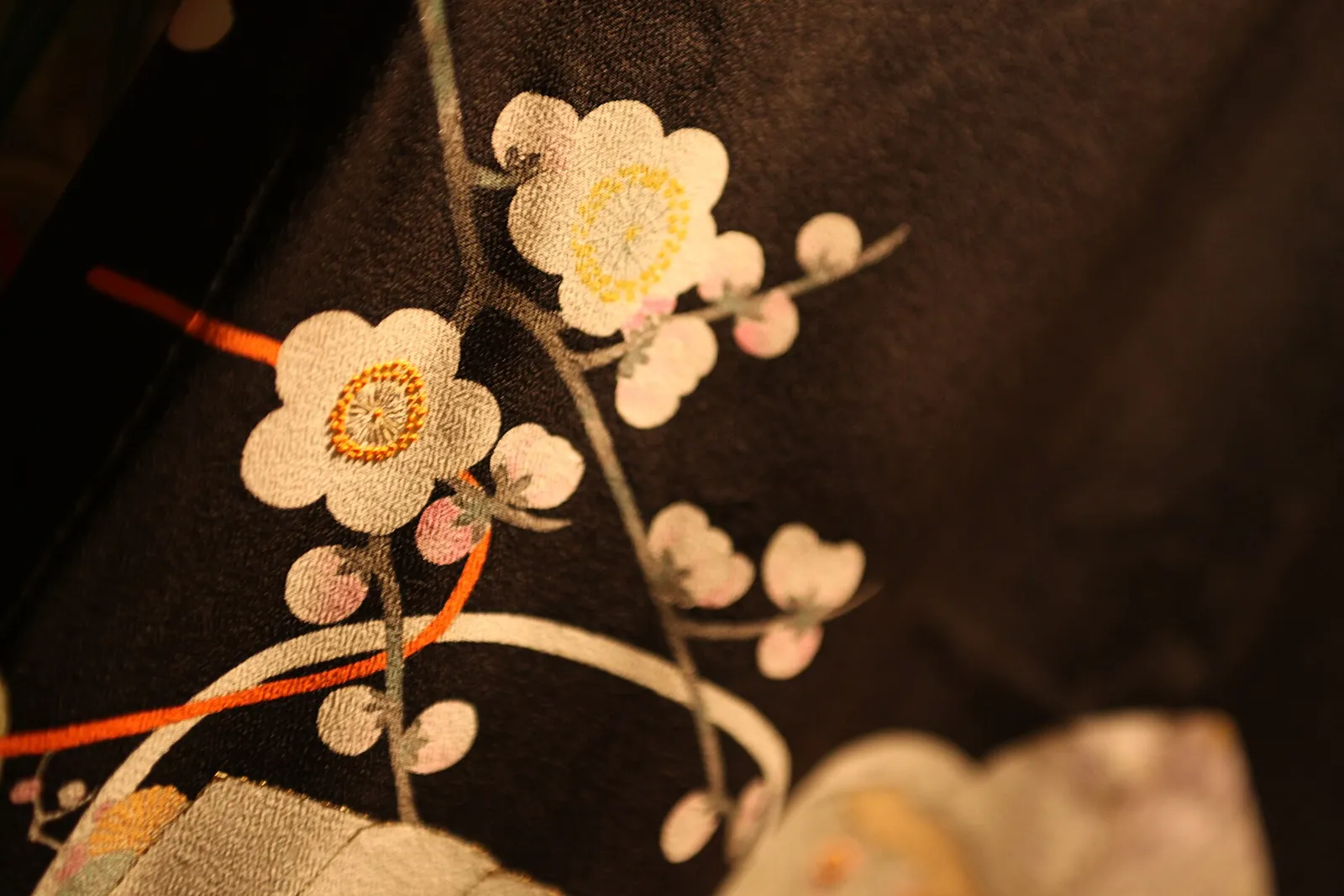
We operate the Maiko & Zen Kyoto experience mentioned in this guide.
Kyoto has given its name to two textile traditions that sit at the heart of kimono. One is Kyo-yuzen, a way of dyeing pictures onto cloth. The other is Nishijin-ori, a way of weaving pattern into the cloth itself. They often appear side by side in the same outfit, and once you can tell them apart, a kimono stops looking like one surface and starts looking like the work of several crafts. This guide gives you the basic ideas, so that what you see in Kyoto makes sense and you know which questions to ask.
Dyed Cloth and Woven Cloth: The Core Difference
The simplest way to separate the two is to ask where the pattern lives. In dyed cloth, the pattern is applied to fabric that has already been made. In woven cloth, the pattern is built from the threads as the fabric is made.
Kyo-yuzen falls on the dyed side: Kyoto's tourism site counts it among Japan's three major Yūzen dyeing styles.
Nishijin-ori sits on the woven side, and the same site says it is renowned for the exquisite way it handles threads in many colors.
That contrast shapes how each one looks. A dyed design can flow freely across the cloth, with soft shading and fine lines that follow the artist's brush. A woven design follows the grid of the threads, so it tends to have a crisp, slightly raised texture and a sheen that shifts as the light moves. Neither is better than the other. They are two answers to the same wish, which is to wear something beautiful.
How Kyo-Yuzen Is Made
Yuzen is a long process with many hands involved. Kyoto's tourism site counts around twenty separate processes in making a piece of Kyo-yuzen.
Among those steps is itome-nori-oki. In this step, a resist paste is laid along the outlines of the design, so that the colors do not bleed.
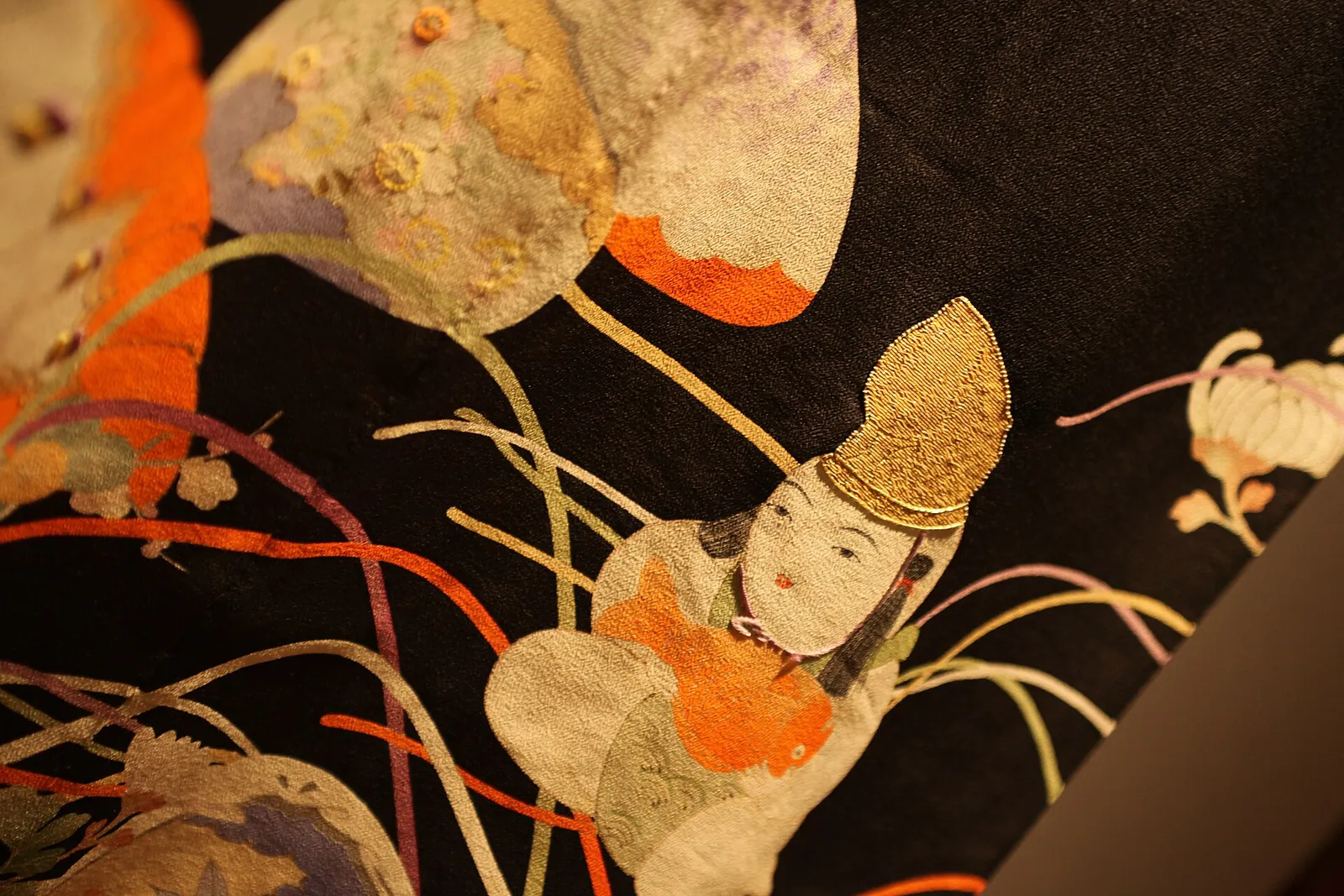
This step explains a detail you can spot with your own eyes. Look closely at a yuzen design, and you will often see a thin, pale line around each shape. That outline marks where the paste held the dye back, which is why neighboring colors can sit side by side without running into each other.
Not every piece is painted freehand. The site separates hand-drawn yuzen, which carries on old, advanced techniques, from stencil yuzen, a method developed at the start of the Meiji period.
In practice, hand-drawn work lets each line vary a little, while stencils make it easier to repeat a design. Both belong to the same tradition, and both still need careful hands at every stage.
Where the Name Kyo-Yuzen Comes From
According to Kyoto's tourism site, the name Kyo-yuzen goes back to Miyazaki Yuzensai.
"Kyo" simply points to Kyoto, so the full name ties the craft both to a person and to the city. When you hear "yuzen" on its own, people are talking about the dyeing method in general, and "Kyo-yuzen" places it in Kyoto.
Nishijin-Ori: Pattern Built from Thread
Kyoto's tourism site says Nishijin's silk weaving took off in earnest in the 15th century, in the days of the Onin War.
Because the pattern in Nishijin-ori comes from the threads themselves, it rewards a careful look at the surface. Tilt your head and the design may seem to change color. Run your eyes along the edge of a motif and you can follow the way the threads turn to draw it.
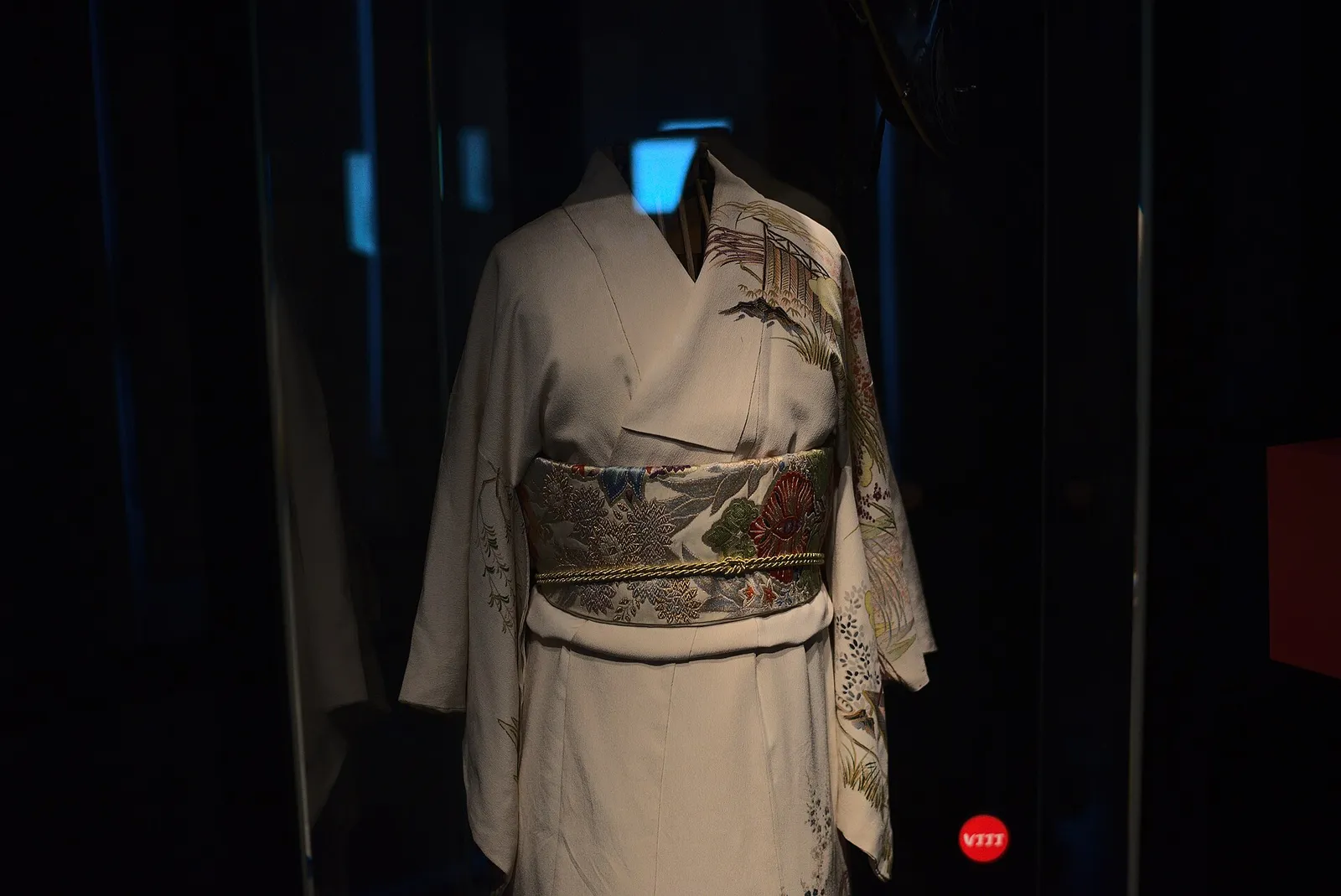
Woven cloth like this is often seen in the obi, the wide sash worn around a kimono. The obi below is one example of a woven sash with a repeating leaf pattern.
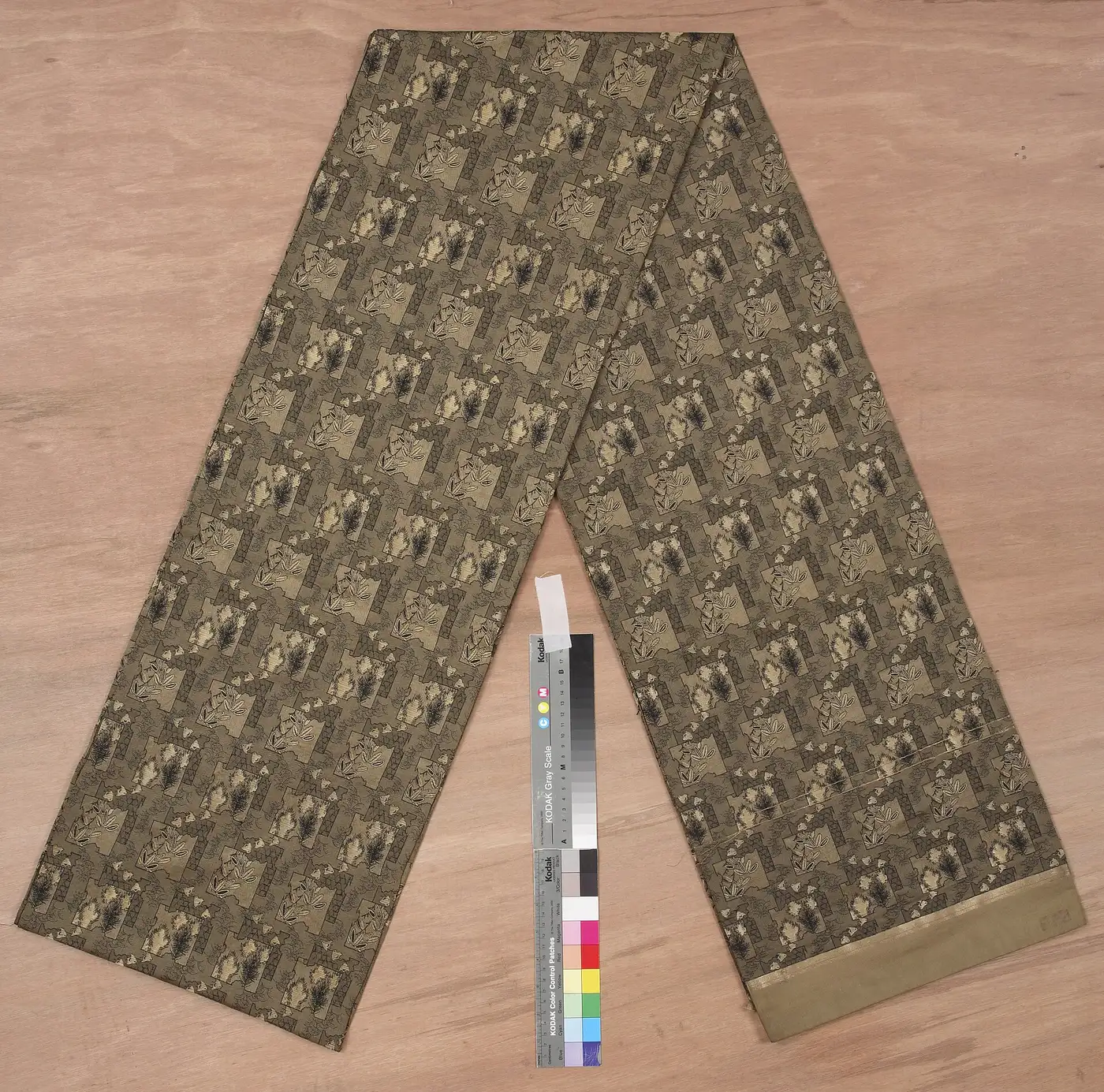
Placed next to a dyed kimono, a woven obi adds a change of texture. That pairing is one reason a full kimono outfit can look so layered even when the colors are quiet.
How to Look at Kimono Fabric Up Close
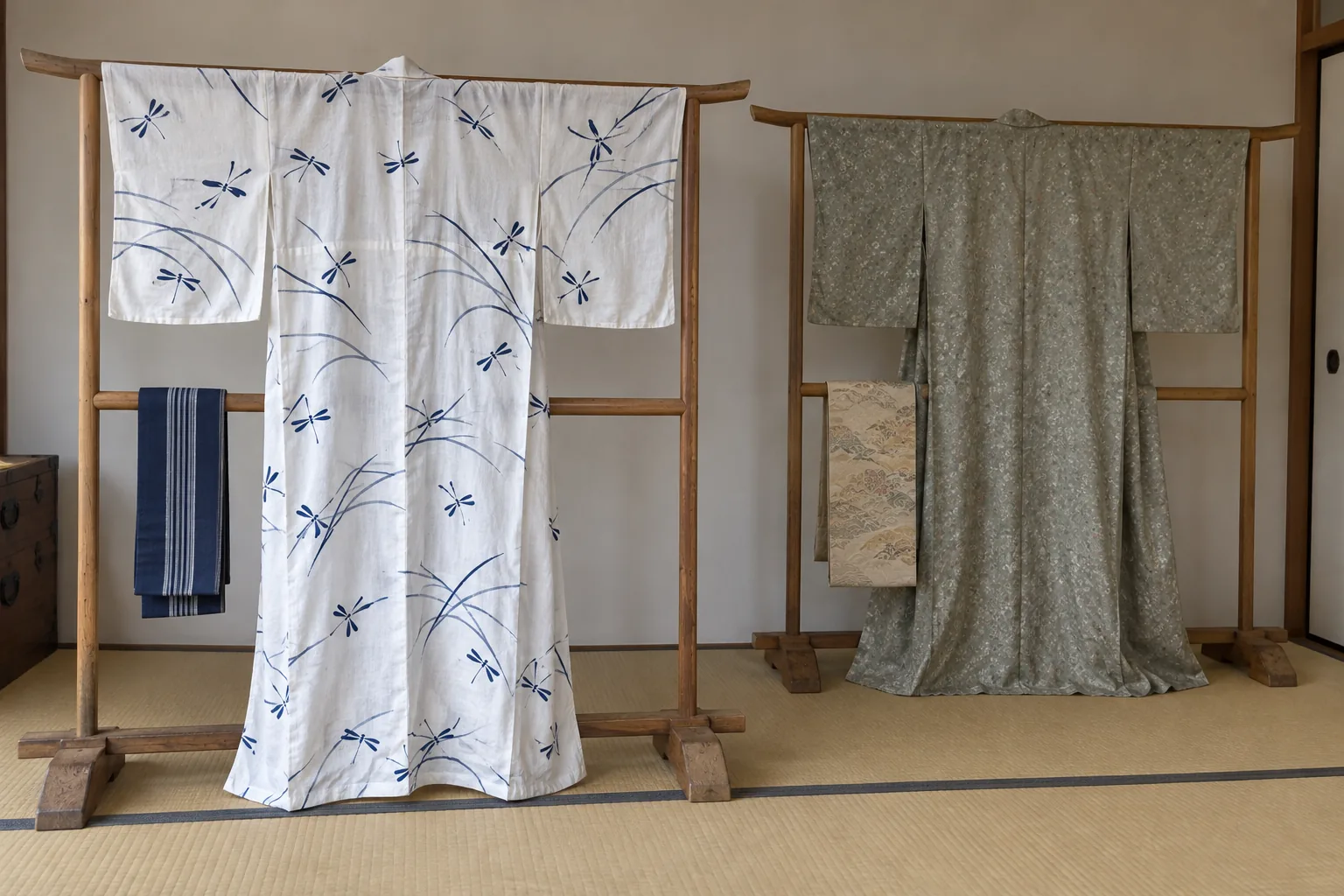
When you meet kimono on display, a simple order of looking helps. Start a few steps away and take in the whole garment: the colors, the balance of the pattern, and where the design is placed on the body. Then move closer and look at the details that reveal how it was made.
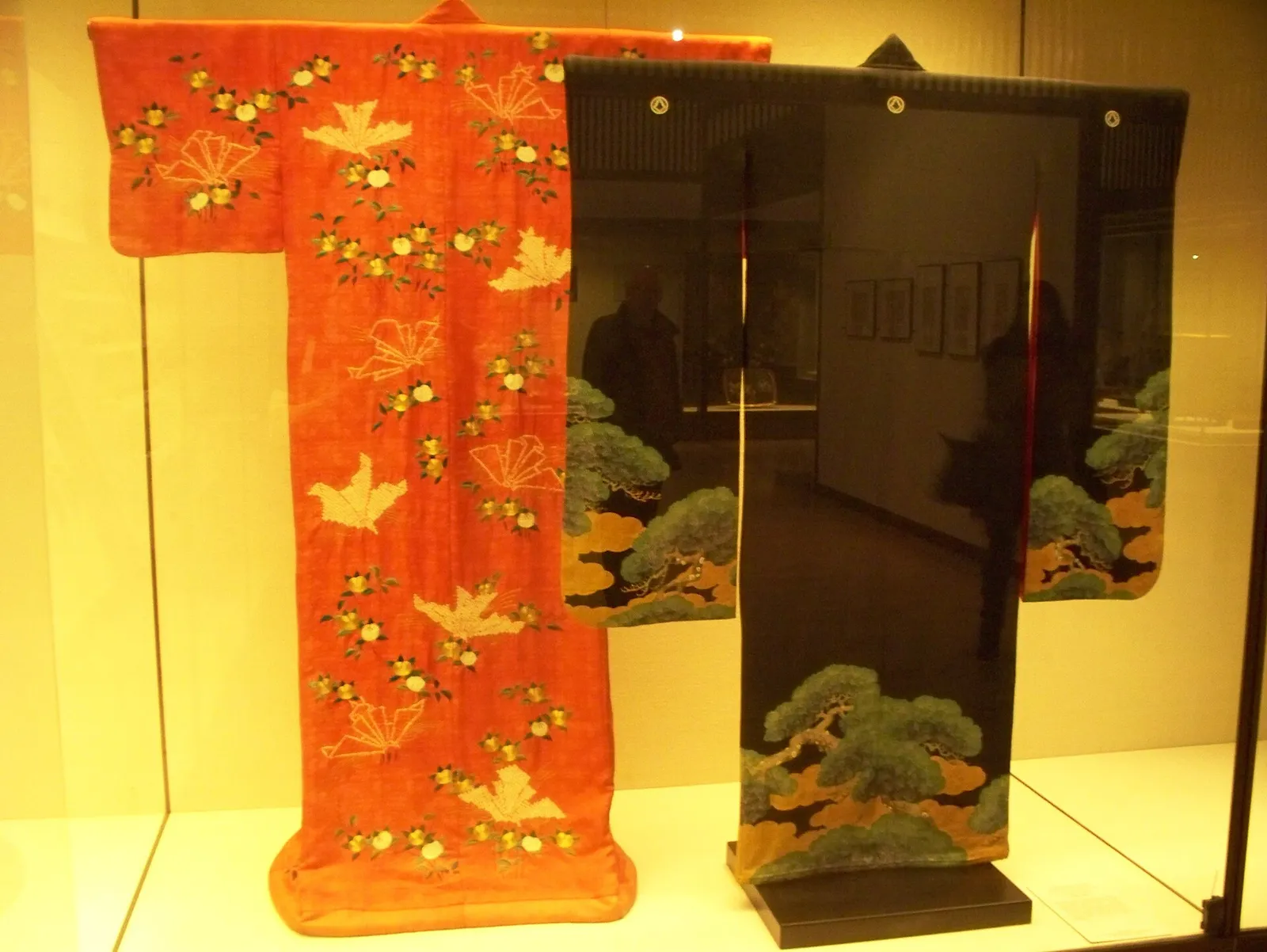
On a dyed kimono, look for the fine outlines around each shape and the way one color blends into the next. On a woven piece, look for the texture of the threads and the way the pattern catches the light. If the back of the cloth is shown, compare it with the front. A dyed pattern and a woven pattern tend to look different on the reverse.
Pictures help with this as well. Take a wide photo of the whole display and then a closer one of a detail you liked, if photography is allowed where you are. Later, the two pictures together will remind you of both the design and the craft.
Questions to Ask About Kyoto Textiles
You do not need special words to enjoy these fabrics. A few plain questions start a good conversation in a gallery, a shop, or a workshop:
- Was this pattern dyed onto the cloth or woven into it?
- Was the design drawn by hand or made with a stencil?
- Which part of the outfit is the obi, and how was it made?
- What should I look at to see the work that went into this piece?
Treat the fabric with the same care you would give any work of art. Ask before you touch a garment or a bolt of cloth, and keep bags and drinks away from displays. If you are trying on a kimono yourself, mention that you are curious about the fabric. Many people who work with kimono are happy to point out the details they love.
For more background, our guide to the different types of kimono explains formality and fabric, and you can read how a yukata differs from a kimono or see how a maiko's hair and kimono come together.
Add a Quiet Temple Stop to Your Day
Add a quiet temple stop to your day. We operate Maiko & Zen Kyoto, a 90-minute session at Ikka-in, a sub-temple of Tofuku-ji, where a maiko dances in the same temple hall with no stage between you, then takes time for your questions and photos. See current session times and prices.
Information about crafts, displays, and workshops can change, so check the official pages of the places you plan to visit for the latest details.
Frequently asked questions
Is Kyo-yuzen dyed or woven?
Dyed. Kyoto's tourism site names it as one of Japan's three major Yūzen dyeing styles.
What is Nishijin-ori known for?
Its many-colored threads. Kyoto's tourism site says the weave is renowned for how exquisitely it handles threads in many colors.
Is all yuzen painted by hand?
Not all of it is drawn freehand. Kyoto's tourism site describes two approaches. Hand-drawn yuzen carries on old, advanced techniques, while stencil yuzen was developed at the start of the Meiji period.
Do I need to know textile terms to enjoy kimono in Kyoto?
Not really. Knowing whether a pattern was dyed onto the cloth or woven into it is enough to start, and the people who show you the fabric can explain the rest.
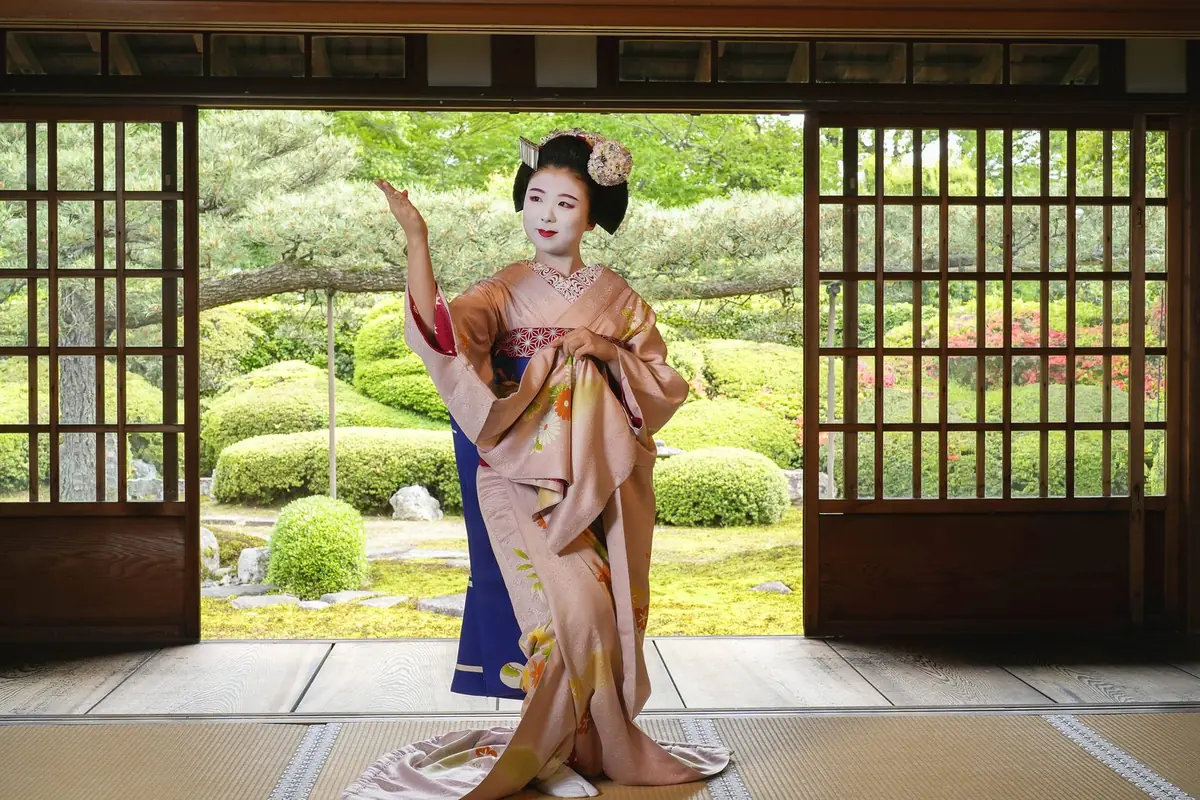
A maiko dance session at a Zen temple near Kyoto Station
Rake a Zen garden, watch two maiko dances and share green tea at Ikka-in, a temple rarely open to the public, one stop from Kyoto Station. Sessions start at 2:00 pm and 3:30 pm.
See the 2:00 pm and 3:30 pm sessions →Sources
- Craftmanship – Dyeing and Weaving – — Kyoto City Tourism Association
- What Is Kyō-Yūzen? — Kyoto City Tourism Association