How to Wear a Kimono in Kyoto: What a First-Timer Needs to Know
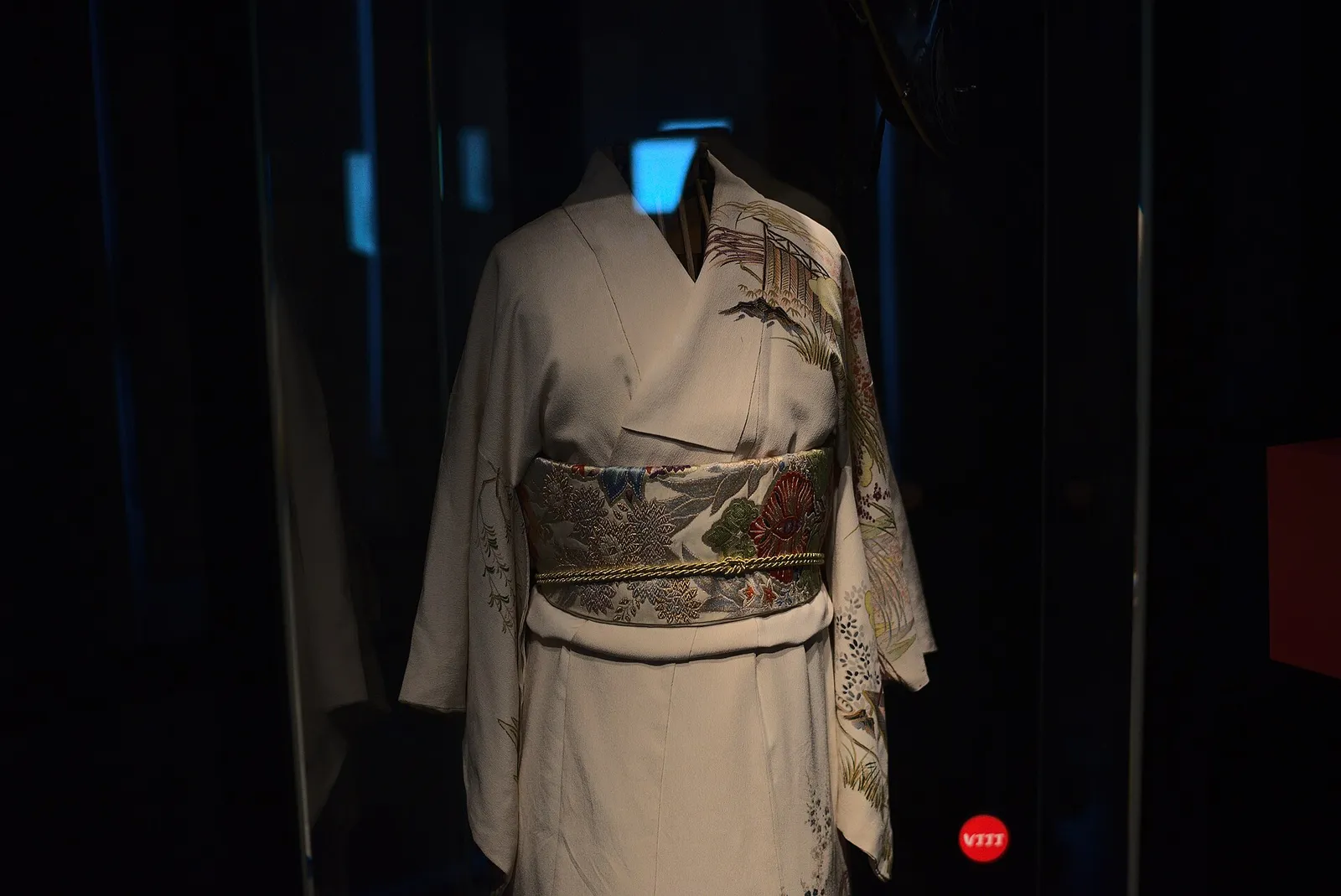
We operate the Maiko & Zen Kyoto experience mentioned in this guide.
A kimono looks like a single garment, but putting one on is a small project with several parts. This guide is for first-time visitors to Kyoto who want to understand what is involved before they try one on: what goes underneath, what goes on your feet, whether to dress yourself, and how to feel at ease once you are out walking. Details differ from one dresser and one style of kimono to another, so treat this page as a way to ask better questions and follow the guidance of the person who helps you.
What to Know Before You Wear a Kimono
Think of a kimono as a set of layers and accessories rather than a single piece of clothing. The Japan National Tourism Organization (JNTO) notes that kimono is a form of traditional formal wear, while yukata is more casual.
That difference shapes how you plan your day. A formal garment asks for a little patience. You will move more slowly, sit with care, and let someone else help with the parts that are hard to reach. For many travelers this slower rhythm is part of the appeal, because it turns an ordinary walk through a neighborhood into something that feels like an occasion.

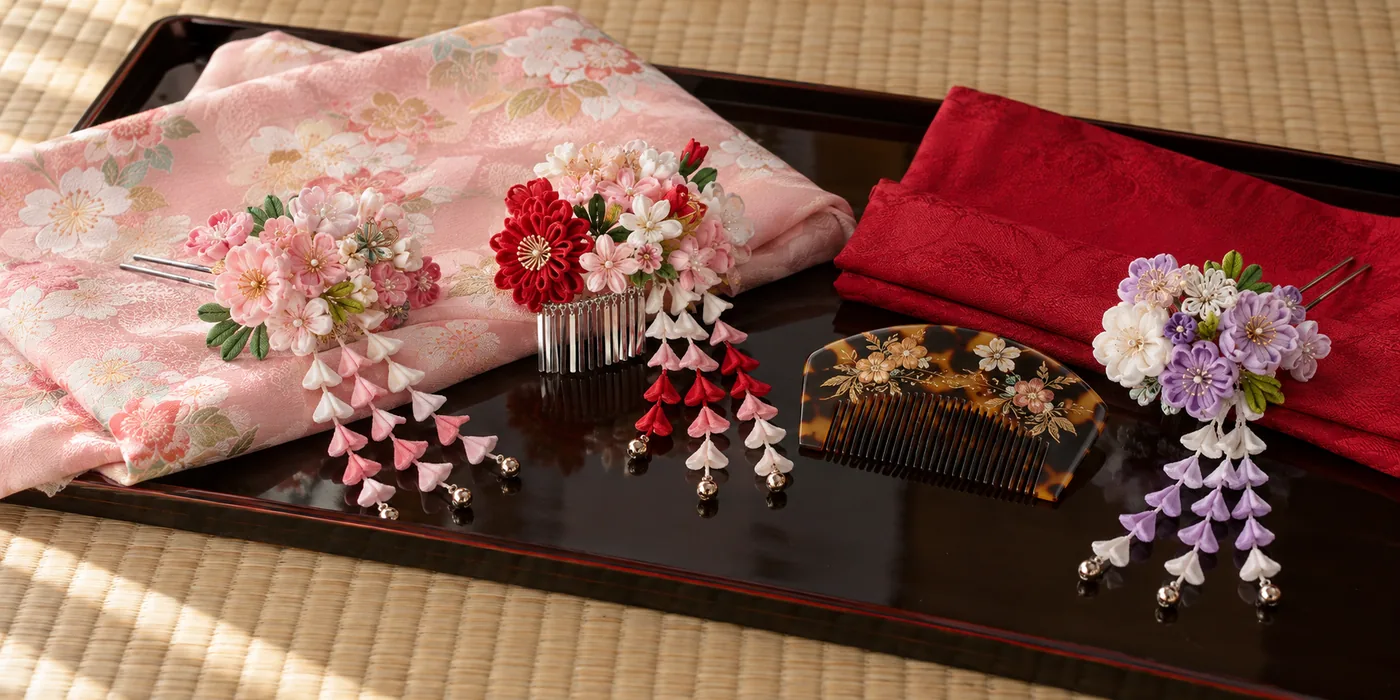
Much of the pleasure is in the cloth itself. When you choose an outfit, take a moment to look closely at the textile: the pattern, the colors, and how the fabric falls when you hold it up. A pattern you love will make the whole day feel like yours, and it gives you something to talk about with the person who dresses you.
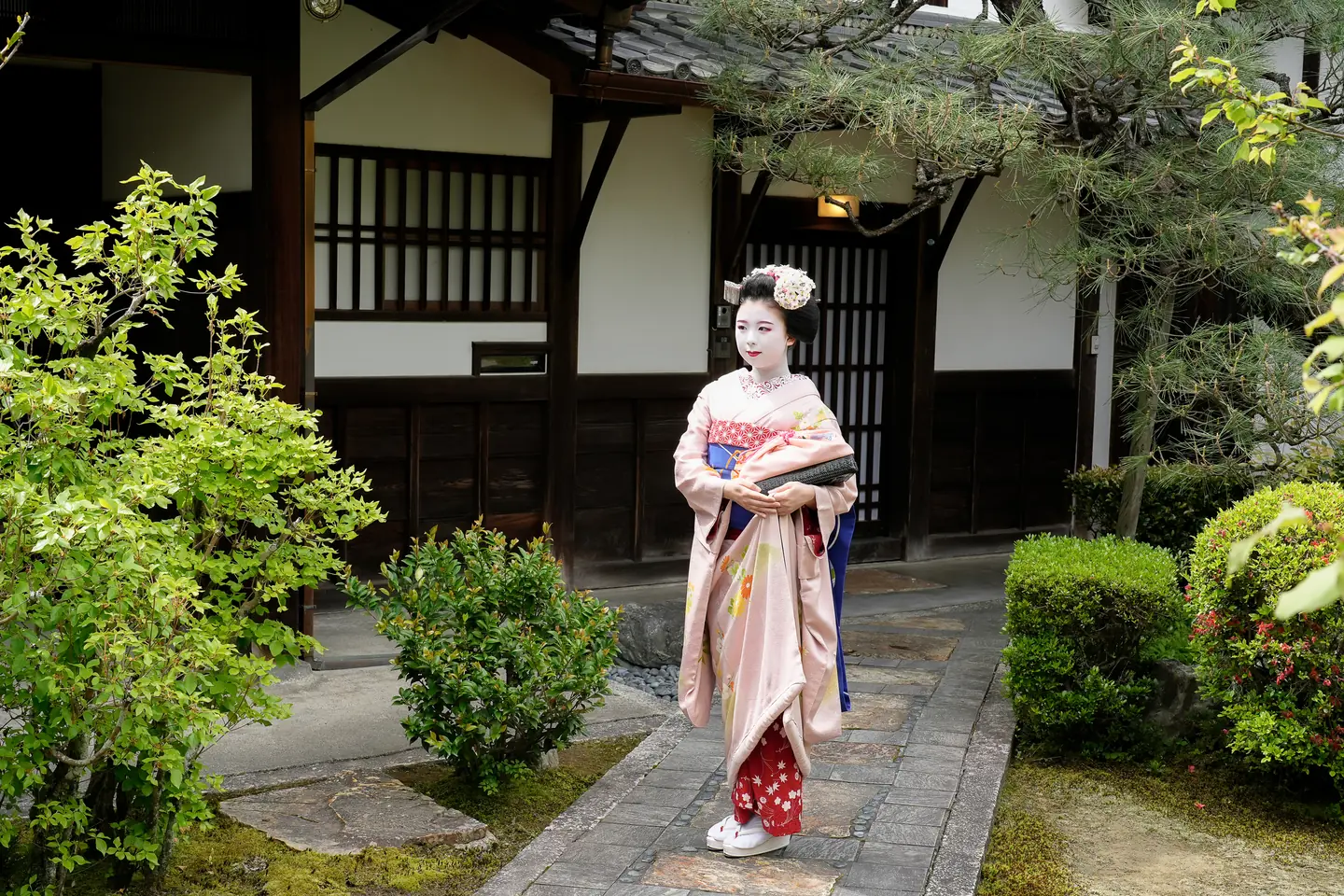
It also helps to decide what you want from the day. Some visitors want to look at temples and gardens in a kimono. Others simply want a few photographs in a beautiful setting. If photographs are the goal, our guide to kimono photo spots in Kyoto explains the rules and planning for popular places. If you are curious about how a real maiko dresses, our article on maiko hairstyles and kimono explains how the details are read.
Undergarments, Tabi Socks, and Sandals
A kimono is never worn on its own. According to JNTO's guide, kimono are worn with special undergarments. You do not need to buy anything in advance. Instead, ask the venue what is provided, what you should bring, and what kind of clothing to wear to the appointment. Plain, comfortable clothes work well and keep your first fitting relaxed.
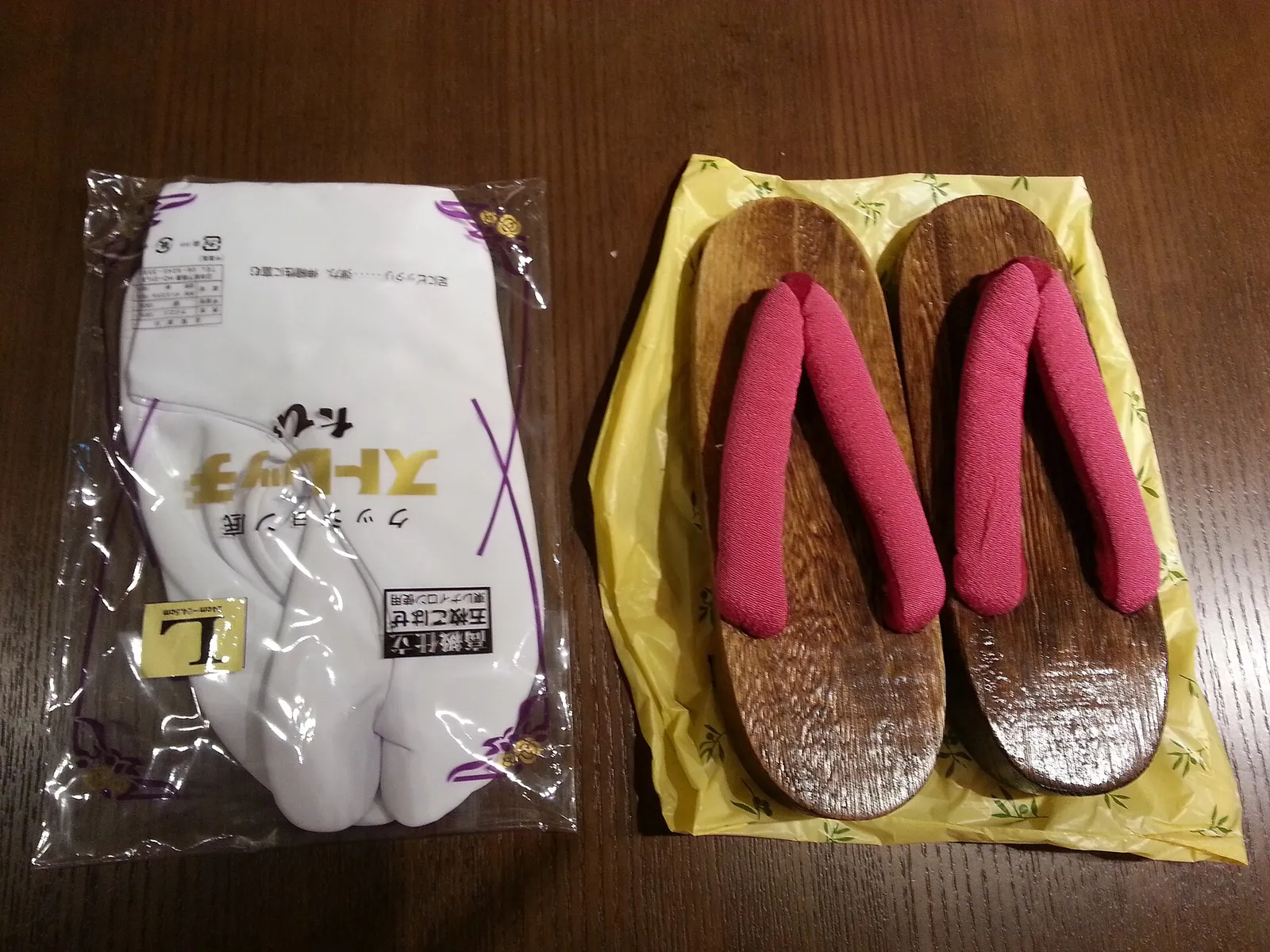
Your feet are the other piece to plan around. Kyoto's official tourism site notes that kimono are worn with tabi socks. Because tabi are part of the outfit, ask whether they are provided or whether you should bring a pair. Ask the same question about the sandals, and try walking a few steps in them indoors so you know how they feel before you head out.
Beyond the garment itself, the outfit comes with an obi and a few smaller pieces that the dresser puts in place. You do not need to learn each name or how to tie anything. What matters is that you allow time for these parts, take a look in the mirror before you leave, and tell the person who dressed you if the front of the outfit later looks different, rather than pulling at it yourself.
A short list of things to ask before you go can make the visit smoother:
- What is provided, and what should I bring?
- Is there a place to leave my own clothes and bags?
- Can I take photographs of the finished outfit?
- Which parts of the outfit can I adjust myself during the day?
Dressing Yourself or Being Dressed
For a first kimono, being dressed by someone experienced is a comfortable way to begin. A dresser knows how the layers sit together and can check that the outfit feels secure before you step outside. You can ask questions as you go, and you will learn what a well-fitted kimono feels like. That feeling is useful later if you ever try to dress yourself.
Dressing yourself is a different kind of pleasure. It suits a traveler who has time to practice, who enjoys learning a craft, and who is happy to accept that the first attempt may not look perfect. If you are drawn to this route, look for a class or a guided lesson rather than trying to follow a video alone, so that someone can show you how each layer should feel.
Either way, a few habits make the experience better:
- Tell the dresser right away if anything feels too tight or uncomfortable. A small change at the start is easier than a big one later.
- Ask how to sit down and stand up, because the way you move changes once you are dressed.
- Ask how to carry a bag, since a large bag can pull on the outfit.
- Ask what to do if something comes loose while you are walking, and where you can go to fix it.
Being dressed does not mean you are a passive guest. You are still the person who knows how you feel, so speak up and ask for what you need.
Staying Comfortable While You Walk
A kimono changes how you move, and that is part of its charm. Take smaller steps than you normally would, and let your pace slow down. Keep your posture upright and relaxed rather than stiff. When you reach for something, hold your sleeve with the other hand so that it does not brush against anything.
Plan your route with the outfit in mind. Choose a short, simple loop with places to sit rather than a long list of stops, and look for spots where you can rest your feet. Stairs, steep slopes, and narrow paths are slower in a kimono, so give yourself extra time and take them one step at a time. If you are visiting a temple or garden, follow the posted signs and the instructions of the staff about where you may walk, sit, and take photographs.
Eating and drinking are easier when you plan for them. Choose a place where you can sit comfortably, and keep your sleeves clear of the table. A small hand towel is a useful companion, since it helps you keep your hands clean without leaving the table.
If you are traveling with others, agree on a relaxed schedule. Wearing a kimono is a shared experience, and everyone enjoys it more when nobody feels rushed. Stop whenever someone wants to adjust their outfit, and treat the pauses as part of the walk.
Warm Days and Cool Days
The weather changes how a kimono feels, so it is worth thinking about before you book. For summer, Kyoto's official tourism site says it is most comfortable to wear a kimono with a transparent top layer made from gauze. If you plan to visit in warm weather, ask the venue whether it offers kimono of this kind.
On cooler days, think about what sits outside the outfit, such as a shawl or coat, and ask the dresser what works well with the kimono you have chosen. Kimono are worn with tabi socks, so plan your footwear with the dresser rather than assuming you can use your usual socks.
Rain deserves a thought as well. Ask the venue how to protect the outfit on a wet day, and whether it recommends changing your plans. A flexible schedule makes it easier to enjoy the day whatever the sky does.
Add a Quiet Temple Stop to Your Day
Add a quiet temple stop to your day. We operate Maiko & Zen Kyoto, a 90-minute session at Ikka-in, a sub-temple of Tofuku-ji, where a maiko dances in the same temple hall with no stage between you, then takes time for your questions and photos. See current session times and prices.
If you are weighing different ways to dress up in Kyoto, our comparison of maiko dress-up and meeting a real maiko can help you decide what kind of day you want.
Frequently asked questions
Can I wear a kimono if I have never done it before?
Yes, and many first-timers choose to be dressed by someone experienced. Ask the venue ahead of time whether help with dressing is offered, because arrangements differ from place to place.
What do you wear under a kimono?
A kimono is worn with special undergarments. Ask the venue what to bring and what is provided, so that you can arrive in comfortable, simple clothes.
Do I need special socks?
Kimono are worn with tabi socks. Ask the venue whether tabi are provided, and if you plan to bring your own, check that they suit the sandals you will wear.
Is a kimono the same as a yukata?
Kimono is a form of traditional formal wear, while yukata is more casual. The two look related, but the feeling of wearing them is different.
What if the weather is hot?
For summer, it is most comfortable to wear a kimono with a transparent top layer made from gauze. Ask the venue which kinds of kimono it offers for warm days.
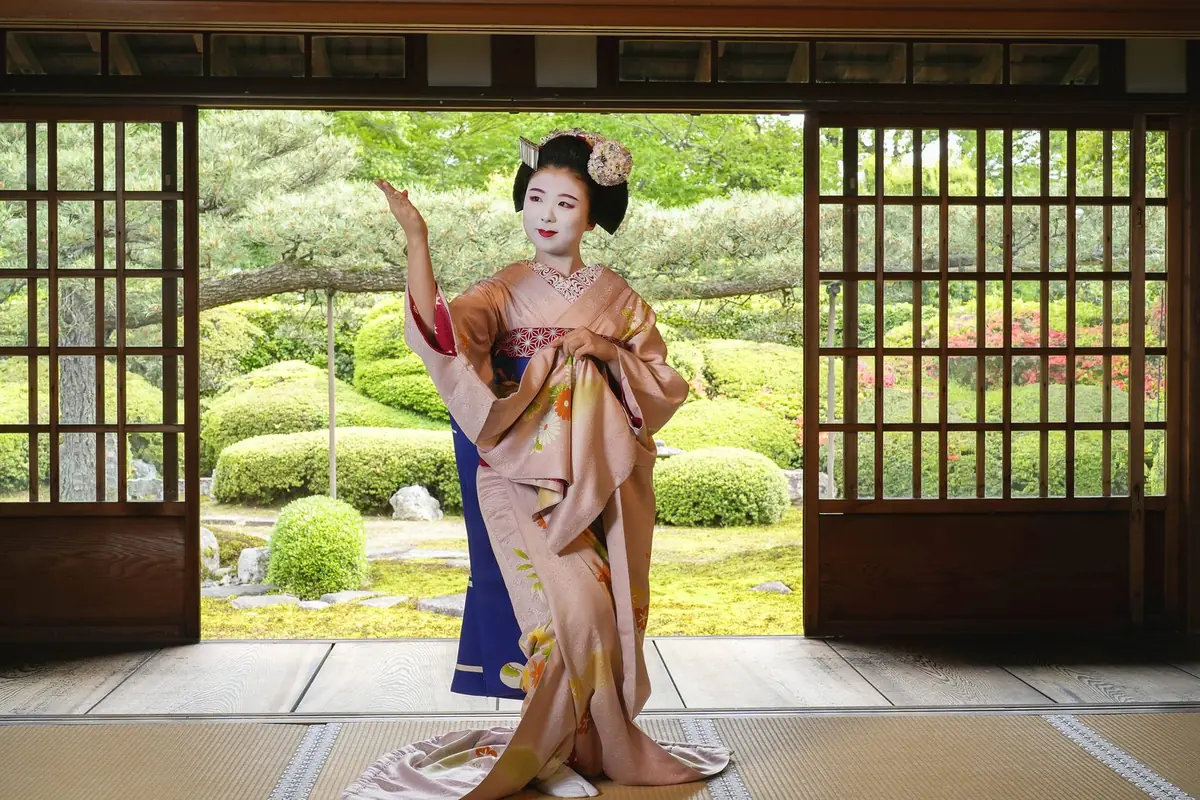
A maiko dance session at a Zen temple near Kyoto Station
Rake a Zen garden, watch two maiko dances and share green tea at Ikka-in, a temple rarely open to the public, one stop from Kyoto Station. Sessions start at 2:00 pm and 3:30 pm.
See the 2:00 pm and 3:30 pm sessions →Sources
- Enjoy the kimono and yukata experience — Japan National Tourism Organization (JNTO)
- Weather & Clothing — Kyoto City Tourism Association