Japanese Incense and Kodo: What to Know Before You Try It
We operate the Maiko & Zen Kyoto experience mentioned in this guide.
Walk through the gate of a Kyoto temple and the first thing to reach you may be a scent rather than a sight: a soft, woody smoke drifting from a large burner in front of the hall. Incense is part of daily life in Japan, from temple courtyards to family altars, and it also has its own refined art, kodo. This guide explains what Japanese incense is, how its main forms differ, what happens in a kodo session, and how a first-time visitor can enjoy scent in Kyoto with confidence.
Incense and Kodo: Two Ways to Enjoy Scent
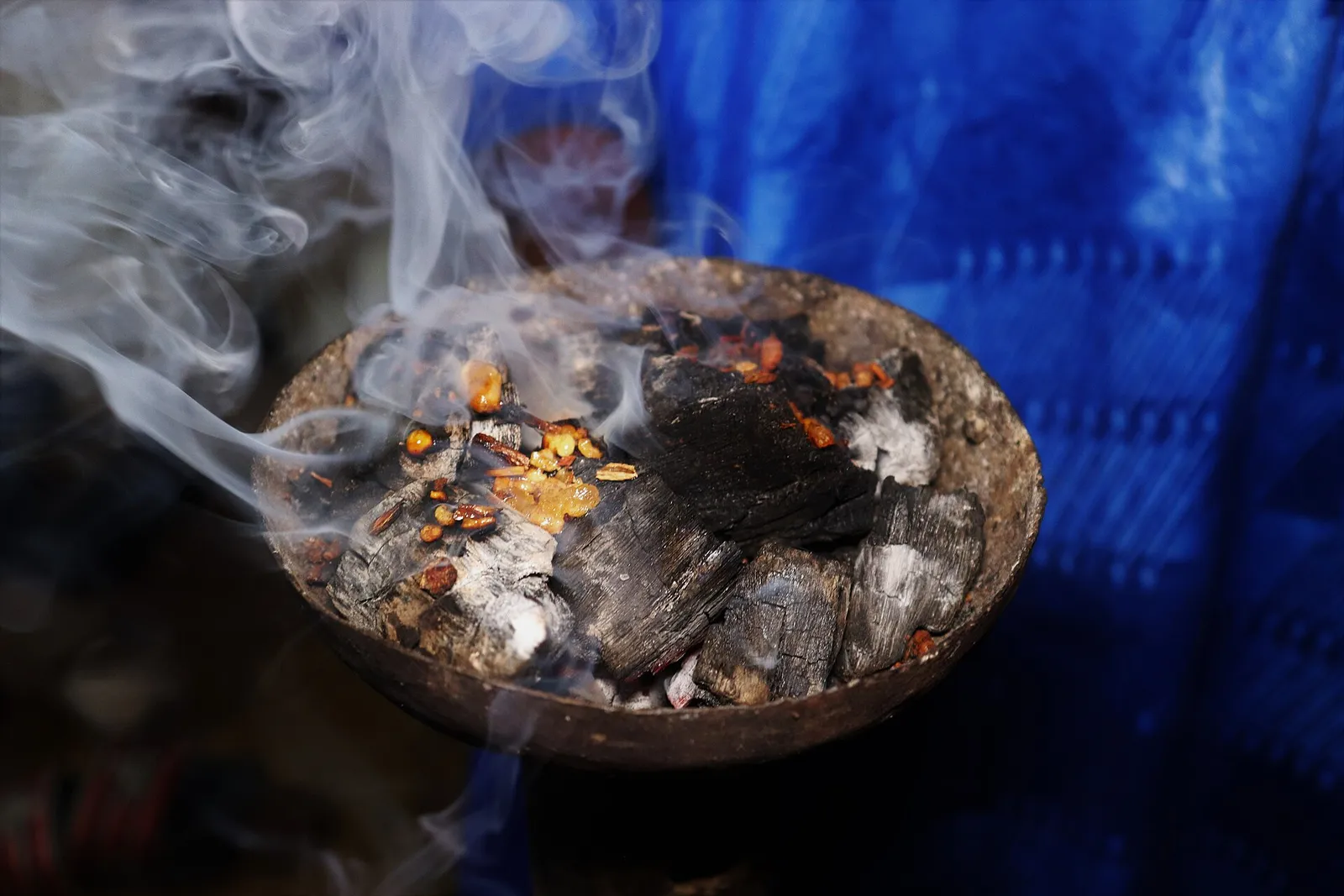
It helps to separate two ideas. Incense is the material itself: thin sticks, small cones, kneaded pellets, and slivers of fragrant wood. People burn it as an offering, to calm a room, or simply because they like the smell.
Kodo, often translated as "the way of incense," is a traditional art that treats scent as something to appreciate with full attention. Rather than filling a room with smoke, a host gently warms a tiny piece of fragrant wood so that it releases its aroma with very little smoke at all. Guests take turns raising a small censer toward the face and noticing what they smell.
Japan's national tourism organization notes that Buddhism arrived in Japan sometime in the 6th century through China and Korea. Temples remain the place where many visitors meet incense for the first time, and that link to Buddhist practice still shapes how scent is used and shared today. If you would like a wider picture of the temple setting, our guide to Zen Buddhism for temple visitors is a good companion to this one.
Sticks, Kneaded Incense, and Fragrant Wood
You will meet incense in a few common forms. Knowing them makes it easier to understand what you are smelling and to choose something you like.
- Incense sticks (senko): the form many visitors know. They are lit at the tip and burn slowly, leaving a line of ash. Temples, homes, and shops all use them.
- Kneaded incense (nerikō): small, soft pellets made from fragrant ingredients blended together. They are warmed rather than lit, so the scent is gentle and rounded.
- Fragrant wood (kōboku): small pieces of naturally aromatic wood. This is the material at the heart of kodo, where a single sliver can be enough for a whole group.
A useful habit is to notice not only whether you like a scent, but how it changes. A stick can smell sweet when it is first lit and drier as it burns down. Fragrant wood can reveal different notes as it warms. Paying attention to those shifts is the first step toward the slower way of smelling that kodo invites.
Listening to Incense: How a Kodo Session Unfolds
In kodo, people speak of "listening" to incense rather than smelling it. The word asks you to take a scent in slowly and quietly, as if you were listening to a soft piece of music, and to let your own impression form without hurrying.
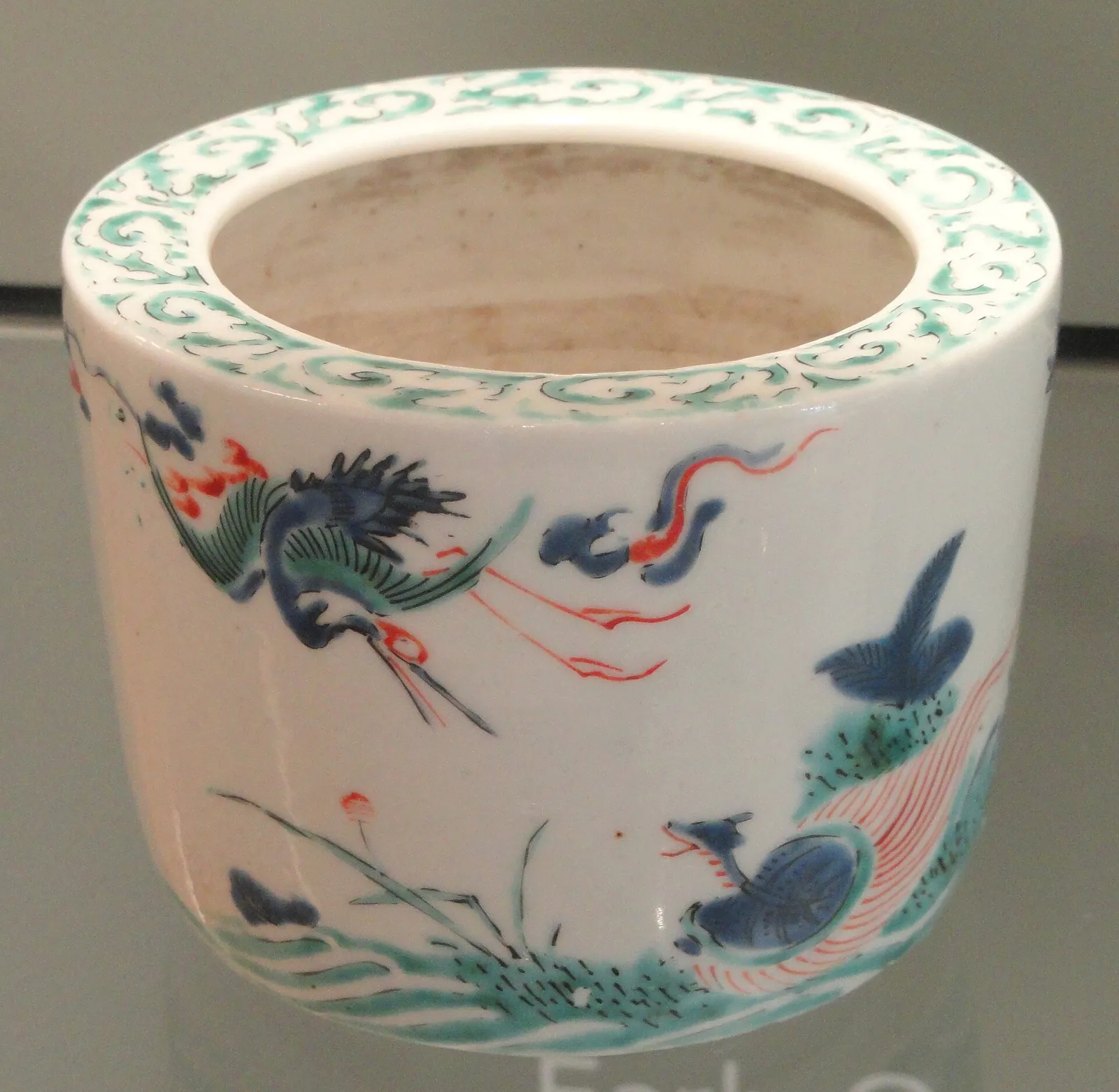
The tools are simple. A small censer holds fine ash, and a piece of charcoal is buried inside so that it warms the ash from below. The host shapes the surface of the ash, places a thin plate on it, and sets the fragrant wood on the plate. Censers come in many materials; the porcelain incense burner above is painted with a crane, a tortoise, and waves, and shows how much care can go into even a small object.
In an introductory session, the steps tend to look like this:
- The host prepares the censer and passes it to the first guest.
- You hold the censer with both hands, cup one hand lightly over the top, and raise it toward your face.
- You breathe in gently, turn your head aside to breathe out, and repeat once or twice.
- You pass the censer on and take a moment to notice what stayed with you.
Some gatherings add a game called kumiko, in which guests listen to several scents and try to tell which ones are the same. The aim is not to win but to sharpen your attention. Many hosts will tell newcomers to focus on whether two scents match rather than on naming them.
Incense at Kyoto Temples
For many visitors, temples are where incense is easiest to see. In front of many main halls you will find a large burner filled with ash, where people leave lit incense sticks standing upright as an offering.
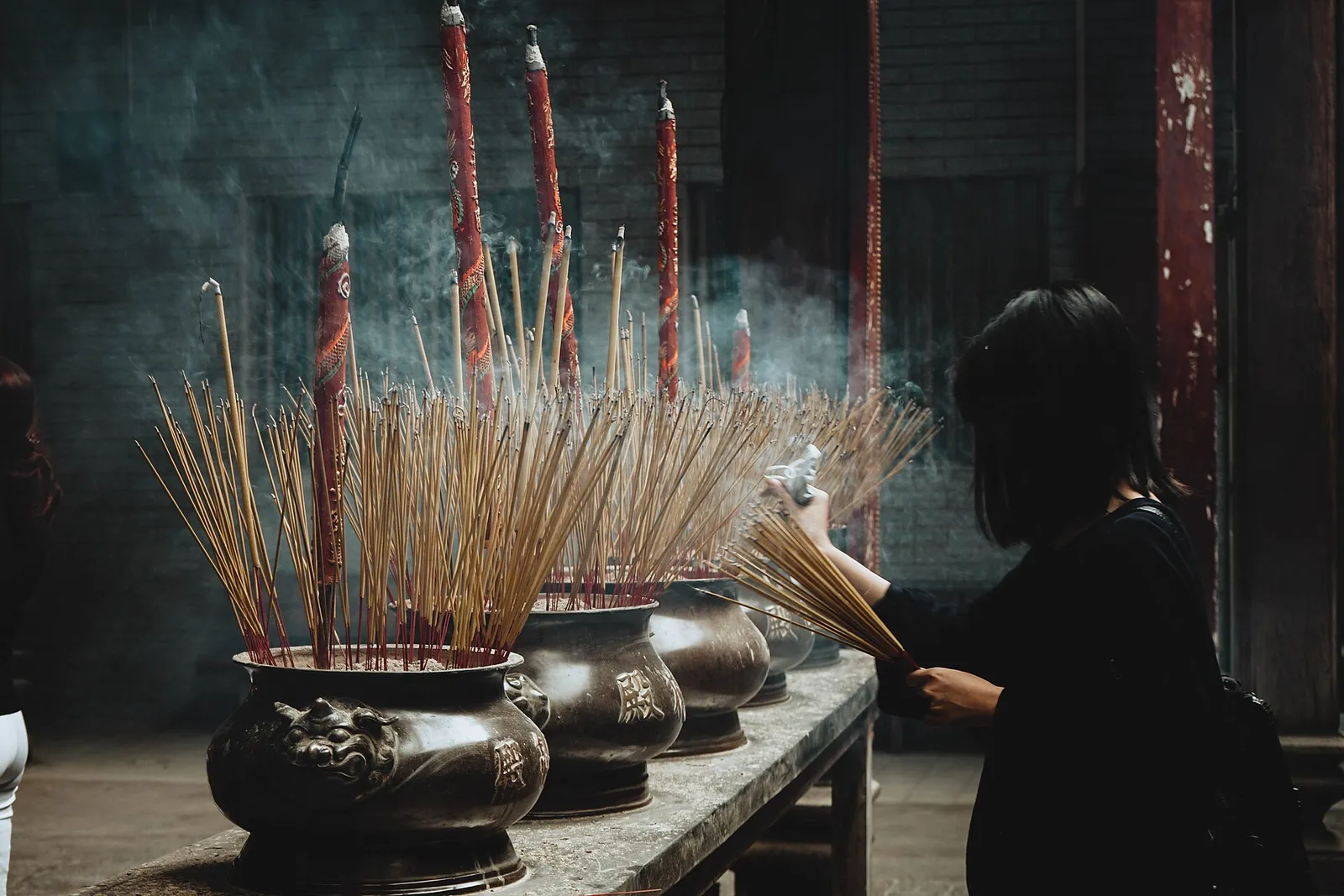
The photo above shows the same idea in another temple setting: incense sticks gathered in bundles, standing in large metal burners, with a visitor adding more. You will often see people wave a little of the smoke toward themselves as they pass. Whether and how to offer incense depends on the temple, so watch what others do, read any signs, and ask a staff member if you are unsure.
Scent is one of several arts that grew alongside temple life. Kyoto's official travel guide traces ikebana to flower offerings that were introduced to Japanese culture through Buddhism. Our guide to Japanese flower arranging in Kyoto explores that story, and you may notice that both arts share a fondness for restraint: one stem, one thin line of smoke, and calm space around it.
Trying Incense in Kyoto and at Home
If you would like to go further than a temple courtyard, some incense makers and cultural spaces in Kyoto hold introductory sessions in kodo or in blending your own scent. Offerings, booking rules, and what each session covers vary, so check the official page of the place you are interested in before you plan around it.
A few habits make any session more enjoyable:
- Consider leaving strong perfume or scented lotion aside that day, so that the incense is easy to notice for you and for others.
- If smoke bothers you, mention it to the host. Kodo uses very little smoke, and a host can help you take part comfortably.
- Keep your voice low while a censer is moving around the room. Quiet is part of the experience.
At home, start small. Choose two or three kinds of incense sticks with different characters, burn one at a time in a calm room, and jot down a word or two about each. Over a few days you will begin to notice details you would have missed at first. If you enjoy that slow kind of attention, our guide to looking at bonsai offers a similar way of seeing with patience.
Details such as session availability and temple customs can change, so check the official information for the place you plan to visit.
A Calm Temple Hall to Add to Your Kyoto Day
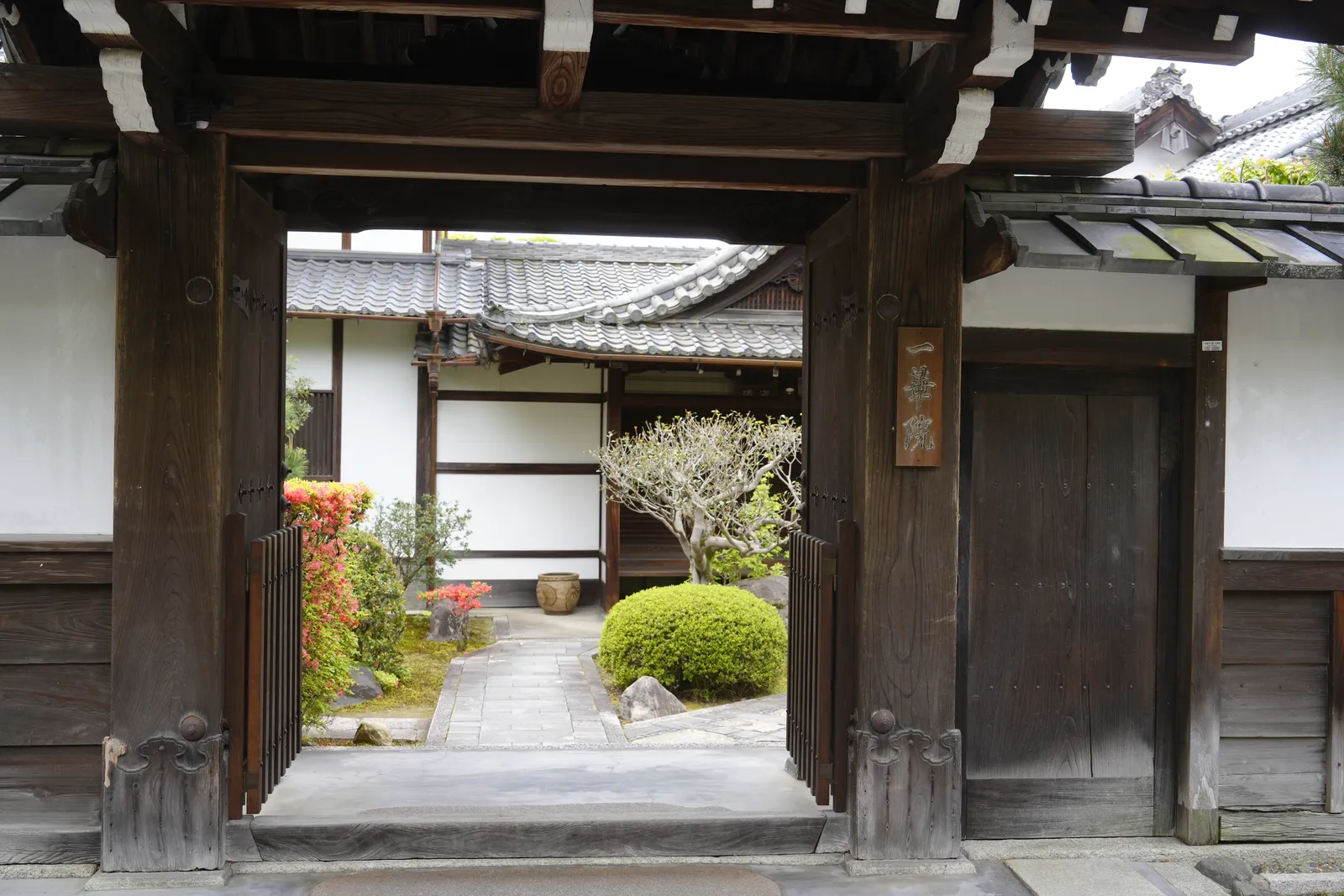
Add a quiet temple stop to your day. We operate Maiko & Zen Kyoto, a 90-minute session at Ikka-in, a sub-temple of Tofuku-ji, where a maiko dances in the same temple hall with no stage between you, then takes time for your questions and photos. See current session times and prices.
Whether you meet incense as a line of smoke in a temple courtyard or as a single warm sliver of wood, give yourself a moment to listen to it.
Frequently asked questions
What is the difference between Japanese incense and kodo?
Incense is the material: sticks, cones, kneaded pellets, or small pieces of fragrant wood. Kodo is a traditional art built around appreciating the scent of that material in a calm, guided setting.
Why do people say they listen to incense?
In kodo, the word used for smelling incense is often translated as listening. It asks you to take in a scent slowly and attentively, the way you would listen to a quiet piece of music.
Do I need any knowledge before I try kodo?
No special knowledge is needed for an introductory session. A host will show you how to hold the censer and what to do. Simply follow along and pay attention to what you notice.
How should I offer incense at a temple?
Customs differ from one temple to another. Watch what other visitors do, follow any signs, and ask a staff member if you are unsure.
What is a simple way to start enjoying incense at home?
Light a few different sticks on separate days in a calm room and notice how each one changes from the first breath to the last. That kind of comparison is a gentle first step.
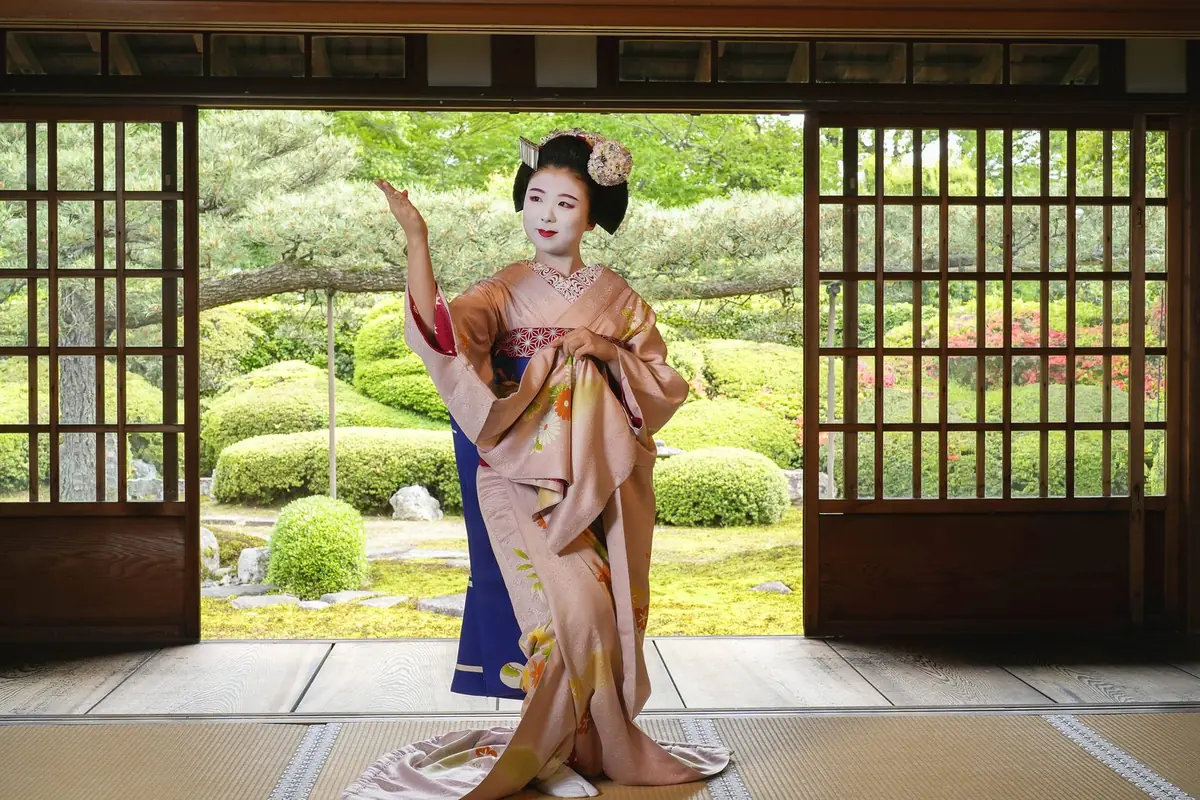
A maiko dance session at a Zen temple near Kyoto Station
Rake a Zen garden, watch two maiko dances and share green tea at Ikka-in, a temple rarely open to the public, one stop from Kyoto Station. Sessions start at 2:00 pm and 3:30 pm.
See the 2:00 pm and 3:30 pm sessions →Sources
- Meditation in Japan — Japan National Tourism Organization
- Ikebana – Japanese Art of Flower Arrangement Originating from Kyoto — Kyoto City Tourism Association