Bonsai in Kyoto: A First-Timer's Guide to Looking at Miniature Trees
We operate the Maiko & Zen Kyoto experience mentioned in this guide.
Bonsai is the art of growing a small tree in a shallow pot and shaping it over many years until it reads as a full-grown tree in a quiet landscape. If you have wondered what people see in a miniature tree, how to look at one without any training, and how the art fits with the gardens you will meet in Kyoto, this guide gives you a simple way in before you go.
What Bonsai Is and Why It Fits Kyoto's Gardens
A bonsai is not a tree that has stopped growing. It is a living tree that someone tends every day, trimming and wiring its branches so that a few inches of trunk can suggest an old tree on a mountain ridge. The pot is shallow on purpose, and the moss at the base stands in for the forest floor.
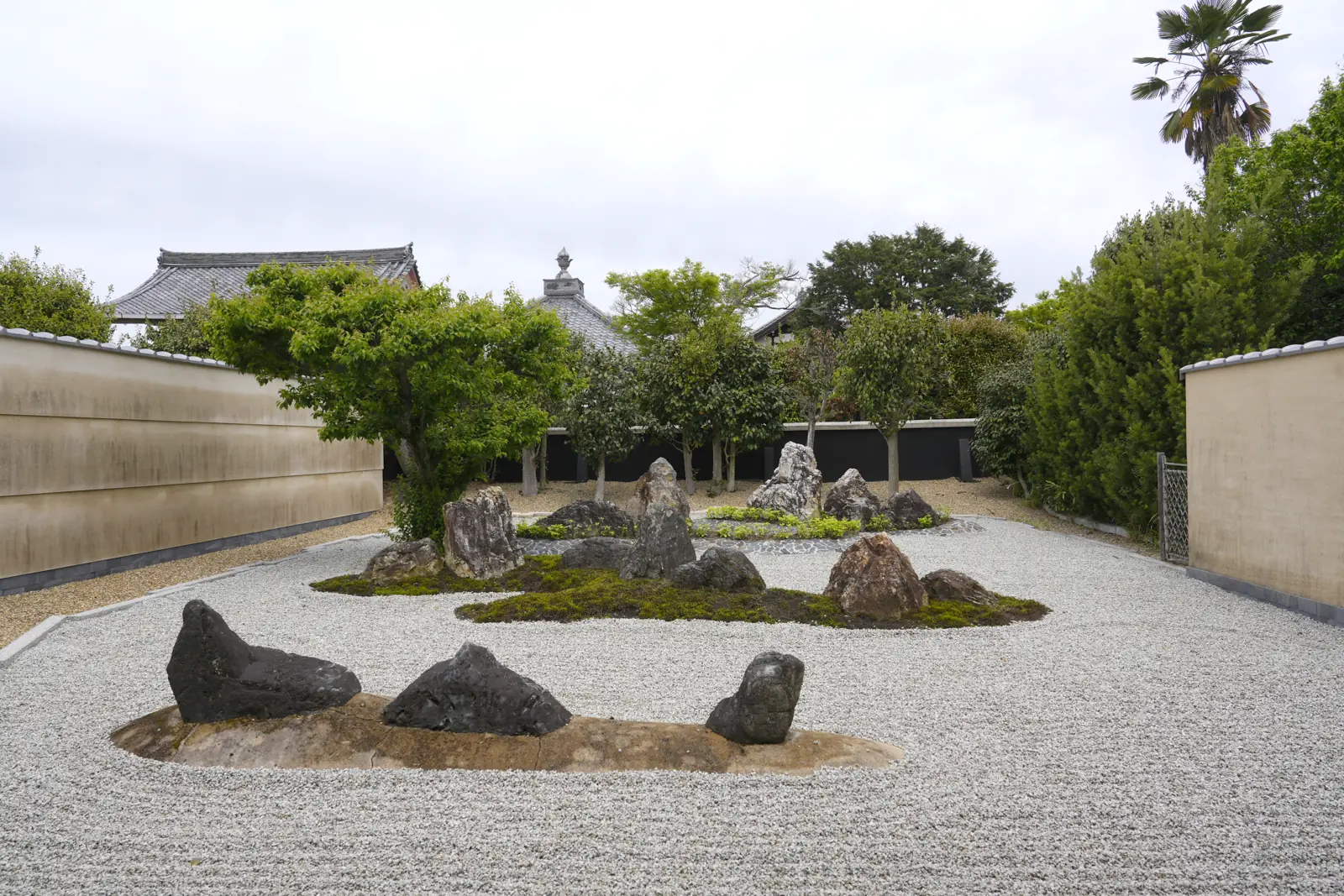
That way of seeing will feel familiar once you have walked through a few gardens in Kyoto. Temple gardens here often compress a whole landscape into a handful of stones, a patch of raked sand, and a few carefully placed plants. Bonsai does the same thing on a table: it gives you a small, edited scene and trusts you to imagine the rest.
If you want a longer look at that idea in a garden setting, our guide to Kyoto's Zen gardens walks through how a few elements can stand for mountains and water, and our explanation of what a rock garden means goes deeper into the same habit of mind.
How to Look at a Bonsai: Trunk, Branches, Pot, and Moss
You do not need to know the names of styles to enjoy a bonsai. Four simple questions are enough to slow you down:
- Trunk: does it rise straight, lean, or twist? How old does it feel?
- Branches: where do they reach, and where has the maker left room so you can see the trunk?
- Pot: how do its shape and color relate to the tree, a rectangle for a steady tree or an oval for a softer one?
- Moss and roots: what kind of ground does the base suggest, a mossy bank, a rocky slope, or a forest floor?
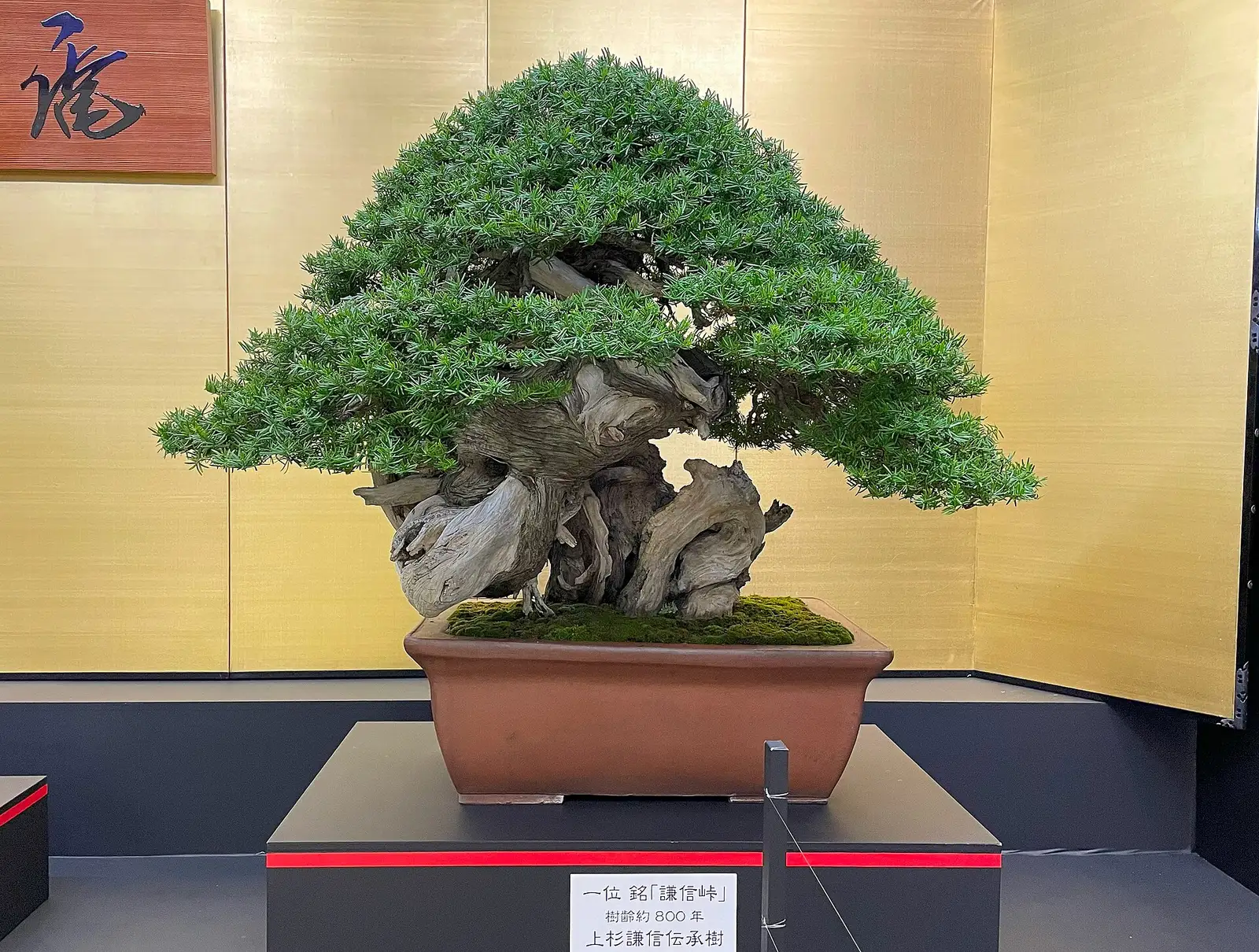
In the photo above, dense green needles sit like a cloud over a pale, twisted trunk, and a bed of moss covers the soil in a plain rectangular pot. The gold screen behind the tree keeps your eye on its outline. Try the four questions on it: the trunk bends and turns, the branches stop short of hiding it, and the low moss makes the whole tree feel like it is standing on a hillside.
A good habit is to look from a few steps away first, then move closer and look at the roots and the surface of the pot. A bonsai often looks different from each side, so walk around it if the display allows.
Pots, Stands, and Empty Space
The pot and the stand are part of the picture. A bonsai in a plain pot on a low table feels calm and quiet, while a tree on a carved stand feels more formal. Neither is better; they simply say different things.
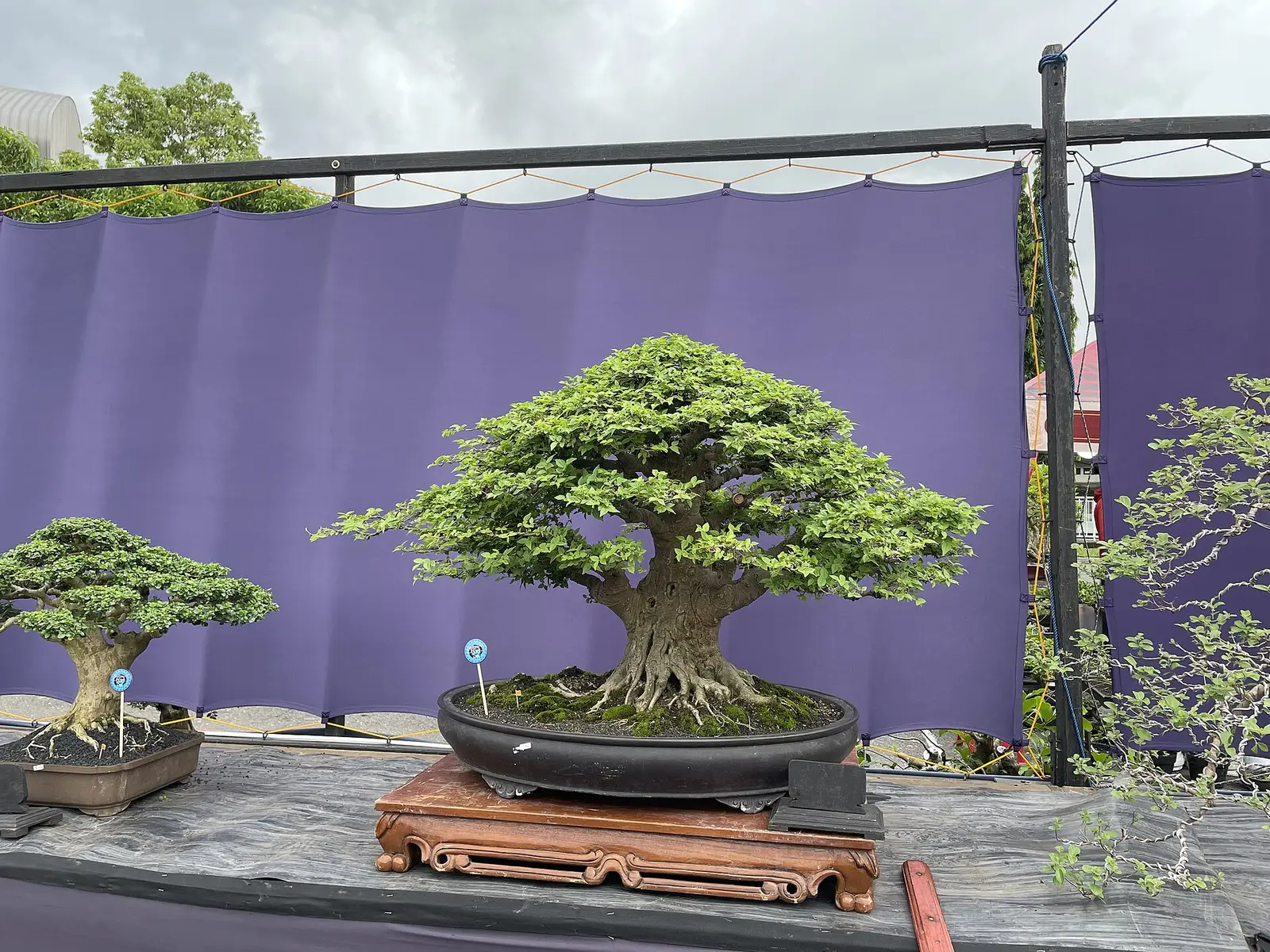
The tree above rests in a wide oval pot on a carved wooden stand. Its roots spread over the soil like the base of a very old tree, and a thin layer of moss covers the ground between them. Notice how the wide, shallow pot gives the heavy roots room to be seen.
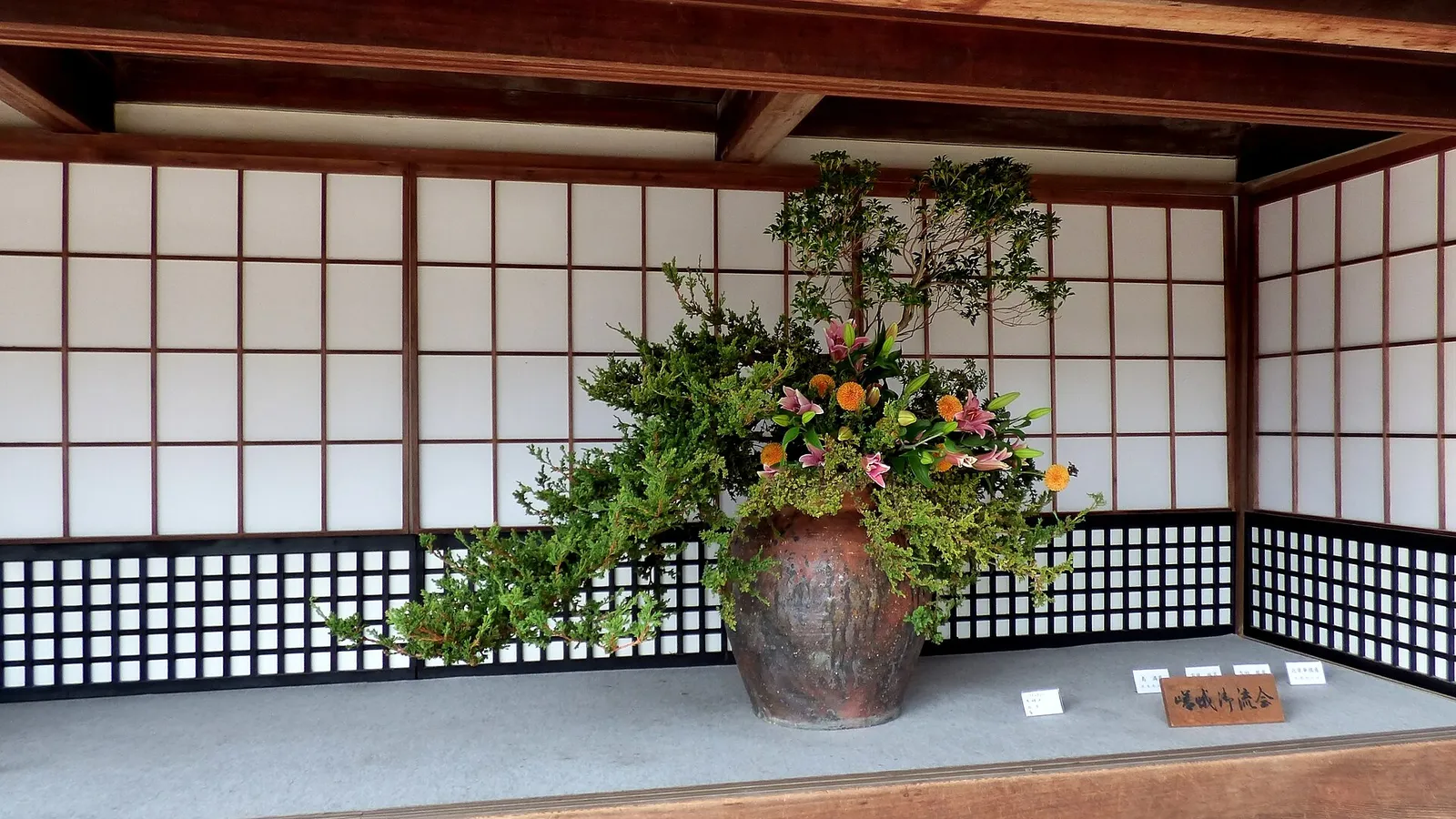
Empty space matters as much as the tree. A well-shown bonsai is surrounded by room, whether that is a blank wall, a screen, or simply a clear stretch of table. In Kyoto's temples and tea rooms you will see the same restraint: one thing placed with care, and quiet around it. Our guide to Japanese flower arranging in Kyoto shows how another traditional art uses empty space in a very similar way.
Plan a Garden Stop in Kyoto
If you want to see living plants in a calm setting, a public garden is an easy place to start. Kyoto Prefecture's official page for the Kyoto Botanical Garden gives its opening hours as 9:00 am-5:00 pm, with last entry at 4:00 pm.
Whether a bonsai display is on view at any garden, and where it stands, can change from one visit to the next. Before you go, check the garden's official page for current displays and for any rules about photographs. If a display is not on, the garden is still a pleasant place to practice the same slow way of looking at trunks, branches, and moss.
Looking Well: A Few Simple Courtesies
Bonsai are living things that someone has tended for years, and a small slip can undo that work. A few habits keep your visit comfortable for everyone:
- Look with your eyes. Touch a tree only if a caretaker invites you to.
- Follow signs and ropes, and keep a respectful distance from the display.
- Ask before you photograph someone's collection or a person's work, and follow any posted rules about photographs.
- Keep your voice low. Bonsai is a quiet art, and most displays are meant to be enjoyed slowly.
Rules differ from one place to another, so follow the guidance of the staff on the day.
Add a Quiet Temple Stop to Your Day
Add a quiet temple stop to your day. We operate Maiko & Zen Kyoto, a 90-minute session at Ikka-in, a sub-temple of Tofuku-ji, where a maiko dances in the same temple hall with no stage between you, then takes time for your questions and photos. See current session times and prices.
Wherever you meet a bonsai, give yourself a moment to look at the one in front of you.
Frequently asked questions
What is bonsai?
Bonsai is the Japanese art of growing a small tree in a shallow pot and shaping it over many years so that it looks like a full-grown tree in a landscape.
How do I look at a bonsai if I know nothing about it?
Start with the trunk, then follow the branches, then look at the pot and the moss. Ask yourself what kind of landscape the tree is suggesting. There is no single right answer.
Can I touch the trees?
Treat every tree as something to look at, not to handle. Touch a plant only if a caretaker invites you to, and follow any signs.
Is bonsai the same as a Zen garden?
They are different arts, but they share a habit of mind: a small, carefully edited scene that asks the viewer to imagine something larger.
What should I check before I plan a visit to see bonsai?
Check the official page of the garden or temple for what is on display, since displays change. Also check the rules for photographs before you take any.
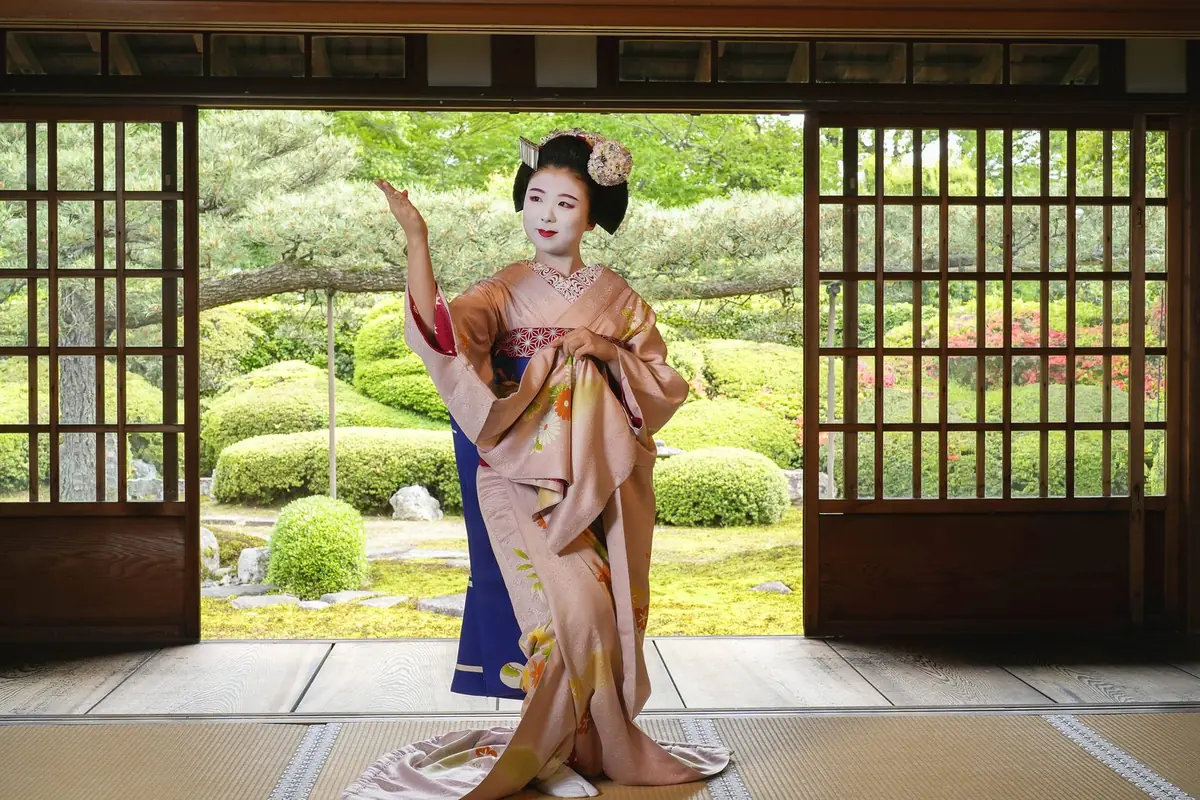
A maiko dance session at a Zen temple near Kyoto Station
Rake a Zen garden, watch two maiko dances and share green tea at Ikka-in, a temple rarely open to the public, one stop from Kyoto Station. Sessions start at 2:00 pm and 3:30 pm.
See the 2:00 pm and 3:30 pm sessions →Sources
- Kyoto Botanical Garden: visitor information (opening hours and admission) — Kyoto Prefecture
- Kyoto Botanical Garden: official site — Kyoto Prefecture