Ikebana in Kyoto: A First-Timer's Guide to Japanese Flower Arranging
We operate the Maiko & Zen Kyoto experience mentioned in this guide.
Ikebana is the Japanese art of arranging flowers, and Kyoto is where the art took shape. If you have wondered how it differs from putting flowers in a vase, where it began, and what you can still see in Kyoto today, this guide gives you the background before you visit or join a class. It covers the roots of ikebana, the temple at the center of its story, the museum that houses historical materials about the art, and a few simple things to notice when you look at an arrangement.
What Ikebana Is and Why It Matters in Kyoto
Ikebana is more than decoration. It is a practice of arranging flowers, branches, and leaves with attention to line, space, and the vessel that holds them, so that a few stems can feel like a small landscape. A bouquet gathers flowers into one rounded mass. Ikebana asks the maker to decide what to leave out as carefully as what to include, so the outline of a single branch can matter as much as the blossoms.
The roots of the art are said to lie in religion. Kyoto's official tourism site says the origins of ikebana are said to be in flower offerings that were introduced to Japanese culture through Buddhism.
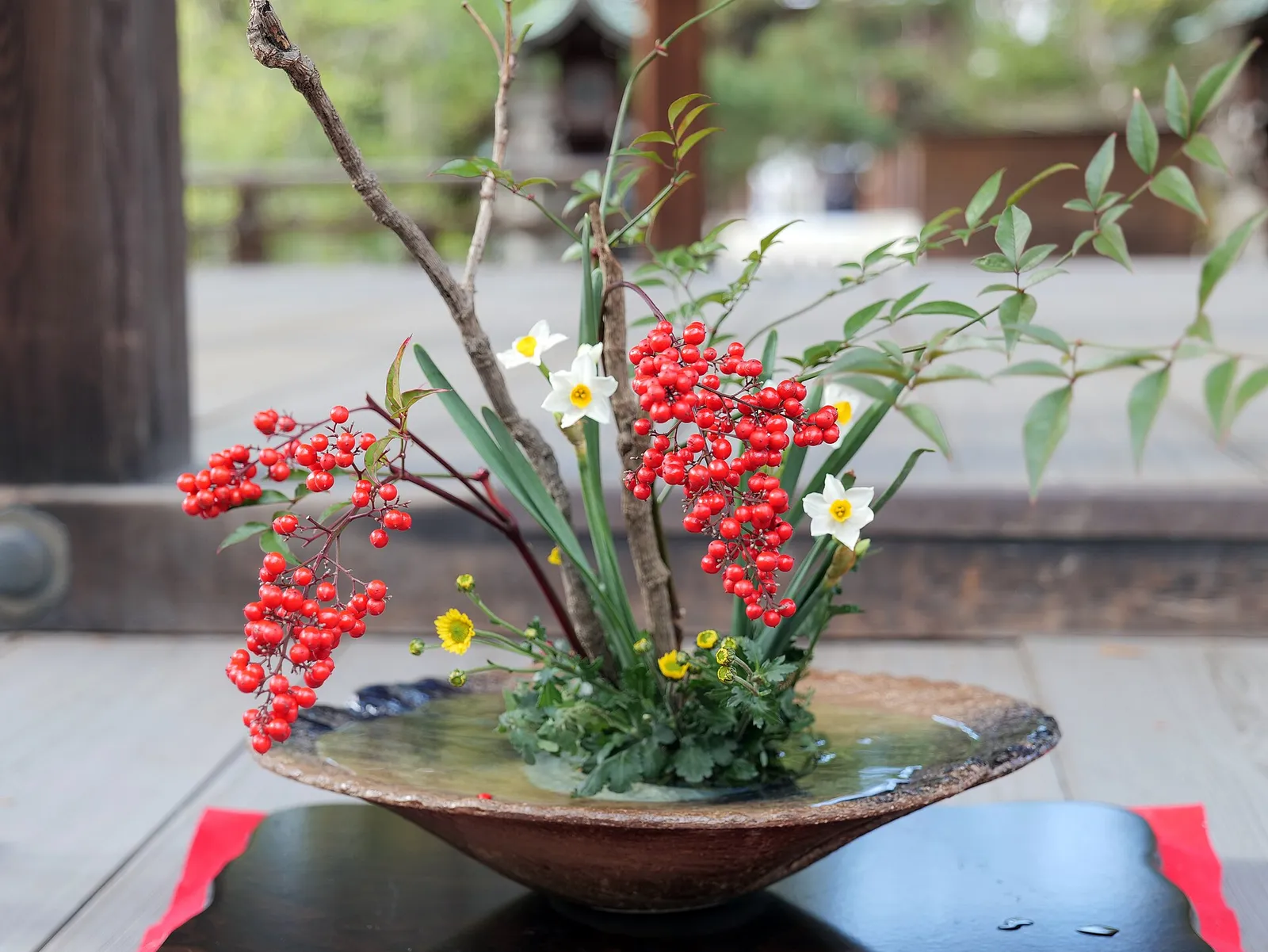
In the photo above, an arrangement sits on the wooden floor of a shrine in Kyoto. Red berries, a few white and yellow flowers, and long leaves rise from one wide bowl, and the empty space around them is part of the picture.
Knowing this changes how a simple arrangement looks. Flowers placed with care in a temple hall or a tea room are the latest chapter of a very old practice, not just an ornament.
How Ikebana Took Shape in Kyoto
Kyoto's official tourism site states that ikebana was created in Kyoto during the Muromachi Period (1336-1573). The same site explains that, at a time when the main focus was simply to display beautiful flowers in a vase, Ikenobo Sen'o, a priest at Rokkakudo Temple, developed this idea further into a way to look at the life of plants and flowers and express nature's form in a vessel.
Other styles followed. Kyoto's tourism site says the shoka style of ikebana was formulated in the mid-Edo Period (1603-1867).
Put together, these points sketch a long story in one city: flower offerings from Buddhism, a creation in Kyoto, a priest at a temple, and a new style in a later age. You do not need to memorize any of it. A rough sense of the timeline is enough to make a visit more meaningful.
Rokkakudo and the Name Ikenobo
Kyoto's official tourism site calls Rokkakudo Temple the birthplace of ikebana. Kyoto's tourism site notes that Rokkakudo, formally called Shiunzan Chohoji Temple, is an ancient temple built by Prince Shotoku.
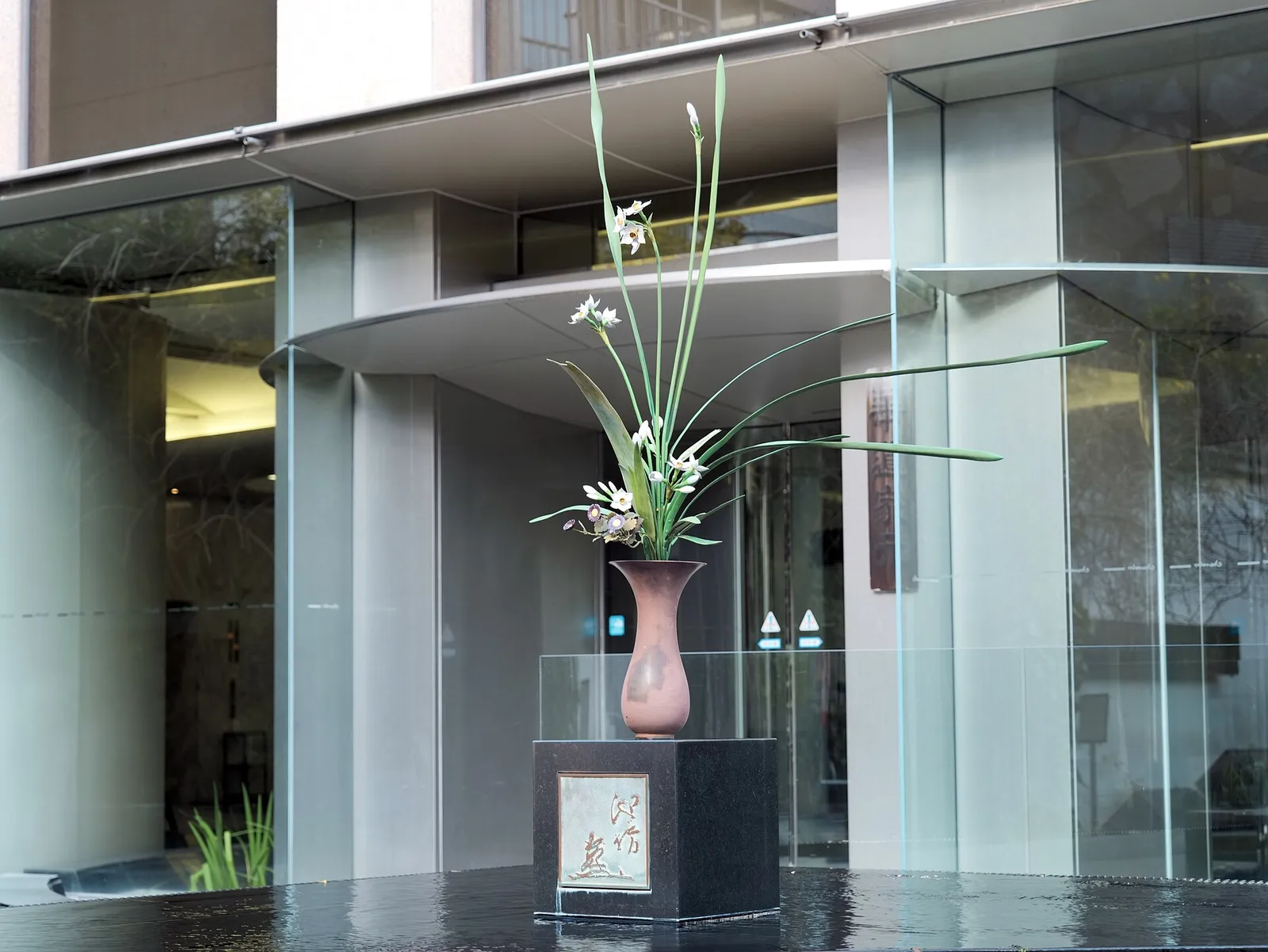
The arrangement in the photo above stands at the foot of the Ikenobo Building at Rokkakudo. The same name appears in the name of the priest Ikenobo Sen'o mentioned earlier, which makes the grounds a natural place to connect the story to a real spot.
Visiting Rokkakudo and the Ikebana Museum
A good way to connect the history to something you can see is the Ikebana Museum. Kyoto's official tourism site says the Ikebana Museum is located in the Ikenobo Building on the grounds of Rokkakudo Temple.
The same site notes that the museum houses historical materials about the art, and that reservations are normally required to enter. Details such as displays can change, so check the official pages of the museum and the temple for current visiting details before you go.
From Karasuma Oike Station, the same site gives the walk to Rokkakudo as 3 minutes on foot, and the walk to the Ikebana Museum as about 3 minutes on foot.
Looking at an Arrangement: Four Things to Notice
You do not need training to enjoy ikebana. Whether you see an arrangement in a museum, a temple, or a class, these questions can help you look more slowly:
- Height: do the stems rise to the same level, or does each one go its own way?
- Space: how much empty room has been left around the flowers, and where does your eye rest?
- Vessel: how do the shape and color of the vessel relate to the stems placed in it?
- Base: how are the stems held in place, a detail that may be hidden from view?
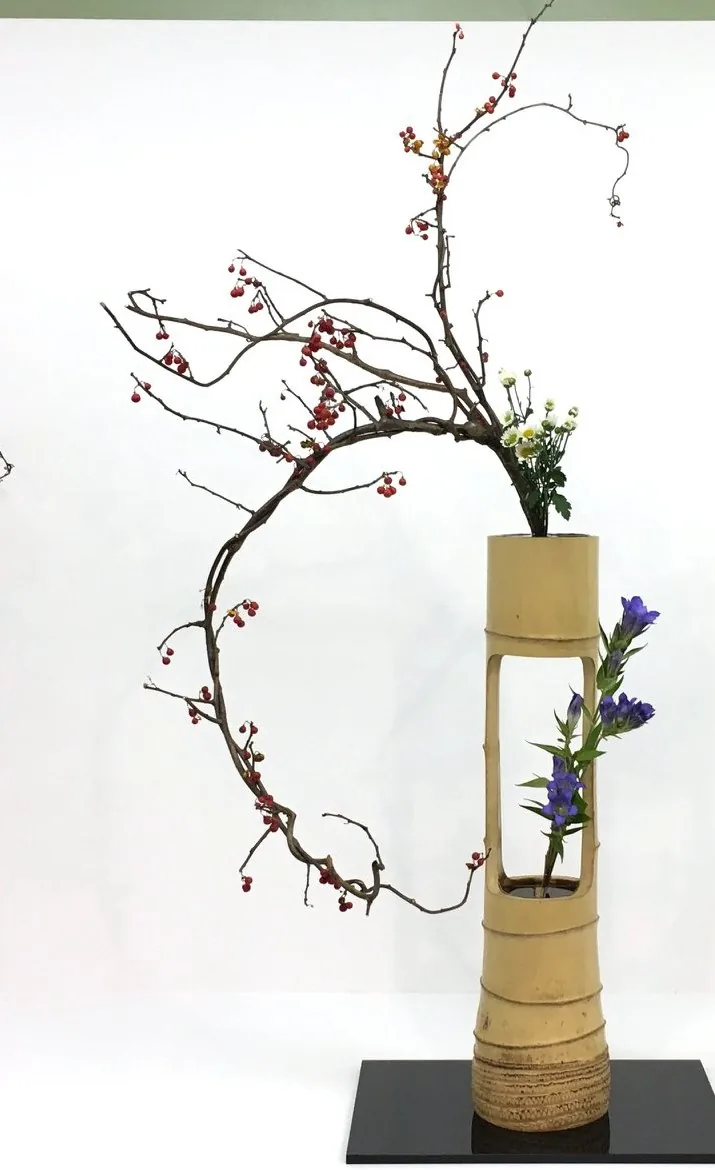
Try the questions on the arrangement above, from an ikebana exhibition in Kyoto. One branch of red berries curves in a wide arc above a tall bamboo vessel, a few blue flowers rise through an opening in the bamboo, and the white wall around them is left empty.
A simple exercise is to pick one detail, such as the tallest stem, and follow its line with your eyes down to the vessel. This works with a formal arrangement in a museum and with a single branch in a tea room alike.
There is no single right answer. The pleasure comes from noticing how a few stems and some empty room can feel complete.
If you enjoy reading small details like these, our guide to Japanese sweets in Kyoto offers a similar way of reading color and shape. Our notes on what geisha do show where other traditional arts fit into Kyoto's culture, and Kyoto's Zen gardens are a calm outdoor counterpart to a flower arrangement.
Before You Try Ikebana in Kyoto
A few simple habits will help you choose well:
- Decide what you want: to watch, to learn the history at a museum, or to arrange flowers yourself. Each one is a different kind of visit.
- Ask how a class works before you book, including the language of instruction, what is provided, and what to expect on the day.
- Mention any allergy to plants or pollen when you book.
- Ask before you photograph another person's arrangement or the room itself.
A visit to the temple grounds can be a short, self-paced stop, the museum asks you to plan ahead, and a class asks for a longer commitment. Decide which pace suits your day.
Class formats and house rules differ from one place to another, so follow the guidance of your teacher on the day.
Add a Quiet Temple Stop to Your Day
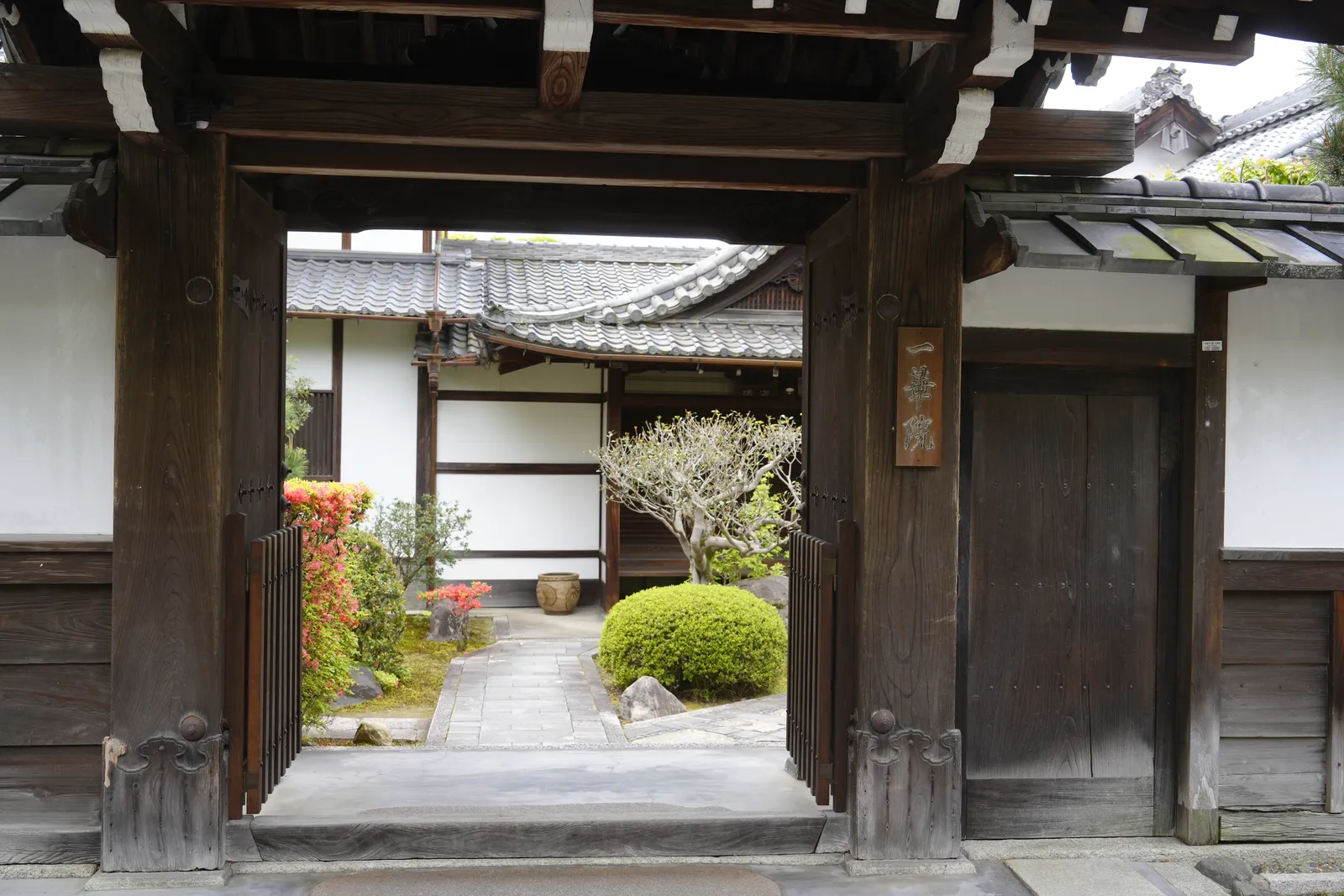
Add a quiet temple stop to your day. We operate Maiko & Zen Kyoto, a 90-minute session at Ikka-in, a sub-temple of Tofuku-ji, where a maiko dances in the same temple hall with no stage between you, then takes time for your questions and photos. See current session times and prices.
Wherever you meet ikebana, give yourself time to look at the arrangement in front of you.
Frequently asked questions
What is ikebana?
Ikebana is the Japanese art of arranging flowers, branches, and leaves with care for line, space, and the vessel. According to Kyoto's official tourism site, ikebana was created in Kyoto during the Muromachi Period (1336-1573).
Where can I learn about ikebana history in Kyoto?
According to Kyoto's official tourism site, the Ikebana Museum is located in the Ikenobo Building on the grounds of Rokkakudo Temple. The same site notes that reservations are normally required to enter. Check the official pages of the museum and the temple for current visiting details before you go.
Which temple is linked to the story of ikebana?
Rokkakudo, formally called Shiunzan Chohoji Temple, is the temple Kyoto's official tourism site calls the birthplace of ikebana. According to Kyoto's official tourism site, it is an ancient temple built by Prince Shotoku.
Do I need to speak Japanese to try ikebana?
Language support differs from one class to another, so ask about the language of instruction when you book.
How should I look at an ikebana arrangement?
Notice the height of the stems, the empty space around the flowers, and the vessel that holds them. There is no single right answer, and looking slowly is the point.
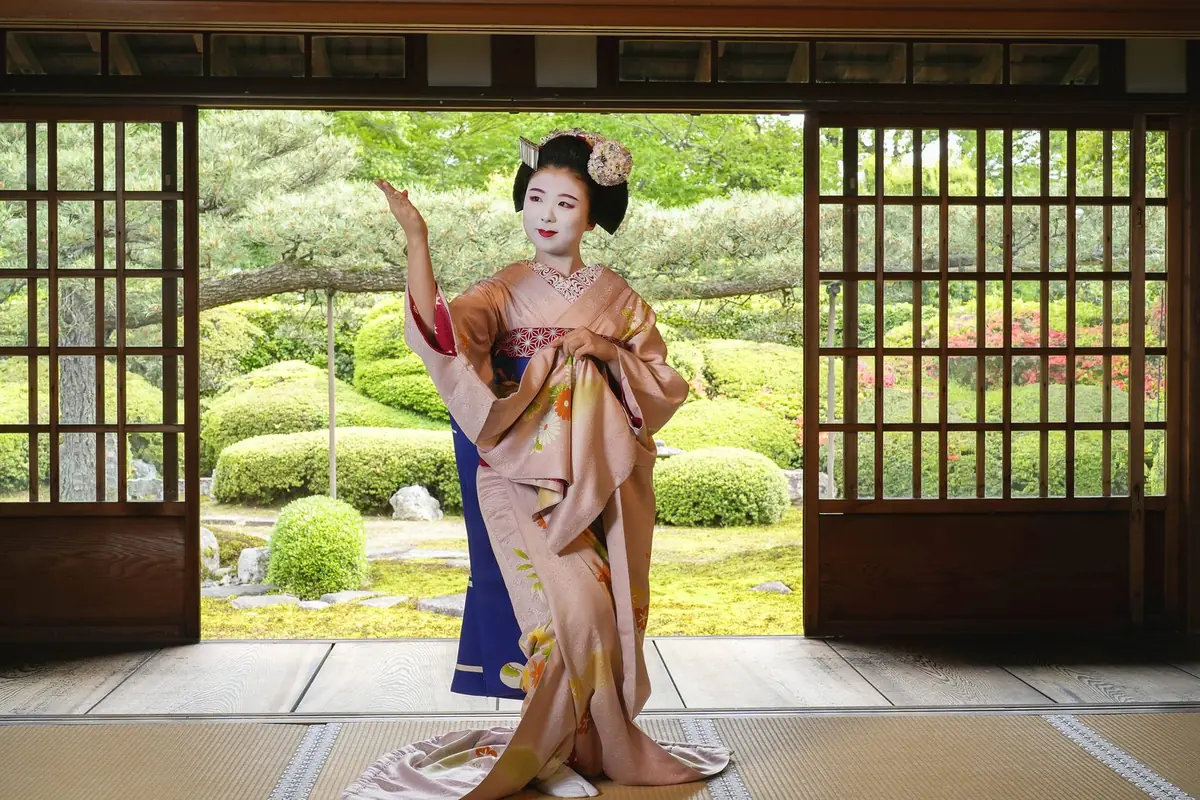
A maiko dance session at a Zen temple near Kyoto Station
Rake a Zen garden, watch two maiko dances and share green tea at Ikka-in, a temple rarely open to the public, one stop from Kyoto Station. Sessions start at 2:00 pm and 3:30 pm.
See the 2:00 pm and 3:30 pm sessions →Sources
- Ikebana – Japanese Art of Flower Arrangement Originating from Kyoto — Kyoto City Tourism Association
- Shiunzan Chohoji Temple (Rokkakudo) — Kyoto City Tourism Association
- Ikebana Museum — Kyoto City Tourism Association