How to Become a Maiko: The Training Path Explained
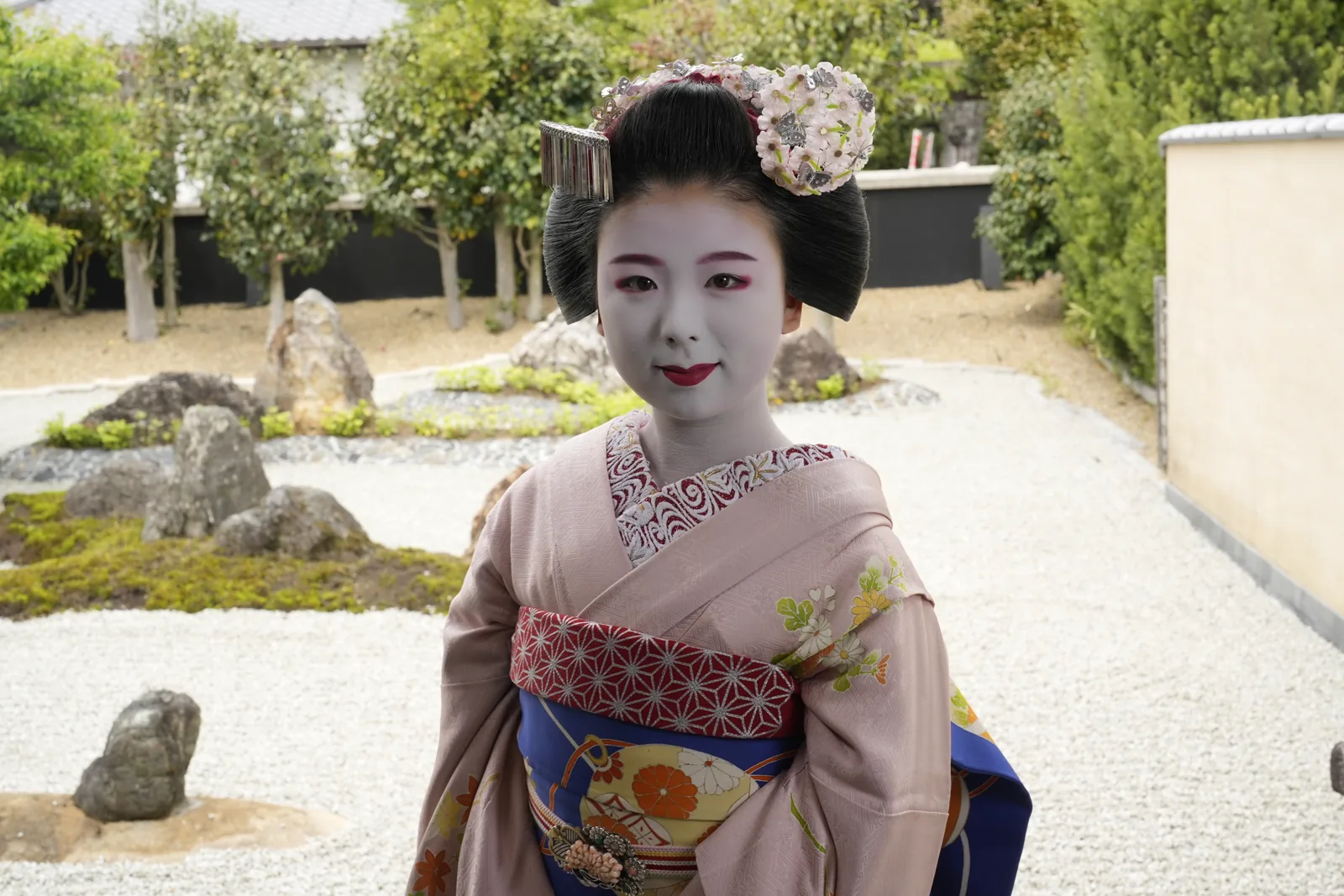
We operate the Maiko & Zen Kyoto experience mentioned in this guide.
This guide answers a simple question: how does a young woman come to take up the life of a maiko? It follows the path in plain steps, from the first days as a trainee to the debut, and shows how a maiko's look changes along the way. It is a general overview, and the details differ from one district to another.
The Path in Brief
The route has three stages. A maiko begins after junior high school, spends about 1 year as a shikomi trainee and about 1 month as a minarai, and then makes her debut. During minarai, she trains alongside a senior geiko, and her debut is called misedashi.
Maiko literally means dancing child.
What a Shikomi Learns
During about 1 year of shikomi, trainees learn manners, Kyoto kagai speech, and dance.
How Her Look Changes as She Advances
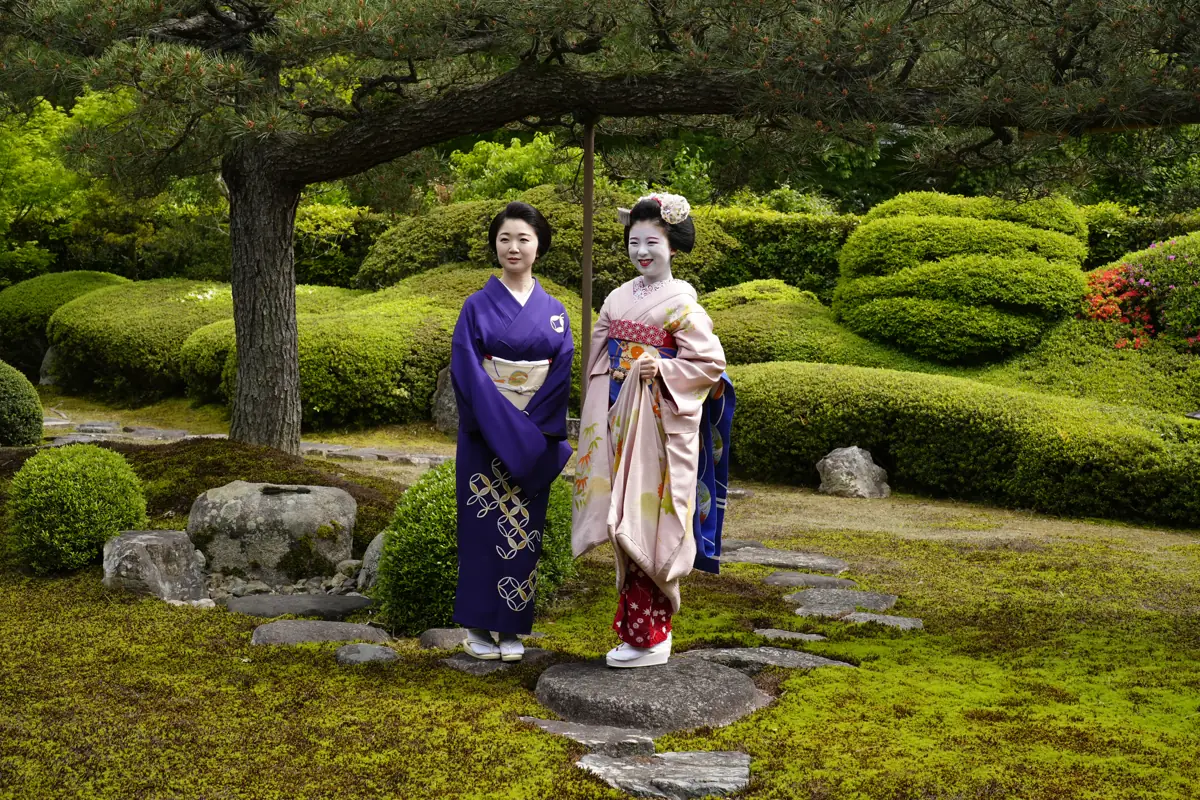
A maiko wears her own hair rather than a wig, and the style she wears is wareshinobu at first. After about 2 years she changes to the ofuku style.
Other parts of the look change as well:
- Her darari obi is about 5 m long and hangs toward the ankles, with a thick obiage above it. During minarai, her darari obi is about half its full length.
- Her furisode has the shoulders and sleeves sewn up in tucks.
- A newly debuted maiko paints only her lower lip.
- Her hair ornaments are large, elaborate kanzashi with seasonal flowers.
- She wears okobo sandals about 10-15 cm (4-6 in.) high, while a geiko wears lower sandals instead.
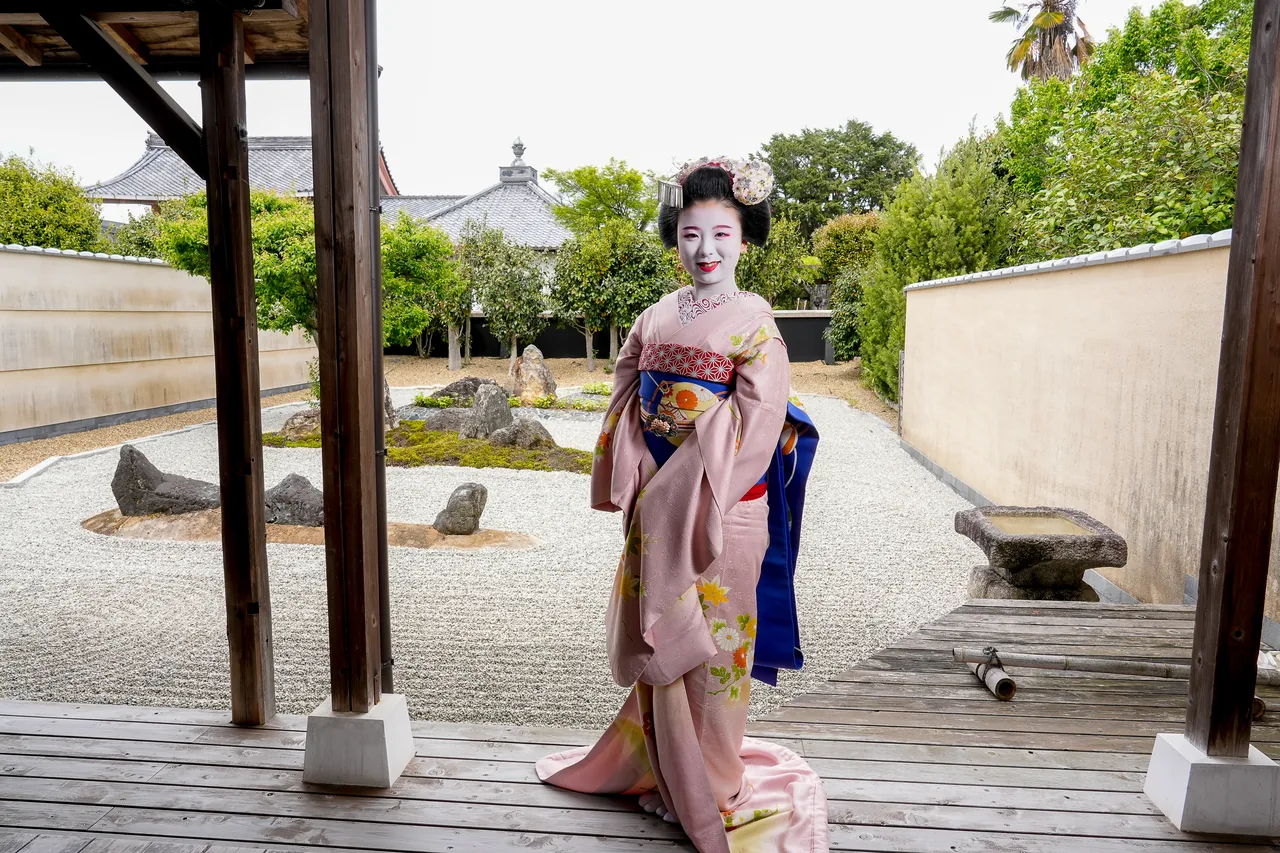
Her makeup is part of the look too. The white base is oshiroi, a paste mixed with water and put on with a brush and a puff, over bintsuke oil that has been warmed and spread on her back, nape, neck, and face. At first, the okaa-san or a senior helps her apply it. Lead-based oshiroi was first made in Japan in 713, and its manufacture was banned in 1934.
These details also set her apart from a geiko. A geiko wears a Shimada wig with small, understated ornaments and a shorter obi tied in a taiko knot, with a short obiage tucked in. Our guide to maiko and geiko sets the differences side by side.
Becoming a Geiko
After 5 or 6 years as a maiko, at around age 20, she decides whether to become a geiko. Becoming a geiko is called erikae.
At erikae, her red collar changes to white, and she wears a new wig and a black crested kimono (kuromontsuki).
What Differs From One District to Another
Each of Kyoto's five geisha districts has its own customs, so some details described here may differ from one district to another.
The kimono is one example. A maiko wears a furisode, and the sleeve length differs by district. The timing of the hairstyle change is another: ofuku comes after about 2 years (two or three in Miyagawacho, for example). In Miyagawacho, a maiko wears the sakko hairstyle for two to three weeks before erikae. If you are comparing sources, expect small differences like these rather than a single fixed rule.
Meeting a Maiko in a Temple Setting
Reading about the path is one way to learn. Another is to see a maiko in person in a setting made for visitors, where you can ask her about her kimono, her hair, and her daily life.
Meeting her on the street is a different matter. In Gion, in December 2023, residents, the teahouse and geiko associations, Kennin-ji, and the district council asked visitors not to stop, touch, or follow people, not to photograph them without permission, and not to enter private property.
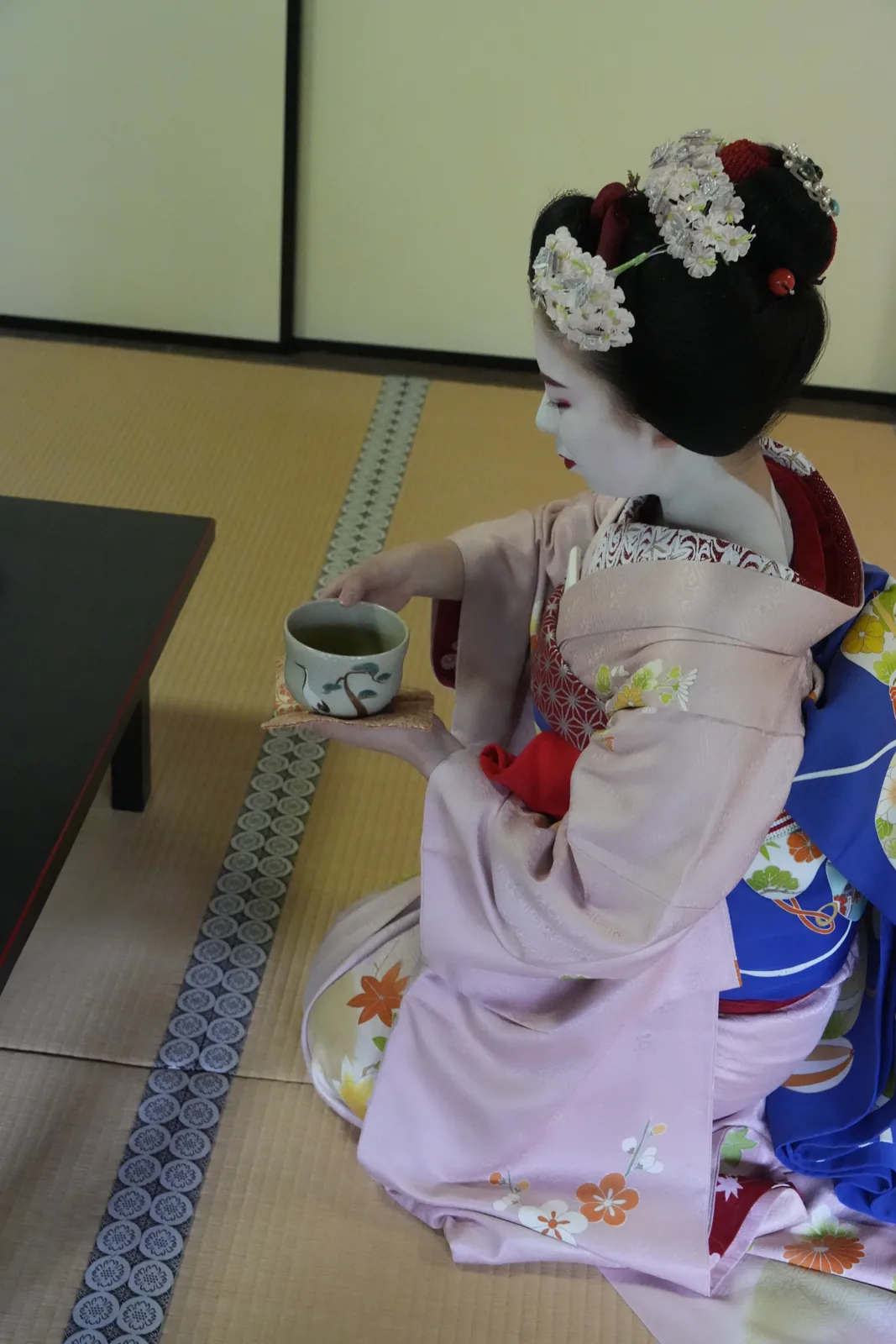
What you have read here gives you good questions to ask. You can ask how long she has been a maiko, or what she studied in her first year.
Our Session at Ikka-in
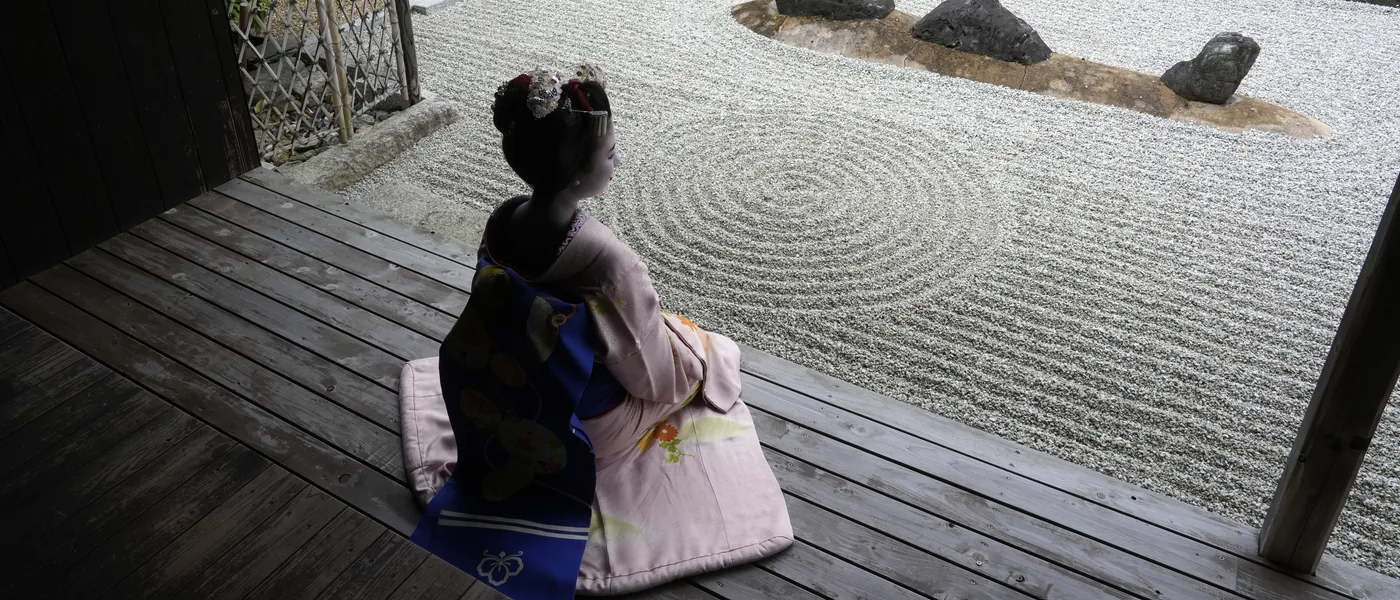
We operate Maiko & Zen Kyoto at Ikka-in, a sub-temple of Tofuku-ji that is rarely open to the public. If a small group, time to talk with a maiko, English support, and photos matter to you, this session is built around them. The maiko dances in the same temple hall as you, with no stage between you. Ikka-in was founded in 1382. Tofukuji Station is one stop from Kyoto Station on the JR Nara Line, about 3 minutes by train, and Tofuku-ji is about 10 minutes on foot from there.
The session lasts 90 minutes and starts at 2:00 pm or 3:30 pm. It is a shared small group with an English-speaking guide. The price is 23,000 yen per person, and for that you see the dance, talk with the maiko, enjoy sencha and a sweet, and take photographs together. Children aged 6 and older pay the same price. Children under 6 cannot take part. You also create patterns in the gravel of the temple's dry-landscape garden with a wooden rake.
Where to Go Next
If this overview raised more questions, our guide to maiko and geiko explains how to tell them apart, and what geisha do describes their work. For a look at everyday life, read about how maiko really live.
Details change over time, so check each organization's official page for the latest information.
See a maiko dance at a Zen temple. We operate Maiko & Zen Kyoto, a 90-minute session at Ikka-in, a sub-temple of Tofuku-ji, where a maiko dances in the same temple hall with no stage between you, then takes time for your questions and photos. See current session times and prices.
Frequently asked questions
How does someone begin the path to becoming a maiko?
This guide does not cover how to apply. The official pages listed under Sources are the place to look.
What is the difference between a maiko and a geiko?
One quick sign is the hair: a maiko wears her own hair, while a geiko wears a wig. For a side-by-side look at hair, obi, and footwear, read our guide to maiko and geiko.
Does the path look the same in every district?
Not exactly. Each district has its own customs, so details such as sleeve length or the timing of a hairstyle change can differ.
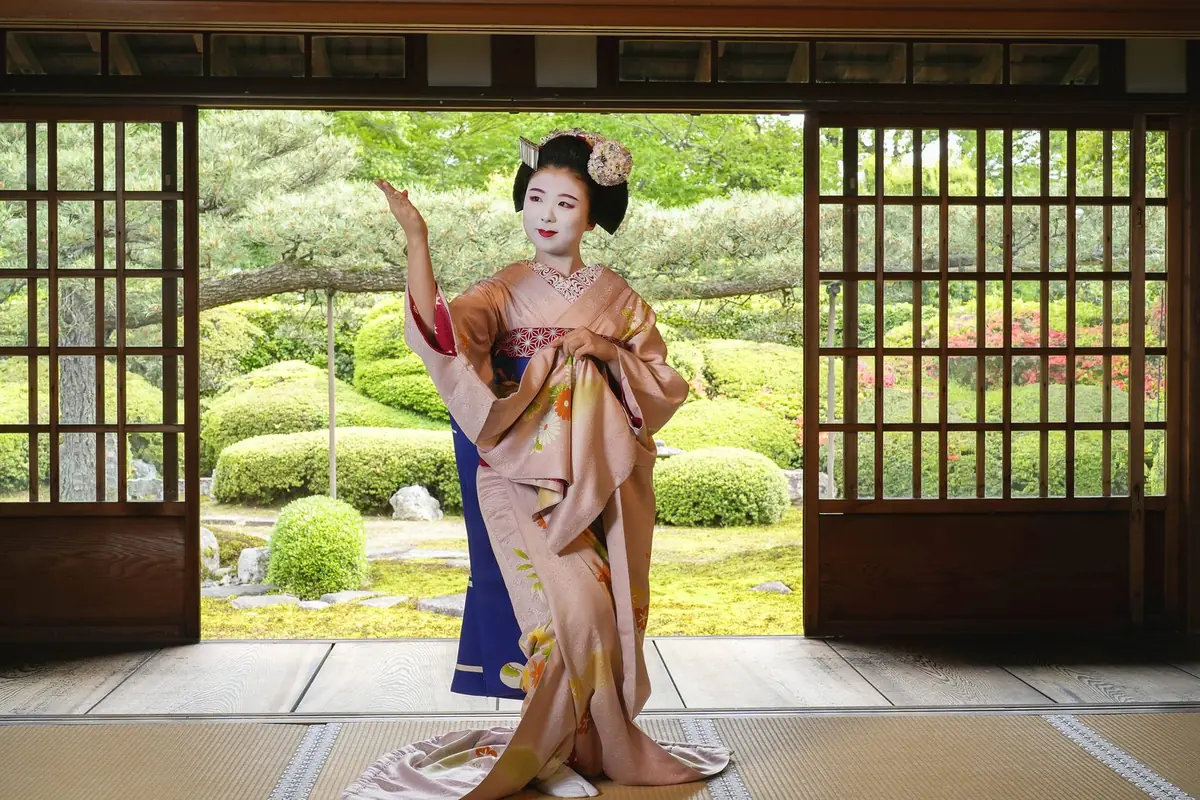
A maiko dance session at a Zen temple near Kyoto Station
Rake a Zen garden, watch two maiko dances and share green tea at Ikka-in, a temple rarely open to the public, one stop from Kyoto Station. Sessions start at 2:00 pm and 3:30 pm.
See the 2:00 pm and 3:30 pm sessions →Sources
- Maiko — Ookini Foundation
- Maiko dressed — Ookini Foundation
- Kagai omotenashi — City of Kyoto