Fushimi Inari History: How the Shrine Began and Why It Has So Many Torii
We operate the Maiko & Zen Kyoto experience mentioned in this guide.
Fushimi Inari Taisha is known around the world for its tunnels of vermilion gates, but the story of the shrine starts long before the first gate went up. This guide follows that story in plain terms, from the arrival of the deity on the mountain to the gates and foxes you pass today, so that what you see on the grounds makes sense when you stand in front of it.
Where the Story of the Shrine Starts
By the shrine's account, Inari Okami came to dwell on Inariyama in 711, on the first Day of the Horse in the second month. That date anchors everything else in this guide: the shrine grew around a mountain that people already treated as sacred.
The shrine also explains that Fushimi Inari Taisha and the Fukakusa area are closely connected to the Hata clan, known in Japanese as Hatauji.
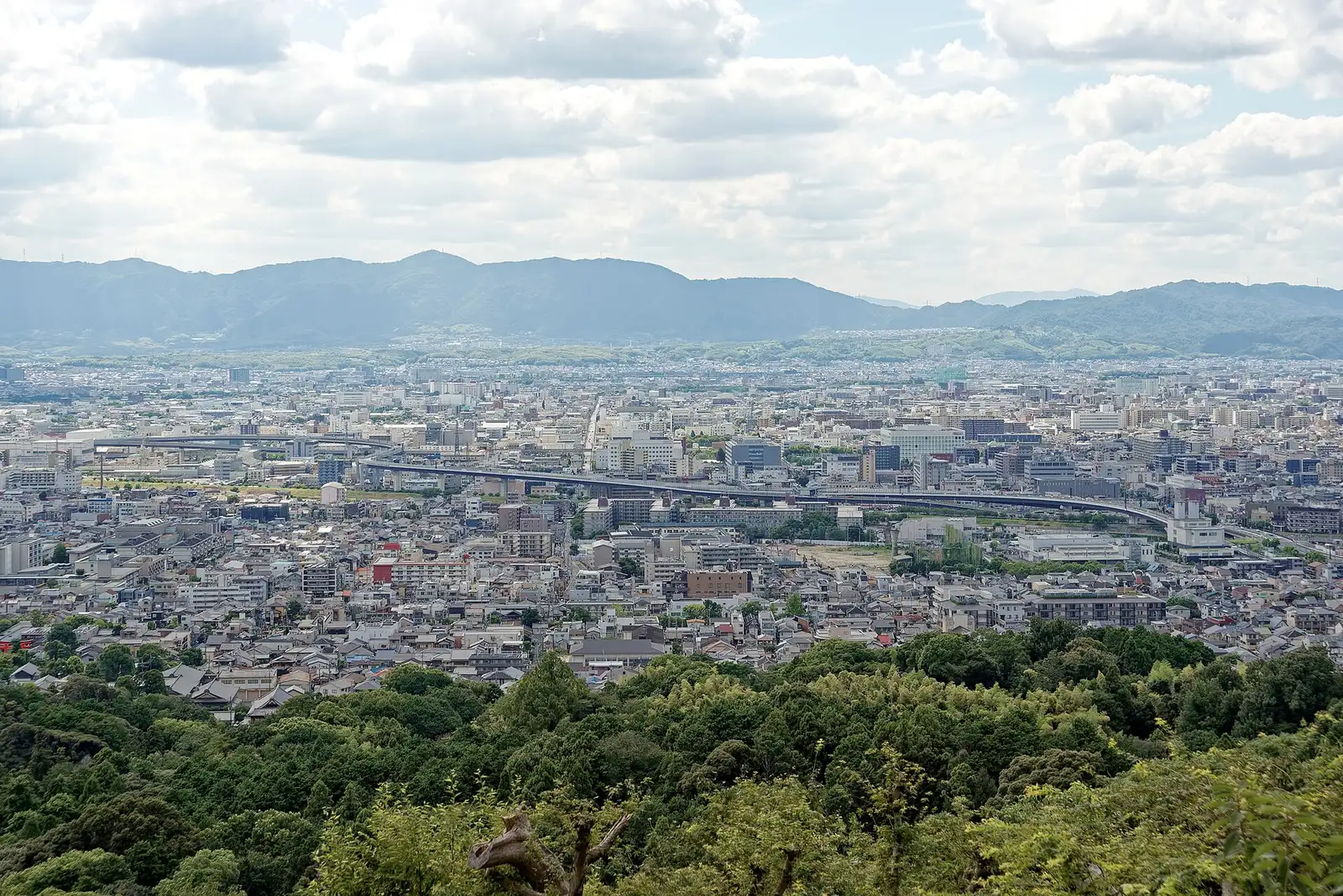
Inariyama is a 233-meter holy mountain, one of the southernmost of the 36 Higashiyama mountains. The shrine considers the whole of Inariyama part of its precinct. Keeping that in mind changes how you read the place: the halls at the entrance are the doorway to a sacred mountain rather than the whole shrine.
Inari Okami and What People Pray For
The deity worshipped here is Inari Okami. The shrine describes Inari Okami as a deity of success in business, thriving industries, safe homes, traffic safety, and progress in the performing arts.
That wide range helps explain the mix of people you may notice in front of the halls. Some come to pray for their work, others for their family or a safe journey. You do not need to share the faith to visit. A quiet bow, a calm pace, and a little space for people who are praying are enough to show respect.
If you are building a day that also includes Buddhist temples, our guide to Zen Buddhism basics explains what to expect inside a Zen temple, which helps you notice how a shrine visit feels different.
The Main Gate and the Main Shrine Building
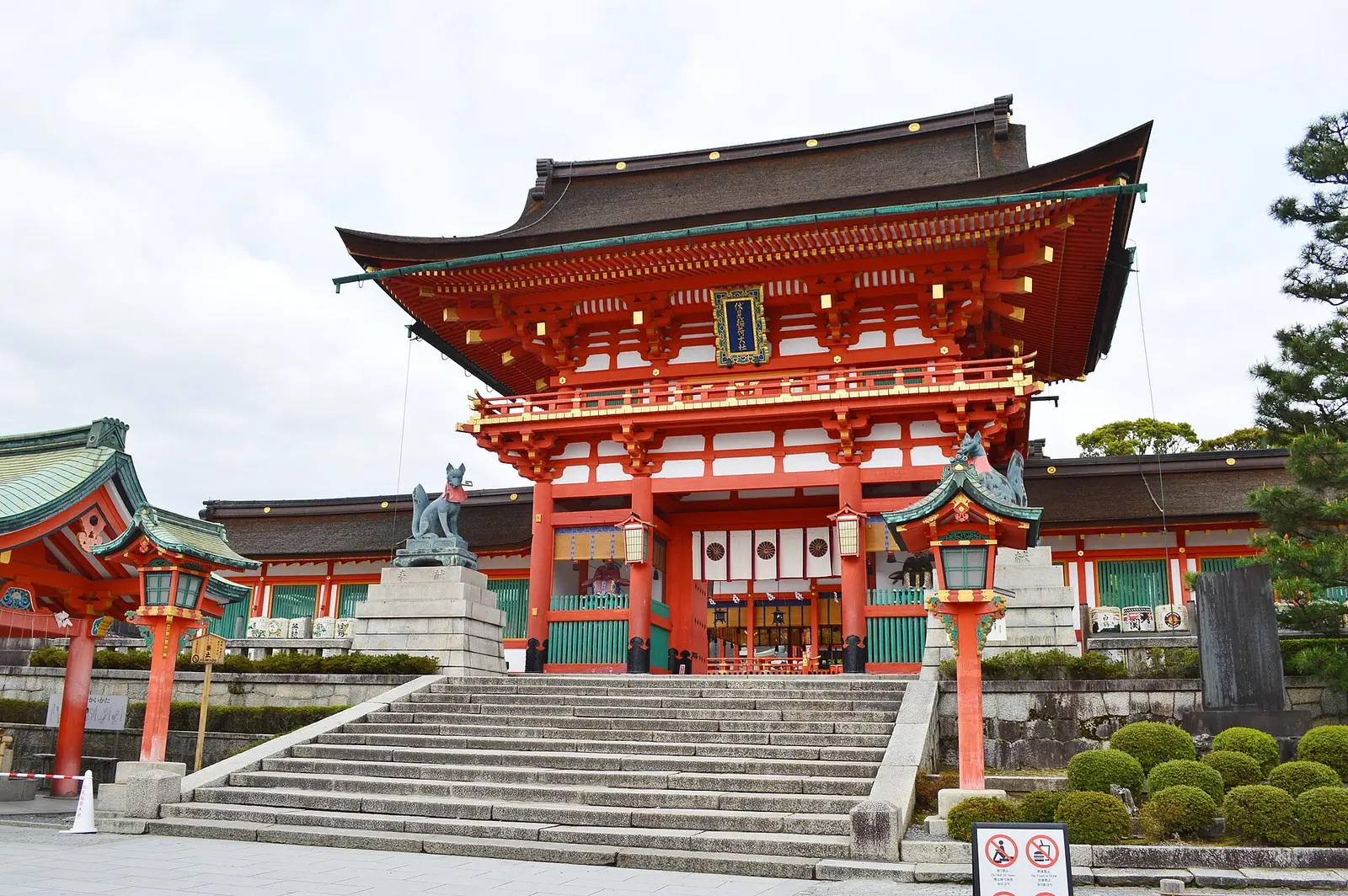
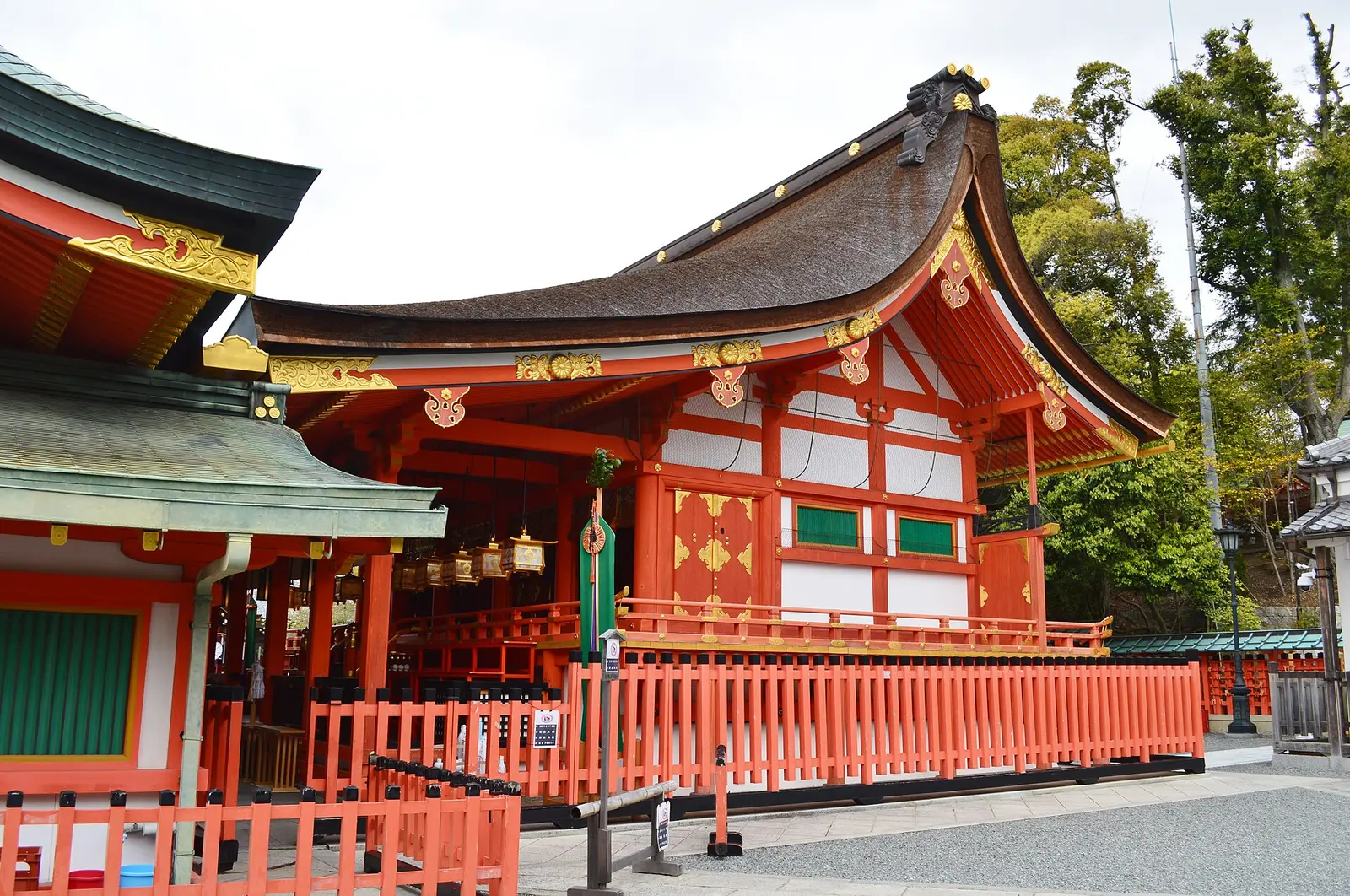
Begin with the large gate at the entrance. According to the shrine, the main gate was built with offerings made by regent Toyotomi Hideyoshi. Standing in front of it, you are looking at an offering with a famous name behind it.
Behind the gate is the main shrine building. The shrine notes that the main shrine building was designated a national treasure and is today an Important Cultural Property. Take a slow look at the sweep of the roof and the painted details along the eaves.
The mountain has its own chapter. Asked whether a shrine once stood on the mountain, the shrine answers that it did, and that it was burned down during the Onin Rebellion. Knowing this, the small shrines and stone markers you pass higher up feel less like scattered monuments and more like the continuing life of the mountain.
Why There Are So Many Torii
By the time the Edo period began, offering a torii had become a common practice, the shrine explains. Each gate you walk under is one of those offerings, which is why the paths feel less like decoration and more like a record left by many people over time.
By the shrine's count, roughly 10,000 gates, both large and small, now line the paths leading up the mountain to Fushimi Inari Taisha. As you climb, look for the smaller gates as well as the large ones.
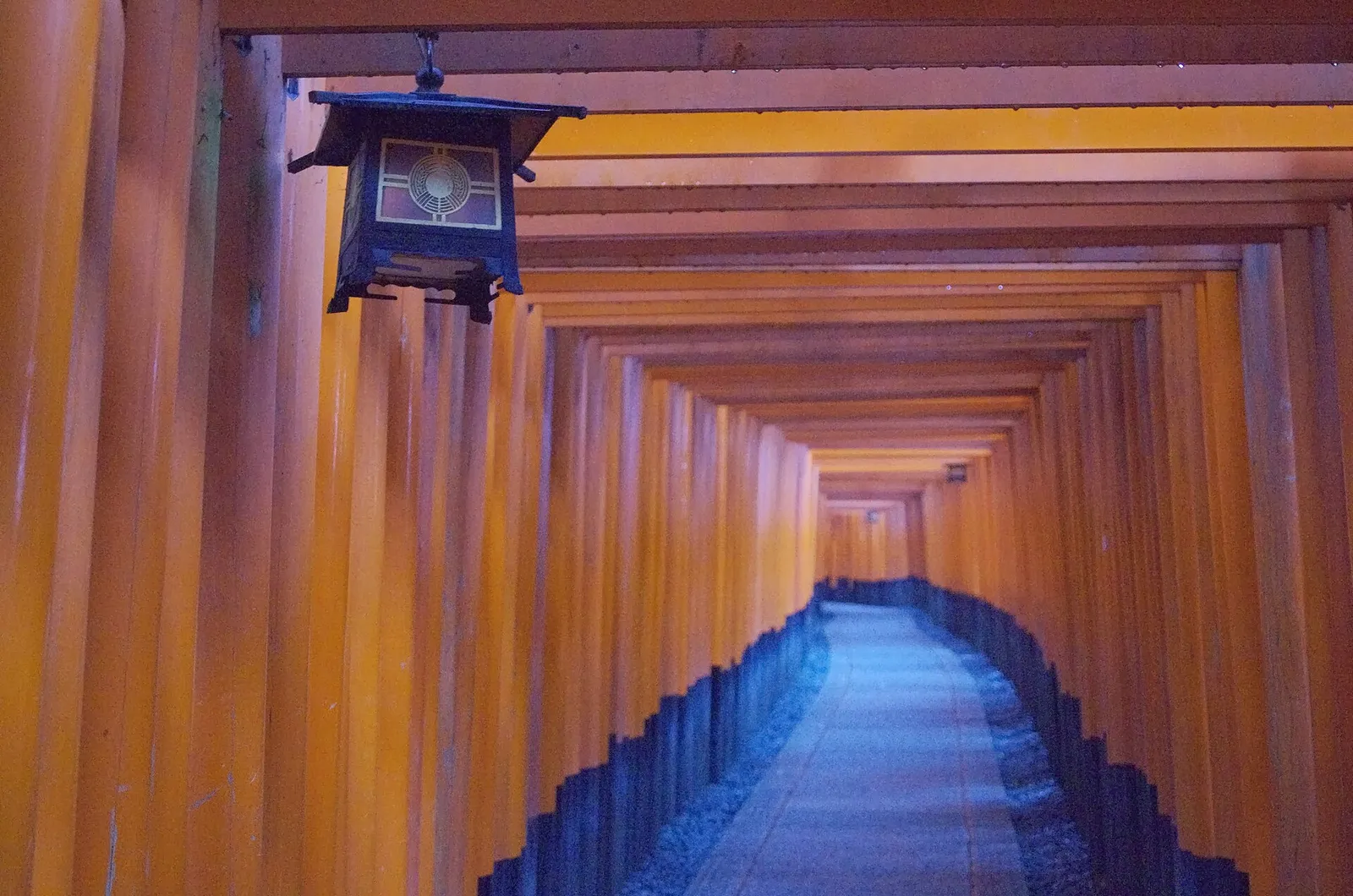
The color has a meaning as well. At Fushimi Inari Taisha, vermilion is described as a color that expresses the bountiful harvests that Inari Okami gives. Seen that way, a torii path is a line of offerings painted in the color of plenty.
A torii path is part of a place of worship, so give other people room as you walk. The shrine asks visitors to avoid preventing worshippers from passing by taking photographs or filming on narrow paths. Step to the side to take a picture, then rejoin the flow.
Foxes: The Messengers of Inari
As you walk, you will notice stone fox statues beside halls, on altars, and next to the smaller shrines along the paths. It is natural to wonder whether the fox is the deity itself. The shrine explains it differently.
The shrine explains that foxes are said to be messengers of Inari Okami. They are not the wild foxes of the hills. Like the deity, these messengers are invisible, and the stone statues honor them.
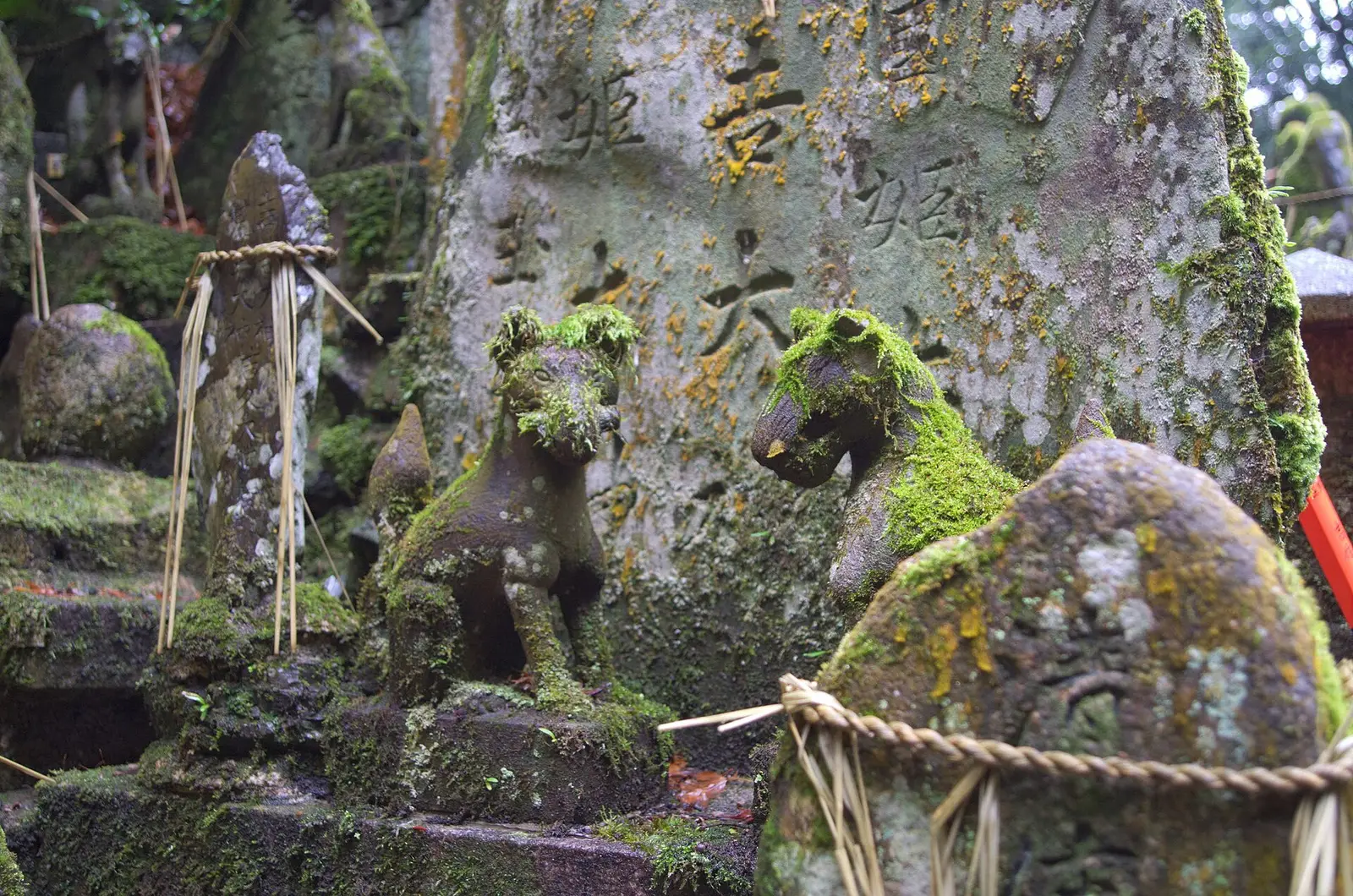
Treat the fox statues as part of the shrine rather than as props. Look closely at the expressions and the red bibs you may find on them, and leave them as they are for the next visitor.
Reading the History on Your Visit
With the story in mind, a simple order works well: the main gate first, then the main shrine building, then the torii paths, and finally as much of the mountain as your energy allows. Each stop matches one part of the history above, so the visit unfolds like a short timeline.
Reaching the shrine is simple. The shrine is right next to JR Inari Station, 2 stations and 5 minutes from Kyoto Station on the JR Nara Line.
For planning the climb itself, see our Fushimi Inari hike guide, and if you are thinking about walking with a guide, our guide to Fushimi Inari tours explains what to ask first. If you would like to visit in kimono, our guide to kimono photo spots in Kyoto covers the photo rules that temples and shrines set.
Shrine details can change, so check the official Fushimi Inari Taisha website for the latest information before you go.
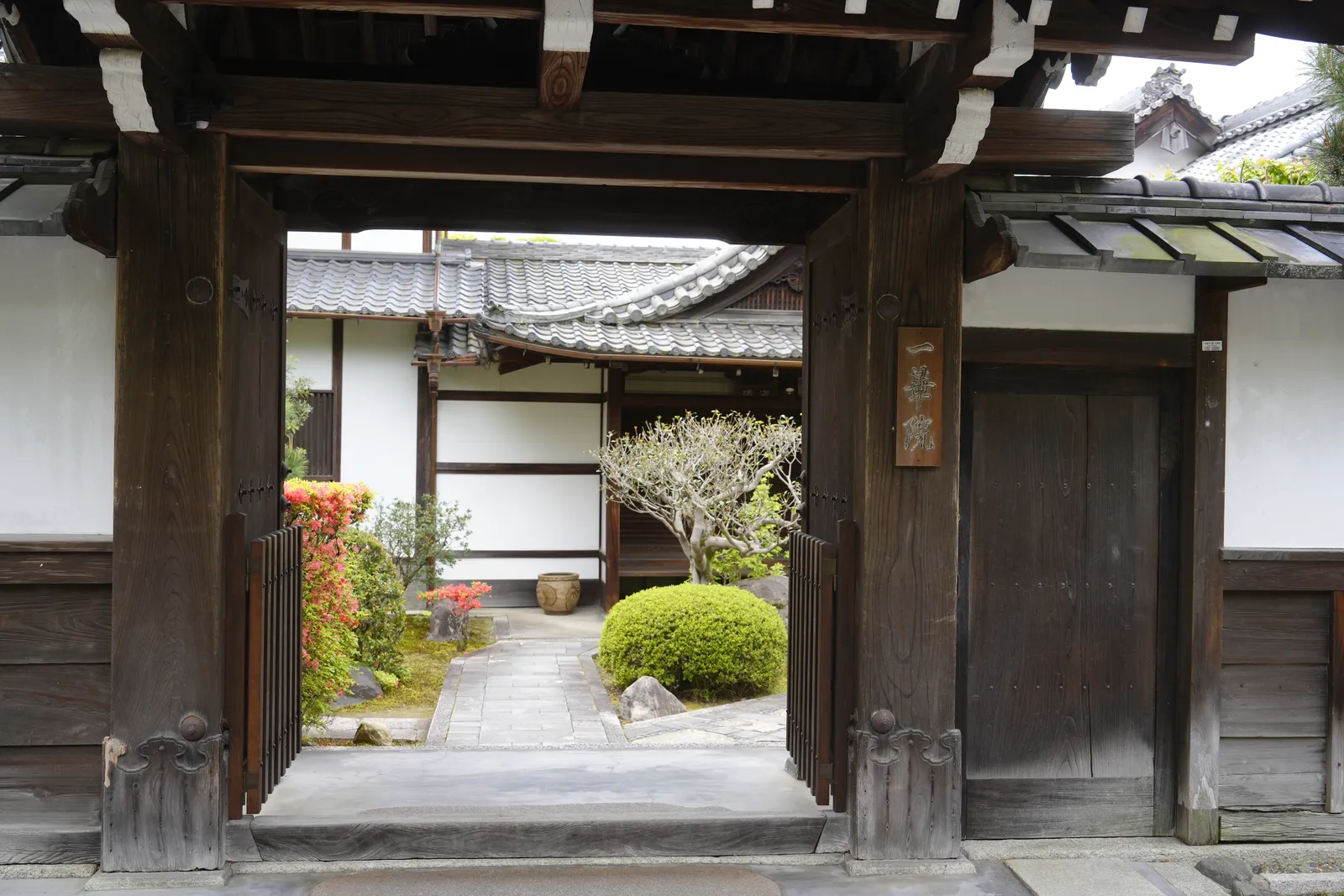
Add a quiet temple stop to your day. We operate Maiko & Zen Kyoto, a 90-minute session at Ikka-in, a sub-temple of Tofuku-ji, where a maiko dances in the same temple hall with no stage between you, then takes time for your questions and photos. See current session times and prices.
Frequently asked questions
When did Fushimi Inari Taisha begin?
By the shrine's account, its story begins in 711, when Inari Okami came to dwell on Inariyama on the first Day of the Horse in the second month.
Why are there so many torii at Fushimi Inari?
Each gate is an offering. By the time the Edo period began, offering a torii had become a common practice, the shrine explains. Those offerings add up: roughly 10,000 gates, large and small, now stand on the mountain paths up to the shrine.
Is Inari a fox?
The shrine explains that foxes are said to be messengers of Inari Okami. They are not the wild foxes that live in the hills; the messengers are invisible, just like the deity they serve.
Who built the main gate of Fushimi Inari Taisha?
According to the shrine, the main gate was built with offerings made by regent Toyotomi Hideyoshi.
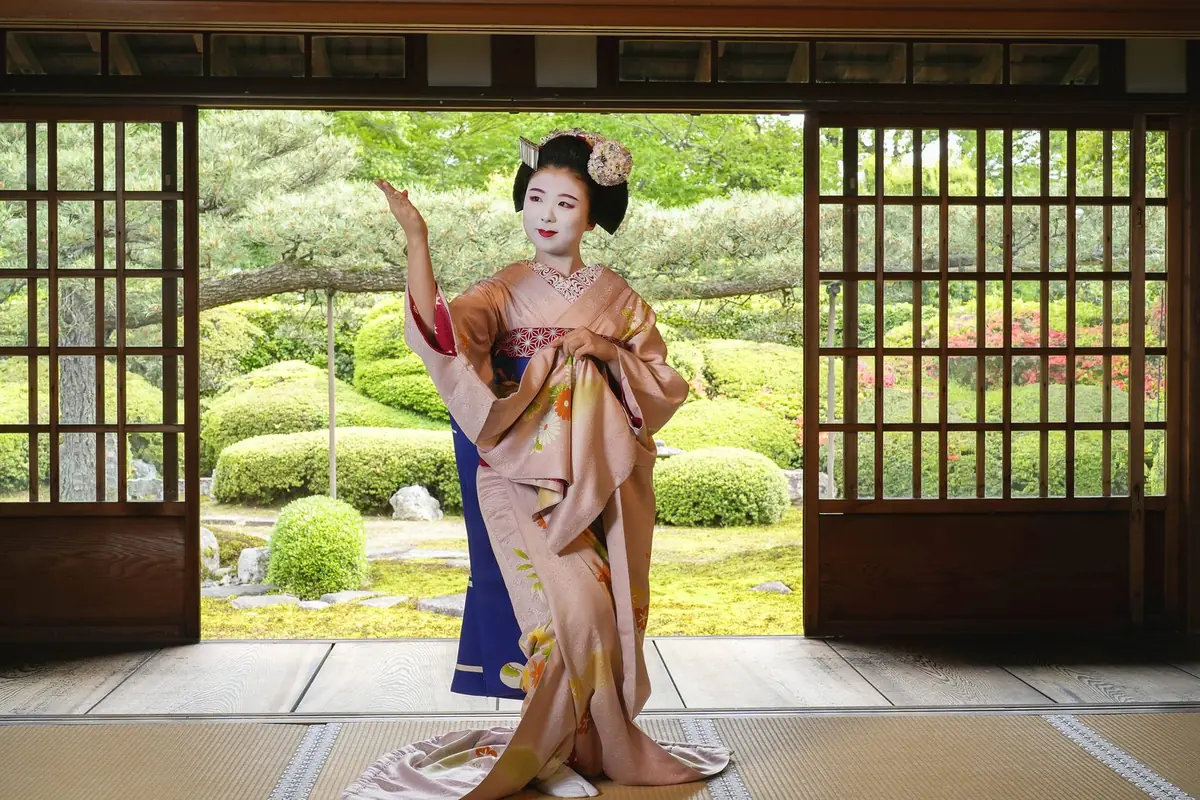
A maiko dance session at a Zen temple near Kyoto Station
Rake a Zen garden, watch two maiko dances and share green tea at Ikka-in, a temple rarely open to the public, one stop from Kyoto Station. Sessions start at 2:00 pm and 3:30 pm.
See the 2:00 pm and 3:30 pm sessions →Sources
- About Fushimi Inari Taisha — Fushimi Inari Taisha
- Frequently asked questions — Fushimi Inari Taisha
- History of the main shrine building — Fushimi Inari Taisha