Karesansui: What a Dry Garden Is and How to Read One
We operate the Maiko & Zen Kyoto experience mentioned in this guide.
A karesansui, or dry landscape garden, builds its scenery from stones and white sand. Kyoto City describes the form as compressing nature into a small space and expressing it in abstract shapes. This guide explains how to look at the stones and the raked gravel, then walks through two dry gardens in Kyoto that you can visit.
What Is a Karesansui?
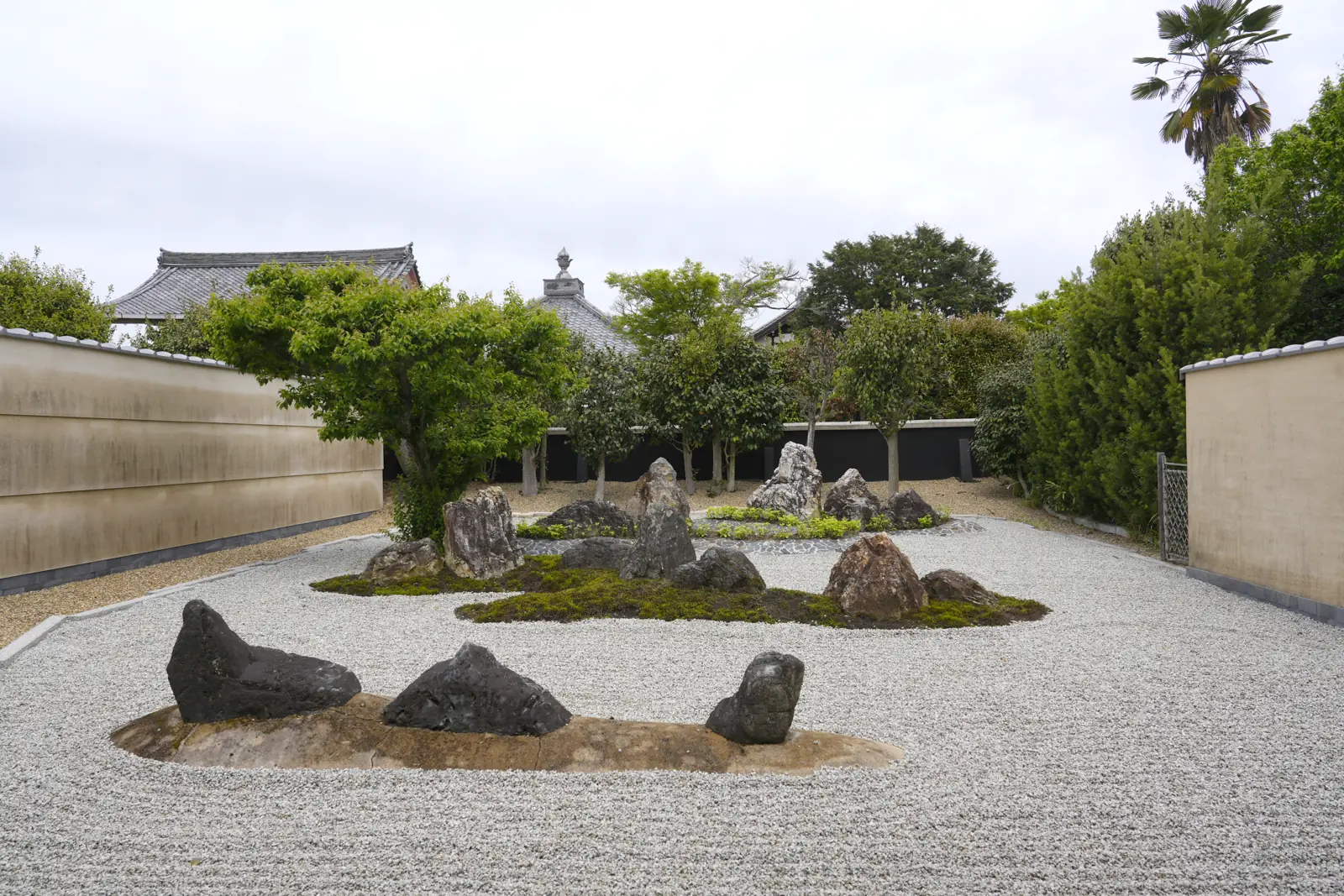
In a dry landscape garden, look for a few elements: stones, white sand or gravel, and sometimes moss.
Because the scenery is abstract, the garden does not spell out what you are looking at. You might read a stone as a mountain or as an island, and either reading can work. That is why a dry garden rewards a slow look more than a quick photo.
How to Look at the Stones
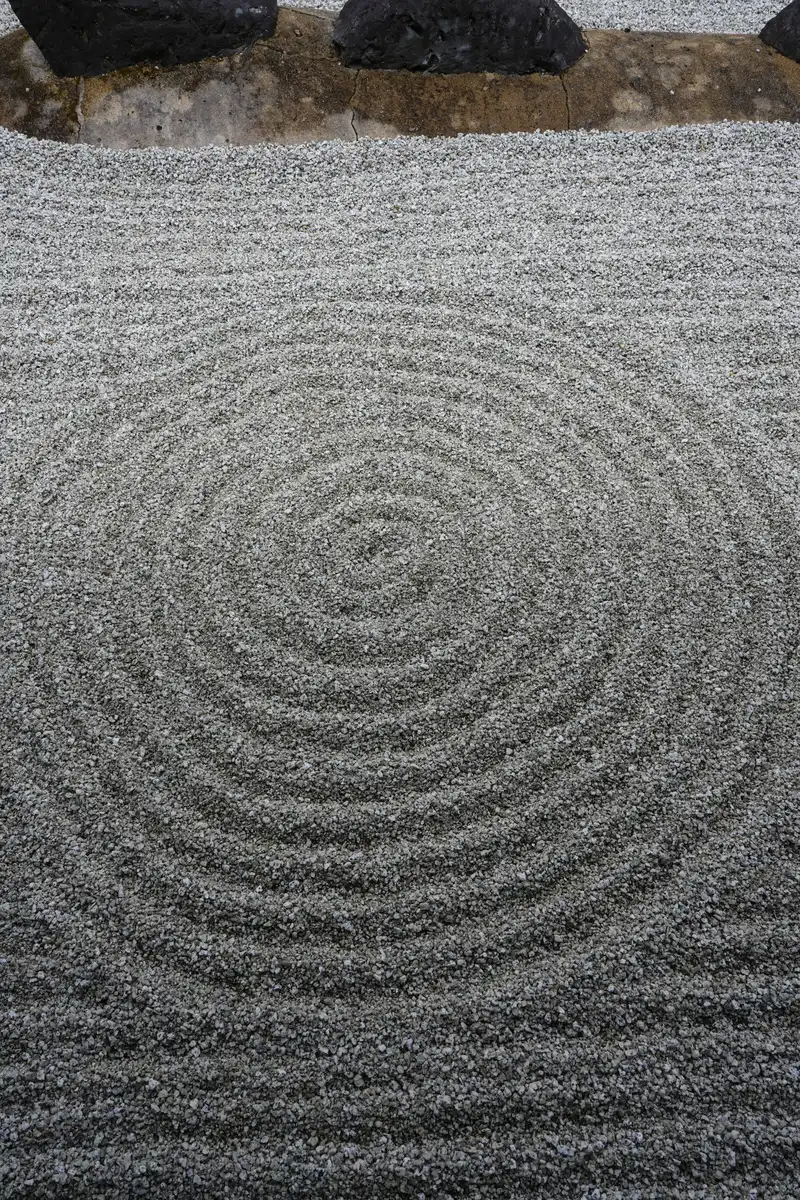
Start with the stones, and look at how they are grouped rather than at each one alone. Ask what each group could be: a range of hills, an island in a sea, or simply a balance of tall and low shapes.
Then look at the space between the groups, and ask whether the bare gravel around them makes the garden feel calm or busy to you.
Notice the moss as well. Where stones sit on a mound of moss, the green gives them a base and sets them apart from the gravel around them.
Finally, change where you stand or sit. You may find that stones overlapping from one spot separate from another, so moving slowly can show a different arrangement at each step.
How to Look at the Raked Gravel
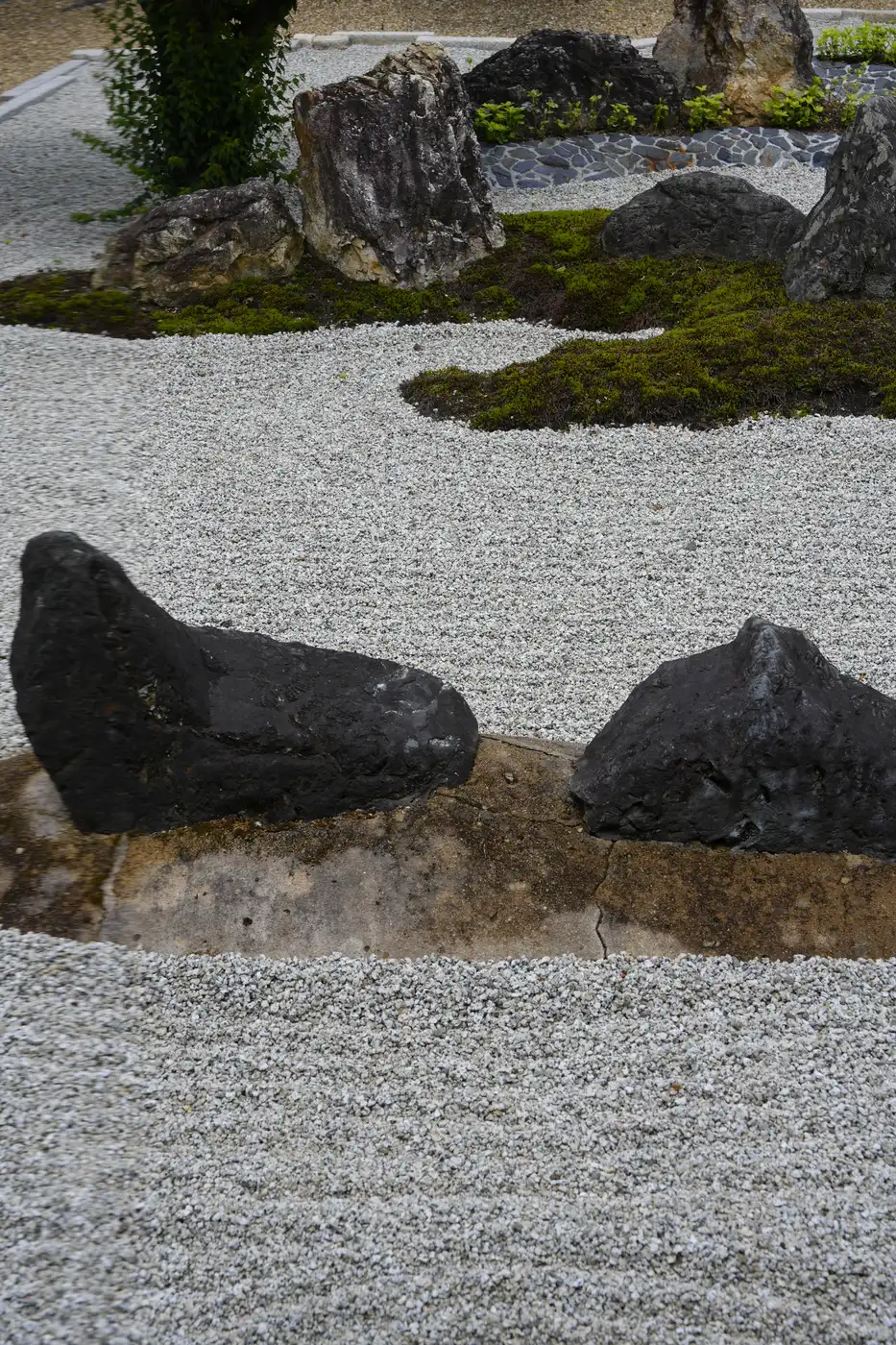
The gravel is the part of the garden that seems to move. Look for straight lines across bare stretches and rings around a point, and ask whether the flat surface starts to read to you as water.
Follow the lines to the edges, where they turn around a stone or meet moss. Those turns are where the pattern and the stones meet, so see whether they lead your eye back to the stone groups.
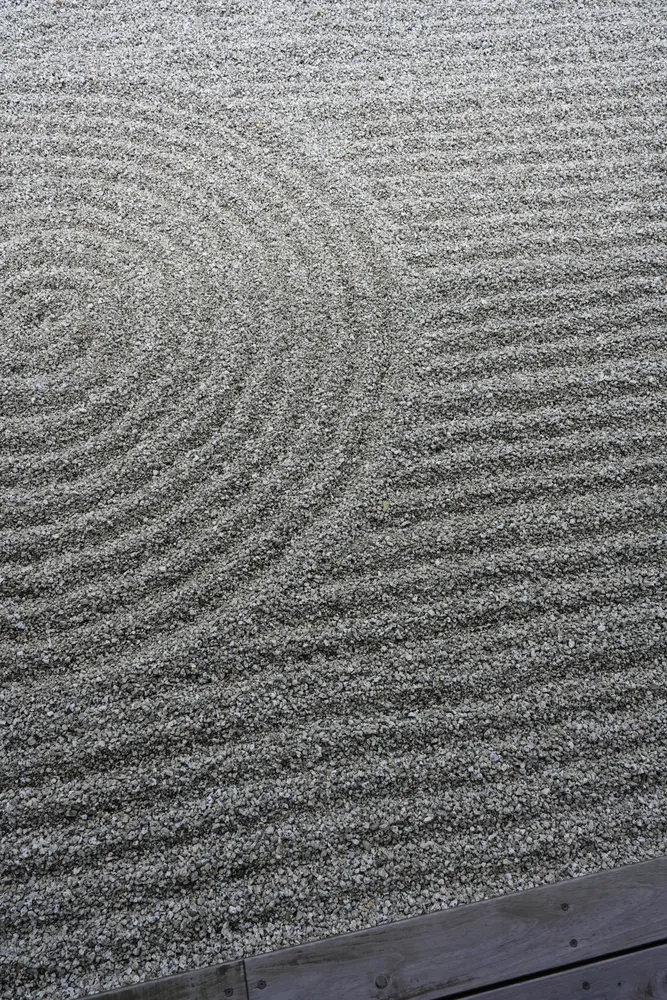
Some gardens give the gravel a stated meaning. In the 1939 garden described below, swirling raked gravel stands for rough seas.
Ryoan-ji: A Classic Example in Kyoto
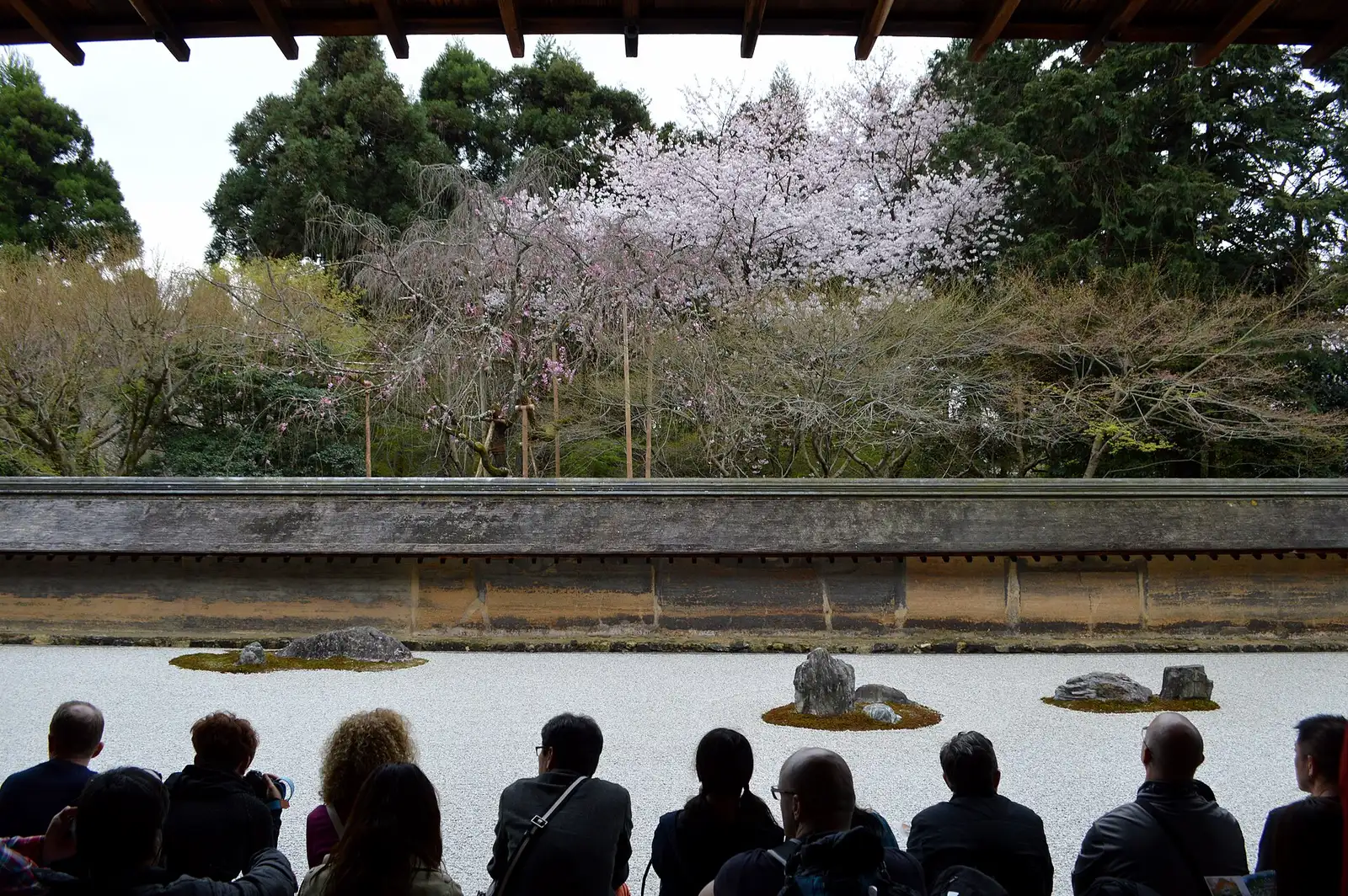
Kyoto City calls the stone garden at Ryoan-ji a representative karesansui and notes that it is famous around the world. Ryoan-ji became a Zen temple in 1450, on land that had been an aristocrat's villa. Its hojo, the abbot's hall, was rebuilt in 1488, and after a fire in 1797 a hall built in 1606 was moved here to serve as the present hojo.
The garden lies on the south side of the hojo, and the city says it is thought to have been made by the mid-15th century. It is a rectangle enclosed by earthen walls on the east, south, and west, and 15 stones are set in five groups on white sand.
The city sees it as the karesansui idea taken to its limit: nature pressed into a small space and shown in the abstract. This is a good place to try the steps above. Look at how the stone groups relate to one another, and at how much of the rectangle is left as bare sand.
To plan a visit, see our Ryoan-ji guide, and for more gardens to visit, see our guide to Zen gardens in Kyoto.
A Garden from 1939, and One You Can Rake
Here is one more garden to read, from the 20th century, and a way to try the raking yourself.
We operate Maiko & Zen Kyoto at Ikka-in, a sub-temple of Tofuku-ji that is rarely open to the public. If you would like to try the raking yourself, our sessions include creating patterns in the gravel of the temple's dry landscape garden with a wooden rake.
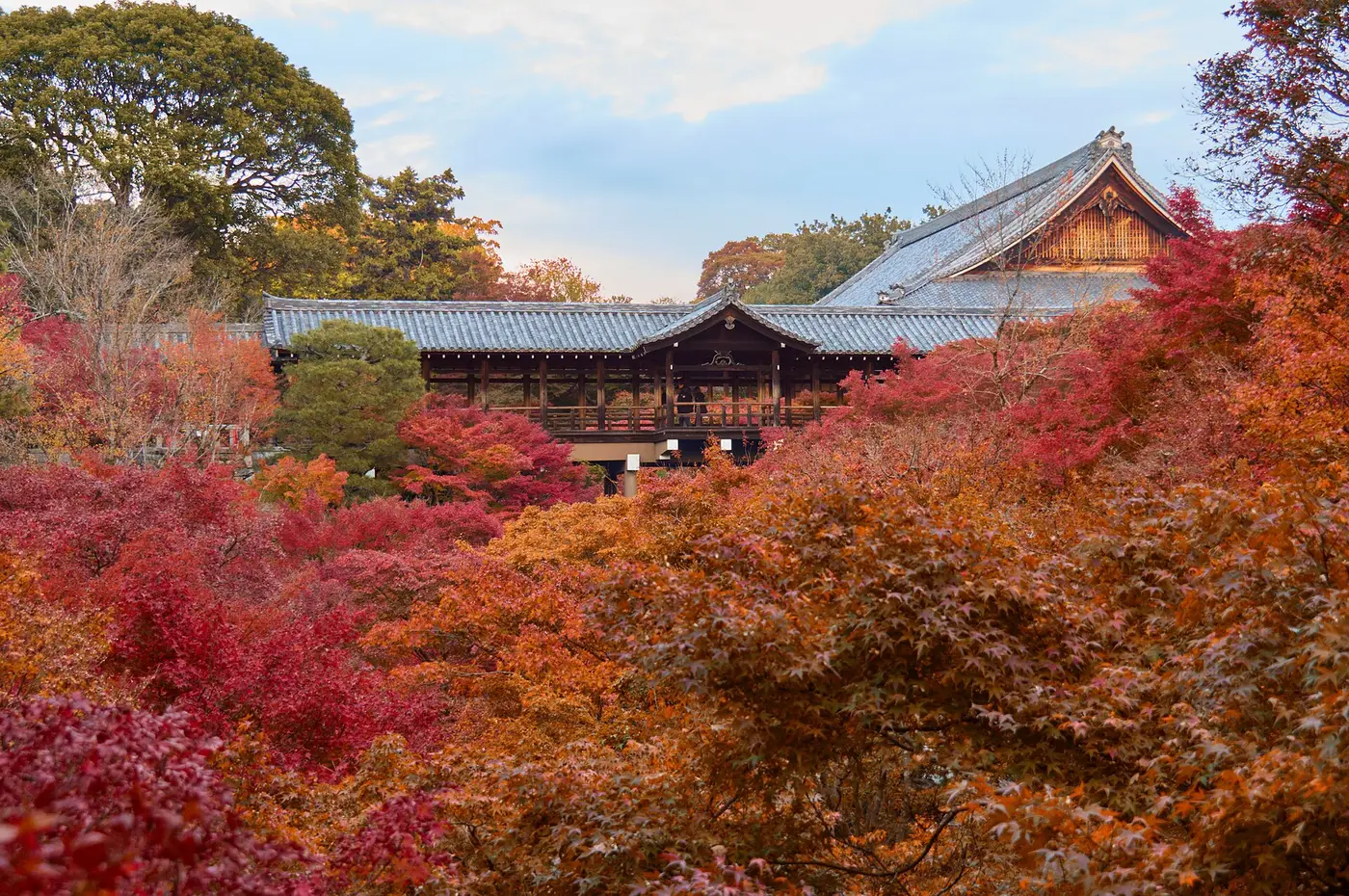
Ikka-in's head temple, Tofuku-ji, has a garden from 1939 around its hojo, which was rebuilt in 1890. The garden designer Mirei Shigemori created the gardens in 1939 and named them the Hasso Garden, with four gardens on the east, west, south, and north of the hojo. The temple describes the Hasso Garden as a fine example of a contemporary Zen garden, bringing together tradition and the abstraction of modern art.
According to the temple, the Hasso Garden represents the eight aspects of the Buddha's life. In the Southern Garden, four large rocks stand for four Elysian islands, named Horai, Hojo, Eiju, and Koryo, and the swirling raked gravel around them stands for eight rough seas, called Hakkai. To the west, five moss-covered mounds stand for Gozan, the five sacred mountains.
The Western Garden, known as Seiden ichimatsu, sets square-trimmed azaleas against squares of white gravel. The Northern Garden uses foundation stones from the front gate and moss to make an irregular checkerboard. The Eastern Garden places the temple's foundation pillars in gravel to show the Big Dipper.
Tofuku-ji's visiting hours are 9:00 am to 4:00 pm, or 9:00 am to 3:30 pm from December 7 to March 31. Admission to the hojo gardens is 600 yen for adults from November 1, 2026 (500 yen before then). For the rest of the temple around Ikka-in, see our Tofuku-ji temple guide.
Add a quiet temple stop to your day. We operate Maiko & Zen Kyoto, a 90-minute session at Ikka-in, a sub-temple of Tofuku-ji, where a maiko dances in the same temple hall with no stage between you, then takes time for your questions and photos. See current session times and prices.
Frequently asked questions
What is a karesansui?
A karesansui is a Japanese dry landscape garden. Kyoto City describes the form as compressing nature into a small space and expressing it in abstract shapes of white sand and stones.
How many stones are in the Ryoan-ji rock garden?
Kyoto City counts 15 stones, set in five groups on white sand. The rectangular garden is enclosed by earthen walls on the east, south, and west.
How old is the Ryoan-ji rock garden?
Kyoto City says the garden on the south side of the abbot's hall is thought to have been made by the mid-15th century.
Is there one correct way to read a dry garden?
Some gardens come with a stated meaning for their stones and gravel. When a garden gives none, the reading is yours. Look at how the stones are grouped, at the empty space around them, and at the raked patterns, and see what they suggest.
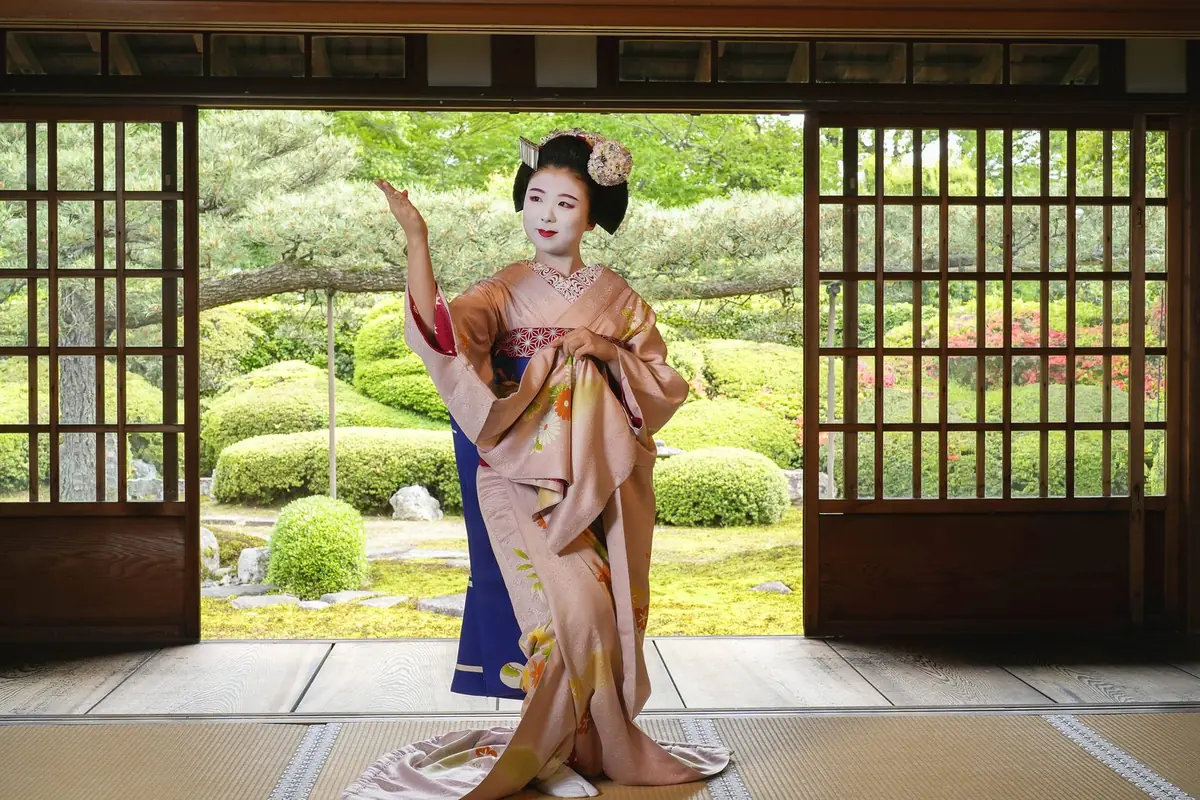
A maiko dance session at a Zen temple near Kyoto Station
Rake a Zen garden, watch two maiko dances and share green tea at Ikka-in, a temple rarely open to the public, one stop from Kyoto Station. Sessions start at 2:00 pm and 3:30 pm.
See the 2:00 pm and 3:30 pm sessions →Sources
- Ryoan-ji (Historic Monuments of Ancient Kyoto) — Kyoto City
- Tofuku-ji's Hojo Hasso Garden — Tofuku-ji
- Visiting guide: hours and admission — Tofuku-ji