Zen Gardens in Kyoto in Autumn: Where to Go, When to Go, and What to Look For
We operate the Maiko & Zen Kyoto experience mentioned in this guide.
A Zen garden is quiet all year, but many visitors want to see one when the leaves change. This guide looks at three Kyoto gardens, at Tofuku-ji, Tenryu-ji, and Ryoan-ji, and covers how color changes the way you look, what to check before you go, and how to plan an unhurried visit. It relies on each temple's own pages for the practical details and does not rank the gardens.
How Color Changes the Way You Look at a Zen Garden
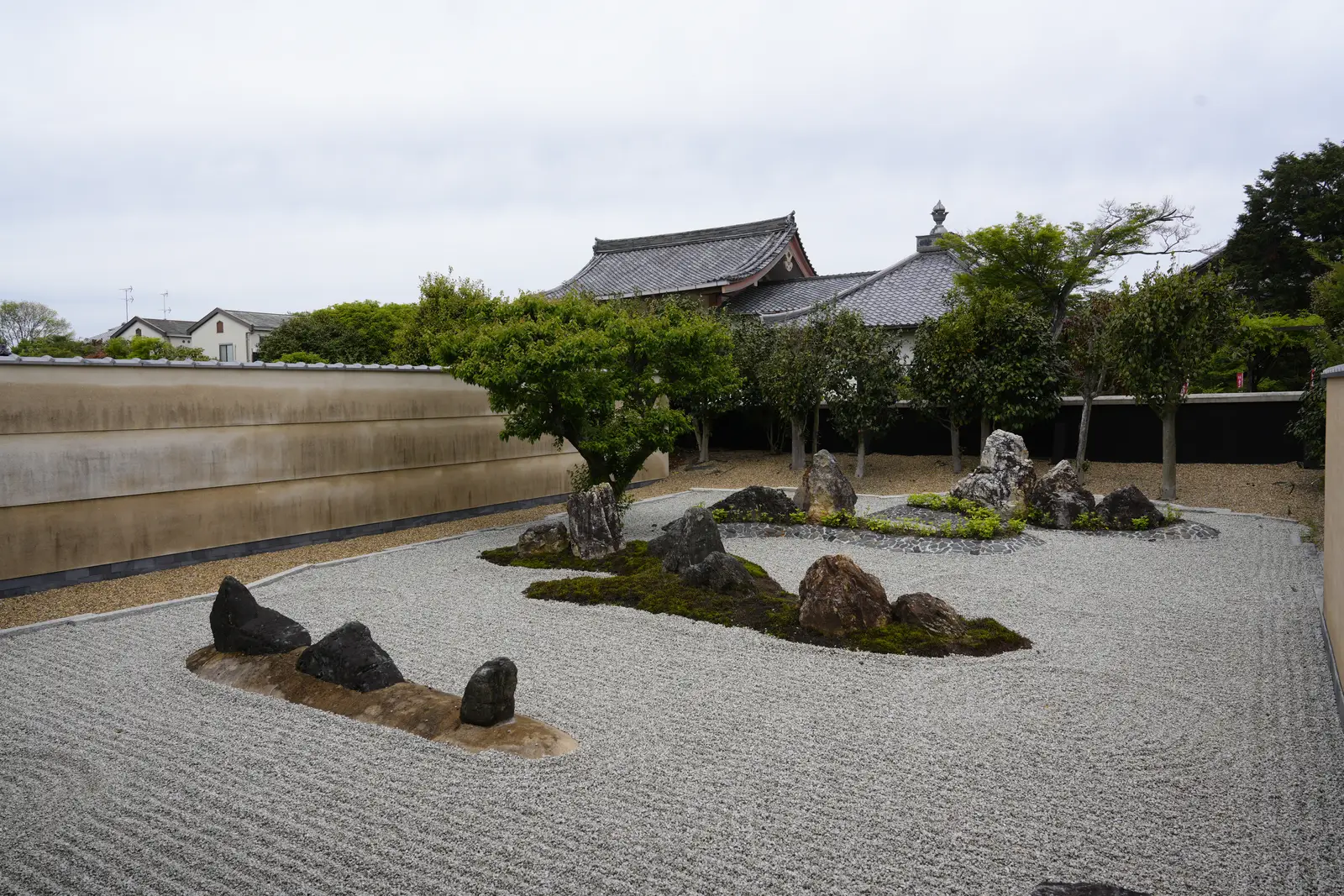
A Zen garden is made to be looked at slowly, from one seat on a veranda or inside a hall. In a dry garden, raked gravel and arranged stones stand in for water and mountains. Plain gravel and stone make a calm ground for red and gold leaves, so the color seems brighter next to them.
Try looking in layers. First take in the whole garden from one spot. Then follow one group of stones with your eyes, and look at the empty gravel around it, since the raked lines are as much a part of the design as the stones. Finally, look past the garden to the trees behind it and notice how their color sets off the stone.
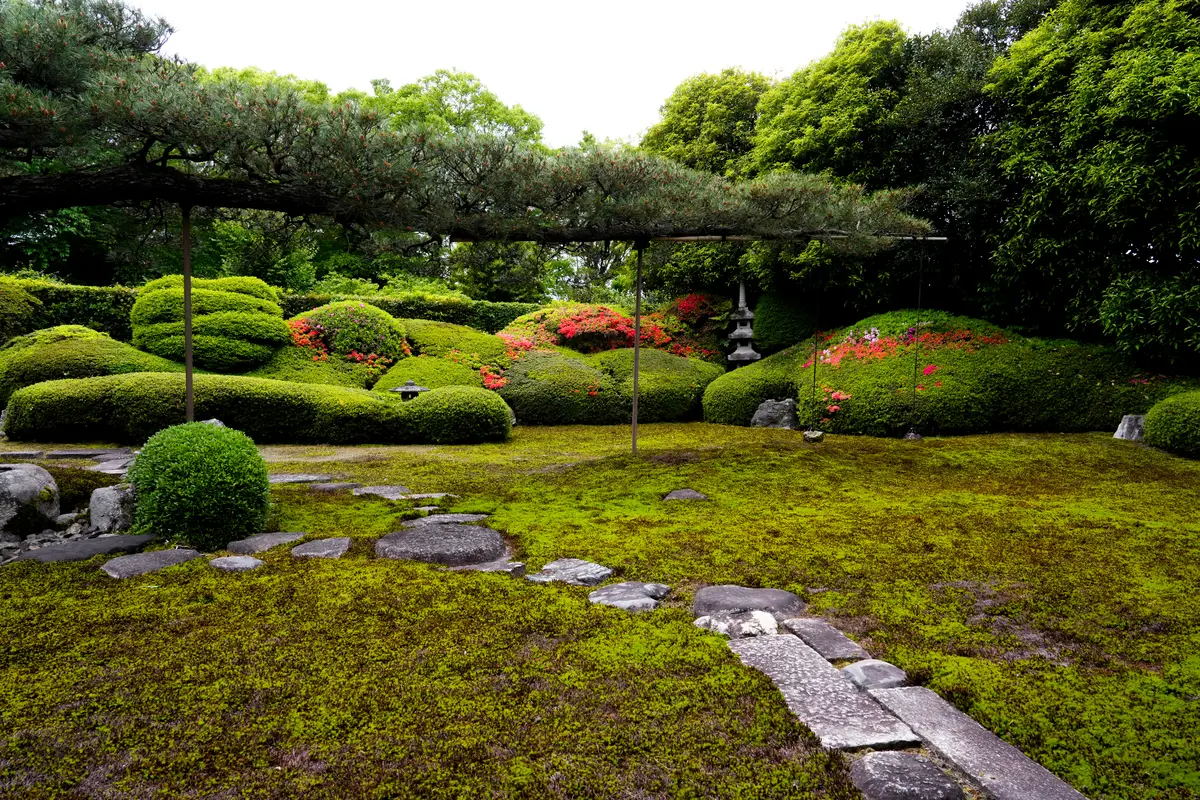
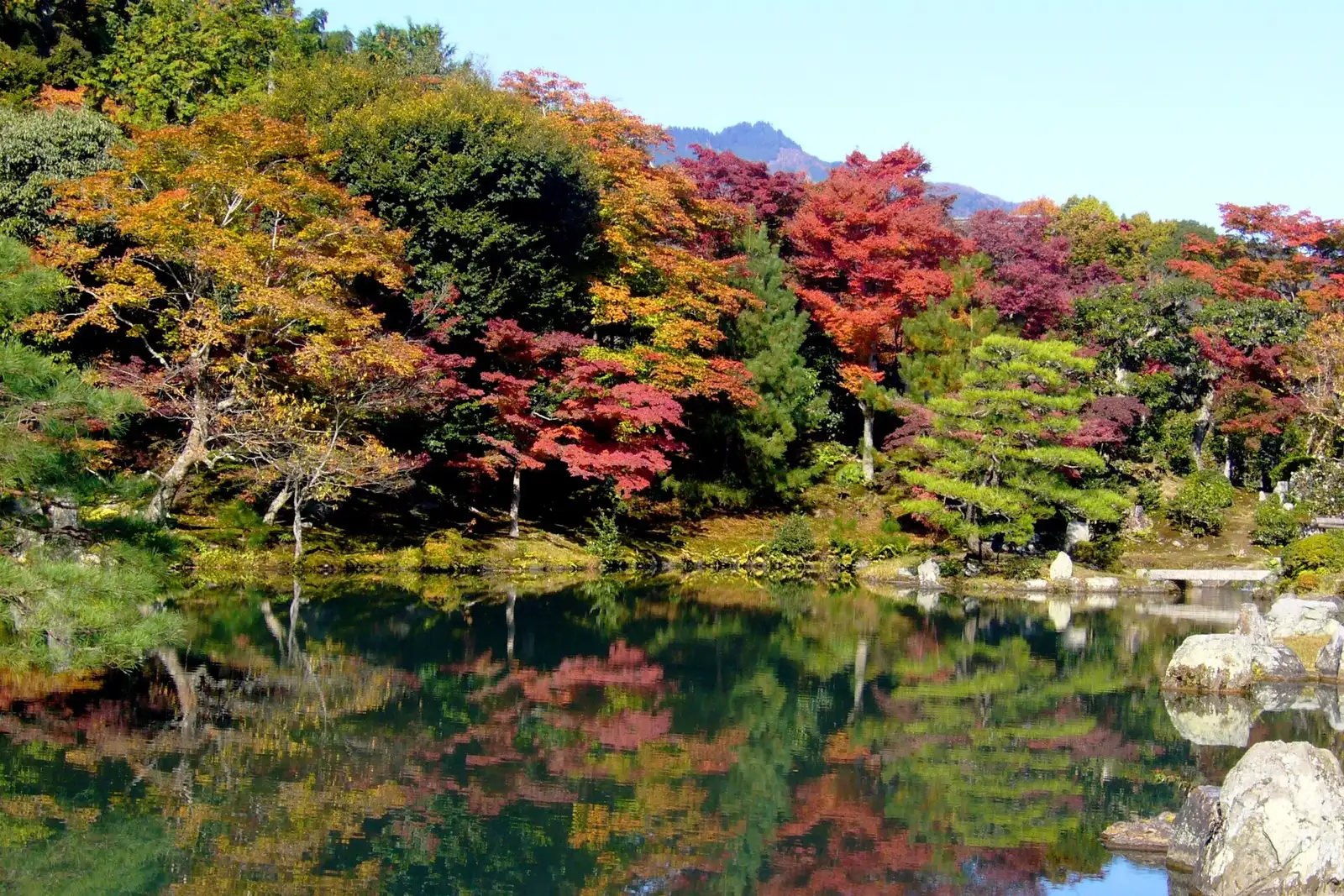
A moss garden works in a different way. Moss and pines stay green while the maples change, so green and red sit side by side, and the stepping stones invite your eyes to travel along the path. Whichever kind of garden you choose, give it more time than you think you need.
Tofuku-ji: Maples Above the Ravine
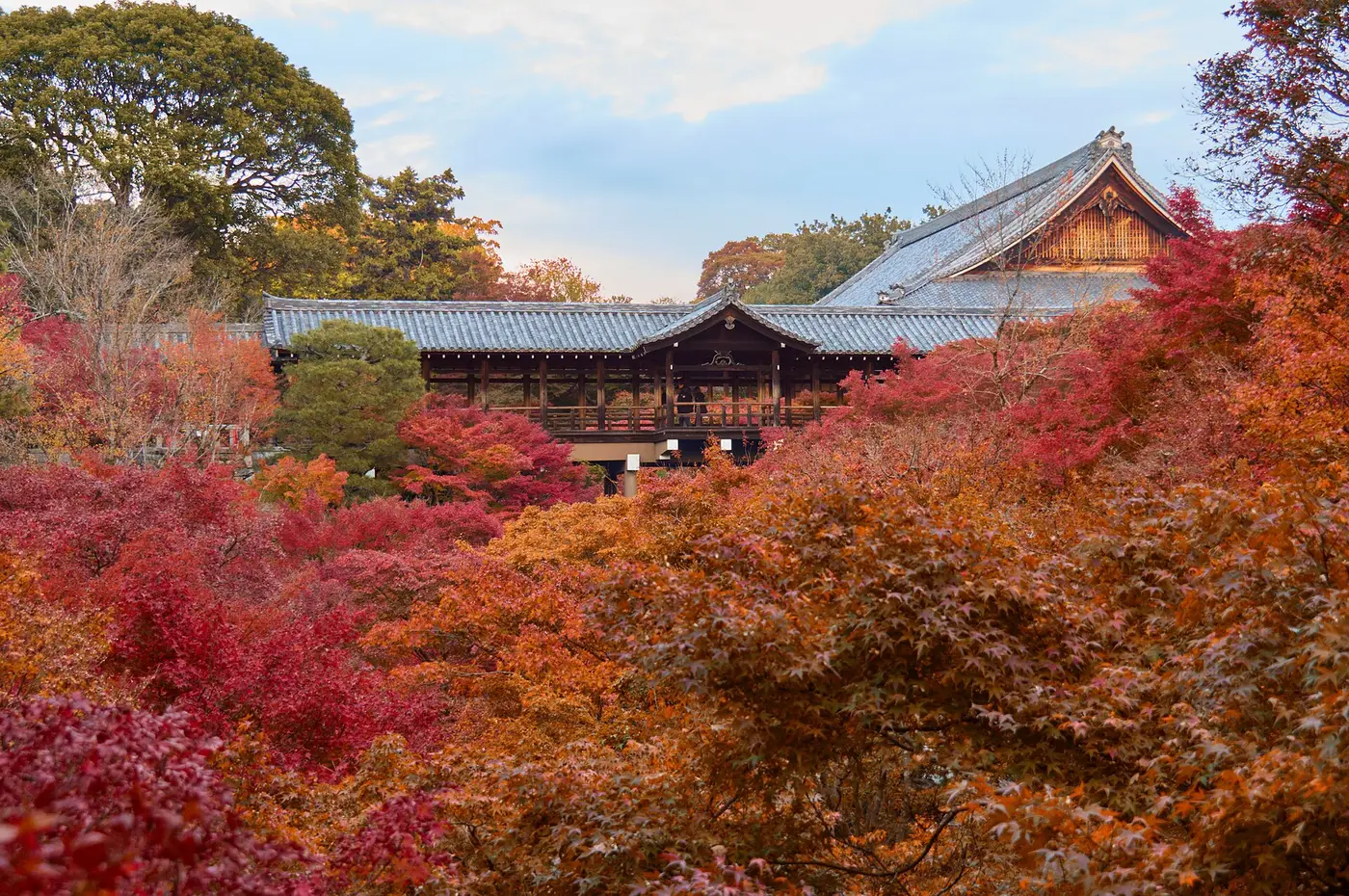
Not every leaf turns red at Tofuku-ji: its rare three-leaf maples turn golden. In autumn, the temple is about the maples of the Sengyokukan ravine, and the place to see them is Tsutenkyo Bridge.
For a garden that does not depend on the leaves, walk around the Hojo afterwards. Its four gardens, the Hasso no Niwa, are the work of Mirei Shigemori in 1939. Our Tofuku-ji temple guide covers the bridge, the gardens, and the rest of the grounds.
Tenryu-ji and Ryoan-ji
Ryoan-ji's dry rock garden is meant to be studied from one seat, so in autumn give it a slow look rather than a quick photo. Tenryu-ji, in Arashiyama, opens earlier in the morning from mid-November (see the dates below).
Both temples make a good half day on their own. If you are weighing them against Tofuku-ji, our Zen garden guide compares the three side by side without ranking them.
What Changes in Autumn: Hours and Fees
The leaf season changes the practical details at Tofuku-ji. From November 14 to December 6, Tsutenkyo Bridge opens at 8:30 am, half an hour before the Hojo gardens, and both close at 4:00 pm. In those weeks the Tsutenkyo and Kaisando ticket costs 1,000 yen for adults and the combined ticket with the Hojo gardens is not sold, while the Hojo gardens cost 600 yen (the price rises from 500 yen on November 1, 2026). The Treasure Tour is suspended from October 25 to December 16. The temple sets its autumn dates and hours again every year, so check its page before you plan around them.
Tenryu-ji opens early, at 7:30 am, from November 14 to 30, 2026. Ryoan-ji moves to shorter hours, 8:30 am to 4:30 pm, from December 1. For the regular hours of all three temples, see our Zen garden guide; the year-round Tofuku-ji tickets are in our Tofuku-ji temple guide.
From Kyoto Station
From Kyoto Station, Tofuku-ji is about 3 minutes on the JR Nara Line to Tofukuji Station, then about 10 minutes on foot, and Kyoto City Bus 88 or 208 is another way in. The stations for Tenryu-ji and the other routes are in the Getting There section of our Zen garden guide.
Photography and Manners in the Gardens
Tsutenkyo Bridge is where the ravine view is, but during the autumn special opening at Tofuku-ji you may be asked not to take photos on Tsutenkyo and Gaun bridges, so plan to spend your time there looking. The temple also asks visitors not to use tripods for photography, and not to eat or drink on the grounds. You cannot come back in once you leave, so see everything before you go.
At any temple, the signs at the entrance and the staff decide what is allowed. Inside a hall, choose a spot where you are not blocking anyone's view.
Pairing Tofuku-ji with Fushimi Inari
In autumn the temples close by late afternoon, so build the day around one garden rather than three. With Tofuku-ji, the easy partner is Fushimi Inari, one stop away on the JR Nara Line (about 2 to 3 minutes by local train): see the maples, then walk the shrine gates. Our Fushimi Inari hike guide shows how that half of the day can go.
Sennyu-ji is another temple you can visit, with temple grounds that cost 500 yen for adults and a special viewing of the Gozasho and garden that costs another 500 yen. For a longer route through the city, see our leaf-viewing itinerary.
Add a Quiet Temple Stop to Your Day
After a morning among the gardens, some travelers like to end the day with something different, such as a small-group cultural session in a temple hall. Whatever you choose, read its rules and booking details first, because they differ from one experience to the next.
Our Session at Ikka-in
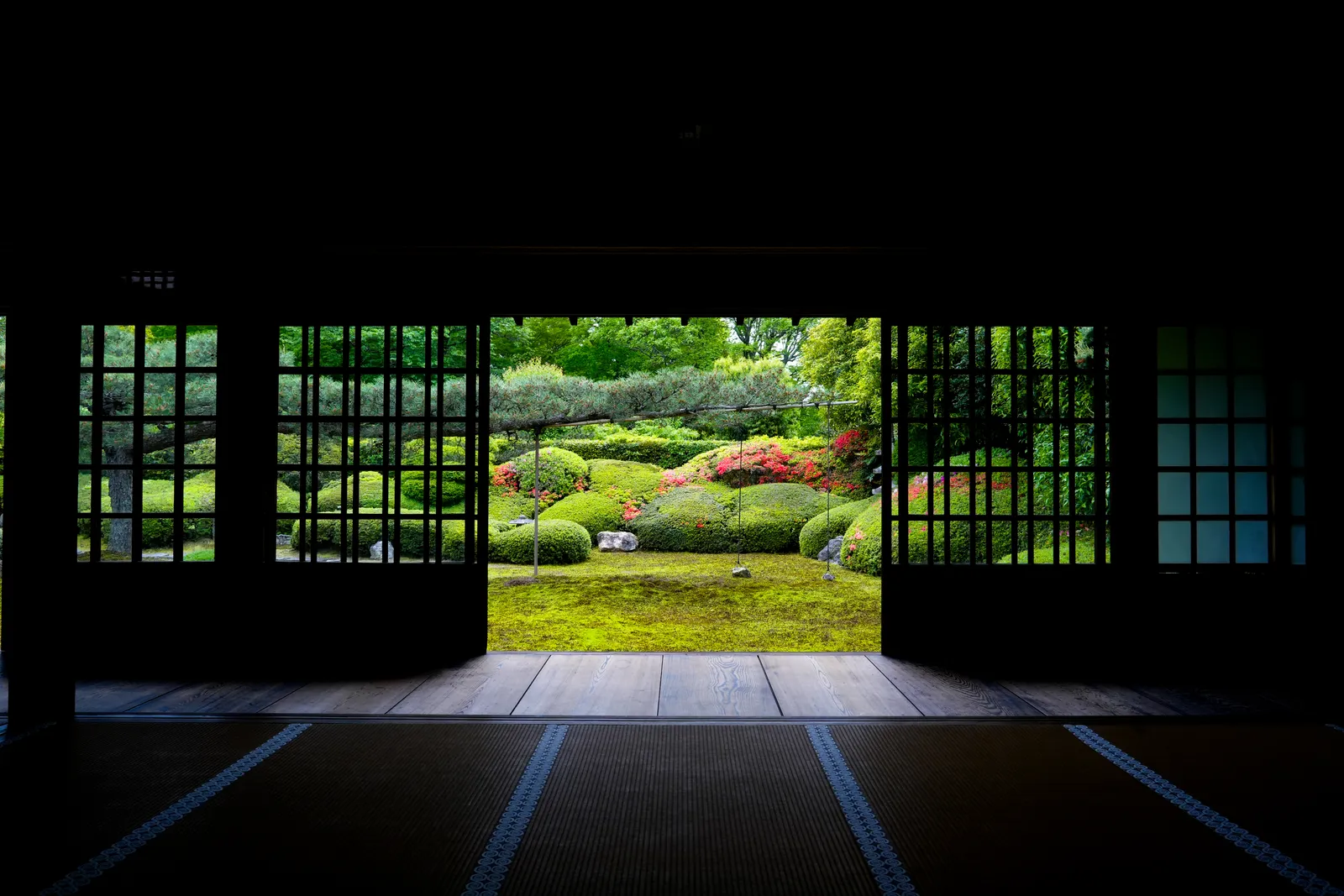
We operate Maiko & Zen Kyoto, a 90-minute session at Ikka-in, a sub-temple of Tofuku-ji founded in 1382 and rarely open to the public. Unlike a theater program, where you watch from a seat facing a stage, the maiko dances in the same temple hall as you, with no stage between you. An English-speaking guide introduces the temple and maiko culture, you create your own patterns in the gravel of the Zen garden with a wooden rake, and you watch two dances while enjoying fragrant sencha green tea and a delicate Japanese sweet, then talk with the maiko, ask her questions, and take photos together.
What sets it apart
- No stage between you and the maiko: she dances in the same temple hall, at close range.
- Time to talk: the session ends with time to ask her questions and take photos together.
- A quiet temple: no general visitors during the session; you share it with a small group of fellow travelers.
- More than a show: an English-speaking guide and a hands-on Zen garden activity are included.
- Easy to reach: near Tofukuji Station, one stop from Kyoto Station on the JR Nara Line, with afternoon start times that fit a sightseeing day.
Is it right for you? If a small group, time to talk with a maiko, English support, and photos matter to you, the session fits easily into a Kyoto sightseeing day. Tea is a relaxed accompaniment rather than a formal tea ceremony.
The session starts at 2:00 pm and 3:30 pm, and the price is 23,000 yen per person as of October 2026. Children 6 and older pay the same price, and children under 6 cannot join. Prices may change by season, so check current session times and prices.
Frequently asked questions
Do the opening hours of Kyoto Zen gardens change in autumn?
They can. At Tofuku-ji the autumn viewing dates and hours change every year, and Tenryu-ji opens early on some days in late November. Check each temple's own visitor page before you go.
How do I get to Tofuku-ji from Kyoto Station?
Take the JR Nara Line from Kyoto Station to Tofukuji Station, which takes about 3 minutes, and then walk about 10 minutes.
Can I use a tripod in a Zen garden?
Tofuku-ji asks visitors not to use tripods for photography, and each temple sets its own rules, so plan to take photos by hand and check the temple's page.
How much does it cost to see the Tofuku-ji gardens?
Adults pay 500 yen for the Hojo gardens, and the price becomes 600 yen from November 1, 2026. Tsutenkyo Bridge and Kaisando cost 1,000 yen for adults from November 14 to December 6.
Is it possible to see two Zen gardens in one day?
Yes, if they are close together. Tofuku-ji and Fushimi Inari are neighbors on the JR Nara Line, while Tenryu-ji and Ryoan-ji are in other parts of the city, so give each of those its own half day.
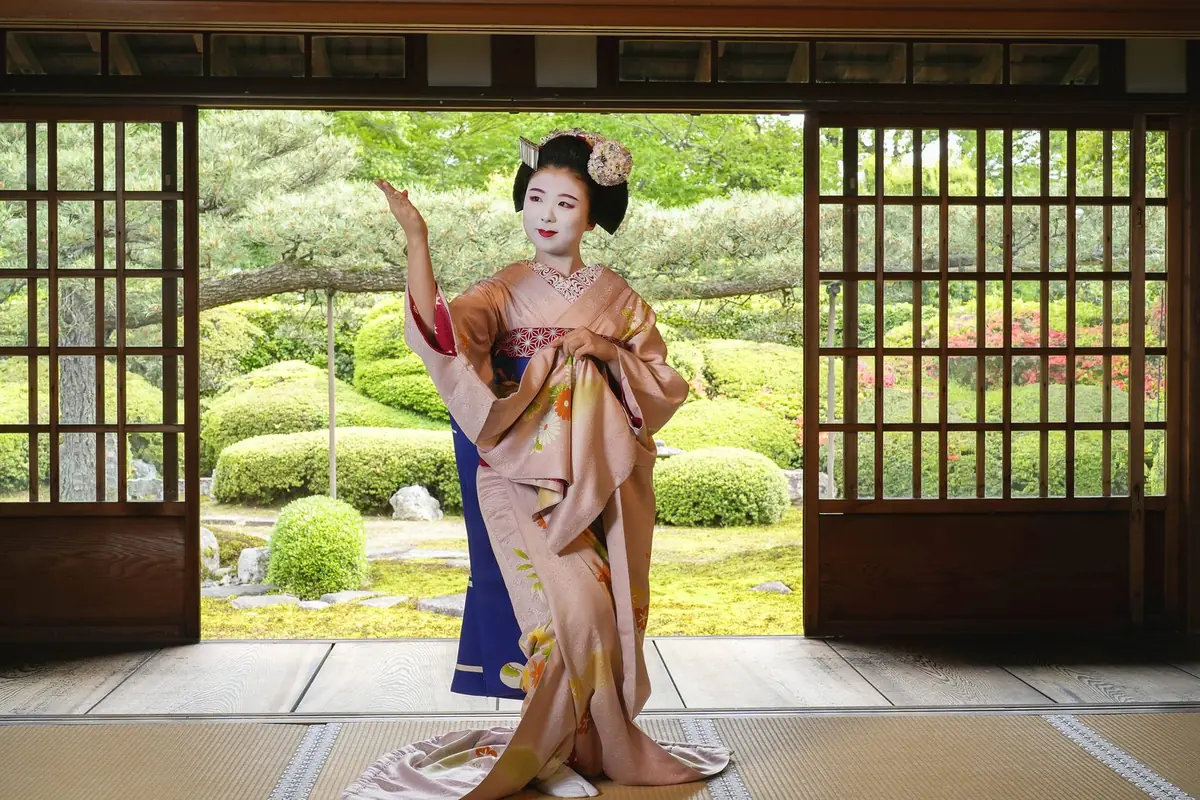
A maiko dance session at a Zen temple near Kyoto Station
Rake a Zen garden, watch two maiko dances and share green tea at Ikka-in, a temple rarely open to the public, one stop from Kyoto Station. Sessions start at 2:00 pm and 3:30 pm.
See the 2:00 pm and 3:30 pm sessions →Sources
- Tofuku-ji: Visitor guide — Tofuku-ji
- Tofuku-ji: Access — Tofuku-ji
- Tenryu-ji: Visit — Tenryu-ji
- Ryoan-ji: Visitor information — Ryoan-ji
- JR Nara Line timetable — JR West