Types of Japanese Gardens: How to Tell Dry Gardens From Pond Gardens
We operate the Maiko & Zen Kyoto experience mentioned in this guide.
Kyoto's temple gardens can look very different from one another. Some are flat beds of white gravel and stone with no water at all, while others are laid out around a pond with trees, islands, and a path. Knowing which type you are looking at helps you decide where to stand or sit and what to look for. This guide explains two types you can see in Kyoto, the difference between a seated view and a strolling view, and how borrowed scenery works. For where to see them, see our guide to Zen gardens in Kyoto.
Two Types to Know: Dry Gardens and Pond Gardens
A simple way to tell the types apart is to look for water. A dry landscape garden, called karesansui in Japanese, is laid out with white gravel and stones, and it can represent water scenes such as a waterfall, a mountain stream, or the sea. A pond garden is built around real water, with stones, trees, and sometimes islands placed around and in the pond.
The two are not strictly separate. Some temples were laid out with both types, and at Tenryu-ji, the stonework of a pond garden influenced dry landscape gardens built later, as the sections below show.
Dry Landscape Gardens (Karesansui)
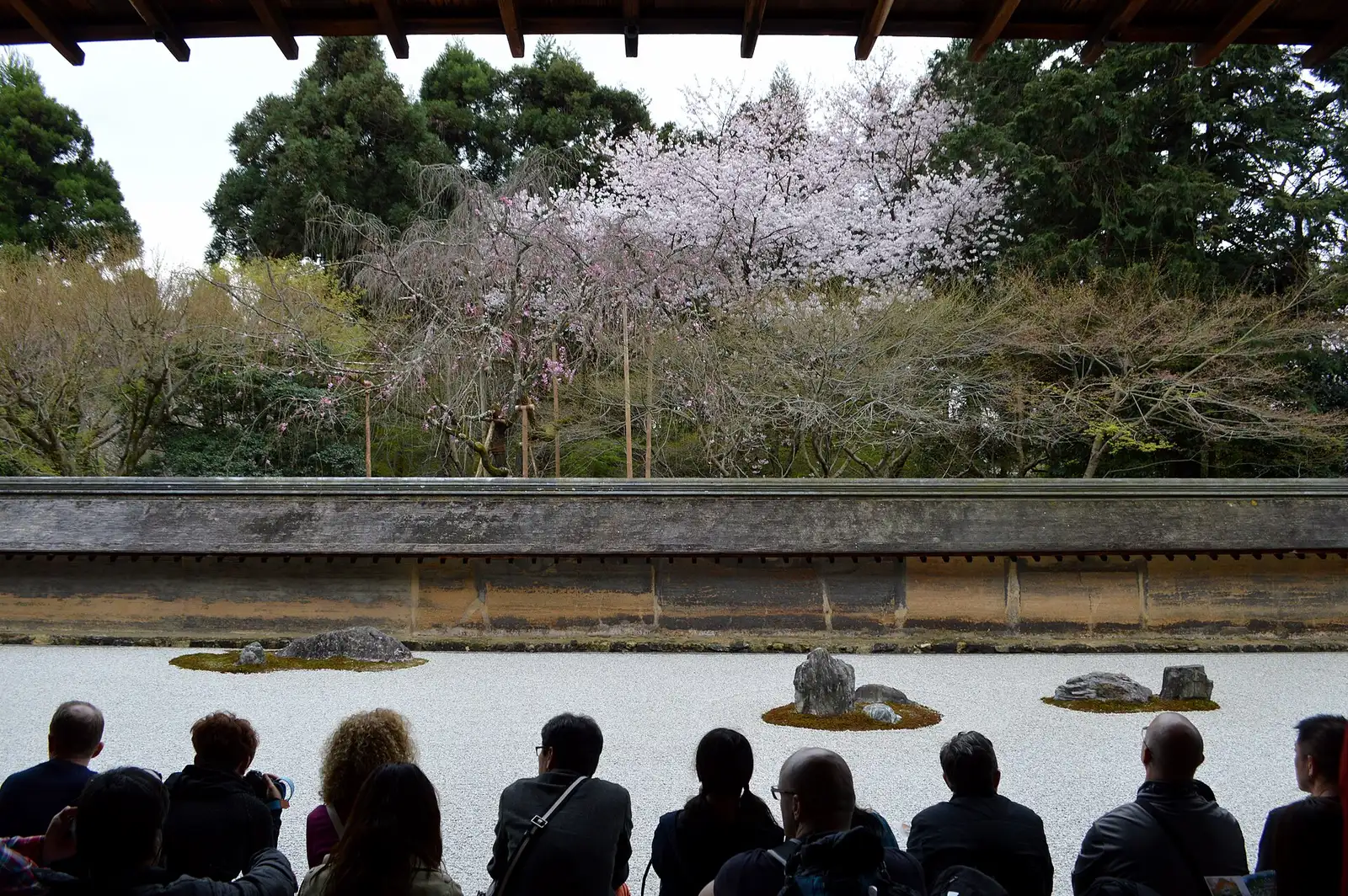
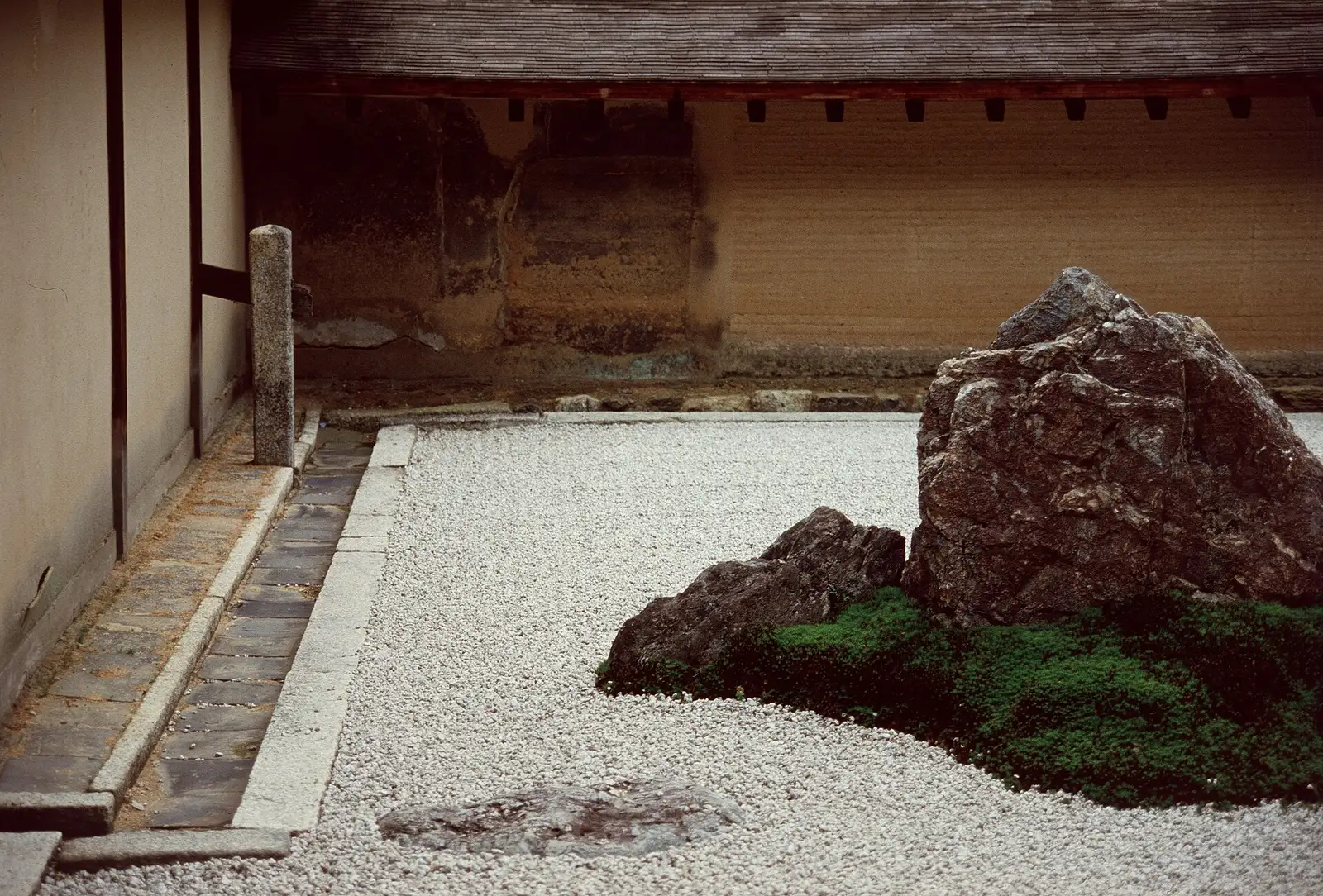
The rock garden at Ryoan-ji is a well-known example. The Hojo garden, south of the Hojo, is thought to have been made by the mid-15th century. It is a rectangular stone garden enclosed by earthen walls on the east, south, and west, with 15 stones set in five groups in a bed of white gravel. The City of Kyoto describes it as the dry landscape garden taken to its limit, a style that compresses nature into a small space and expresses it in abstract form, and notes that it is known around the world.
Not every dry garden is so spare. At Nishi Hongan-ji (Hongan-ji), the dry landscape garden known as the Garden of Kokei represents a waterfall, a mountain stream, and the sea in a simple, clear layout, and it uses colored stones and sago palms in a bold style of the Momoyama period.
When you see a dry garden, look at how the stones are grouped and how the gravel surrounds them. Our guide to Ryoan-ji covers the rock garden there in more detail.
Pond Gardens
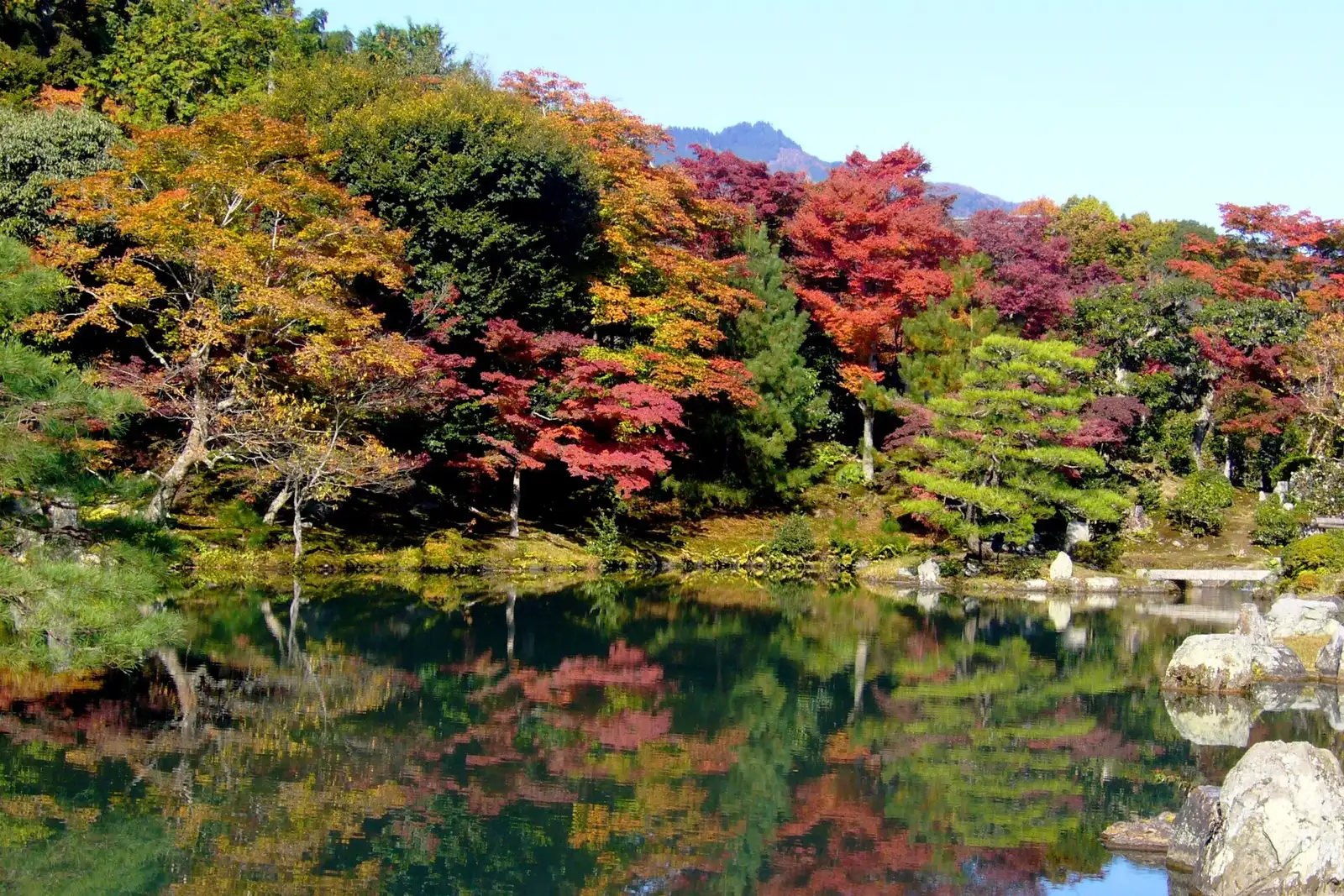
A pond garden puts real water at the center. At Tenryu-ji, the pond garden, known as the Sogenchi Garden, has stone arrangements such as a Dragon Gate waterfall, a stone bridge, and rock islands, and its layout puts weight on the view from the Hojo.
Looking directly across the pond from the center of the Hojo's veranda, the visitor can see an arrangement of several large standing rocks. These represent the Dragon Gate Falls, a waterfall on the Yellow River in China. Tenryu-ji says the garden was laid out nearly seven hundred years ago by Zen master Muso Soseki.
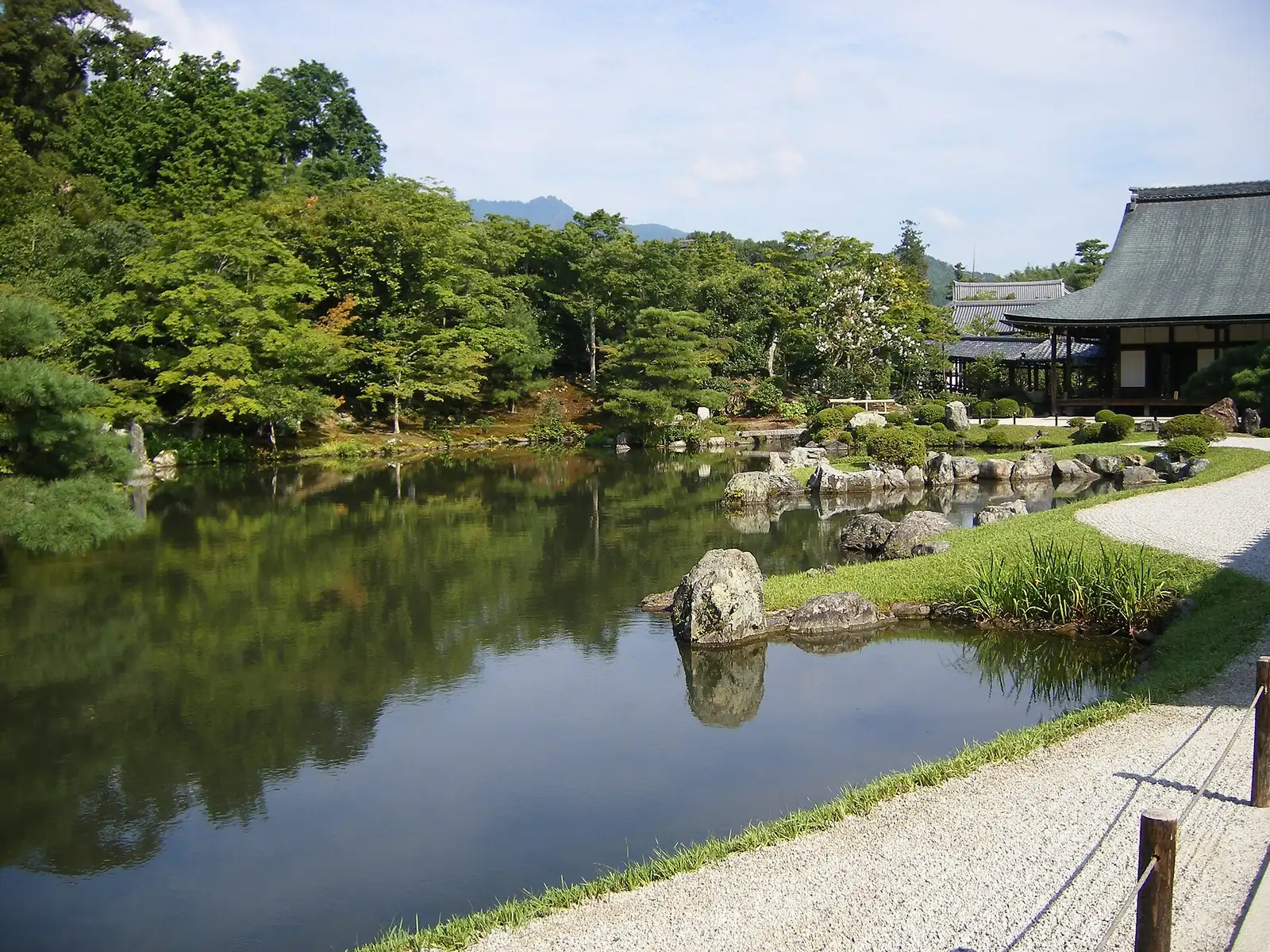
Other pond gardens in Kyoto show the same idea in different ways. At Ginkaku-ji, many fine stones and trees are set around a pond at the center in the strolling pond style, with careful detail in the stonework. At Nijo-jo Castle, the Ninomaru Garden is a strolling pond garden with three islands in the pond and a three-step waterfall at the far side.
Seated Views and Strolling Views
Gardens are also made to be seen in different ways. Some are designed to be viewed from a building, such as the veranda of a hall. A strolling pond garden is meant to be walked. At Tenryu-ji, the Sogenchi Garden is designed as a strolling pond garden, in which a level path surrounding a picturesque pond allows guests to appreciate the scenery from a variety of perspectives.
The same garden can work both ways. At Tenryu-ji, the garden is laid out both to be seen from the Hojo's veranda and to be walked along the path around the pond.
A simple habit helps with either type. With a garden made to be seen from a building, choose one spot and stay there for a while. With a strolling garden, stop at a few points along the path and notice how the view changes.
Borrowed Scenery (Shakkei)
Tenryu-ji gives a clear example. The Sogenchi Garden also employs "borrowed scenery" (shakkei), in which nearby mountains are used to give the garden a sense of added depth.
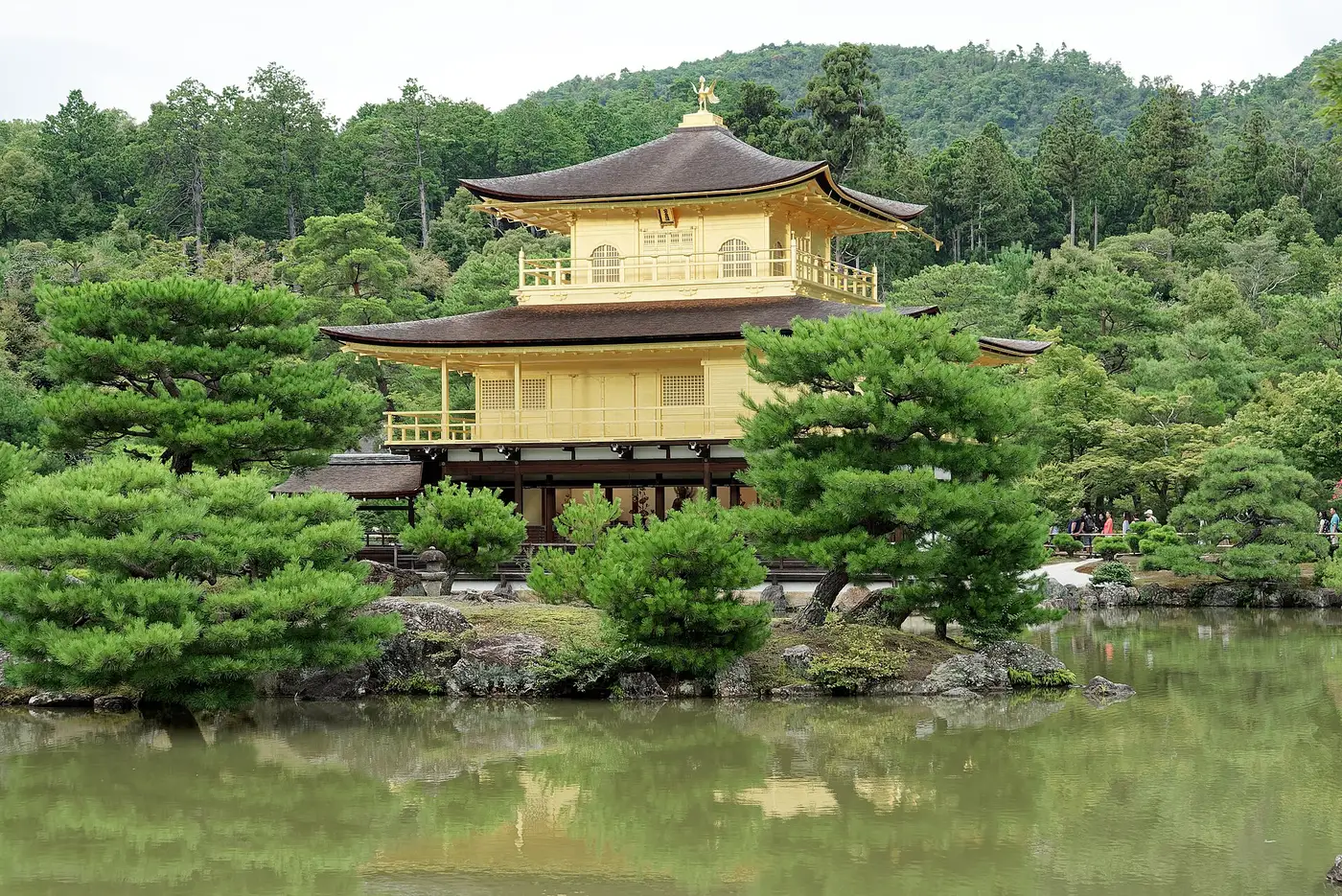
At Kinkaku-ji, the garden uses Mount Kinugasa as borrowed scenery, with fine stones set in an existing pond and the three-story Golden Pavilion built facing the water. Our Kinkaku-ji guide has more on visiting.
When you look at a garden, check the edges of the view. A hill or mountain beyond the wall may be part of the design.
When One Temple Has More Than One Type
Some temples were laid out with both types. At Saiho-ji, when it was restored, a pond garden lay on the flat ground and a dry stone arrangement called Koinzan was placed on the hillside. One type also influenced the other: at Tenryu-ji, the City of Kyoto notes that the pond garden's stonework influenced dry landscape gardens and stone banks built from the Muromachi period onward.
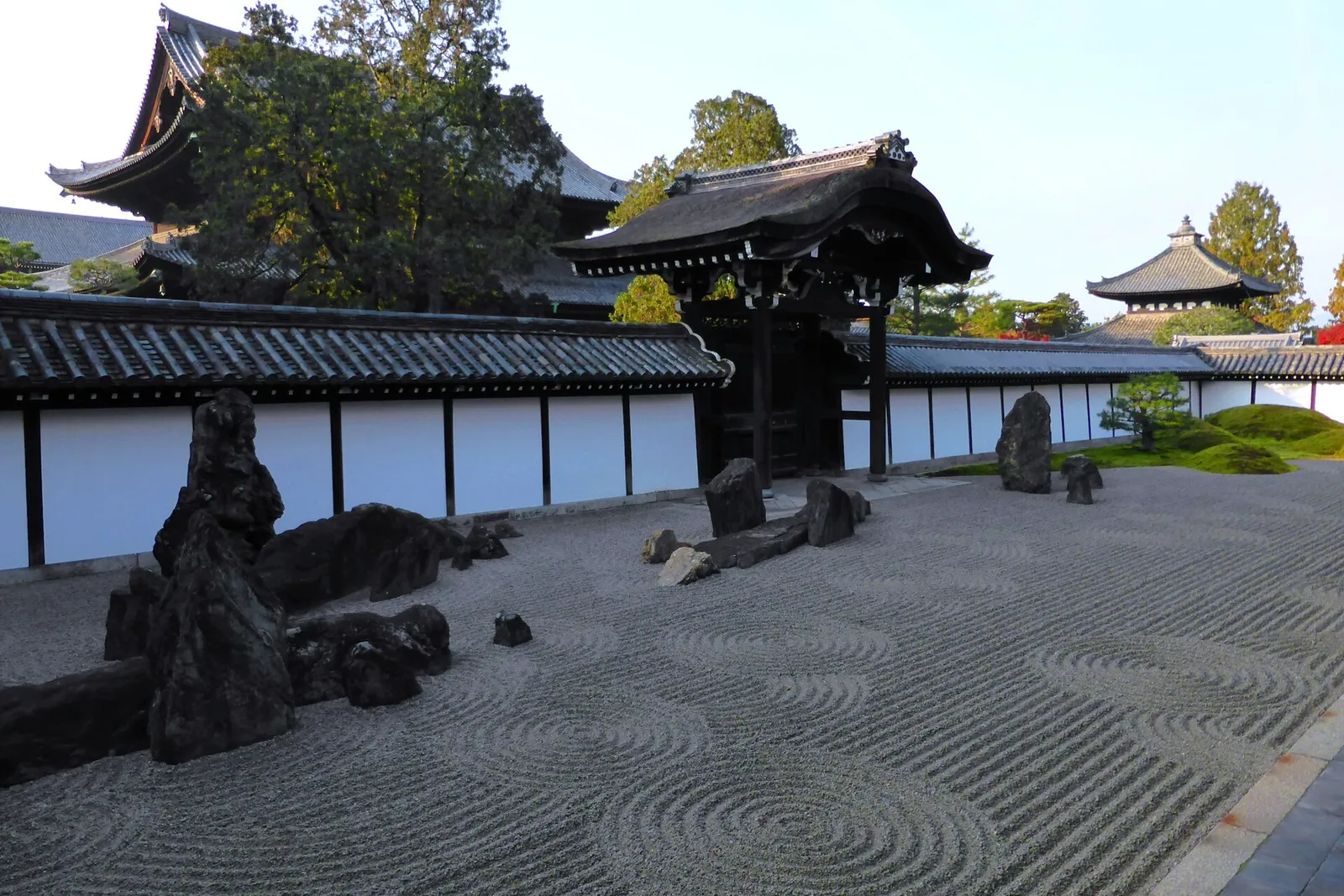
A temple can also have several gardens around one building. At Tofuku-ji, the Hojo gardens were designed by Mirei Shigemori in 1939 and are called Hasso no Niwa, with four gardens on the east, west, south, and north of the Hojo.
How to Tell Them Apart on Your Visit
A few questions help when you arrive at a garden:
- Is there a pond, or a bed of white gravel and stones? A pond points to a pond garden, and gravel and stones point to a dry landscape garden.
- Is there a path around a pond? If so, the garden is likely meant to be walked.
- Is there a veranda facing the garden? If so, start there and take in the whole layout.
- What lies beyond the wall? A hill in the distance may be borrowed scenery.
Take your time with each garden.
Add a Quiet Temple Stop to Your Day
Add a quiet temple stop to your day. We operate Maiko & Zen Kyoto, a 90-minute session at Ikka-in, a sub-temple of Tofuku-ji, where a maiko dances in the same temple hall with no stage between you, then takes time for your questions and photos. See current session times and prices.
Frequently asked questions
What are the main types of Japanese gardens in Kyoto?
Two types you can see in Kyoto are dry landscape gardens, which are laid out with white gravel and stones, and pond gardens, which are laid out around real water.
What is a strolling pond garden?
At Tenryu-ji, the Sogenchi Garden is designed as a strolling pond garden, in which a level path surrounding a picturesque pond allows guests to appreciate the scenery from a variety of perspectives.
What does borrowed scenery mean?
Borrowed scenery (shakkei) uses nearby mountains to give a garden a sense of added depth, as the Sogenchi Garden at Tenryu-ji does.
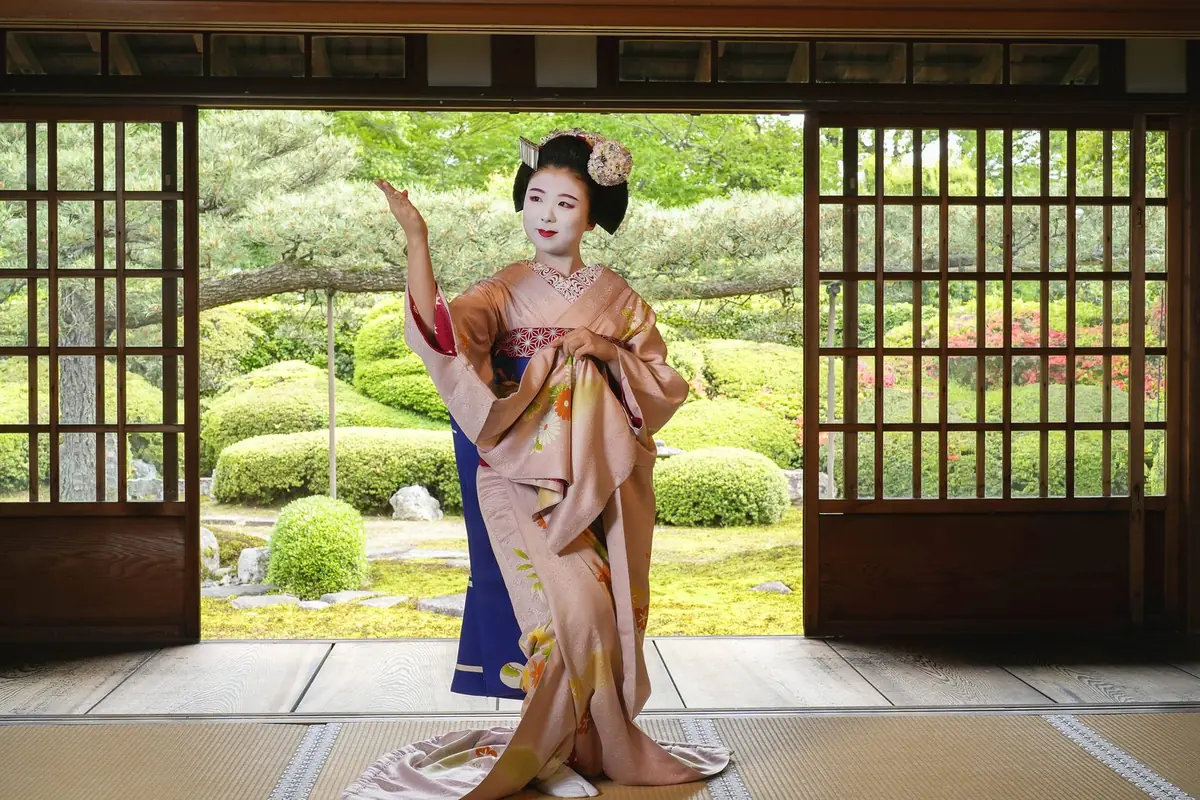
A maiko dance session at a Zen temple near Kyoto Station
Rake a Zen garden, watch two maiko dances and share green tea at Ikka-in, a temple rarely open to the public, one stop from Kyoto Station. Sessions start at 2:00 pm and 3:30 pm.
See the 2:00 pm and 3:30 pm sessions →Sources
- World Heritage: Ryoan-ji — City of Kyoto
- World Heritage: Tenryu-ji — City of Kyoto
- World Heritage: Rokuon-ji (Kinkaku-ji) — City of Kyoto
- World Heritage: Jisho-ji (Ginkaku-ji) — City of Kyoto
- World Heritage: Hongan-ji (Nishi Hongan-ji) — City of Kyoto
- World Heritage: Nijo-jo Castle — City of Kyoto
- World Heritage: Saiho-ji — City of Kyoto
- Tenryu-ji: precincts — Tenryu-ji
- Tofuku-ji: visitor guide — Tofuku-ji